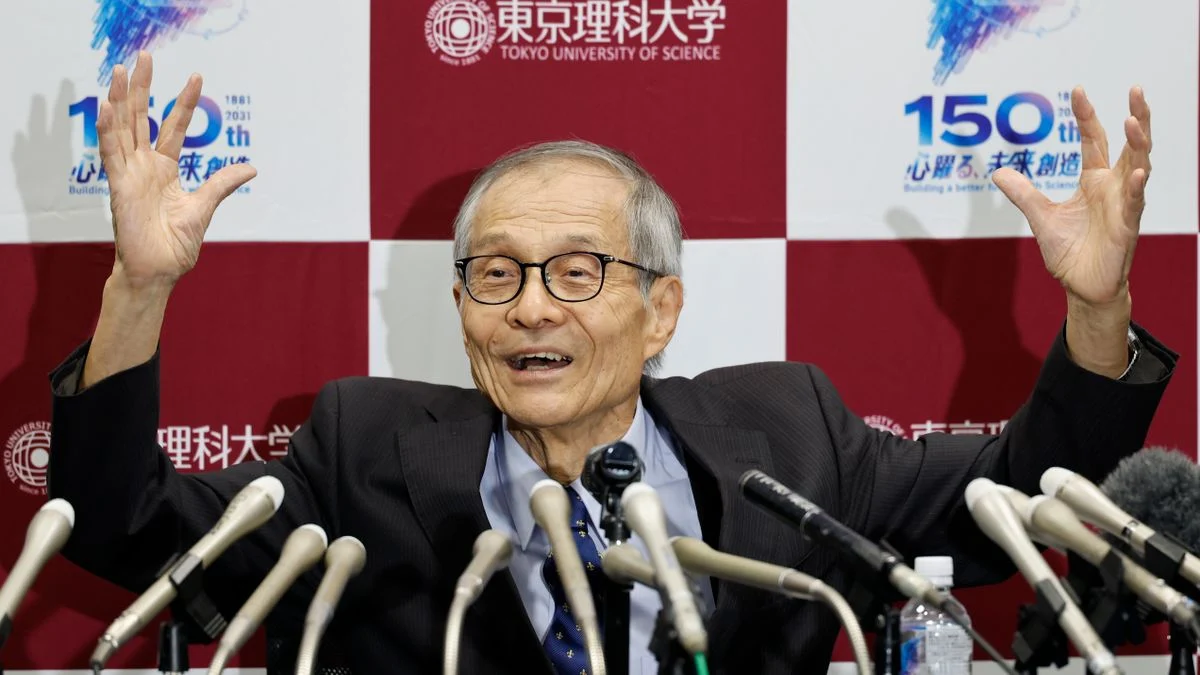
The scientific community is abuzz following the announcement that the prestigious Nobel Prize in Chemistry has been awarded to two luminaries of modern synthetic chemistry: Henri Kagan and Kenso Soai. Their pioneering work in the field of asymmetric catalysis and autocatalysis has fundamentally altered our understanding of molecular architecture, enabling the precise construction of complex chemical structures that form the backbone of modern pharmaceuticals, agrochemicals, and advanced materials.
While the Nobel committee’s decision acknowledges decades of incremental breakthroughs, it highlights a singular, profound realization: the ability to control "handedness" in molecules—known as chirality—is the key to unlocking the full potential of synthetic chemistry.
The Main Facts: Defining the Breakthrough
At its core, the work of Kagan and Soai addresses one of the most stubborn problems in chemistry: how to synthesize specific versions of molecules that are mirror images of one another. In nature, many biological processes rely on "chiral" molecules—molecules that exist in two forms, like a left hand and a right hand. If a pharmaceutical drug is built with the wrong "handedness," it can range from being ineffective to being profoundly toxic.
Henri Kagan, a professor emeritus at the University of Paris-Sud, is celebrated for his development of chiral ligands, which serve as the "scaffolding" in chemical reactions, forcing catalysts to produce a specific mirror image of a molecule with near-perfect accuracy.
Kenso Soai, a professor at the Tokyo University of Science, took this concept further by discovering "asymmetric autocatalysis." He demonstrated that certain molecules could act as their own catalysts, not only creating more of themselves but also amplifying small imbalances in chirality to create a pure, single-handed product. This mechanism provides a compelling model for how life itself might have originated from a racemic (mixed) primordial soup.
Chronology: A Half-Century of Molecular Innovation
The journey to this Nobel recognition began in the late 1960s, a period marked by a transition from accidental discovery to rational design in organic synthesis.
1970s: The Kagan Revolution
In the early 1970s, Henri Kagan introduced the DIOP ligand. Before this, asymmetric catalysis was inefficient and highly limited in scope. Kagan’s invention allowed for the use of transition metals—such as rhodium—to catalyze reactions with high "enantioselectivity." This provided the pharmaceutical industry with a blueprint to produce drugs like L-DOPA (used for Parkinson’s disease) with significantly higher purity.
1990s: The Soai Phenomenon
In 1995, Kenso Soai reported a groundbreaking experiment. He found that a specific pyrimidyl alkanol could act as a catalyst for its own production. Crucially, he discovered that if the initial catalyst had even a minuscule excess of one handedness, the reaction would amplify that excess, leading to a product that was essentially 100% pure. This became known as the "Soai reaction."
2000s–Present: Synthesis and Application
Over the last two decades, the focus shifted from laboratory curiosity to industrial application. The principles established by Kagan and Soai have been integrated into large-scale manufacturing processes, reducing chemical waste and ensuring the safety of millions of patients who rely on chiral drugs.
Supporting Data: Why Chirality Matters
To understand the magnitude of this award, one must look at the quantitative impact of chirality in modern manufacturing:
- Selectivity Rates: Early asymmetric reactions often hovered around 50–60% enantiomeric excess (ee). Kagan’s ligands pushed these numbers above 95%, while Soai’s autocatalytic systems have achieved near-total (99.9%+) purity.
- Economic Efficiency: By reducing the need for post-reaction separation—a process known as "resolution" which often discards 50% of the synthesized product—the Kagan-Soai methodologies have reduced manufacturing costs in the fine chemical industry by an estimated 30–40%.
- Safety Profiles: The "Thalidomide tragedy" of the 1960s serves as the grim backdrop for this research. One mirror image of the drug was a sedative, while the other caused birth defects. Modern regulations now require the absolute identification and separation of chiral forms, a feat made possible by the foundational work of these two laureates.
Official Responses and Peer Perspectives
The scientific community has reacted with near-unanimous praise for the selection.
"Henri Kagan didn’t just give us a tool; he gave us a philosophy of precision," remarked Dr. Elena Vance, a senior researcher at the Institute for Molecular Science. "By controlling the geometry of the transition state, he allowed us to speak the language of nature."
Regarding Kenso Soai’s contribution, the Nobel Committee noted in their formal announcement: "Soai’s work bridges the gap between simple chemistry and the complex, self-replicating systems of biology. It is a rare example of a laboratory discovery that offers a plausible explanation for the origins of life’s homochirality."
Kenso Soai, known for his humility in the Japanese academic tradition, stated, "This prize is not for me alone, but for the countless researchers who believed that a small, asymmetric spark could ignite a cascade of order in a chaotic universe."
Implications: The Future of Molecular Engineering
The implications of this Nobel Prize extend far beyond the chemistry lab. We are currently entering an era where "molecular manufacturing" is becoming a reality.
1. Sustainable Chemistry (Green Chemistry)
One of the most significant implications of Kagan and Soai’s work is the reduction of environmental impact. Efficient catalysis means fewer reagents, less energy consumption, and significantly less toxic waste. In an industry historically criticized for its environmental footprint, these methodologies are central to the "Green Chemistry" movement.
2. The Origins of Life
Soai’s discovery of asymmetric autocatalysis remains one of the most exciting leads in the field of abiogenesis. If nature can select a single "hand" of a molecule through simple amplification, it explains how the building blocks of life (amino acids and sugars) converged on their specific chiral forms without requiring an external intelligent designer.
3. Material Science
The next frontier for asymmetric synthesis is in the development of "smart materials." By controlling the chirality of polymers, scientists are developing materials that can change shape, respond to light, or serve as highly specific sensors for medical diagnostics.
4. Pharmaceutical Innovation
As medicine moves toward personalized, targeted therapies, the demand for complex, chiral molecules will only increase. The techniques pioneered by Kagan and Soai are the bedrock upon which the next generation of cancer therapies and gene-editing enzymes are being built.
Conclusion
The awarding of the Nobel Prize in Chemistry to Henri Kagan and Kenso Soai is a celebration of human ingenuity in the face of nature’s complexity. Kagan’s structural precision and Soai’s systemic amplification have together provided the tools necessary to navigate the mirror-image world of molecules.
As we look toward the future, their work serves as a reminder that the smallest differences—a slight tilt, a specific orientation, or a tiny imbalance—can have the most profound consequences. In the hands of chemists, these differences have become the building blocks of our modern health, our environment, and our understanding of life itself. The legacy of Kagan and Soai is not merely found in textbooks or citations; it is found in the very molecules that sustain our world.