After 14 years of construction chaos, cost overruns totaling €1.5 billion, and a near-constant presence in the headlines for all the wrong reasons, the Cologne Opera House has finally reopened its doors at Offenbachplatz. As the city celebrates with a season opening featuring Richard Strauss’s "Der Rosenkavalier," the question remains: Can this project transcend its reputation as a municipal disaster and truly become a "stage for everyone"?
When architect Wilhelm Riphahn first envisioned the Cologne Opera, his goal was to create a "house for everyone"—a democratic cultural hub that would serve the entire populace. Half a century later, that vision had crumbled into a state of structural decay, triggering a renovation project that evolved into a 14-year tragedy. With the grand reopening on September 27, 2026, the city is attempting to pivot from a narrative of financial mismanagement to one of artistic renewal.
The Anatomy of a Billion-Euro Debacle
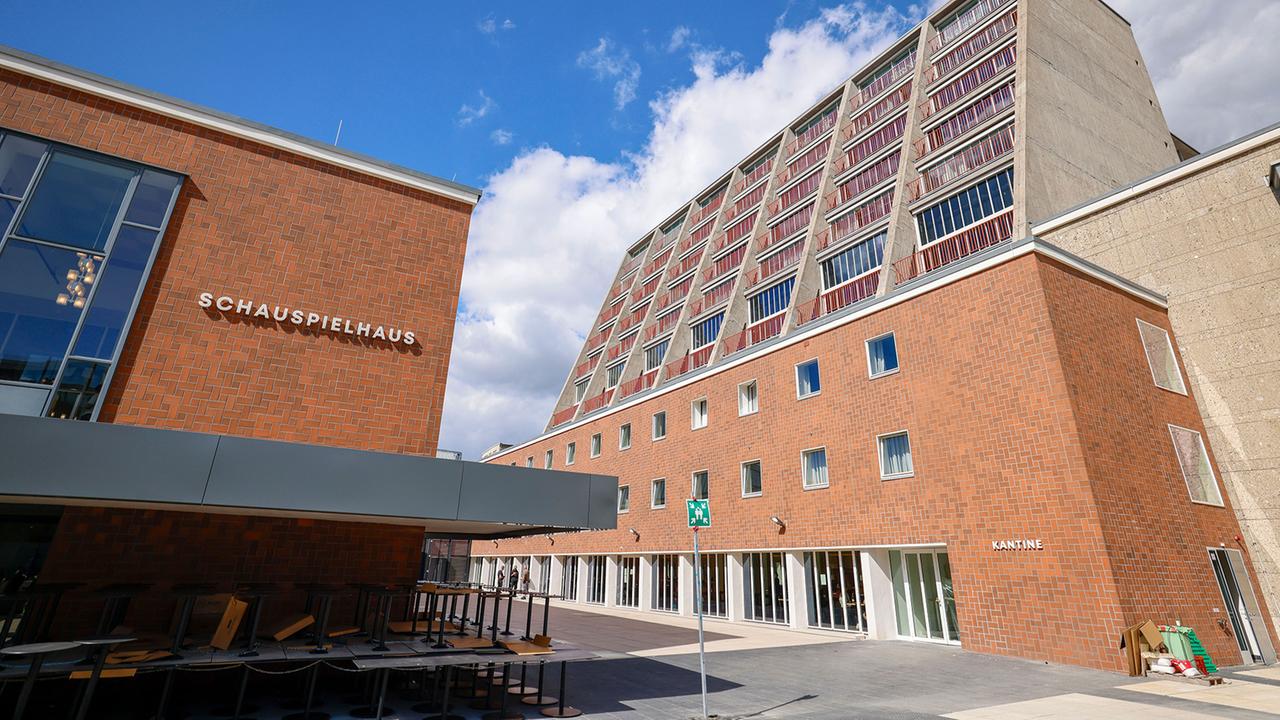
The renovation of the Cologne Opera is widely regarded as one of Germany’s most significant municipal construction failures. What began as a necessary restoration of a heritage-protected landmark quickly spiraled into a cautionary tale of planning incompetence, legal disputes, and technical challenges.
The project, which saw construction timelines stretched thin and budgets shattered, became a symbol of administrative failure. Frank Deja of the citizens’ initiative "Köln kann auch anders" (Cologne Can Do Things Differently) admits that the city suffered significant reputational damage. "Cologne made itself look ridiculous," Deja remarked in a recent interview. Yet, even the harshest critics acknowledge that the final architectural result is impressive.
The financial burden is staggering. While the "hard" construction costs landed at approximately €800 million, the inclusion of interim performance venues, interest payments, and operational overheads brings the total price tag to roughly €1.5 billion. For comparison, while this figure exceeds the cost of the Elbphilharmonie in Hamburg, the cultural impact and architectural "wow-factor" of the two projects are viewed very differently by urban planners and the public alike.
A Chronology of Chaos: 14 Years in the Making
The journey to the 2026 reopening was anything but linear. The roots of the conflict lie in the decision-making process of the late 2000s. In 2010, a massive grassroots movement emerged, with over 50,000 citizens signing a petition to save the existing ensemble of the Opera and the adjacent Playhouse. They successfully thwarted the city’s initial plans for a partial demolition and new construction.
However, the subsequent effort to modernize the historic structures while maintaining their protected status proved to be a technical nightmare. Throughout the 2010s and early 2020s, the construction site was a revolving door of contractors, consultants, and municipal oversight committees. Delays were compounded by the discovery of asbestos, outdated fire safety regulations, and the sheer complexity of retrofitting a mid-20th-century design to modern standards.
The pandemic further exacerbated these issues, pushing the project past the breaking point of public patience. By 2024, the "Offenbachplatz" had become a shorthand for municipal dysfunction in German political discourse.
Comparing Cologne to Hamburg: Can Cologne "Do" an Elbphilharmonie?
Comparisons to Hamburg’s Elbphilharmonie are inevitable, yet experts argue they are fundamentally flawed. The Elbphilharmonie was designed as a landmark—a beacon to attract global tourism and define the city’s skyline. The Cologne Opera, conversely, is a restoration of a site-specific cultural institution that seeks to serve the local community rather than the international tourist circuit.
The success of the Cologne project will not be measured in the number of tourists taking selfies in front of the building, but in its ability to reconcile the city with its own heritage and to foster a sustainable, vibrant artistic program. The transition from a "construction site" to a "cultural house" is the primary challenge facing Intendant Hein Mulders.
Official Responses and Political Accountability
The political leadership of Cologne is keenly aware of the public’s resentment regarding the financial waste. Mayor Torsten Burmester has been vocal about the necessity of moving past the blame game while acknowledging the gravity of the failure.
"It was a planning failure—there is no point in arguing otherwise," Burmester stated in a recent interview. He emphasized that the only way to justify the expenditure is to ensure that the stages of Cologne are accessible to a broad spectrum of the public. "It must be a stage, an opera, a playhouse, a children’s opera—a place for the people of Cologne, not just a small circle of subscribers."
Critics, such as Bärbel Hildebrand of the Taxpayers’ Association of North Rhine-Westphalia, remain skeptical. "These culture funds could have been poured into museum projects, dance, or the independent scene," she noted. The argument remains that while the opera house is a jewel of architecture, the opportunity cost of the project was the stagnation of other, perhaps more inclusive, cultural sectors.
Artistic Vision: "Great Opera for a Great Audience"
Intendant Hein Mulders, who has led the Opera since 2022, is steering the institution toward a balance of high-brow tradition and contemporary relevance. His vision for the future is summarized by the mantra: "Great opera for a great audience."
Mulders is committed to maintaining the house’s international standing. By providing modern facilities, the Cologne Opera can now compete for top-tier international co-productions, allowing them to "play in the international league." However, he is equally focused on the avant-garde. "I stand for new commissions," he explains. "Every year, we aim for at least one world premiere. Contemporary music is vital because opera must remain a living art form."
The upcoming season highlights this duality. Following the opening with Der Rosenkavalier, the company will present Jacques Offenbach’s The Tales of Hoffmann—a production that has already garnered critical acclaim at the Bregenz Festival.
The Social Implications: Who is the "Stage for Everyone"?
The central question remains whether the "house for everyone" can overcome the demographic divide. Data from 2018 indicated that only one in five Cologne residents attended the opera at least once a year, while two-thirds of the population had never set foot in the building.
To bridge this gap, the city is planning a massive festival on the Offenbachplatz, featuring popular local bands like Kasalla to signal that the venue is open to more than just the traditional opera-going elite. The Playhouse, under the direction of Kay Voges, is taking a more aggressive approach to inclusion, focusing on programs that bridge the gap between theater and journalism, and utilizing EU funding to reach marginalized demographics.
The Challenge of Cultural Accessibility
- The Physical Barrier: The architecture itself can be intimidating. The city is attempting to mitigate this by opening the foyers to the public, hoping to make the building a "living room" for the city.
- The Economic Barrier: High ticket prices have long been a deterrent. The city is currently debating subsidized pricing models for younger audiences and low-income residents.
- The Psychological Barrier: The perception of opera as an elitist activity remains the most difficult hurdle. Success will depend on the programming’s ability to remain "alive"—as Mulders puts it—rather than a static museum of 19th-century works.
Conclusion: A Future Beyond the Scaffolding
Thomas Werner, the City Conservator of Cologne, believes that in time, the bitterness over the costs will fade, replaced by an appreciation for the architecture. "The design is masterfully composed, and the quality is first-class—eventually, people will truly value what they have here."
Whether or not the Cologne Opera becomes a symbol of triumph or a lasting reminder of the "billion-euro mistake" depends on the next few years. If the institution can prove that it is a space for dialogue, education, and artistic innovation, the public may eventually forgive the construction chaos. But if the opera remains an ivory tower accessible only to the wealthy elite, the financial scar will remain a sore point for generations.
For now, the scaffolding is down. The curtains are rising. The true test of Wilhelm Riphahn’s vision for a "house for everyone" is only just beginning. As the city of Cologne looks forward, it does so with a blend of pride in its new architectural centerpiece and a cautious hope that the music inside will eventually drown out the echoes of the construction site.