Germany, long considered the bedrock of fiscal stability in the Eurozone, is facing an increasingly perilous financial horizon. Recent internal documents from the Federal Ministry of Finance (BMF) have surfaced, painting a stark picture of a nation grappling with structural debt, rising interest burdens, and a rapidly shrinking fiscal space. The data, which projects a significant escalation in debt reliance by 2030, suggests that the "debt brake" (Schuldenbremse) era is entering its most challenging phase to date.
The Core Indicators: A Double-Fronted Fiscal Challenge
The internal BMF projections center on two critical metrics that serve as the "canary in the coal mine" for the German federal budget.
The first is the Credit Financing Ratio, which measures the proportion of the federal budget financed through new debt rather than revenue. In 2025, this figure stood at 13.6 percent. According to the BMF’s internal roadmap, this ratio is set to nearly double, reaching an alarming 26.3 percent by 2030. This suggests that over a quarter of every euro spent by the federal government will be borrowed, a trend that threatens to erode the long-term credibility of German sovereign bonds.
The second, and perhaps more immediate, concern is the Interest-Tax Ratio. This indicator tracks the percentage of tax revenue that must be siphoned off solely to service existing debt interest. Last year, this figure was 7.7 percent. By 2030, the BMF anticipates this will balloon to 18.4 percent. In practical terms, this means that nearly one-fifth of all taxes collected from German citizens and corporations will disappear into the coffers of bondholders before a single cent is spent on infrastructure, defense, or social welfare.
Chronology: From Surplus to Structural Deficit
To understand how Germany arrived at this fiscal inflection point, one must look back at the trajectory of the last fifteen years.
The Era of the "Black Zero" (2010–2019)
Following the global financial crisis of 2008, Germany championed the "Schwarze Null"—a commitment to a balanced budget. For nearly a decade, low interest rates and a robust economy allowed the government to fund its ambitions without accumulating new debt. During this period, the interest-tax ratio was at historical lows, occasionally dropping toward zero in real terms.
The Pandemic Shock (2020–2022)
The COVID-19 pandemic necessitated the first major suspension of the constitutional debt brake. Massive emergency aid packages were launched to stabilize the economy. While these measures were widely viewed as necessary, they initiated a shift in the debt-to-GDP ratio that proved difficult to reverse.
The Energy Crisis and Security Shift (2023–2025)
The fallout from the war in Ukraine brought a dual burden: the need for massive energy subsidies to shield households and industry from spiking prices, and the implementation of the Zeitenwende (the historic shift in defense policy). These structural demands, coupled with the end of the era of negative interest rates, began to exert severe pressure on the budget.
The Path to 2030
We are currently in a transition phase. The BMF projections indicate that the current fiscal framework is no longer aligned with the structural realities of higher interest rates and increased geopolitical spending requirements.
Supporting Data: The Anatomy of the Burden
The BMF’s internal assessment is bolstered by broader economic indicators that explain why these ratios are rising.
- Interest Rate Normalization: The European Central Bank’s transition away from ultra-loose monetary policy has been the primary driver of the rising interest-tax ratio. As maturing debt is refinanced at current market rates—which are significantly higher than the near-zero rates of the previous decade—the debt service costs are compounding rapidly.
- The Investment Gap: Germany faces a monumental need for investment in digitalization, energy transition, and infrastructure. Unlike in previous cycles, the government cannot easily fund these through growth alone, as the German economy is currently experiencing stagnant productivity growth.
- Demographic Headwinds: The aging workforce means that the revenue-generating base (taxpayers) is shrinking relative to the population dependent on the state (pensioners), creating an "entitlement squeeze" that limits the government’s ability to pivot toward austerity without risking social unrest.
Official Responses and Political Friction
The revelation of these internal projections has sparked a firestorm within the governing coalition and the broader political establishment.
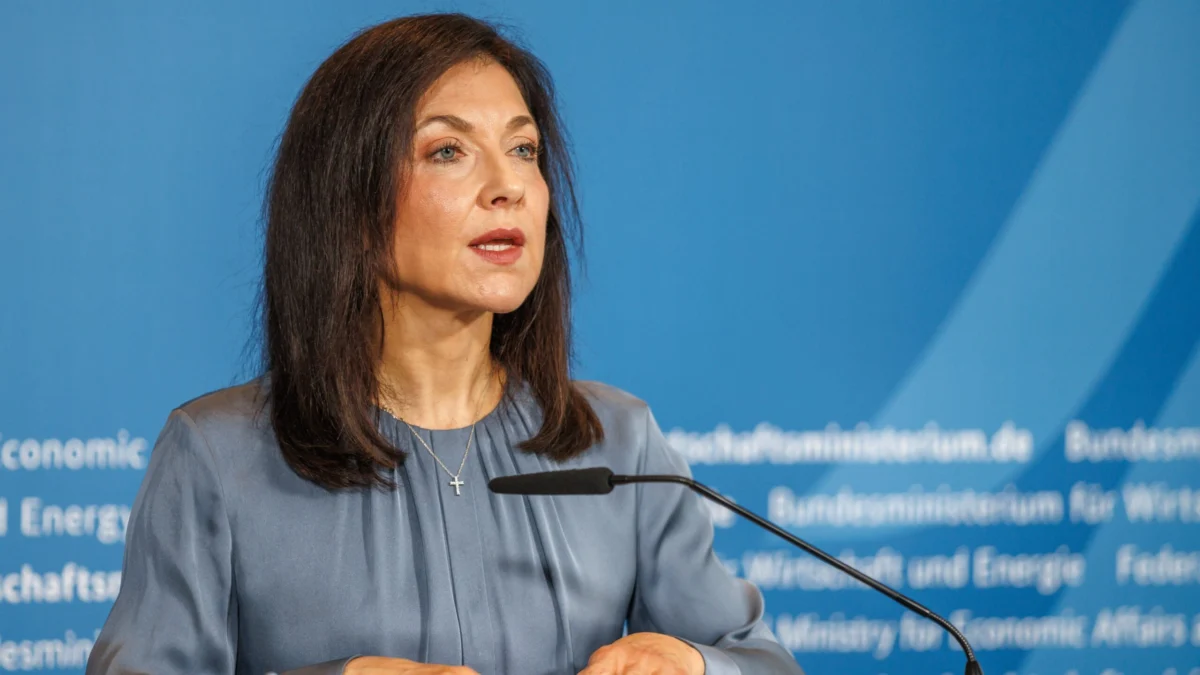
The Federal Ministry of Finance, currently navigating the delicate balance of fiscal discipline and the need for growth-oriented spending, has maintained that these figures represent a "stress test" rather than a final destiny. A spokesperson for the BMF stated that the figures underscore the "necessity of structural reforms" and that fiscal discipline is not an end in itself, but a prerequisite for future stability.
However, opposition parties have been quick to weaponize the data. Representatives from the Christian Democratic Union (CDU) have cited the projections as proof of "fiscal mismanagement" by the current coalition, arguing that the government has failed to prioritize spending effectively. Meanwhile, proponents of reform from the Green and SPD factions argue that the rigid adherence to the debt brake is strangling the country’s ability to invest in the future. They contend that if the government does not borrow to build, the resulting economic stagnation will only make the debt-to-GDP ratio worse in the long run.
Economists are similarly divided. The "Hawks," led by traditional fiscal conservatives, warn that ignoring these trends will lead to a loss of investor confidence and a surge in bond yields that could make the 18.4 percent interest-tax ratio look optimistic. The "Doves," conversely, argue that the government must modernize the debt brake to allow for "golden rule" borrowing—debt used strictly for productive capital investment rather than consumption.
Implications: A Nation at a Crossroad
The implications of the BMF’s findings are profound and reach far beyond the federal budget.
1. The Crowding-Out Effect
As the interest-tax ratio approaches 20 percent, the "crowding out" effect becomes inevitable. The government will be forced to choose between raising taxes (which risks further depressing the economy), cutting social spending (which carries high political risk), or slashing public investment. Each option threatens to stifle the growth required to pay down the debt in the first place.
2. Geopolitical Vulnerability
Germany’s role as the "anchor" of European stability is tied to its fiscal health. A Germany that is forced to retrench on defense spending or European Union contributions due to internal debt constraints may see its influence in Brussels and on the global stage wane.
3. The Future of the "Schuldenbremse"
The internal BMF document serves as a powerful argument for the inevitable reform of the debt brake. The current constitutional mechanism, designed for a low-interest-rate environment, may prove fundamentally incompatible with the reality of the 2030s. The debate is no longer about whether the rules need to change, but how they can be adjusted without triggering a loss of market trust.
Conclusion: The Cost of Inaction
The BMF’s internal projections are not merely numbers on a spreadsheet; they are a roadmap to a potential fiscal crisis. By 2030, Germany will likely be forced to confront the limits of its current economic model. Whether the nation chooses to reform its fiscal framework, boost productivity to "grow out" of the debt, or endure a decade of painful austerity remains the defining political question of the decade.
For the German government, the message from its own finance experts is clear: the era of easy debt is over. The coming years will require a level of fiscal discipline and political courage that has not been tested in the post-reunification era. If the government fails to act, the markets—and the German taxpayer—will be the ones to pay the price.