By [Name], Political Correspondent
After weeks of mounting uncertainty and high-stakes political maneuvering, a potential governing coalition between the Left Party (Die Linke), the Greens, and the Social Democrats (SPD) in Berlin has cleared a critical hurdle. Following a series of tense, multi-hour negotiation rounds, the three parties have reached a foundational agreement regarding the state’s commitment to Israel’s right to exist and the broader protection of Jewish life in the capital. This breakthrough signals the end of the preliminary "exploratory" phase, paving the way for formal coalition negotiations that will now address the pressing economic and social challenges facing the city.
The Context: A Political Crisis Over Values
The path to this agreement was far from straightforward. For the SPD and the Greens, the core issue was never merely about administrative policy or cabinet positions; it was a fundamental question of political alignment and moral integrity. The catalyst for this friction was the aftermath of the recent election in Berlin’s Neukölln district, where a series of incidents cast a long shadow over the Left Party’s campaign.
During the Left Party’s election night celebration, the presence of figures associated with controversial political groups caused a firestorm. Specifically, the appearance of individuals linked to the PFLP (Popular Front for the Liberation of Palestine)—an organization classified as a terrorist entity by the European Union—drew sharp condemnation from potential coalition partners. Furthermore, the presence of local figures such as clan leader Issa Remmo served to alienate the center-left parties, who viewed these associations as a litmus test for the Left Party’s ability to govern responsibly.
The situation was further exacerbated by the rhetoric of newly elected Left Party representative Vanessa Emde. During a public rally, Emde stated, "There is no right to existence for states," a declaration that was widely interpreted as a direct challenge to Israel’s sovereignty. For the SPD and the Greens, this was a "red line." The subsequent negotiations became a struggle to determine whether the Left Party could effectively distance itself from such positions to ensure a stable, consensus-driven government.
A Chronology of the Breakthrough
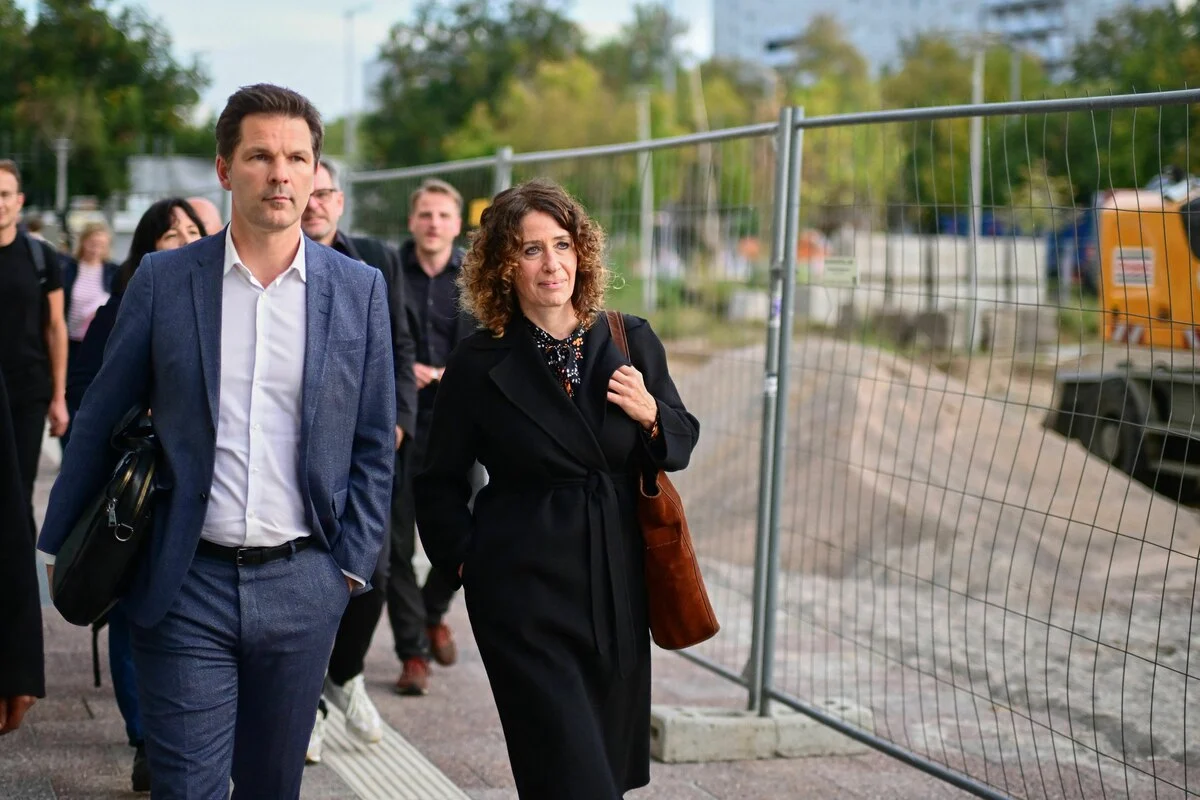
The resolution, finalized late Wednesday evening, is the result of three grueling rounds of negotiations held at the "Haus der Statistik" in Berlin-Mitte.
- Initial Stagnation: The first two rounds of talks were characterized by a deep lack of trust. The SPD, led by Steffen Krach, maintained a firm stance, demanding clear guarantees before any further substantive policy discussions could occur.
- The Turning Point: The turning point arrived when the Left Party, led by election victor Elif Eralp, agreed to a comprehensive "protection of Jewish life" package. This included a mechanism for vetting controversial statements made by elected officials.
- The Wednesday Consensus: After several hours of deliberation on Wednesday, the 14 negotiators emerged without immediate public statements. However, the mood had shifted. All parties attended an interreligious memorial service for the victims of the October 7 Hamas massacre, a symbolic act of unity that preceded the official announcement of the breakthrough on Thursday morning.
The Mechanism of Oversight
The agreement creates a novel, albeit controversial, institutional mechanism. Each of the three parties—SPD, Greens, and the Left—will appoint a dedicated "person of trust" (Vertrauensperson). This panel will be tasked with evaluating future statements from elected officials. The goal is to distinguish between what the parties define as "legitimate criticism of Israel" and instances of antisemitism.
Furthermore, reports indicate that the Left Party has agreed to a structural change regarding the inclusion of Vanessa Emde in the new parliamentary group. While she secured a direct mandate, it is understood that the coalition agreement will effectively sideline her from key legislative functions, ensuring that the new government speaks with a unified voice on matters of foreign policy and human rights.

Economic Challenges and the Looming "Housing" Conflict
With the ethical and ideological deadlock cleared, the coalition is shifting its focus to the stark reality of Berlin’s governance. On Thursday morning, the parties moved immediately into discussions concerning the local economy.
Berlin is currently grappling with a significant "billion-euro hole" in its budget. The city’s fiscal stability is predicated on economic growth and increased tax revenues, yet the current economic climate is sluggish. The SPD, traditionally representing a pro-business and labor-oriented approach, is pushing for policies that foster investment. The challenge for the Left and the Greens will be to reconcile these economic realities with their own social spending platforms.
However, observers note that the most significant obstacle—the issue of Vergesellschaftung (socialization/expropriation of large private housing companies)—remains unresolved. This is a point of fundamental ideological divergence:
- The SPD Position: Steffen Krach has been unequivocal, stating that under his watch, there will be no mass expropriations of private property.
- The Left Position: Elif Eralp has made the socialization of housing a central pillar of her platform, arguing it is the only way to tackle Berlin’s skyrocketing rental costs.
This tension is set to define the next phase of negotiations. The coalition, which holds a 14-seat majority in the new House of Representatives, is far more stable than a hypothetical alternative coalition of the CDU, Greens, and SPD (which would have held a razor-thin three-seat majority). Nevertheless, keeping this three-party alliance together will require constant compromise on the most polarizing issues in Berlin’s political landscape.

Official Responses and Public Sentiment
The reaction to the agreement has been mixed. Supporters of the potential coalition praise the move as a triumph of pragmatic governance over ideological rigidity. They argue that by isolating extremist elements and establishing a framework for dialogue on antisemitism, the three parties have successfully defended democratic values while securing a path to power.
Conversely, critics within the Left Party remain concerned that the agreement constitutes an act of "capitulation" to the SPD and the Greens. They argue that the oversight panel on antisemitism could be used to suppress legitimate, non-antisemitic criticism of Israeli government policy.
From the perspective of the SPD leadership, the agreement is a necessary "cleanup" of the political environment. "We are not just forming a government; we are setting the parameters for what is acceptable in our public discourse," noted a spokesperson close to the negotiations.
Implications for Berlin’s Future
The implications of this potential government are profound. If the coalition succeeds, it will mark one of the few instances in Germany where a left-wing alliance has managed to govern effectively while maintaining a strict, proactive stance on the protection of Jewish life—a position that has historically been the preserve of center-right parties.

Furthermore, the stability of the city depends on the outcome of the upcoming economic debates. Berlin’s infrastructure, public schools, and transport systems are in dire need of investment. If the coalition can move past the ideological debates of the campaign trail and address the fiscal crisis, they may find a broad base of support among voters who are tired of the stalemate.
However, the "red lines" on housing remain the elephant in the room. Should the negotiations stall on the issue of expropriation, the fragile trust established this week could dissolve rapidly. The voters of Berlin have provided a clear mandate for change, but the coalition partners must now prove they can balance the radical demands of their base with the pragmatic necessities of city administration.
As the parties enter the formal phase of negotiations, all eyes will be on the "Haus der Statistik." The breakthrough on antisemitism was the first test; the test of governance and economic management will be significantly more difficult. Whether this alliance becomes a model for the rest of Germany or a cautionary tale of mismatched political visions remains to be seen. For now, Berlin has a path forward, and the city’s political machinery is finally turning again.