The political landscape in Saxony-Anhalt is reeling following a seismic shift in the state parliament. The election of an AfD politician as Landtag President has exposed deep fractures within the state’s Christian Democratic Union (CDU), raising alarming questions about the party’s future and the stability of democratic norms in Germany.
The Breaking Point: A Historical Precedent
In a move that has sent shockwaves through the German political establishment, Tobias Rausch of the Alternative for Germany (AfD) was elected President of the Landtag in Saxony-Anhalt during the legislature’s inaugural session. This marks the first time in the history of the Federal Republic of Germany that an AfD politician has ascended to such a high-ranking state office.
The election, held via secret ballot, saw Rausch secure 48 votes—a number that significantly exceeds the combined strength of the AfD and the Bündnis Sahra Wagenknecht (BSW) factions, which together command 44 seats. The mathematical discrepancy indicates that at least four members of the CDU, which had officially recommended that its members abstain, broke ranks to support the AfD candidate. The fallout was immediate: a wave of frustration, anger, and disillusionment has engulfed the CDU, with party members across the country demanding accountability for what many view as a betrayal of the party’s firewall against the far right.
Chronology of a Political Breach
The events of the last week represent the culmination of months of internal tension. While the leadership of the CDU in Saxony-Anhalt, headed by Fraktionschef Sven Schulze, attempted to maintain a stance of neutrality by recommending abstention, the rank-and-file were clearly not aligned.
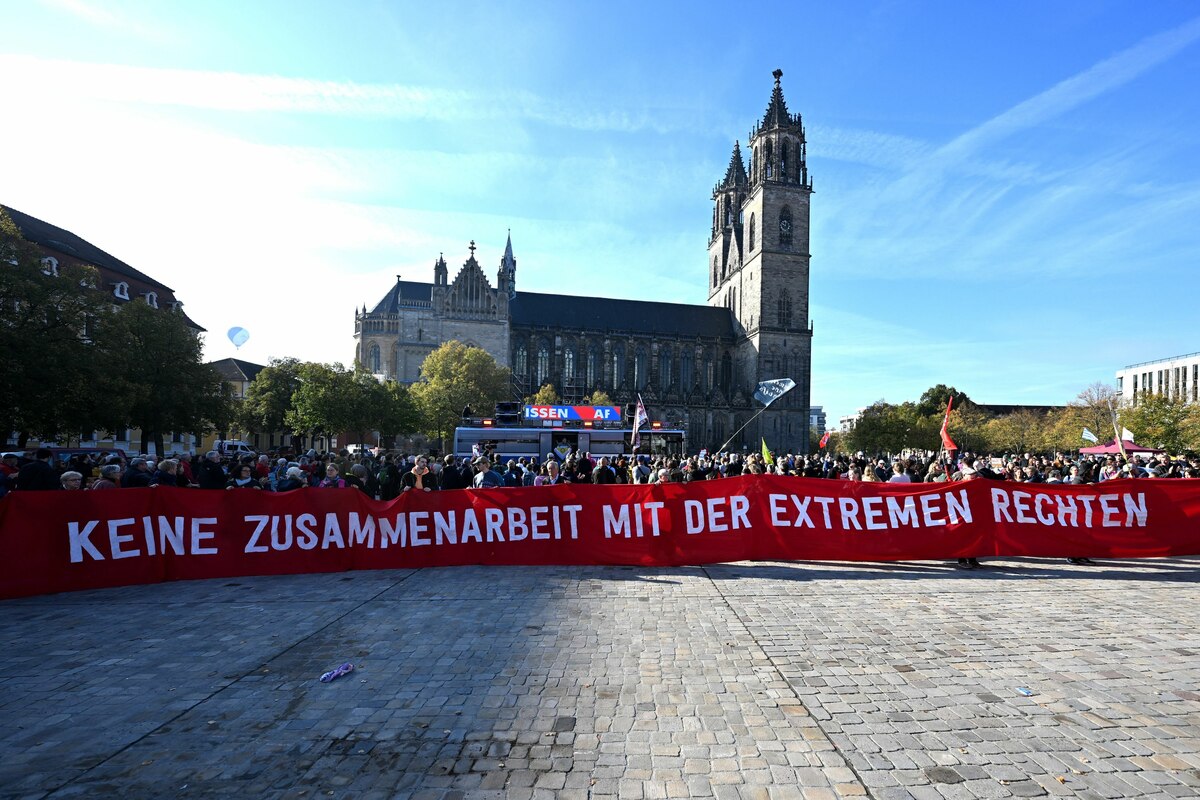
- Pre-Election Maneuvering: According to Rausch, the election was not a spontaneous act but a "long-planned" operation. In interviews, the 35-year-old AfD politician claimed to have engaged in direct outreach to members of other parties, confirming that CDU representatives had approached him and vice versa.
- The Secret Ballot: During the vote, 48 deputies voted in favor of Rausch, while 29 voted against, and 5 abstained. Given the known voting intentions of the SPD, Greens, and Left Party—all of whom campaigned against Rausch—the arithmetic confirms that the additional votes originated within the center-right bloc.
- The Tillschneider Factor: The situation was further complicated by the election of Hans-Thomas Tillschneider, a polarizing figure within the AfD known for his pro-Russian rhetoric and confrontational parliamentary style, as a deputy president. Unlike the election of Rausch, Tillschneider’s victory occurred in a round where exactly 44 votes were cast—the precise total of the AfD and BSW. This has led to a bitter blame game, with the CDU accusing the BSW of facilitating the far right, a charge the BSW vehemently denies.
Strategic Failures and the Schulze Dilemma
At the heart of the crisis is the leadership of Sven Schulze. Critics within the CDU argue that his management of the parliamentary group has been disastrous. By failing to force a clear, public stance against the AfD—or by failing to secure the loyalty of his own caucus—Schulze is now facing calls for his resignation.
"The CDU is completely torn," one anonymous party insider told the press, echoing a sentiment shared by many in the state capital, Magdeburg. The lack of discipline during the secret ballot is viewed by many as a damning indictment of Schulze’s inability to unify his caucus. Furthermore, the decision not to publicly declare that the party would vote against the AfD is now being labeled a "strategic error" that left the door open for dissenters to act in the shadows.
The situation has reached such a boiling point that high-ranking officials, such as state party deputy Marco Tullner, have publicly floated the possibility of leaving the parliamentary group if the internal rot is not addressed before the end of the year.
National Responses: A "Heavy Blow"
The shockwaves have traveled quickly from Magdeburg to Berlin. CDU leadership at the federal level has expressed profound concern, characterizing the events in Saxony-Anhalt as a "politically historic incision."

Franziska Hoppermann, the CDU’s federal Secretary-General, described the election as a "heavy blow" to the party’s core identity. Similarly, Catarina dos Santos-Wintz, the CDU’s parliamentary manager in the Bundestag, questioned the moral integrity of those who cast their ballots for the AfD, stating, "How can one reconcile such a decision with one’s conscience? I certainly could not."
The Social Democrats (SPD) have also weighed in, with party leader Lars Klingbeil calling the election of a far-right politician to a presiding office a "taboo break." Klingbeil has demanded that the CDU provide an urgent explanation for how such a breach of the democratic firewall could occur, arguing that silence is no longer an option.
Implications: The Shadow of the Minister-President Election
The most pressing concern now facing the state is the upcoming election of the Minister-President, scheduled for December. Ulrich Siegmund (AfD) has set his sights on the premiership and requires 42 votes in the first round to secure the position.
With the BSW declaring its intention to abstain, Siegmund is mathematically dependent on securing at least three votes from outside his own ranks. The fact that he was able to secure four extra votes for the Landtag presidency suggests that the necessary support for a far-right government in Saxony-Anhalt is already present in the shadows of the parliament.

Günter Krings, deputy chairman of the CDU/CSU parliamentary group in the Bundestag, has issued a stark warning: "The vote for the Landtag President gives us pause. We must now do everything in our power to ensure that this does not repeat itself during the election of a Minister-President."
A Party at the Crossroads
The crisis in Magdeburg is not merely a regional incident; it is a microcosm of the existential challenge facing the CDU nationwide. The party has long maintained a strict policy of non-cooperation with the AfD, yet the events of the past week demonstrate that this firewall is crumbling in the face of local political opportunism and ideological drift.
As the December vote approaches, the CDU in Saxony-Anhalt must reconcile its internal divisions. If the party remains "torn," as observers claim, it risks not only the loss of the Minister-President position but also a fundamental loss of credibility with voters who rely on the party as a bulwark against extremism.
The coming weeks will be a test of character for the CDU leadership. Whether they can enforce discipline and reaffirm their commitment to democratic standards, or whether they will allow the further normalization of the far right in German state politics, remains to be seen. One thing is certain: the political landscape in Germany has changed, and the consequences of this shift are only just beginning to unfold.

For now, the question remains: Can the CDU mend its broken ranks, or has the process of fragmentation in Saxony-Anhalt already passed the point of no return? The answer will define the political trajectory of the region for years to come.