


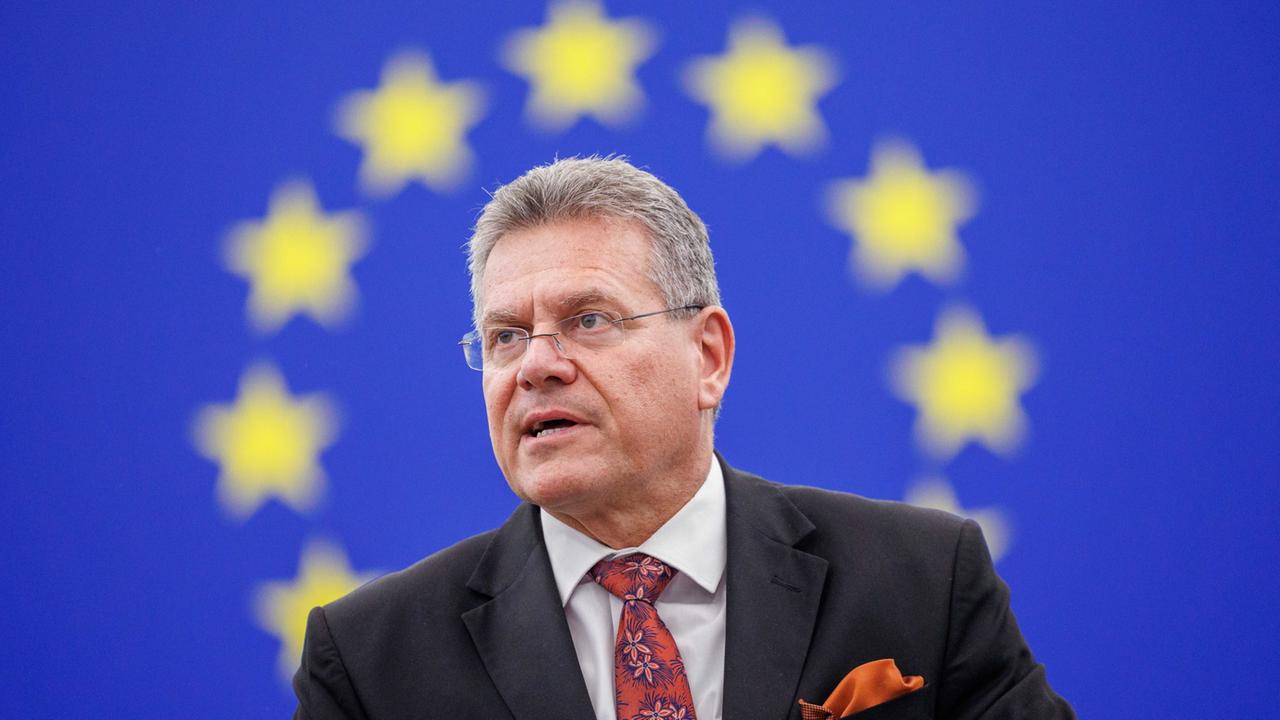
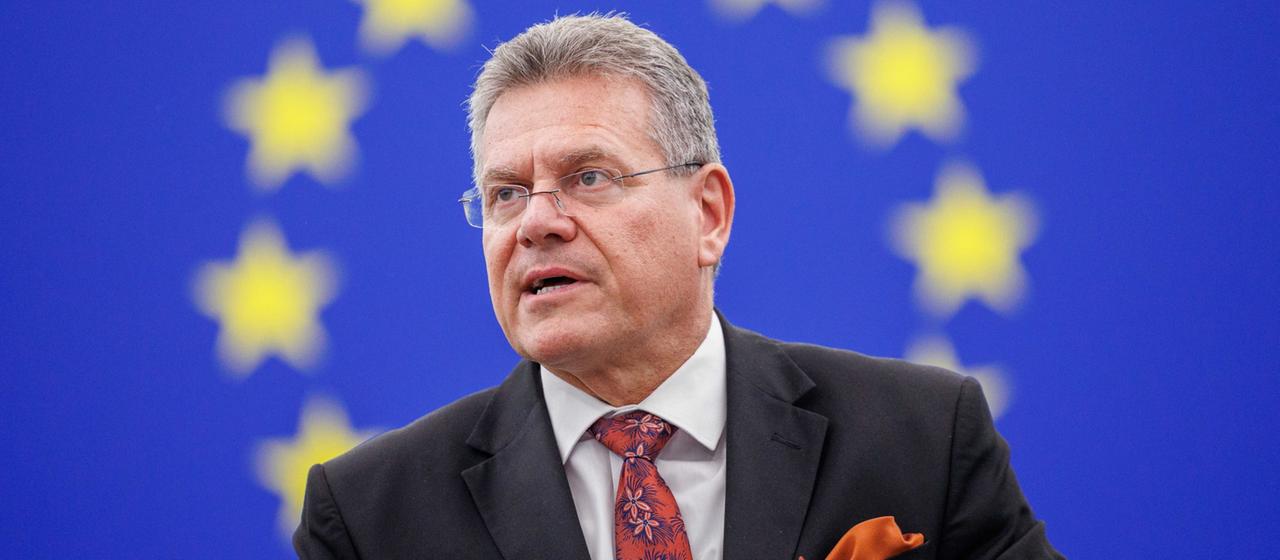
Brussels/Beijing – October 8, 2026, 10:27 AM CET – As China emerges from its week-long National Day celebrations, the European Union’s trade delegation, led by EU Trade Commissioner Maros Sefcovic, has landed in Beijing for critical discussions aimed at de-escalating escalating trade tensions. The visit comes at a pivotal moment, with Brussels and Beijing at odds over a widening trade deficit, allegations of unfair trade practices, and a growing sentiment of protectionism on both sides. The outcome of these high-stakes negotiations could significantly shape the future of the €1.5 billion per day trade relationship between the two economic powerhouses.
The Stakes: A Deepening Trade Imbalance and Growing Resentment
The core of the current friction lies in the EU’s mounting trade deficit with China, which has ballooned to an unsustainable level, averaging over €1 billion daily in the past year. European businesses operating in China have long voiced grievances concerning preferential treatment for Chinese state-owned enterprises, opaque tender processes, and significant bureaucratic hurdles. These challenges have been exacerbated by China’s extensive state subsidies, which critics argue allow Chinese companies to flood the European market with goods at artificially low prices, undermining fair competition and local industries.
A Chronology of Escalation: From Diplomatic Murmurs to Concrete Actions
The recent period has witnessed a notable increase in trade-related disputes, marked by a clear hardening of positions on both sides.
- Early October 2026: The German Chancellor, Friedrich Merz, speaking in Berlin, signaled a desire for a more agile and responsive EU trade policy. He advocated for equipping the European Commission with instruments to react swiftly to emerging trade challenges, emphasizing the need for expedited decision-making processes, albeit with oversight from the European Council. This initiative, spearheaded by Germany and France, aimed to bolster the EU’s capacity to counter what they perceive as unfair trade practices.
- During China’s National Day Holiday: In a move that signaled Beijing’s firm stance, the Chinese Ministry of Commerce initiated an anti-dumping investigation into p-Nitrotoluol, a key intermediate product, originating from the EU chemical industry. This action directly targeted a sector vital to Germany’s economy and served as a clear retaliatory signal.
- Past Retaliatory Measures: This latest investigation follows a pattern of similar retaliatory measures by China against EU products, including pork, dairy, and brandy. These actions were widely seen as a response to EU tariffs on Chinese electric vehicles, with Spain and France being particularly affected by these punitive measures.
Supporting Data: The Widening Chasm of Trade
The sheer scale of the trade imbalance is a stark indicator of the economic disconnect. The EU’s trade deficit with China has consistently grown, reaching an average of over €1 billion per day in the preceding year. This trend is not merely a statistical anomaly; it represents a significant outflow of capital and a struggle for European manufacturers to compete on a level playing field.
Adam Dunnett, Secretary-General of the European Chamber of Commerce in Beijing, articulated the concerns of European businesses: "European companies in China have high expectations for the visit of EU Trade Commissioner Sefcovic for direct discussions, especially since decisions in China are made at the highest level. According to Sefcovic, China understands the problems we face in Europe. I hope this is true. And therefore, I hope they can find various sectors where they can open the market a little further, so we can sell more goods from Europe to China. That would be great."
However, Dunnett also offered a pragmatic, albeit sobering, perspective on China’s motivations for change: "Ultimately, China will not change anything because the EU or anyone else is upset. China will change when it is in its own self-interest. And that interest is quite strong." He further explained that while the Chinese government is making efforts to stimulate domestic consumption, these efforts have not been sufficient to offset the current production levels. This implies that China’s willingness to adjust its trade policies will be heavily influenced by its internal economic pressures rather than external diplomatic appeals.
Official Responses: A Tense Dialogue and Unyielding Stances
The reactions from both sides highlight the deep-seated disagreements.
- EU’s Position: The European Commission, through Commissioner Sefcovic, is advocating for greater market access, a level playing field, and an end to what it deems unfair trade practices. The EU is prepared to defend its interests more assertively if China fails to offer concessions. The impetus from Germany and France for a more robust trade defense mechanism underscores the growing frustration within the bloc.
- China’s Response: The Chinese Ministry of Commerce issued a stark warning, stating that China would react decisively if the EU intended to discriminate against Chinese companies in the European market. Beijing has accused Germany and France of politicizing trade issues and inciting protectionism within the EU, labeling it a detrimental path that would ultimately backfire on both nations. China continues to express its hope that Germany and France will uphold principles of open cooperation and free trade.
Implications: A Crossroads for Global Trade
The unfolding trade dispute between the EU and China carries significant implications, not only for the two economic giants but also for the broader global economic landscape.
- Impact on European Industries: The outcome of these negotiations will directly influence the competitiveness of European industries, particularly those reliant on exports to China or those facing intense price competition from subsidized Chinese goods. The chemical sector, now under scrutiny, is a crucial component of the European economy, and any protectionist measures could have far-reaching consequences.
- Geopolitical Ramifications: Beyond economics, the trade tensions are intertwined with broader geopolitical dynamics. The EU’s push for greater strategic autonomy in trade aligns with a global trend of re-evaluating dependencies and diversifying supply chains. China’s assertive stance, conversely, reflects its growing economic power and its determination to protect its own interests.
- The Future of Free Trade: The current impasse raises fundamental questions about the future of free trade in a world increasingly shaped by national interests and protectionist sentiments. The success or failure of Sefcovic’s mission could set a precedent for how major economic blocs navigate complex trade relationships in the coming years.
The discussions in Beijing are not merely about trade figures; they represent a critical juncture in the evolving relationship between Europe and China, a relationship that is as vital as it is complex. The world watches to see if diplomacy can bridge the growing divide, or if protectionism will ultimately dictate the terms of engagement.





