In a striking reversal of traditional European holiday patterns, the mist-covered peaks and dense pine forests of Germany’s Black Forest are witnessing an unprecedented influx of visitors from the sun-drenched regions of Southern Europe. For decades, the travel narrative was defined by a northward exodus of Germans seeking the warmth of the Mediterranean. Today, that script has been flipped. As climate change accelerates and summer heatwaves in Spain and Italy reach blistering, record-breaking levels, a growing number of travelers are choosing "Tannenzäpfle" (a local beer) over "Tinto de verano" and Spätzle over spaghetti, seeking refuge in the cooler, temperate climate of the Black Forest.
The Data: A Statistical Shift in Holiday Habits
The transformation is not merely anecdotal; it is deeply embedded in the tourism statistics of the state of Baden-Württemberg. According to data from the State Statistical Office, analyzed by the Schwarzwald Tourismus GmbH, the surge in visitors from the Iberian Peninsula is profound.
Since 2015, overnight stays by Spanish tourists in the Black Forest region have skyrocketed by 64 percent. By the close of last year, the region recorded 199,000 overnight stays by Spanish nationals. Similarly, Italian travelers have contributed significantly to the region’s tourism economy, accounting for 194,000 overnight stays in the same period.
The trend is even more pronounced in the "Hochschwarzwald" (High Black Forest), a sub-region known for its higher elevation and consequently milder summer temperatures. Data from the Hochschwarzwald Tourismus GmbH indicates that, in the post-pandemic era, the annual growth rate of Spanish overnight stays has ranged between 11 and 46 percent. These figures suggest that the region is not just seeing a temporary spike, but rather the beginning of a sustained structural shift in regional tourism demographics.
Chronology of a Climate-Driven Trend
To understand this phenomenon, one must look at the intersection of meteorological reality and tourism marketing.
- Pre-2015: Tourism was largely characterized by standard seasonal patterns. Southern Europeans visited Germany primarily for business or cultural tours, while the Black Forest remained a domestic or Northern European stronghold.
- 2015–2019: The steady rise in global temperatures began to manifest as more frequent and intense heatwaves across the Mediterranean. Tourists began to report discomfort with the soaring temperatures in Spain, Italy, and Greece, leading to a shift in destination preferences.
- 2020–2022 (The Pandemic Pivot): While COVID-19 disrupted global travel, it also forced Europeans to reconsider regional travel. The "staycation" became a necessity, and for those who did travel, the emphasis shifted toward nature, outdoor activities, and, crucially, climate comfort.
- 2023–Present: The formalization of the "Coolcation" trend. Recognizing the changing needs of their guests, tourism boards in the Black Forest began explicitly marketing the region as a climate-resilient sanctuary.
The Drivers: Beyond the Heatwave
What drives a family from the bustling streets of Barcelona or the coastal beauty of Bari to the dense forests of Southwest Germany? While "abkühlung" (cooling down) is the primary motivator, it is not the only one.
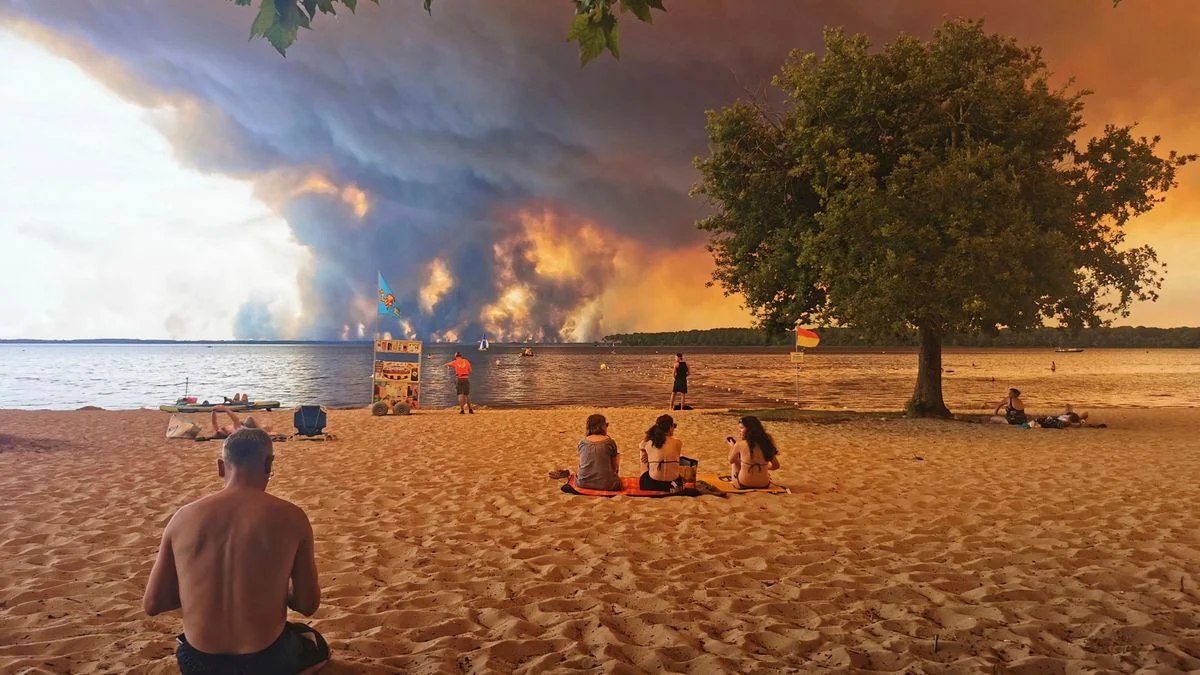
The heat is, undeniably, the catalyst. As the SPIEGEL forest fire monitor consistently shows, the Mediterranean basin is increasingly plagued by severe drought and devastating wildfires. For the average traveler, the prospect of spending a vacation in an environment where air quality is poor and outdoor activity is limited by heat exhaustion is unappealing.
However, the tourism boards are careful to frame the Black Forest not just as a "cold alternative," but as a high-quality cultural destination. They emphasize the traditional appeal of the region: the iconic Black Forest farms, the architectural majesty of the St. Blasien Cathedral, and the dense, hikeable trail networks that offer a stark, green contrast to the arid landscapes of the South.
Official Responses and Strategic Pivots
The regional tourism authorities have been quick to capitalize on this migration. Recognizing the trend, the Schwarzwald Tourismus GmbH launched a targeted "Coolcation" campaign in Spain last year. This campaign was not merely about advertising the region; it was about branding the Black Forest as a sophisticated destination for those fleeing the climate crisis.

"We have seen an increase in the visibility of our region in Spanish and Italian media," noted a representative from the Hochschwarzwald Tourismus GmbH. Influencers and travel writers from the South are now regularly highlighting the virtues of the German mountains, effectively creating a new "cool" factor. By integrating into the media landscape of Southern Europe, the Black Forest is positioning itself as a permanent fixture on the European summer map.
Implications: The Cultural and Economic Confluence
This shift brings with it complex implications. Economically, the infusion of high-spending Southern European tourists is a boon for the local hospitality sector, which has faced labor shortages and inflationary pressures.
However, there is an inherent tension in the marketing narrative. While tourism boards laud the "cultural exchange," there remains a healthy skepticism regarding the culinary and lifestyle adjustments. Is it realistic to expect an Italian tourist, accustomed to the world-class gastronomy of their homeland, to return home and rave about the regional cuisine of Hinterzarten?
Perhaps not. Yet, this misses the point of the modern "Coolcation." The value proposition of the Black Forest today is not that it offers a better version of Southern European culture, but that it offers a viable alternative to the stress of an overheated environment. It is a trade-off: the loss of the Mediterranean beach for the gain of breathable air, a cool breeze, and a forest canopy that stays green through August.
The Future of European Tourism
The "Great Northern Migration" is a micro-reflection of a macro-problem. As the Earth warms, the traditional Mediterranean holiday model—long considered the gold standard of European leisure—is facing an existential crisis. If current projections hold, the "cool" regions of Central and Northern Europe will continue to see increased pressure from tourists seeking climate refuge.
This presents a challenge for the Black Forest. To sustain this influx, the region must balance the economic benefits of tourism with the environmental necessity of preserving the very nature that attracts these visitors. Over-tourism in fragile forest ecosystems is a real risk, and local authorities will need to manage foot traffic and infrastructure development with unprecedented care.
Furthermore, the rise of the "Coolcation" signals a fundamental change in how Europeans perceive their continent. The borders between the "sun-belt" and the "cool-belt" are blurring. As residents of the South adapt to the heat, the residents of the Black Forest must adapt to a more diverse, international, and climate-conscious demographic.
In conclusion, the rise of Southern European tourism in the Black Forest is more than just a passing trend. It is a tangible response to the changing climate, a testament to the adaptability of the tourism industry, and a new chapter in the history of European travel. Whether these visitors eventually develop a genuine, lasting affinity for local traditions like cuckoo clocks and Black Forest gateau remains to be seen. But for now, the pine trees of Germany are providing exactly what the Mediterranean can no longer guarantee: a summer that feels like a summer, rather than an ordeal.