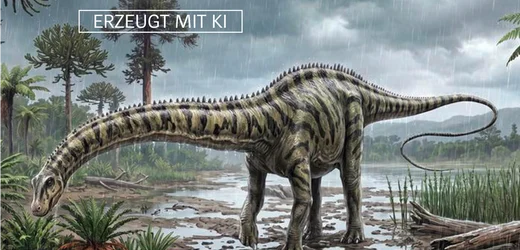
For over a century, the Diplodocus has stood as the quintessential icon of the Jurassic world. With its impossibly long neck, whip-like tail, and massive, columnar legs, this sauropod has been a staple of natural history museums and a focal point of North American paleontological research since its initial discovery in 1877. However, the geographic narrative of this prehistoric titan is currently undergoing a radical revision.
A groundbreaking study published in the Journal of Vertebrate Paleontology has provided the first definitive evidence that these iconic long-necked giants once roamed the landscape of Europe. Researchers from the Teruel-Dinópolis Paleontological Foundation in Spain have unveiled fossilized remains that challenge the long-held assumption that the Diplodocus was exclusively a North American resident.
Main Facts: A Discovery in El Castellar
The evidence, unearthed from the sediment-rich layers of El Castellar in the province of Teruel, eastern Spain, consists of 150-million-year-old fossils. The team, led by a group of dedicated paleontologists, successfully recovered 14 caudal (tail) vertebrae and several "chevron" bones—specialized bones located on the underside of the tail vertebrae that provided structural support and protection for the animal’s blood vessels.
This discovery is not merely a regional find; it is a global paleontological event. As Sergio Sánchez-Fenollosa, one of the three primary authors of the study, noted in an interview with Reuters, this marks the first time the genus Diplodocus has been scientifically confirmed outside of North America. The implications of this finding are profound, forcing a re-evaluation of how dinosaur species distributed themselves across the globe during the Late Jurassic period.
Chronology of a Jurassic Giant
To understand the significance of this find, one must look at the timeline of the Diplodocus. The genus was first identified in 1877 from fossils discovered in the Morrison Formation of Wyoming, USA. Throughout the 20th century, the Diplodocus became the "gold standard" for our understanding of sauropod anatomy, characterized by its immense size—often reaching lengths of 25 meters (approximately 82 feet)—and its specialized feeding adaptations.
The timeline of the Spanish specimen is equally compelling. Dated to approximately 150 million years ago, the remains coincide with the peak of the Late Jurassic epoch. During this time, the configuration of the Earth’s continents was significantly different from the modern map. The supercontinent Pangea had long since begun to fracture into Laurasia and Gondwana, but the Tethys Ocean and various shallow seaways created complex environments that allowed for unique migration patterns.
For decades, the consensus among paleontologists was that the Diplodocus lineage was restricted to the North American continent. The discovery in Teruel suggests that there were periods during the Jurassic where land bridges or transient corridors allowed these gargantuan herbivores to traverse from the Americas to what is now the Iberian Peninsula.
Supporting Data: Anatomical Precision
The methodology behind the Teruel discovery highlights the rigor of modern paleontology. The identification of the Diplodocus remains was not based on guesswork but on the precise morphological analysis of the caudal vertebrae. The "chevrons," or haemal arches, found in El Castellar bear the distinct structural hallmarks of the Diplodocus genus.
The estimated length of the specimen—roughly 25 meters—aligns perfectly with the dimensions of its North American counterparts. This size consistency suggests that the European population was not a dwarfed or isolated sub-species, but rather a successful, fully-developed branch of the genus that thrived in the lush, river-delta environments of ancient Spain.
The site of El Castellar itself is becoming a hotspot for sauropod research. This discovery joins a rapidly expanding list of giant sauropods identified in the region, which has become a focal point for understanding European Jurassic biodiversity. The stratigraphic integrity of the site ensures that these fossils have remained largely undisturbed for 150 million years, providing a clear window into the ecosystem of the past.

Official Responses and Scientific Context
The publication in the Journal of Vertebrate Paleontology has been met with excitement and cautious validation from the broader scientific community. Experts note that while the discovery is surprising, it is not entirely inconsistent with recent theories regarding the connectivity of Jurassic ecosystems.
Dr. Sánchez-Fenollosa and his colleagues have been praised for their meticulous documentation. In their report, they emphasize that the discovery validates the theory that the Diplodocus was more globally distributed than previously thought. The presence of these fossils in Spain suggests that during the Late Jurassic, there may have been a more fluid exchange of fauna between the western and eastern portions of the northern landmasses than previously reflected in the fossil record.
"Finding a Diplodocus in Spain is akin to finding a North American bison in the middle of a European forest," noted one independent researcher. "It forces us to rethink the migration barriers we assumed were impenetrable 150 million years ago."
Implications: Rewriting the Paleobiogeography
The implications of this discovery extend far beyond the classification of a single genus. It provides a new framework for analyzing the paleobiogeography of the Jurassic. If Diplodocus could migrate to Europe, it raises the question: what other North American species might be hiding in European sediment?
1. Reassessing Migration Corridors
The existence of this dinosaur in Spain suggests the presence of transient land bridges. Researchers are now looking at paleogeographic maps of the Jurassic with renewed focus, attempting to identify the exact pathways these creatures might have used to traverse thousands of miles of changing terrain.
2. Environmental Adaptation
The fact that Diplodocus survived in both the Wyoming environment and the Iberian environment suggests a high level of environmental plasticity. These animals were clearly capable of adapting to diverse vegetation and climate zones, which explains their success as one of the longest-lived and most successful sauropod lineages in the history of the Earth.
3. The Future of Spanish Paleontology
The Teruel region is now firmly established as a premier destination for dinosaur research. With the success of the Teruel-Dinópolis Foundation in identifying this specimen, funding and international interest in the region are expected to grow. This could lead to a new wave of excavations, potentially uncovering further links between the dinosaur populations of North America and Europe.
Conclusion: A Living Legacy
The Diplodocus has always been a symbol of the sheer scale of the dinosaur age. By confirming its presence in Europe, researchers have effectively expanded the horizons of the Jurassic world. We are no longer looking at a story of isolated continental development, but a story of global giants that traversed a planet vastly different from our own.
As the scientific community continues to analyze the Teruel fossils, one thing is certain: the history of the Diplodocus is far from complete. This discovery serves as a humbling reminder that in the study of paleontology, our current knowledge is only a snapshot in time. Every new bone uncovered in the sediment of El Castellar is a piece of a massive, 150-million-year-old puzzle that continues to be solved, one vertebra at a time. The, Diplodocus, once the pride of the American West, has now claimed its rightful place in the annals of European prehistory, forever altering our understanding of the Jurassic giants that ruled the earth.