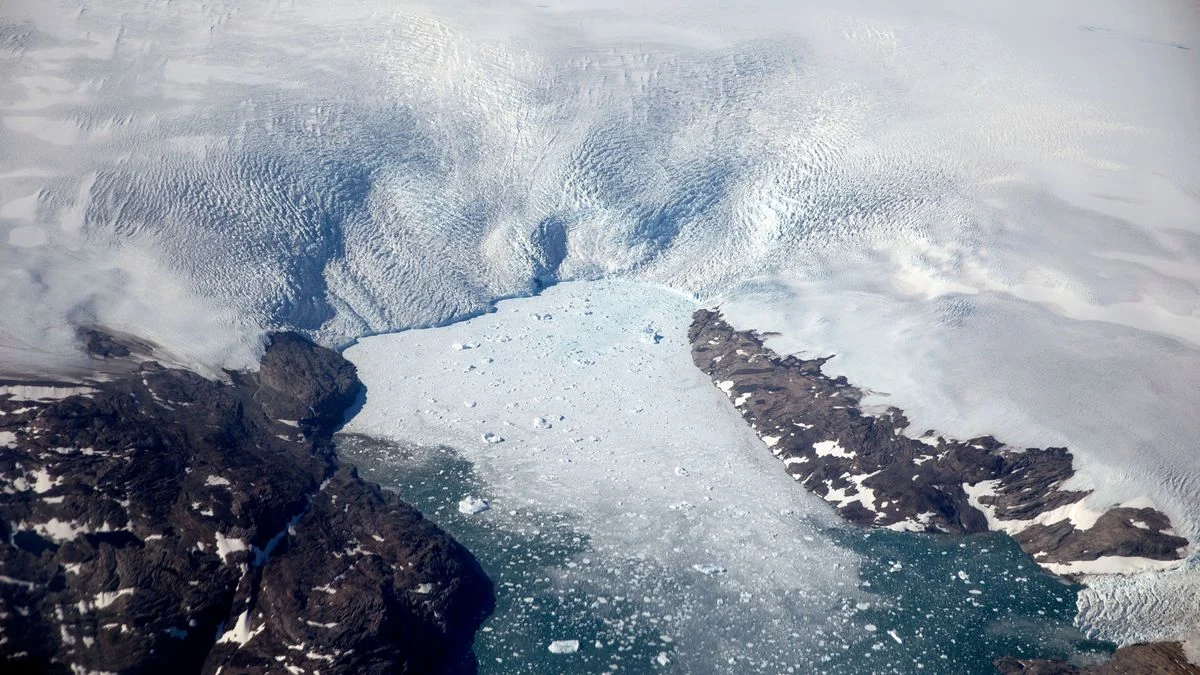
The world’s two largest reservoirs of frozen water—the ice sheets of Greenland and Antarctica—are undergoing a transformation of historic proportions. In a sobering report published in the journal Scientific Data, a research team associated with the Ice Sheet Mass Balance Intercomparison Exercise (IMBIE) has revealed that these polar titans have shed more than 11 trillion tons of ice over the past 45 years. This massive loss, recorded between 1979 and 2023, has contributed to a global sea-level rise of 3.14 centimeters, a figure that, while seemingly modest in isolation, masks a growing existential threat to millions of people living in coastal communities.
The Magnitude of Loss: A Chronology of Decline
To understand the scale of this environmental shift, the IMBIE team synthesized data from 27 different satellite missions, aggregating 42 individual surveys to create a consistent, multi-decadal narrative. The findings paint a picture of a planet whose cryosphere is struggling to maintain equilibrium.
The 1980s: The Baseline
In the 1980s, the ice loss was significant but relatively stable by modern standards. Greenland lost approximately 60 billion tons of ice annually, while Antarctica shed roughly 48 billion tons per year. During this decade, the global community was only beginning to fully grasp the mechanisms of anthropogenic climate change, and the polar regions were largely viewed as static, immutable features of the global climate system.
The 1990s and 2000s: The Acceleration
As the 1990s progressed, the rate of depletion began to climb. The cooling and warming cycles that had historically regulated ice accumulation were disrupted by rising atmospheric and ocean temperatures. By the 2010s—a decade characterized by record-breaking heatwaves and anomalous weather patterns—the situation had deteriorated dramatically. Greenland’s annual loss spiked to roughly 264 billion tons, while Antarctica saw its annual contribution to ice loss climb to 202 billion tons.
2020–2023: A Temporary Lull or a False Signal?
The most recent data from 2020 to 2023 indicates a slight slowing in the rate of ice loss. However, scientists are quick to caution against optimism. This deceleration is not indicative of a reversal of the long-term trend, nor does it suggest that the ice sheets have reached a state of recovery. Rather, it is viewed as a statistical fluctuation within a broader, accelerating trajectory of decline. The fundamental imbalance—where the rate of ice outflow far exceeds the rate of snow accumulation—remains firmly in place.
The Hidden Engine: Dynamic Ice Loss vs. Surface Melting
A critical finding in the IMBIE report challenges the conventional wisdom that ice sheets primarily shrink because they melt from the sun’s heat hitting their surface. According to Inès Otosaka of Northumbria University, a co-author of the study, more than four-fifths of the ice loss observed over the last four decades was driven by "dynamic" processes.
Faster-Flowing Glaciers
The study highlights that the ice is not merely melting in place; it is accelerating toward the ocean. "More than four-fifths of the ice loss was discharged into the ocean by faster-flowing glaciers and was not melted at the surface," explains Otosaka. This indicates that the primary driver of current ice loss is the "dynamic response" of the ice sheets to a warming ocean.
In Antarctica specifically, the entire loss of mass is attributed to this acceleration of glacier flow. As warmer ocean waters circulate beneath the floating ice shelves—the "tongues" of ice that hold back the massive glaciers on land—they erode these structures from below. Once these supporting shelves are weakened or collapse, the land-based glaciers behind them lose their resistance, allowing them to surge into the sea at unprecedented speeds.
Supporting Data: An Interdisciplinary Effort
The IMBIE report stands as a landmark in climate science due to the sheer volume of data utilized. By harmonizing information from 27 satellite missions, the research team was able to reconcile discrepancies that have historically plagued climate modeling.
The data confirms that:
- Greenland’s vulnerability: The northern island is particularly susceptible to surface melting during extreme heat events, which have become more frequent.
- Antarctica’s complexity: The southern continent, particularly the West Antarctic Ice Sheet, is showing signs of instability linked to the "grounding line" retreat, where the ice meets the bedrock below sea level.
- Global Correlation: The synchronous acceleration of mass loss in both poles confirms that the forcing mechanism is global in nature, tied directly to the increase in greenhouse gas concentrations and the resulting thermal energy trapped within the Earth’s oceans.
Official Responses and Scientific Context
The European Space Agency (ESA), which provided essential support for the research, notes that while Greenland and Antarctica account for approximately 25% of the total rise in sea levels, they are not the sole contributors. The remaining 75% of sea-level rise is attributed to the melting of mountain glaciers—which are also in rapid retreat—and the thermal expansion of the oceans. As water warms, it occupies a greater volume, a physical phenomenon known as thermal expansion, which is a major contributor to the current rise in global sea levels.
Andrew Shepherd, also of Northumbria University, emphasizes the human cost of these shifts. "Three centimeters of sea-level rise may sound like a small number, but it exposes an additional six to nine million people to the risks of flooding and coastal erosion," Shepherd notes. These figures highlight the "compounding effect" of even small rises in sea level, which significantly amplify the reach of storm surges and high-tide flooding in low-lying regions.
Global Implications: A Future at the Water’s Edge
The implications of this research extend far beyond the polar circles. The findings serve as a clarion call for coastal urban planning, disaster preparedness, and international climate policy.
The Human Cost
As the ice sheets continue to contribute to the global sea-level rise, the risk profile for coastal megacities changes. From the low-lying deltas of Southeast Asia to the metropolitan coastal hubs of the United States and Europe, the threat of "permanent inundation" is transitioning from a theoretical future concern to a current reality. The displacement of millions, potential damage to infrastructure, and the loss of arable land represent an economic and social crisis that will define the coming century.
The Unknown Depths
Adding to the urgency are recent breakthroughs in data collection. Because the world’s largest fjord systems—specifically in Greenland—have been notoriously difficult to study, scientists have begun deploying innovative, non-traditional methods. For instance, sensors attached to narwhals have provided researchers with data from depths exceeding 1,500 meters. These data points have revealed that deep, warm currents are penetrating further into these fjords than previously assumed, providing a direct, high-energy conduit for melting the base of the glaciers.
Conclusion: The Need for Sustained Vigilance
The message from the IMBIE report is clear: the ice sheets are in a state of sustained, long-term imbalance. While the atmospheric and oceanic systems are complex, the evidence provided by 45 years of satellite surveillance leaves little room for doubt. The "dynamic response" of the ice sheets means that once a tipping point is reached, the process of glacial acceleration may become difficult, if not impossible, to halt.
As nations continue to negotiate climate targets, the 11 trillion tons of lost ice stand as a silent, powerful testament to the necessity of rapid decarbonization. The glaciers are not just melting; they are shifting, accelerating, and rewriting the geography of our planet. For the six to nine million people already affected by this change, and the countless more who will follow, the data from Scientific Data is not merely a collection of statistics—it is a map of a changing world that requires urgent and decisive action.