

In the rapidly escalating arms race for artificial intelligence hardware, memory bandwidth has emerged as the most critical bottleneck. As AI models grow in complexity and parameter count, the ability to shuttle data between high-performance GPUs and memory becomes the defining factor in training efficiency and inference speed.
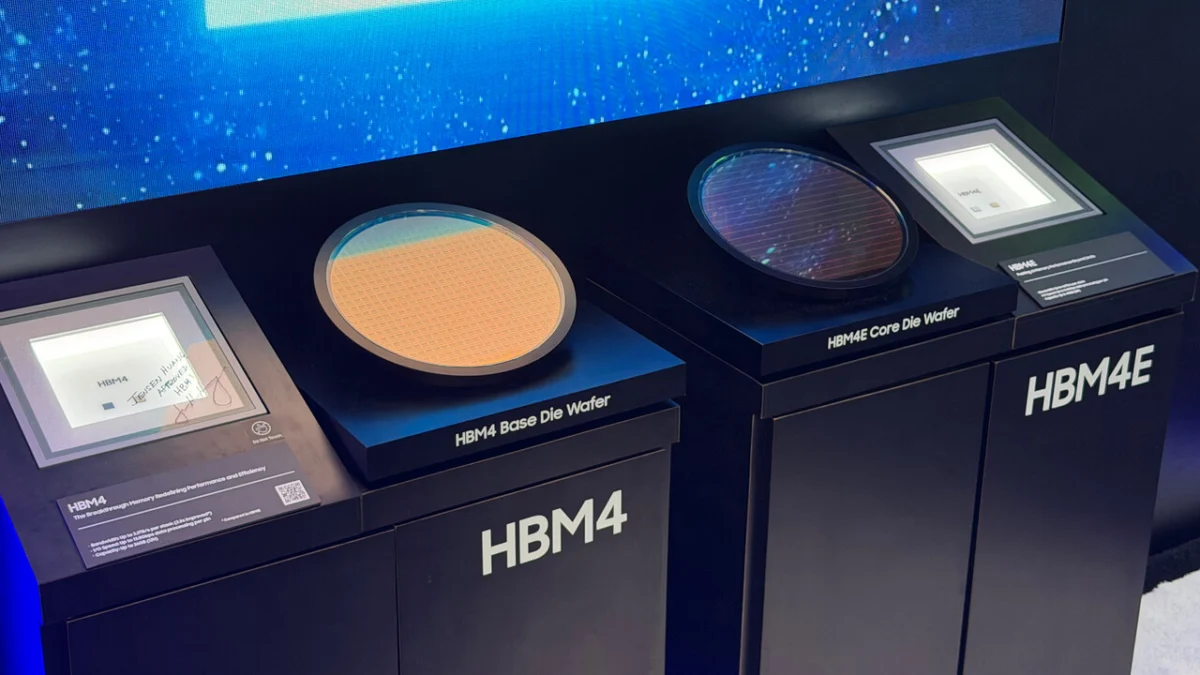
In a significant breakthrough that could alter the competitive landscape, South Korean technology giant Samsung Electronics has reportedly successfully passed critical qualification tests for its 12-layer HBM4E memory with Nvidia and several major hyperscale data center providers. This development, first reported by the Korean outlet Hankyung, signals a potential pivot in Samsung’s fortunes as it fights to regain its status as the premier supplier for the next generation of AI-accelerated computing.
The Strategic Importance of HBM4E Qualification
The qualification process is the "gatekeeper" of the semiconductor industry. Before a memory vendor can supply components for high-end AI accelerators like Nvidia’s upcoming architectures, the silicon must undergo rigorous stress testing. Clients examine not only the theoretical bandwidth but also the real-world thermal performance, power efficiency, and long-term reliability under the extreme heat generated by massive GPU clusters.
For Samsung, passing this hurdle is more than a routine quality check—it is a vital recovery. While the company dominated the early memory market, it faced significant technical setbacks with its HBM3e offerings, which struggled to meet Nvidia’s stringent performance and thermal requirements. These issues forced a time-consuming redesign, allowing rivals like SK Hynix to capture the lion’s share of the market for current-generation AI chips.
By successfully validating its 12-layer HBM4E, Samsung is signaling to the industry that it has overcome the yield and integration challenges that plagued its previous generation. While neither Samsung nor Nvidia has officially confirmed the conclusion of supply agreements, the successful completion of these tests by late September marks a major milestone in the commercialization roadmap for next-generation AI memory.
A Chronology of the HBM4E Development Cycle
To understand the magnitude of this news, one must look at the compressed development cycle of the HBM (High Bandwidth Memory) sector:
- May 2024: Samsung marks its aggressive intent by becoming the first major manufacturer to distribute test samples of its HBM4E memory to primary partners. This move was intended to showcase the company’s 1c-class 10nm DRAM process and its advanced 4nm logic die integration.
- Late June 2024: Shortly after Samsung’s lead, rival SK Hynix joins the fray, shipping its own HBM4E samples. This confirmed the industry-wide push to transition from HBM3e to the HBM4/4E standard to support the upcoming Vera Rubin and Blackwell Ultra architectures.
- Late September 2024: According to industry reports, Samsung concludes the formal qualification testing phase with Nvidia and key cloud service providers. This period is critical, as it involves stress-testing the memory’s ability to maintain high data rates without throttling under constant load.
- Future Outlook (2025-2026): With the qualification phase largely cleared, the industry now turns its attention to mass production timelines. While the specific start date for high-volume shipments remains confidential, the successful validation sets the stage for integration into next-generation GPU platforms.
Technical Specifications: The Next Tier of Throughput
The leap from HBM3e to HBM4E is not merely an incremental upgrade; it is a fundamental redesign of how memory is stacked and communicated with the processor.
Bandwidth and Performance
Samsung’s 12-Hi HBM4E stack provides a staggering 48GB of capacity per unit. The core advantage, however, lies in its throughput. Operating at a stable 14 Gbit/s per pin, the stack achieves a total bandwidth of 3.6 TB/s. Most impressively, the architecture is designed to scale up to 16 Gbit/s per pin, which would push the total bandwidth to approximately 4.0 TB/s per stack.
Architectural Innovations
Samsung has achieved this performance boost—roughly 20% over the previous HBM4 generation—by leveraging a unique hybrid manufacturing approach. The HBM4E combines:
- 1c-class DRAM: The sixth generation of Samsung’s 10nm-class DRAM, which offers higher density and lower power consumption.
- 4nm Logic Die: A custom-built 4nm controller die manufactured within Samsung’s own Foundry division. By using 4nm logic, Samsung reduces the power overhead required for the memory’s high-speed interface, directly addressing the thermal issues that hampered their previous HBM3e modules.
This vertical integration—designing both the DRAM and the logic controller in-house—is intended to provide a "total solution" that simplifies the implementation for Nvidia, reducing the complexity of the interposer and the memory controller logic on the GPU package.
Official Responses and Market Silence
In the high-stakes world of semiconductor supply chains, silence is often a form of confirmation. When queried by Hankyung regarding the successful qualification, Samsung declined to provide an official statement. This is standard operating procedure for the company, as it adheres to non-disclosure agreements with major clients like Nvidia.
Analysts suggest that this reticence is also a calculated move to manage market expectations. By not publicly announcing the contract, Samsung maintains flexibility regarding pricing negotiations and production ramp-up schedules. Conversely, Nvidia maintains its leverage by keeping its supply chain multi-vendor, playing Samsung, SK Hynix, and potentially Micron against one another to drive down costs and ensure consistent supply.
Broader Implications for the AI Hardware Ecosystem
The Competitive Triad
The success of Samsung’s HBM4E qualification reshapes the rivalry between the "Big Three" memory makers.
- SK Hynix: Currently the market leader in high-end HBM, they set the pace for the industry. Samsung’s resurgence forces them to accelerate their own HBM4 production cycles.
- Micron: As the third major player, Micron is attempting to catch up by focusing on extreme efficiency and yield rates.
- Samsung: By successfully qualifying their latest tech, Samsung has effectively neutralized the "reliability" narrative that critics used against them throughout 2023 and 2024.
The Impact on Nvidia’s Roadmap
For Nvidia, the primary beneficiary is the stability of its supply chain. The demand for AI chips is currently so high that "supply" is the single biggest constraint on Nvidia’s revenue. If Samsung can provide a consistent, high-yield supply of HBM4E, it will allow Nvidia to increase the total number of Blackwell and Vera Rubin GPUs it brings to market.
The Shift to Customization
The transition to HBM4 and HBM4E is notable for the shift toward "custom" HBM. Unlike standard DDR5 RAM, which is commoditized, HBM4E requires deep collaboration between the GPU designer (Nvidia) and the memory manufacturer (Samsung). This makes the partnership significantly stickier; once a design is qualified for a specific architecture, the cost and time required to switch to a different supplier are prohibitive.
Conclusion: A Turning Point for the Semiconductor Industry
The successful qualification of Samsung’s HBM4E is a critical inflection point. It demonstrates that Samsung has successfully navigated the complexities of 1c-class DRAM and 4nm logic integration, effectively bridging the performance gap that existed in the previous generation.
As we look toward 2026, the focus will shift from "can they make it?" to "how many can they make?" The massive scale of AI data center build-outs by companies like Microsoft, Meta, and Google requires an unprecedented supply of high-bandwidth memory. If Samsung can leverage this qualification to achieve high-volume production, they will not only reclaim their prestige but also play a foundational role in the next era of AI development.
For the investor and the industry observer, the message is clear: the battle for the "brain" of the AI computer—the memory subsystem—is far from over, and Samsung is once again a primary contender for the crown. The next eighteen months will determine whether this qualification translates into sustained market dominance or if it remains a temporary reprieve in a fiercely competitive landscape.

























