LONDON/MUNICH – In the shadow of the Victorian-era clock tower at King’s Cross station, the rhythmic clatter of steam trains has been replaced by the silent hum of high-end artificial intelligence. This corner of North London, once a grim industrial wasteland of coal barges and soot-stained warehouses, has undergone a metamorphosis so radical that it now stands as the global epicenter for the Fourth Industrial Revolution.
Twenty years ago, urban developer Roger Madelin looked upon the derelict sprawl of King’s Cross and saw only "decay, neglect, criminality, and filth." Today, it is a high-tech ecosystem where the future of mobility is being coded in real-time. Amidst the glass-fronted offices of AI titans like Google’s DeepMind, OpenAI, and Anthropic, a quiet revolution is taking place in an unassuming side street: Tileyard Road.
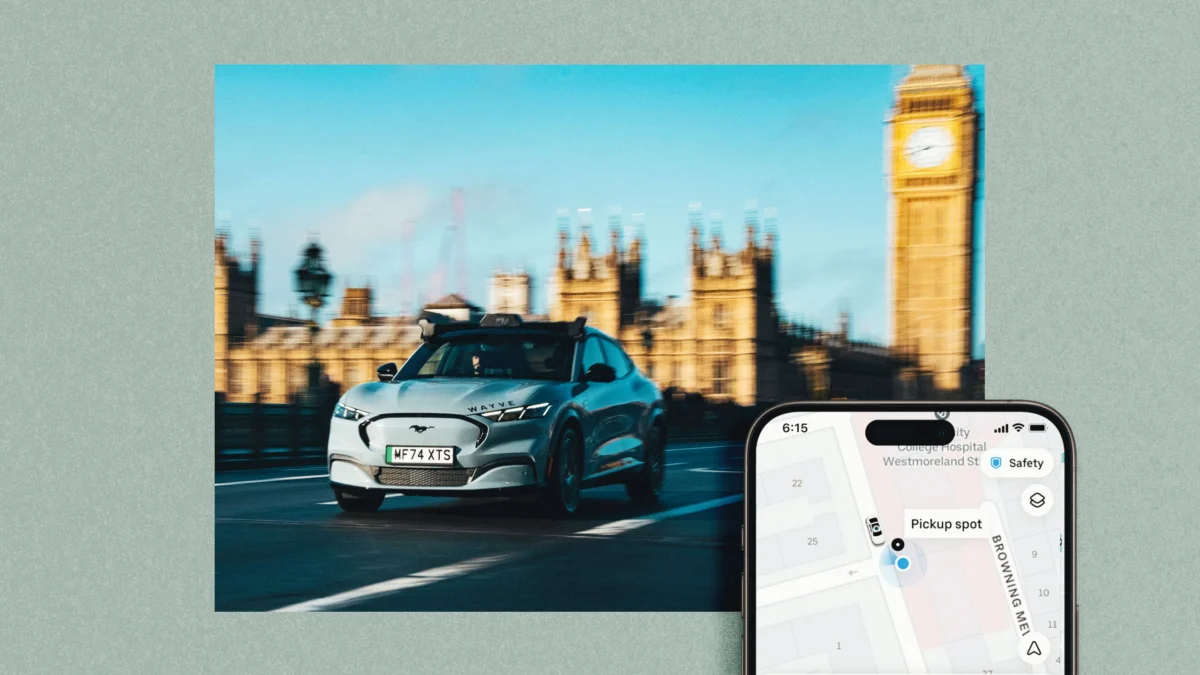
Here, inside a nondescript, fenced-in courtyard, sits the vanguard of autonomous transport: a fleet of Ford Mustang Mach-Es. To the casual observer, they are merely electric SUVs with a slim roof rack. To the engineers at Wayve, the British startup pioneering these vehicles, they are the key to conquering the most complex urban driving environment on the planet.
The Evolution of King’s Cross: From Coal to Code
To understand the scale of the transformation at King’s Cross, one must look at the site’s history. In the 19th century, the Regent’s Canal was the circulatory system of Britain’s industrial might. Coal arrived via canal boats to be redistributed by steam locomotive or horse-drawn carriage to the factories that fueled the Empire. It was a place of raw, physical labor.
By the turn of the millennium, that era had vanished, leaving behind a scarred urban landscape. The reclamation of King’s Cross by developers like Argent, led by visionaries like Madelin, shifted the focus from heavy machinery to intellectual capital. The "Knowledge Quarter," as it is now known, has attracted billions in investment, turning the area into a dense cluster of life sciences, creative industries, and—most crucially—the world’s most concentrated hub for Artificial Intelligence research.
Chronology of a Disruption: The Rise of Wayve
The story of Wayve is the story of the transition from rule-based programming to "end-to-end" deep learning in robotics.
- 2017: Wayve is founded by Amar Shah and Alex Kendall. Departing from the industry standard of using high-definition maps and rigid "if-then" programming, the founders bet on "AV 2.0"—a machine learning-first approach.
- 2019: The company gains global attention by becoming one of the first to demonstrate a car learning to drive using only a single camera and a reinforcement learning algorithm.
- 2022: Wayve completes a $200 million Series B funding round, signaling the transition from academic experimentation to commercial viability.
- 2023-2024: The company scales its fleet of Ford Mustang Mach-Es, testing in the chaotic, narrow, and unpredictable streets of Central London, often referred to by transport experts as the "final boss" of autonomous driving.
Supporting Data: Why London is the Ultimate Test
For decades, the consensus in the autonomous vehicle (AV) industry was that "easy" environments were the prerequisite for success. This led to the proliferation of robotaxis in the flat, wide, sun-drenched, and grid-planned streets of Phoenix and San Francisco.
London, however, offers a different challenge. The data reveals why the UK capital is the ultimate proving ground:
- Complexity of Geometry: London’s streets are medieval in origin. Unlike the 90-degree intersections of American suburbs, London features roundabouts, narrow alleys, and asymmetrical junctions that require nuanced spatial reasoning.
- Traffic Density: London’s "Black Cabs" and buses create a constant flow of high-intensity interaction. An AV in London must anticipate the aggressive cut-ins and maneuvers of human drivers who operate with a distinct "London style."
- Weather and Lighting: With constant rain, fog, and low-light conditions, the sensors (LiDAR, radar, and cameras) are subjected to the worst-case scenarios for visibility.
Wayve’s approach is fundamentally different from competitors like Waymo. By using a "foundation model" for driving, the car doesn’t just recognize a stop sign; it understands the intent of other road users through visual context, much like a human driver does.
Official Perspectives: The Regulatory and Corporate Outlook
The British government has positioned the UK as a primary destination for AI-driven transport, recently introducing the Automated Vehicles (AV) Act. This legislation provides a clear framework for liability, ensuring that if a robotaxi is in control, the manufacturer—not the passenger—bears legal responsibility.
"We are not just building a car; we are building an intelligent agent," says a spokesperson from the Wayve development team. "The goal is to create a vehicle that can navigate a chaotic London street as confidently as a local driver."
However, the transition is not without its skeptics. Road safety advocacy groups have raised concerns about the "black box" nature of deep learning. When an AI makes a split-second decision in a crowded intersection, how do we audit that decision? Wayve argues that their massive simulation data sets—where they run millions of "virtual miles" daily—provide a level of safety that far exceeds the human capacity for error.
Implications: The Road Ahead for Munich and Beyond
The experiment in Tileyard Road is not an isolated incident; it is the blueprint for global mobility. Munich, with its deep-rooted automotive heritage, is the next logical frontier. As BMW, Audi, and Mercedes-Benz grapple with the transition to software-defined vehicles, the lessons learned in London are already being exported.
The Shift to "AV 2.0"
The implication of Wayve’s success is a potential collapse of the "HD Map" industry. Currently, companies like Waymo rely on mapping every inch of a city to centimeter precision. Wayve’s model allows for "generalized driving," meaning a car trained in London could potentially be dropped into Munich or Tokyo and, with minimal localized fine-tuning, navigate the streets immediately.
Urban Planning Redefined
The long-term implication for cities like Munich is a reimagining of urban space. If autonomous fleets can optimize traffic flow and reduce the need for inner-city parking, the massive surface-level car parks currently scarring urban centers could be repurposed for housing, green spaces, or pedestrianized zones.
The Human Element
The most significant hurdle remains public trust. While the technology is advancing at an exponential rate, the psychological barrier of "handing over the wheel" persists. The Handelsblatt test drive, which involved navigating the busy A406 and the tighter backstreets of Islington, proved that the vehicle’s decision-making is smoother than many human drivers, yet the sensation of being a passenger in a car without a driver remains a surreal, almost unsettling experience.
Conclusion: The Final Mile
As the sun sets over King’s Cross, the six Ford Mustang Mach-Es are plugged into their charging stations, their data uploaded to the cloud for the next round of training. The juxtaposition is striking: the grand Victorian ironwork of the station, built to power the steam age, now houses the servers that are powering the age of artificial intelligence.
The robotaxi revolution is no longer a science fiction pipe dream; it is an engineering reality currently navigating the complex, rain-slicked streets of London. For Munich and other major European hubs, the question is no longer if these vehicles will arrive, but how quickly the infrastructure and societal norms can adapt to accommodate them.
The transition from the coal-fired locomotives of the 19th century to the AI-driven Mustangs of the 21st is complete. The future of the city is not just in its buildings, but in the intelligence of the machines that weave through them. The "final mile" of the autonomous journey is, fittingly, being driven on the oldest, most complex streets in the world.