BERLIN/MAGDEBURG – Germany’s political landscape is reeling following the unprecedented election of an Alternative for Germany (AfD) politician, Tobias Rausch, as the State Parliament President in Saxony-Anhalt. The landmark vote, which saw an AfD member assume one of the highest constitutional offices at the state level for the first time in German history, has ignited a fierce debate and drawn strong condemnation from across the mainstream political spectrum, most notably from Chancellor Friedrich Merz (CDU). Merz unequivocally labelled the development as a "historical incision" and a dangerous incursion of extremism into the core of democratic institutions, sparking urgent questions about the integrity of Germany’s "firewall" against the far-right.
The election, conducted by secret ballot, has not only elevated a figure from a party widely classified as far-right and, in some parts, extremist by domestic intelligence agencies, but also cast a shadow of suspicion over the voting behaviour of other parties, particularly Merz’s own Christian Democratic Union (CDU). The outcome has prompted an immediate and visceral reaction, with coalition partners demanding accountability and raising alarms about the state of democratic resilience in Germany.
Main Facts: A Breakthrough for the Far-Right
On Tuesday, Tobias Rausch of the AfD was elected as the Landtag (state parliament) President in Saxony-Anhalt, marking a watershed moment in German post-war politics. This unprecedented event signifies the first time a politician from the AfD has occupied such a senior constitutional position at the state level. The AfD, which has seen a significant surge in support, particularly in Germany’s eastern states, has long been a pariah among established parties due to its anti-immigrant rhetoric, Euroscepticism, and increasingly radical positions.
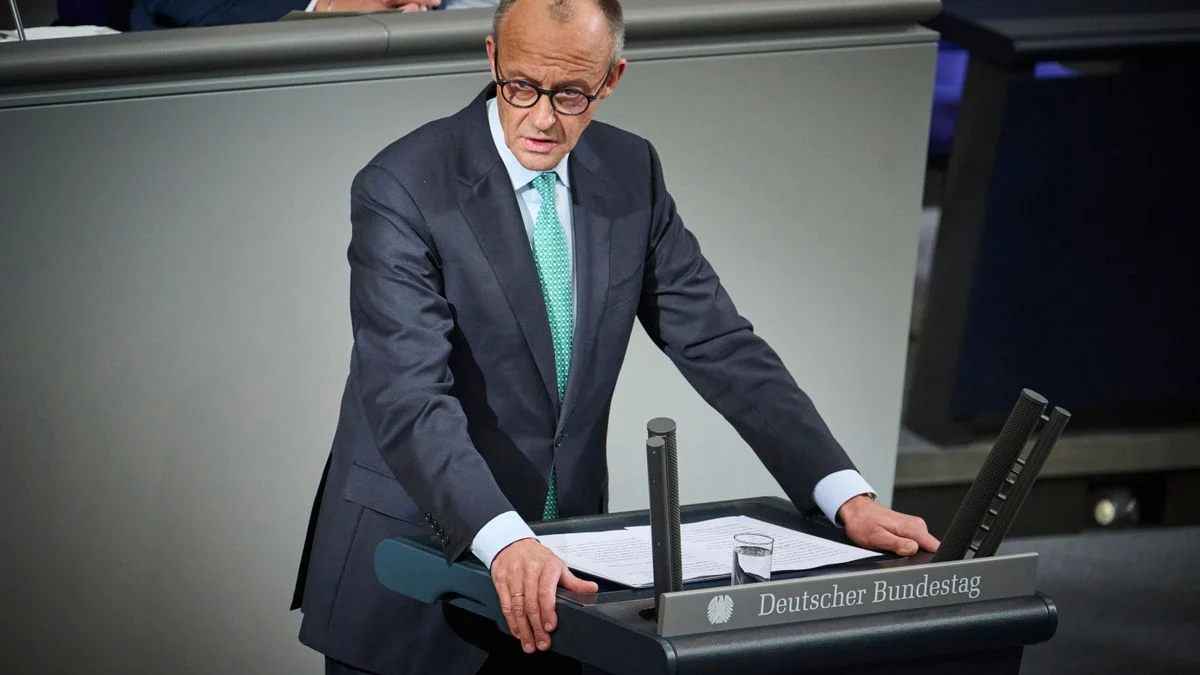
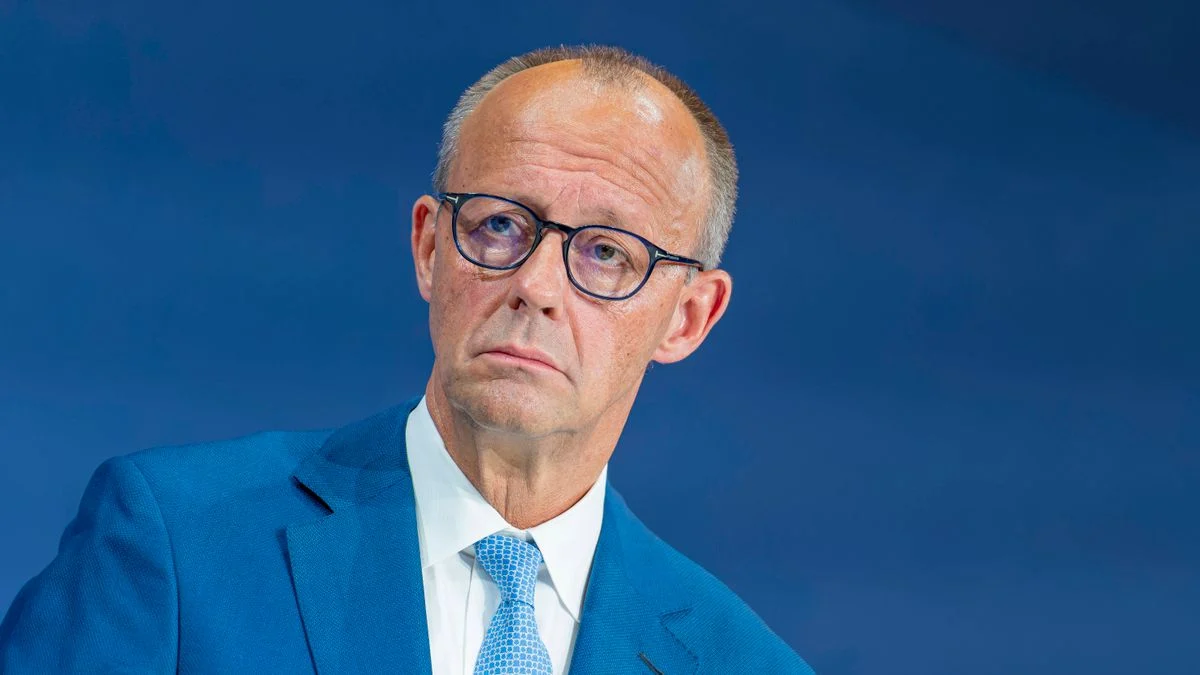
Chancellor Friedrich Merz, leader of the CDU, responded swiftly and with palpable alarm to the news. Speaking at the "Deutschland-Gipfel" (Germany Summit) hosted by "Handelsblatt" and "WirtschaftsWoche," Merz declared, "We see that there are forces in this country that want to invalidate the DNA of our democracy, of our system. This extremism is penetrating our parliaments with force." He described the election results for the AfD and the newly formed Bündnis Sahra Wagenknecht (BSW) in Saxony-Anhalt as "a historical incision" that would inevitably have consequences, as evidenced by Tuesday’s vote.
The secret ballot saw Rausch secure 48 "yes" votes, against 29 "no" votes and five abstentions. The combined strength of the AfD and BSW factions in the Saxony-Anhalt Landtag amounts to 44 seats. This arithmetic immediately sparked speculation that Rausch must have received at least four votes from outside these two factions, raising uncomfortable questions about potential cross-party support, particularly from the CDU.
Chronology of a Contentious Election
The path to Rausch’s election was fraught with tension and political manoeuvres. In the run-up to the vote, the political climate in Saxony-Anhalt, a state where the AfD has consistently polled strongly, was already highly charged. The state elections had demonstrated a significant shift in voter sentiment, with both the AfD and BSW gaining considerable ground, thereby altering the traditional power dynamics within the Landtag.
On the day of the election for the Landtag President, the proceedings were closely watched, not just within Saxony-Anhalt but across the entire federal republic. The AfD, sensing an opportunity to break through the established "Brandmauer" (firewall) maintained by mainstream parties, put forward Tobias Rausch as their candidate. Rausch’s nomination immediately drew condemnation from the SPD, Greens, and The Left, all of whom had publicly committed to voting against any AfD candidate for the presidency.
The CDU, facing a difficult internal dilemma, had issued a recommendation to its deputies to abstain from the vote. This stance aimed to avoid directly supporting the AfD while also signalling a reluctance to actively block a candidate from the second-largest party in the state parliament. However, the outcome of the secret ballot complicated this position significantly. With Rausch receiving 48 votes, four more than the combined strength of the AfD and BSW, the spotlight immediately turned to the CDU. If all 14 CDU deputies had followed their party’s recommendation, there should have been 14 abstentions, not five. This discrepancy fuelled intense speculation that some CDU members had defied their party’s line and cast their votes for Rausch.

Following the vote, Saxony-Anhalt’s CDU faction leader, Sven Schulze, vehemently denied that any CDU votes had gone to Rausch. However, Rausch himself claimed that his election was indeed facilitated by votes from CDU members, directly contradicting Schulze’s assertion and deepening the controversy. The conflicting statements have created an atmosphere of distrust and highlighted the deep divisions within the CDU on how to confront the rising influence of the far-right.
Supporting Data: The Political Landscape and the Breach of the Firewall
The election of an AfD Landtag President is not an isolated incident but rather a symptom of broader political shifts in Germany, particularly in the eastern states. Saxony-Anhalt has long been a stronghold for the AfD, reflecting a broader trend of voter disillusionment with established parties, economic anxieties, and concerns over immigration. The AfD has capitalized on these sentiments, positioning itself as the voice of the disaffected.
The role of a Landtag President in Germany is significant. While largely ceremonial, the office carries considerable symbolic weight. The President is responsible for conducting parliamentary sessions, representing the Landtag externally, and ensuring the smooth functioning of democratic processes. Traditionally, this role has been filled by a candidate from a mainstream democratic party, embodying neutrality and adherence to democratic values. The election of an AfD member to this post is seen by many as a legitimization of a party that often challenges core democratic principles and has been under scrutiny by the Federal Office for the Protection of the Constitution (BfV) for its extremist tendencies.
The "Brandmauer" (firewall) – the unspoken and often explicitly stated consensus among Germany’s mainstream parties to refuse any form of cooperation or legitimization of the AfD – has been a cornerstone of German post-war politics. This firewall was intended to prevent the resurgence of far-right extremism and protect democratic institutions. Rausch’s election is widely perceived as a significant breach of this firewall, raising fears that it could pave the way for further normalization of the AfD’s presence in high office.
The BSW, Bündnis Sahra Wagenknecht, a newly formed party that split from The Left, played a crucial role in Rausch’s election. The BSW, which combines left-leaning economic policies with a more restrictive stance on immigration and a critical view of Germany’s foreign policy, announced its support for Rausch. This alliance between the AfD and BSW, ideologically disparate on many fronts but united in their opposition to the mainstream, provided a significant bloc of 44 votes. The additional four votes needed for Rausch’s majority remain shrouded in the secrecy of the ballot, intensifying the political drama and the hunt for accountability within the CDU.
Official Responses: Outcry and Moral Appeals
The reaction from Germany’s political leadership has been swift, strong, and deeply concerned, highlighting the gravity with which this development is viewed.
Chancellor Friedrich Merz’s Decisive Stance:
Merz’s comments at the "Deutschland-Gipfel" were not just a condemnation but a rallying cry for democratic values. His assertion that "this extremism is penetrating our parliaments with force" underscores the perceived threat to Germany’s constitutional order. He framed the AfD and BSW’s electoral gains as a "historical incision," implying a fundamental shift in the political landscape that demands serious introspection and robust defence of democracy.
Merz specifically addressed the contentious issue of the secret ballot, acknowledging, "It was a secret ballot. We do not know from whom the AfD candidate received his votes in total." However, he quickly moved to a moral imperative, stating, "Anyone who votes for a member of a far-right party to be State Parliament President must reconcile that with their conscience." His message was clear: a vote for the AfD, regardless of the office, is a betrayal of democratic principles. He concluded with an unambiguous statement of his party’s values: "Anyone who gives their vote to the AfD is playing the game of the extremists and destroying credibility. This is certainly not compatible with the values of my party, the CDU." Merz’s strong words aim to reinforce the CDU’s "Brandmauer" policy and put pressure on any internal dissenters.
The CDU’s Internal Turmoil:
The speculation surrounding CDU votes for Rausch has plunged the party into an internal crisis. The official recommendation for CDU deputies to abstain was a clear attempt to navigate the situation without directly legitimizing the AfD. However, the discrepancy in the numbers – 5 abstentions instead of 14 – indicates a failure of party discipline or a significant number of deputies deliberately flouting the party line. Sven Schulze’s denial, immediately contradicted by Rausch, only deepened the sense of disarray. This incident highlights the ongoing struggle within the CDU, particularly in the eastern states, to maintain a consistent stance against the AfD, where some members may be tempted to appeal to AfD voters or even collaborate with them. This internal division poses a significant challenge to Merz’s leadership and the party’s future direction.

The SPD’s Outcry and Protest:
The most dramatic reaction came from the Social Democratic Party (SPD), a junior partner in the federal coalition government. On Tuesday evening, the SPD’s parliamentary group spontaneously organized a protest march through Berlin, an unusual and highly symbolic act for a ruling party. Defense Minister Boris Pistorius (SPD) delivered an impassioned speech, his voice filled with emotion and anger. He sharply criticized the voting behaviour in the Saxony-Anhalt Landtag, declaring, "This is a day of rage, this is a day of disappointment that democrats have apparently learned nothing from history and are letting history repeat itself." His words evoked the darkest chapters of German history, drawing implicit parallels to the rise of extremism in the Weimar Republic. Pistorius further stated, "Whoever allowed this to happen has violated the democracy of our great country." The protest culminated in the spontaneous singing of the German national anthem, a powerful symbol of national unity and democratic defence against extremism. The SPD’s forceful reaction underscores the deep alarm within the federal government and the coalition’s determination to resist the normalization of the AfD.
Profound Implications for German Democracy
The election of Tobias Rausch as Landtag President in Saxony-Anhalt carries profound implications for the future of German democracy, extending far beyond the borders of the state itself.
Erosion of Democratic Norms and the "Brandmauer": This event represents a significant erosion of the "Brandmauer" that has historically protected German democracy from far-right extremism. By elevating an AfD politician to such a prominent constitutional office, even at the state level, a dangerous precedent is set. It risks normalizing a party whose rhetoric and policies are often antithetical to core democratic values, thereby shifting the boundaries of what is considered acceptable in mainstream politics. This normalization can gradually desensitize the public and political actors to the dangers of extremism.
Challenges to Mainstream Parties and Political Stability: The incident exposes the deep challenges facing Germany’s established parties. The CDU, in particular, is caught in a difficult bind, struggling to maintain its "no cooperation" stance while facing internal pressure and a highly competitive political landscape in eastern Germany. The inability to fully enforce party discipline in a secret ballot highlights vulnerabilities within mainstream parties. For the SPD, Greens, and The Left, the incident serves as a stark reminder of the urgency to counter the AfD’s appeal and defend democratic institutions more vigorously. This event could further destabilize political coalitions and make government formation more complex in future state and federal elections.
The Role of Secret Ballots and Accountability: The secrecy of the ballot, while a fundamental democratic right, has created a grey area of accountability. While it protects individual deputies from pressure, it also allows for actions that contravene party lines and collective democratic consensus without immediate public consequence. The debate around this issue will likely intensify, especially concerning votes for candidates from parties deemed extremist. It raises questions about whether certain constitutional offices, which demand a clear commitment to democratic principles, should be subject to such an opaque voting process.
Precedent Setting and Future Political Dynamics: This election sets a worrying precedent. If an AfD member can assume the Landtag presidency in one state, it opens the door for similar attempts in other state parliaments where the AfD is strong. This could gradually lead to the AfD gaining more influence and positions of power across Germany, fundamentally altering the country’s political landscape. It also complicates federal politics, as the federal government and established parties must now contend with the reality of an AfD official holding a high democratic office. This will inevitably impact inter-state relations and Germany’s standing on the international stage, particularly given the country’s historical commitment to combating extremism.
Public Trust and the "Wehrhafte Demokratie": The strong reactions from figures like Merz and Pistorius reflect a deep concern for public trust in democratic institutions. When parties explicitly labelled as extremist gain such positions, it can erode public confidence in the ability of the democratic system to protect itself. The concept of "Wehrhafte Demokratie" (militant democracy), which allows the state to defend itself against those who seek to undermine its liberal democratic order, becomes more pertinent than ever. This incident will likely spark a renewed national debate on how best to strengthen Germany’s democratic resilience and combat the rising tide of political extremism.
In conclusion, the election of Tobias Rausch as State Parliament President in Saxony-Anhalt is more than just a local political event; it is a profound moment of reckoning for Germany. It has exposed vulnerabilities within the democratic "firewall," tested the resolve of mainstream parties, and ignited a crucial national conversation about the future of German democracy in the face of rising extremism. The coming months will undoubtedly see continued debate, political manoeuvring, and a heightened focus on safeguarding the core principles that have underpinned Germany’s post-war success.