The landscape of the German automotive market is undergoing a structural shift that extends far beyond the debate over internal combustion versus electric propulsion. For decades, European manufacturers—led by German industrial titans—have enjoyed a distinct competitive advantage in the realm of insurance classification. By prioritizing modular design, standardized parts, and robust service networks, they ensured that their vehicles were cost-effective to repair, translating into favorable insurance premiums for consumers.
However, a new analysis from the Allianz Center for Technology (AZT), a cornerstone of automotive safety and accident research, reveals that this critical advantage is rapidly evaporating. As Chinese manufacturers gain a foothold in the European market, they are demonstrating a steep learning curve regarding repairability and service infrastructure, while European incumbents appear to be moving in the opposite direction.
The Shrinking Gap: A Statistical Reality
The core of the issue lies in the "Type Class" (Typklasse) system managed by the German Insurance Association (GDV). These classifications determine the risk assessment of a vehicle model; generally, the higher the classification, the higher the insurance premium for the policyholder.
According to Christian Sahr, head of the AZT in Ismaning, the data paints a sobering picture for domestic manufacturers. In 2024, European vehicles held a significant lead, sitting on average three type classes lower—and thus cheaper to insure—than their Chinese counterparts. By 2026, that lead is projected to shrink to just one single type class.
The trajectory is particularly alarming for industry observers. Sahr notes that Chinese manufacturers have, on average, improved their standing by 1.5 type classes. Conversely, European manufacturers have regressed, slipping by an average of 0.5 type classes. "A first trend is clearly recognizable: the Chinese manufacturers are learning quickly," Sahr observed. "The second, very negative trend is that the European manufacturers are, on average, becoming worse."
Chronology of Market Integration
To understand this shift, one must look at the influx of new models into the German market. The AZT analysis was based on a robust sample size: 174 new models introduced in 2024, 115 in 2025, and 35 in the first half of 2026.
Initially, when Chinese manufacturers first attempted to penetrate the European market, they faced significant hurdles. They lacked established workshop networks and, crucially, a reliable supply chain for spare parts. When a vehicle is involved in a collision, the "total cost of ownership" is heavily influenced by how long the car sits in a garage waiting for parts and how complex the repair process is. In the early days, these logistical bottlenecks led to higher repair costs, which in turn pushed these vehicles into higher insurance type classes.
However, the last 24 months have seen a rapid maturation of these brands. Major Chinese players—many of which have moved from being curiosities to mainstream contenders—have invested heavily in local logistics, parts warehousing, and service partnerships. They are no longer treated as "risky" imports by the insurance industry, but as competitors with increasingly standardized, repair-friendly designs.
The "Repairability" Paradox
Perhaps the most concerning finding for European automotive executives is the apparent decline in the "repair-friendliness" of their own new designs.
"European manufacturers seem to be attaching less and less importance to the repairability of their vehicles," says Sahr. "For vehicle owners, this can become expensive."

From a design perspective, the industry has been racing to optimize for production speed, electrification, and digital integration. However, in the process of creating highly complex, integrated vehicle architectures, manufacturers may be neglecting the long-term maintenance costs that affect the consumer’s bottom line. When a minor fender bender requires the replacement of an entire proprietary sensor array or a complex, non-modular component, the repair bill skyrockets.
This is a self-inflicted wound that Sahr finds difficult to justify. In an era where consumers are increasingly sensitive to the total cost of mobility, discarding a long-standing competitive advantage in favor of design choices that prioritize short-term manufacturing ease over long-term durability is a strategic gamble that could have lasting consequences for brand loyalty.
Case Study: The Rise of BYD
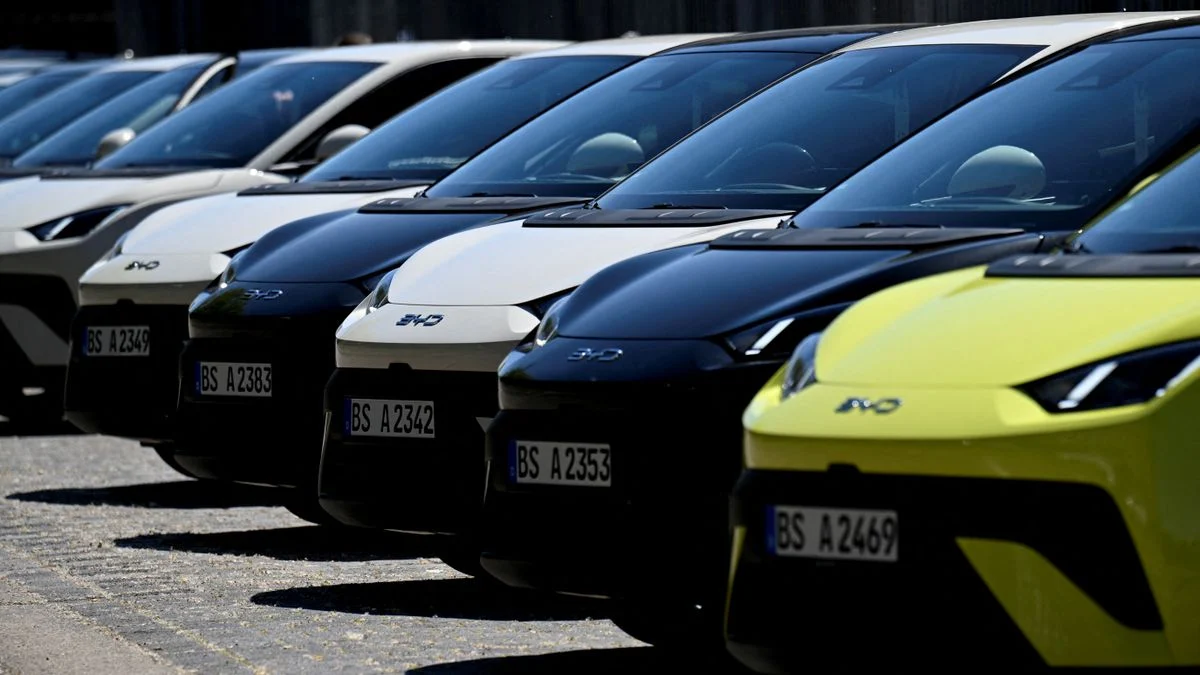
The most prominent example of this shift is BYD. Once a fringe player in the European context, the company has surged to become the market leader among Chinese brands in Germany. With 36,748 new registrations in the first eight months of the year, BYD has successfully overtaken established legacy brands like Mazda and Citroën, and is consistently challenging Tesla’s dominance in the electric vehicle segment.
BYD’s success is not merely a result of aggressive pricing. It is a result of scaling. As they reach critical mass, they are able to justify the infrastructure—dealerships, repair training, and parts distribution—that keeps insurance costs competitive. For a consumer, the barrier to switching from a German brand to a Chinese one is lowered significantly when the insurance premium is no longer a deterrent.
Economic and Strategic Implications
The implications of this trend extend far beyond the insurance industry. If European manufacturers continue to ignore the "repairability" metric, they risk losing one of their most effective defensive moats against low-cost entrants.
1. The Erosion of Consumer Trust
Insurance premiums are a visible, recurring cost for every car owner. If European cars become synonymous with "expensive to fix," the perception of these brands as reliable, sensible, and "worth the premium" will inevitably decline. This is particularly dangerous for the mid-market segment, where price sensitivity is high.
2. Regulatory and Sustainability Concerns
There is also a sustainability angle. A vehicle that is difficult or too expensive to repair is more likely to be written off as a "total loss" after a relatively minor accident. This leads to higher rates of vehicle scrappage, which runs counter to the European Union’s broader goals regarding circular economy and resource efficiency. If the insurance industry effectively forces the early retirement of modern vehicles due to high repair costs, it will create a regulatory backlash that manufacturers are currently ill-prepared to handle.
3. The Future of the Workshop Ecosystem
The decline in repairability is also a blow to the independent workshop sector. These shops rely on accessible, standardized parts to serve their customers. If European manufacturers move toward "black-box" designs that are only repairable via proprietary, expensive dealer networks, it will further alienate the aftermarket ecosystem and increase the total cost of ownership for the consumer.
Conclusion: A Wake-up Call for European Incumbents
The analysis from the Allianz Center for Technology serves as a loud warning bell for the European automotive industry. For decades, the "Made in Europe" label carried with it an implicit promise of long-term value and manageable maintenance. By allowing that promise to fade, European manufacturers are ceding ground to Chinese competitors who are not only matching them in technology and pricing but are now actively learning how to provide a better, more efficient service experience.
The path forward for European automakers is clear but demanding. They must pivot back to "Design for Repairability," ensuring that their quest for high-tech, integrated vehicles does not come at the expense of the owner’s wallet. If they fail to correct this trajectory, the insurance cost gap will continue to close, removing one of the last remaining barriers for consumers to shift their allegiance to the new guard of global automotive powerhouses. The competition is no longer just about who can build the fastest or most efficient car; it is about who can provide the most sustainable and affordable ownership experience. As of today, the momentum is undeniably shifting.