The geopolitical landscape of the Middle East has reached a critical flashpoint, marked by a multi-front escalation involving the United States, Iran, Saudi Arabia, and various proxy militias. As the ongoing conflict between the U.S. and Iran—now entering its seventh month—continues to destabilize the global economy, the U.S. Treasury Department has issued a severe warning to international financial institutions: facilitate transactions with the Iranian financial sector at your own peril.
The warning underscores a desperate U.S. effort to tighten the economic vice around Tehran. Meanwhile, on the ground, the situation is increasingly volatile. From the strategic waters of the Strait of Hormuz to the battlefields of Yemen and the skies over Saudi Arabia, the region is witnessing a rapid expansion of hostilities that threatens global energy security and regional stability.

Main Facts: A New Phase of Economic and Military Pressure
The U.S. Treasury’s latest directive is unambiguous. In a statement released this week, the department signaled that foreign financial entities engaging with the Iranian regime or its financial apparatus could face immediate sanctions without prior warning. This move is designed to isolate Tehran further as the economic toll of the conflict becomes increasingly apparent; the Iranian Rial has hit a historic low, trading at three million per Euro on the open market, effectively slashing the purchasing power of the average Iranian worker by nearly 40% since the start of the year.
Simultaneously, the military situation has devolved into a series of interconnected skirmishes. Reports from the U.S. indicate a preemptive withdrawal of long-range bombers from the RAF Fairford base in the United Kingdom due to credible intelligence regarding a complex plot orchestrated by the Iranian Revolutionary Guard Corps (IRGC). This plot allegedly aimed to target U.S. personnel and aircraft stationed on British soil, marking a dangerous expansion of the conflict beyond the Middle Eastern theater.

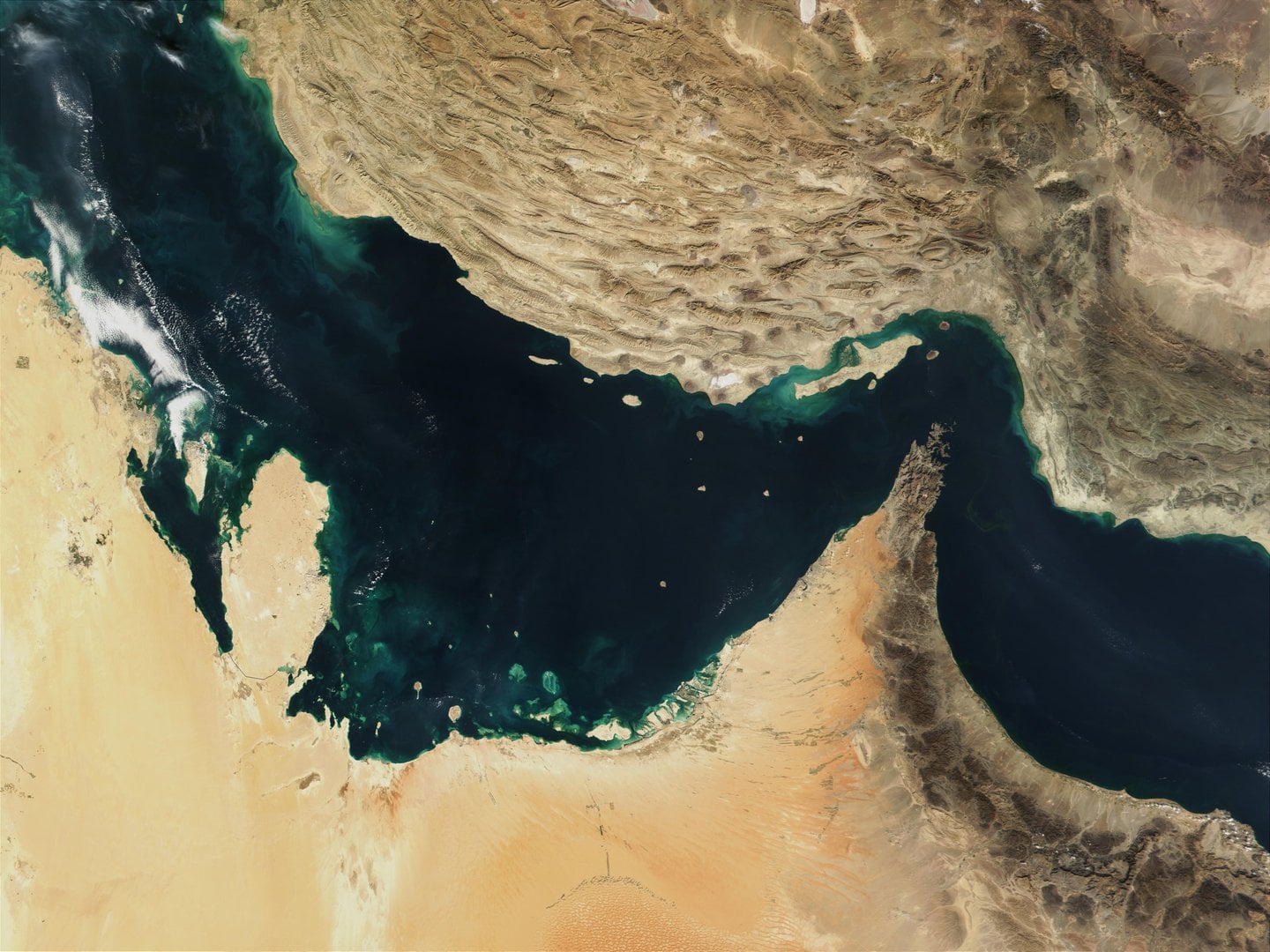
In the Gulf, the Strait of Hormuz remains a primary site of contention. Following several recent attacks on tankers, the Iranian leadership has explicitly stated that the critical waterway will remain closed to international shipping until seven specific conditions—based on an earlier interims agreement—are met.
Chronology of Escalation
The current cycle of violence and diplomatic friction has evolved rapidly over the past several days:
- September 25: Iraq suspends flights from Iranian carriers due to tightened U.S. sanctions, though exceptions were later carved out for the pilgrimage city of Nadschaf.
- Late September: Huthi rebels seize ground near the strategic Bab al-Mandab strait, immediately threatening a chokepoint vital for global energy and trade flows.
- October 4-5: A flurry of activity occurs, with Saudi-backed government forces in Yemen launching a "strategic offensive" against the Huthis. Concurrently, reports emerge of multiple tankers being hit by projectiles in the Strait of Hormuz.
- October 6: The U.S. confirms the full withdrawal of B-1 bombers from RAF Fairford following the arrest of individuals suspected of plotting attacks against the base.
- October 7: The Iranian Oil Minister, Mohsen Paknejad, resigns amid the intensifying economic crisis.
The Yemen Front: A Brewing Regional War
The conflict in Yemen has shifted from a localized civil war into a central front for regional power projection. The Huthi militia, aligned with Tehran, has escalated its operations, targeting infrastructure deep within Saudi Arabia. Among the reported targets are international airports in Riyadh and Abha, as well as critical Aramco refinery facilities in Rabigh.
In response, the Saudi-led coalition has initiated a massive air campaign, deploying 100 combat aircraft to support the internationally recognized government forces. The objective is to reclaim the Bab al-Mandab strait, which has effectively become a secondary, highly volatile gateway for oil exports following the Iranian-imposed blockade of the Strait of Hormuz.
The tactical situation on the ground remains fluid. Government forces, supported by the "Giants Brigades," are pushing from multiple fronts, including the north, west, and south, aiming to break the Huthi stranglehold on the province of Tais. However, the Huthis have countered by warning commercial airlines against utilizing Saudi airspace, declaring it "unsafe" as long as the current military offensive continues.
Supporting Data and Economic Implications
The economic impact of this conflict is no longer confined to the borders of the combatant nations. The uncertainty surrounding the Strait of Hormuz and the attacks on Saudi infrastructure have sent shockwaves through energy markets.

German Chancellor Friedrich Merz expressed "cautious optimism" regarding the situation, acknowledging that the German government is acutely aware of how these disruptions are driving up energy costs. "We are doing everything possible to end this conflict as quickly as possible, because we are feeling the consequences massively in the energy prices," Merz stated.
The human cost is equally devastating. The currency collapse in Iran is only one indicator of the broader humanitarian crisis. In Gaza, the conflict continues to claim lives, with recent reports indicating that an Israeli strike targeting a Hamas commander in the Nukhba elite unit resulted in significant collateral damage, further complicating the prospects of a lasting ceasefire.

Official Responses and Diplomatic Friction
The diplomatic fallout from the alleged plot against the RAF Fairford base has been severe. British Prime Minister Andy Burnham stated that there were "strong indications" of Iranian involvement in the planned attacks, while U.S. Secretary of State Marco Rubio publicly cited the "hands of a foreign actor."
Tehran has categorically denied these accusations, dismissing them as "propaganda." In a sign of the deteriorating diplomatic relations, Iran summoned the British ambassador to lodge a formal protest. The Iranian government continues to maintain that its military posture—including the recent push to increase the range of its ballistic missiles to 1,000 km—is a purely defensive reaction to the positioning of U.S. military assets in the region.

"While this war continues, we have concluded that we absolutely must increase the range of our missiles, and we have taken steps in this direction," said Iranian army spokesman Mohammed Akraminia. This increased range puts not only U.S. bases in the Gulf within striking distance but also critical NATO infrastructure, including the Incirlik Air Base in Turkey.
Long-term Implications: A Region on the Edge
As the conflict stretches into its seventh month, the risk of miscalculation remains at an all-time high. The involvement of multiple regional powers—Saudi Arabia, Pakistan, Turkey, and Iran—suggests that the conflict is moving toward a more rigid, polarized state.

The agreement between Pakistan, Saudi Arabia, and Turkey to rapidly station military forces and capabilities within the Kingdom under the "Mecca Defense Pact" indicates that regional allies are preparing for a protracted period of insecurity. This collective security arrangement is a direct response to the multifaceted threats posed by the Iran-Huthi axis.
For the international community, the challenge is twofold: preventing a full-scale regional conflagration and mitigating the economic damage of energy price volatility. The U.S. Treasury’s warning to financial institutions is a clear sign that Washington intends to continue using economic leverage to force Tehran’s hand. However, as the Iranian regime faces internal economic pressure, its willingness to engage in asymmetrical warfare—both in the air and on the seas—seems to be hardening rather than softening.

The coming weeks will be decisive. Whether the current military offensives in Yemen can successfully reopen strategic chokepoints, or whether the conflict will spiral into a broader regional war involving NATO and non-NATO allies, remains the central question of the crisis. For now, the world remains on high alert, watching as the Middle East balances on a knife’s edge between fragile diplomacy and total escalation.