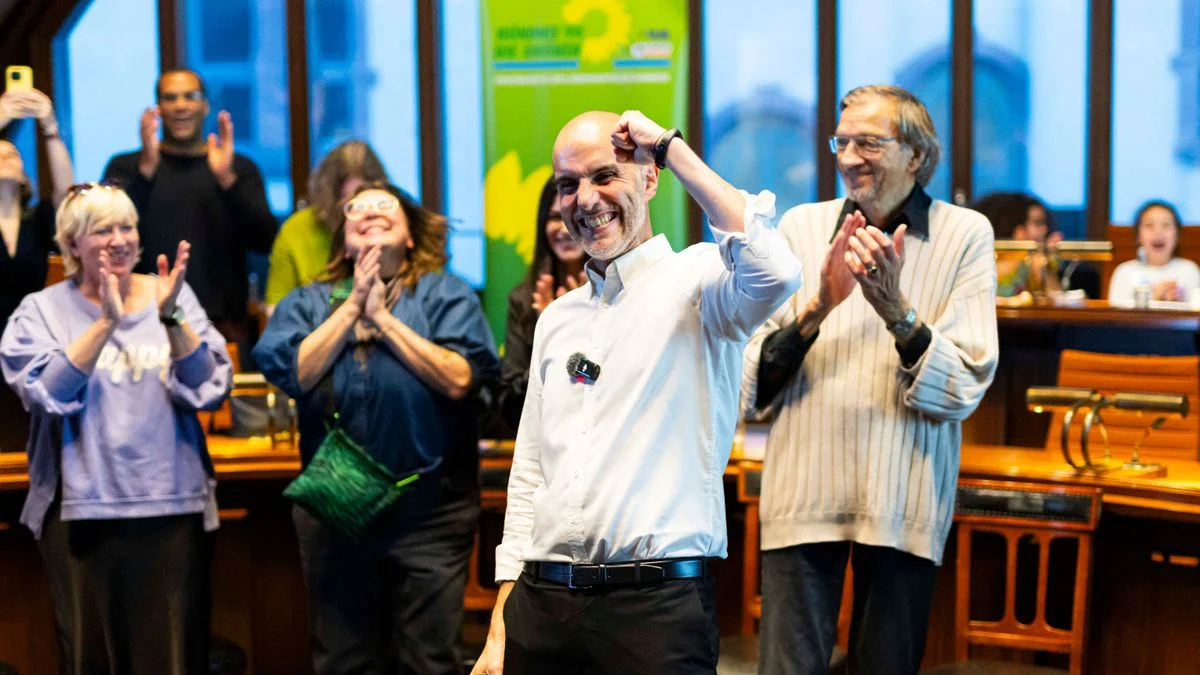
Hannover, Germany – Voters across Lower Saxony have delivered a decisive mandate in recent run-off elections, solidifying existing political trends in some areas while ushering in significant changes in others. The Green Party’s Belit Onay secured a comfortable re-election as Mayor of Hannover, underscoring the city’s clear shift towards environmentalist politics. Concurrently, the Social Democrats (SPD) celebrated a historic victory with Eva Bender becoming the first female President of the Hannover Region. Elsewhere, the Greens also made inroads in Göttingen, while the SPD maintained its stronghold in Braunschweig. Notably, the far-right Alternative for Germany (AfD) suffered comprehensive defeats in all three run-off elections where its candidates were on the ballot, failing to secure any top communal offices.
These results paint a nuanced picture of Lower Saxony’s political leanings, reflecting a blend of established party loyalties, a growing urban embrace of green policies, and a firm rejection of extremist parties in executive leadership roles. The outcomes will undoubtedly shape local governance and potentially offer insights into broader political sentiments within Germany’s second-largest state by area.
Main Facts: A Reshaped Political Landscape
The run-off elections in Lower Saxony have concluded with a series of definitive outcomes, charting a course for local governance across key cities and regions. The most prominent result saw Belit Onay of the Green Party re-elected as Mayor of Hannover with a commanding 61.5 percent of the vote. His victory against SPD challenger Axel von der Ohe (38.5 percent) not only cements his position but also reinforces Hannover’s status as a Green stronghold, a transformation that began with Onay’s initial election in 2019. This re-election is particularly significant given the city’s long history of SPD leadership.
In a parallel and equally historic development, Eva Bender of the SPD was elected President of the Hannover Region, becoming the first woman to hold this influential office. Securing an impressive 69.4 percent of the vote against CDU candidate Oliver Junk, Bender’s win signals a fresh chapter for the regional administration. Her mandate is strong, reflecting a clear preference for her vision and experience as Hannover’s Education Councilor since 2024.
Beyond the state capital, other major cities in Lower Saxony also saw their leadership decided. In Braunschweig, SPD incumbent Thorsten Kornblum secured a landslide re-election with 75.6 percent, triumphing over CDU rival Maximilian Pohler and demonstrating the SPD’s continued dominance in the region’s second-largest city. Meanwhile, Göttingen witnessed another Green success story, with Onyeka Oshionwu elected mayor, garnering 63 percent of the vote against CDU candidate Ehsan Kangarani. This victory represents a significant shift, as Göttingen’s city hall had previously been under SPD control.
A crucial narrative emerging from these elections is the AfD’s resounding defeat in all three run-off elections where its candidates participated. Despite making headlines for reaching these advanced stages, the party failed to translate its first-round support into executive power. In Salzgitter, CDU incumbent Frank Klingebiel was comfortably re-elected with 74.7 percent, defeating AfD challenger Patricia Mair. In Bockenem, independent candidate Jens Lüer secured 69.6 percent against AfD’s Felix Mull. Similarly, in Munster, independent Anna Adamczak won with 80.5 percent, with an AfD candidate also in the running. These results collectively underscore a widespread reluctance among Lower Saxony voters to entrust the far-right party with direct administrative responsibility.
Chronology: The Electoral Journey
The recent local elections in Lower Saxony unfolded over two distinct phases, each setting the stage for the next and culminating in the decisive run-off outcomes.
The First Round: Setting the Stage
The initial round of voting, held two weeks prior to the run-offs, served as a crucial barometer of public sentiment and laid the groundwork for the subsequent contests. In Hannover, Mayor Belit Onay demonstrated his significant popularity by nearly achieving an absolute majority in the first instance, securing 45.6 percent of the vote. This strong performance immediately positioned him as the frontrunner, far ahead of his SPD challenger Axel von der Ohe, who garnered 21.5 percent. Onay’s near-victory in the first round was a clear indication of the Greens’ strong appeal in the state capital, a trend further evidenced by the city council elections held concurrently. In these council elections, the Green Party emerged as the strongest political force in Hannover, solidifying its dominant position within the city’s political landscape.
In the contest for the President of the Hannover Region, Eva Bender (SPD) also established a clear lead in the first round, securing 30.6 percent of the vote. This initial advantage placed her in a strong position for the run-off, highlighting her broad appeal across the region. The first round also saw various AfD candidates advance to run-offs in specific municipalities, generating discussion about the party’s potential to secure a top communal office for the first time in Lower Saxony. While these candidates managed to make it to the second round, their initial support levels were generally lower than those of the established parties, hinting at the challenges they would face in a direct head-to-head contest.
Run-off Day: Decisive Mandates
The second round of voting, the Stichwahl, was characterized by a palpable sense of anticipation as voters returned to the polls to make their final choices for the highest local offices. For many, it was an opportunity to either confirm their initial preferences or to strategically vote to prevent an outcome they disfavored. The decisive mandates delivered on run-off day were unequivocal.
In Hannover, Belit Onay’s victory was not merely a win but a resounding affirmation of his leadership and the Green Party’s agenda. The increase in his vote share from the first round to 61.5 percent in the run-off demonstrated a successful consolidation of support, likely drawing votes from other progressive camps or tactical voters. Similarly, Eva Bender’s almost 70 percent victory in the Hannover Region run-off was a powerful statement, indicative of a broad consensus for her leadership and a rejection of her CDU opponent. These overwhelming majorities suggest that voters were not just choosing a candidate, but endorsing a clear direction for their respective administrations.
The run-offs in other cities and municipalities followed a similar pattern of decisive outcomes. Thorsten Kornblum’s massive re-election in Braunschweig, and Onyeka Oshionwu’s clear win in Göttingen, both reflected strong voter confidence in the chosen candidates. Crucially, the run-off stage also exposed the limitations of the AfD’s appeal. Despite reaching this final hurdle in Salzgitter, Munster, and Bockenem, their candidates were comprehensively defeated. The significant margins by which they lost – often by more than two-thirds of the vote – illustrate a collective resolve among voters to prevent the far-right from assuming executive power, even if it meant tactical voting for candidates from other mainstream parties or independents. The run-offs thus served as a clear democratic mechanism for voters to coalesce around alternatives to the AfD, delivering unambiguous rejections of their candidacies for leadership roles.
Supporting Data: Unpacking the Numbers
The detailed results from the run-off elections provide a robust dataset for understanding the evolving political dynamics within Lower Saxony, highlighting areas of consolidation, significant shifts, and clear voter preferences.
Hannover: Green Stronghold Confirmed
Belit Onay’s re-election as Mayor of Hannover with 61.5 percent of the vote against Axel von der Ohe’s 38.5 percent is a profound affirmation of the Green Party’s ascendancy in the state capital. This victory is not just a personal triumph for Onay but a symbolic shift in Hannover’s political identity. For decades, the Lower Saxon capital was considered an unshakeable bastion of the SPD. The Social Democrats had held the mayoral office almost uninterrupted since the post-war era, with figures like Herbert Schmalstieg (1972-2006) and Stephan Weil (2006-2013, now Minister-President of Lower Saxony) defining the city’s political landscape. Onay’s initial victory in 2019, which broke this long-standing SPD dominance, was already a historic moment. His re-election with an even stronger mandate now solidifies this change, indicating it was not an anomaly but a sustained trend.
The Greens’ strength in Hannover is further underscored by their performance in the city council elections held concurrently with the first round of the mayoral race. In these elections, the Green Party emerged as the strongest force, outperforming both the SPD and CDU. This dual success – in both the executive mayoral office and the legislative city council – grants the Greens a powerful platform to implement their policies on environmental protection, sustainable urban development, and social justice. The high vote share for Onay also suggests a significant consolidation of progressive votes, where voters from other parties or those who supported other candidates in the first round strategically voted for Onay to ensure a stable, progressive leadership.
Hannover Region: A Historic Shift with Eva Bender
The election of Eva Bender (SPD) as the first female President of the Hannover Region is a landmark achievement, marking a new era for regional governance. Her overwhelming victory with 69.4 percent against CDU challenger Oliver Junk demonstrates broad cross-party appeal and a clear mandate from the electorate. Bender’s background as Hannover’s Education Councilor since 2024 likely contributed to her strong performance, positioning her as an experienced and capable administrator. The role of Regional President is crucial, overseeing a wide array of services including public transport, vocational schools, and social welfare programs for a population of over one million. Her victory signals a public desire for forward-looking leadership and potentially reflects a broader trend of embracing diverse representation in executive roles. This result also shows that while the SPD may face challenges in mayoral races in some urban centers, it retains significant strength at the regional level, especially with strong, well-known candidates.
Beyond the Capital: Other Key Municipalities
The electoral outcomes in other major cities of Lower Saxony add further layers to the state’s political tapestry:
- Braunschweig: SPD incumbent Thorsten Kornblum’s landslide re-election with an impressive 75.6 percent against CDU’s Maximilian Pohler highlights the enduring strength of the Social Democrats in the region’s second-largest city. Braunschweig has long been an SPD stronghold, and Kornblum’s victory reinforces this tradition. His substantial mandate will allow him to continue his policy agenda with strong public backing, likely focusing on social housing, economic development, and public services.
- Göttingen: The election of Onyeka Oshionwu (Greens) as mayor with 63 percent against Ehsan Kangarani (CDU) represents another significant gain for the Green Party. Like Hannover, Göttingen had historically been an SPD-led city. Oshionwu’s victory signifies a similar progressive shift in another major Lower Saxon urban center, indicating a growing preference for Green policies among urban populations. This further establishes a pattern of Green success in university towns and cities with a strong youth demographic.
These results collectively indicate a clear urban-rural divide in party preferences, with the Greens solidifying their position in vibrant university cities, while the SPD demonstrates resilience and dominance in other traditional industrial or administrative centers. The CDU, while holding its ground in some smaller municipalities and contributing to the defeat of AfD candidates, appears to struggle in securing top executive positions in the larger urban areas.
The AfD’s Stalled Ambitions
The run-off elections delivered a stark message regarding the AfD’s aspirations for executive power in Lower Saxony: while the party can secure enough first-round votes to enter run-offs, it consistently fails to win direct leadership roles.
- Salzgitter: CDU incumbent Frank Klingebiel secured a decisive re-election with 74.7 percent, comfortably defeating AfD challenger Patricia Mair. Klingebiel, who has held office since 2006, benefited from a broad consensus among mainstream voters to prevent an AfD victory.
- Munster (Heidekreis District): Independent candidate Anna Adamczak won with an overwhelming 80.5 percent of the vote. Although the specific AfD candidate’s name is not provided in the original text, the context of the "AfD verliert in drei Stichwahlen deutlich" (AfD loses significantly in three run-offs) heading implies an AfD candidate was her opponent, or one of the candidates she defeated in the run-off. This result further underscores the willingness of voters to support non-party candidates or established parties to block the AfD.
- Bockenem (Hildesheim District): Independent Jens Lüer was elected with 69.6 percent, defeating AfD candidate Felix Mull. This outcome mirrors the pattern seen in Salzgitter and Munster, where a unified front of voters opted for a mainstream or independent alternative.
These comprehensive defeats for the AfD in all three run-offs where they had candidates are profoundly significant. They suggest that while the AfD has managed to gain a foothold in legislative bodies across Germany, voters are far less willing to entrust them with the direct administrative responsibility of a mayoral or regional leadership position. This resistance points to a deep-seated concern among the electorate about the AfD’s policies and suitability for executive governance, particularly in a system that values stability and broad representation. The margins of defeat are so substantial that they cannot be attributed merely to party loyalty but suggest a deliberate electoral strategy by voters to exclude the far-right from these critical leadership roles.
Official Responses and Political Commentary
The outcomes of the run-off elections have naturally elicited a range of reactions from the victorious parties, the defeated candidates, and political observers, each offering their perspective on the implications of these results for Lower Saxony and beyond.
Upon his re-election, Belit Onay of the Greens expressed profound gratitude to the citizens of Hannover, interpreting his strong mandate as a clear endorsement of his progressive agenda. He is expected to emphasize continuity in his efforts to transform Hannover into a more climate-friendly, socially equitable, and innovative city. His statements are likely to highlight plans for expanding public transport, promoting cycling infrastructure, advancing digitalization, and fostering social cohesion. Onay’s victory is also a source of great satisfaction for the federal Green Party, offering a positive narrative amidst current coalition challenges at the national level.
Eva Bender (SPD), the newly elected President of the Hannover Region, will undoubtedly speak of the historic nature of her election as the first woman to hold the office. Her focus will likely be on unifying the region, addressing pressing issues such as education, healthcare, and public services, and fostering a collaborative spirit across municipalities. Her victory is a morale booster for the SPD in Lower Saxony, demonstrating their ability to win significant executive offices with strong candidates, despite facing tough competition in other urban areas.
Thorsten Kornblum (SPD) in Braunschweig and Onyeka Oshionwu (Greens) in Göttingen are also anticipated to acknowledge their respective mandates with commitments to serve all citizens, irrespective of their political leanings. Their statements will likely outline their immediate priorities, building on existing policy frameworks or introducing new initiatives aligned with their party platforms.
From the perspective of the losing parties, particularly the SPD in Hannover and the CDU across various contests, responses will likely be characterized by an acceptance of the democratic outcome and a pledge to serve as constructive opposition. Axel von der Ohe (SPD) will likely congratulate Onay and express his commitment to continuing his work for Hannover in another capacity. CDU leaders will need to analyze their performance, particularly their struggles in urban mayoral races, and consider strategies for regaining ground in these important demographic centers.
Political commentators are already dissecting these results, offering various interpretations. Many highlight the deepening divide between urban and rural voting patterns, with the Greens cementing their hold on progressive, often university-heavy cities, while the SPD maintains strength in its traditional strongholds and at the regional level. The CDU, while a significant force, appears to be grappling with its appeal in diverse urban environments.
A central theme of the commentary revolves around the AfD’s comprehensive defeats. Analysts widely view these outcomes as a strong signal from the electorate that while the AfD may attract protest votes or legislative support in some areas, there is a distinct and widespread reluctance to entrust them with direct executive responsibility. This rejection is interpreted as a success for democratic resilience, demonstrating that mainstream parties and independents can successfully rally support to prevent the far-right from assuming top administrative roles. Commentators suggest that these results might encourage other German states to pursue similar strategies when faced with AfD candidates in run-off elections for executive positions.
Implications: A Glimpse into Lower Saxony’s Future
The recent run-off elections in Lower Saxony carry significant implications, not only for local governance but also for the broader political landscape of the state and potentially for national trends.
Shifting Political Alignments
The election results underscore a clear further entrenchment of Green influence in urban centers. Hannover and Göttingen, two of Lower Saxony’s major cities, are now firmly under Green leadership, signaling a clear preference for environmentalist and progressive policies in these dynamic urban environments. This trend reflects a broader pattern observed across Germany, where the Green Party consistently performs well in cities, particularly among younger, educated demographics. This will likely lead to accelerated climate action, sustainable urban planning, and investments in public transport and cycling infrastructure in these municipalities.
The SPD’s performance is mixed but resilient. While they lost the mayoral race in Hannover to the Greens, they secured a historic win for the regional presidency and maintained a strong hold in Braunschweig. This suggests that the SPD continues to be a vital political force, particularly when presenting strong candidates for regional or traditional strongholds. Their challenge will be to adapt their appeal to increasingly diverse urban electorates while retaining their traditional voter base.
The CDU faces ongoing challenges in urban contexts. Despite being a major party in Lower Saxony, their candidates struggled to secure top executive positions in the larger cities. Their strength appears to lie more in smaller municipalities and in their ability to unite voters against AfD candidates, rather than in winning outright in competitive urban races.
The success of independent candidates in Munster and Bockenem also highlights a willingness among voters to support individuals over party affiliations, particularly in smaller communities, and especially when presented with an alternative to an AfD candidate. This could encourage more independent candidacies in future local elections.
The Message for Federal Politics
While local elections are primarily about municipal issues, their outcomes often provide a pulse check on broader political sentiments. The strong performance of the Greens in urban areas and the SPD in specific contexts could be seen as a positive signal for the current federal ‘traffic light’ coalition (SPD, Greens, FDP), at least from the perspective of the two larger partners. It suggests that despite national challenges and criticisms, these parties retain significant electoral appeal at the local level.
Crucially, the comprehensive rejection of AfD candidates in all run-off elections for executive offices sends a powerful message to federal politics. It indicates a clear line in the sand drawn by voters: while some may vote for the AfD in legislative elections, there is a widespread unwillingness to grant them direct administrative power. This "firewall" against the far-right taking executive roles could serve as a model or a hopeful sign for other states and federal elections, suggesting that the German electorate maintains a robust commitment to democratic norms and mainstream governance when it comes to direct leadership. It challenges the AfD’s narrative of being a viable alternative for governance and highlights their isolation in the political spectrum.
Challenges and Opportunities for the Newly Elected
The newly elected mayors and regional president face a multitude of challenges and opportunities. For Belit Onay in Hannover, the opportunity is to deepen the city’s green transformation, focusing on ambitious climate protection targets, sustainable mobility concepts, and digital innovation. Challenges include managing urban growth, ensuring affordable housing, and fostering social inclusion in a diverse city.
Eva Bender in the Hannover Region will have the opportunity to modernize regional administration, enhance public services, and promote regional cohesion. Her challenges will involve balancing the needs of diverse municipalities, addressing demographic shifts, and ensuring effective coordination across different levels of government. Her role as the first female President also presents an opportunity to inspire greater female participation in politics and administration.
For Thorsten Kornblum in Braunschweig, the strong mandate provides an opportunity to further develop the city’s economic strength, particularly in research and technology, while addressing social challenges and urban development. In Göttingen, Onyeka Oshionwu can leverage the city’s academic environment to foster innovation and sustainability, while also tackling issues pertinent to a university town, such as student housing and integration.
Across all these municipalities, common challenges include the impact of climate change, the need for affordable housing, ensuring social integration, supporting local economies, and adapting to demographic changes. The electoral results suggest a preference for leadership that prioritizes these issues through progressive and inclusive approaches. The new leadership teams will be expected to deliver tangible results, building on their strong mandates to shape the future of their respective communities in Lower Saxony.