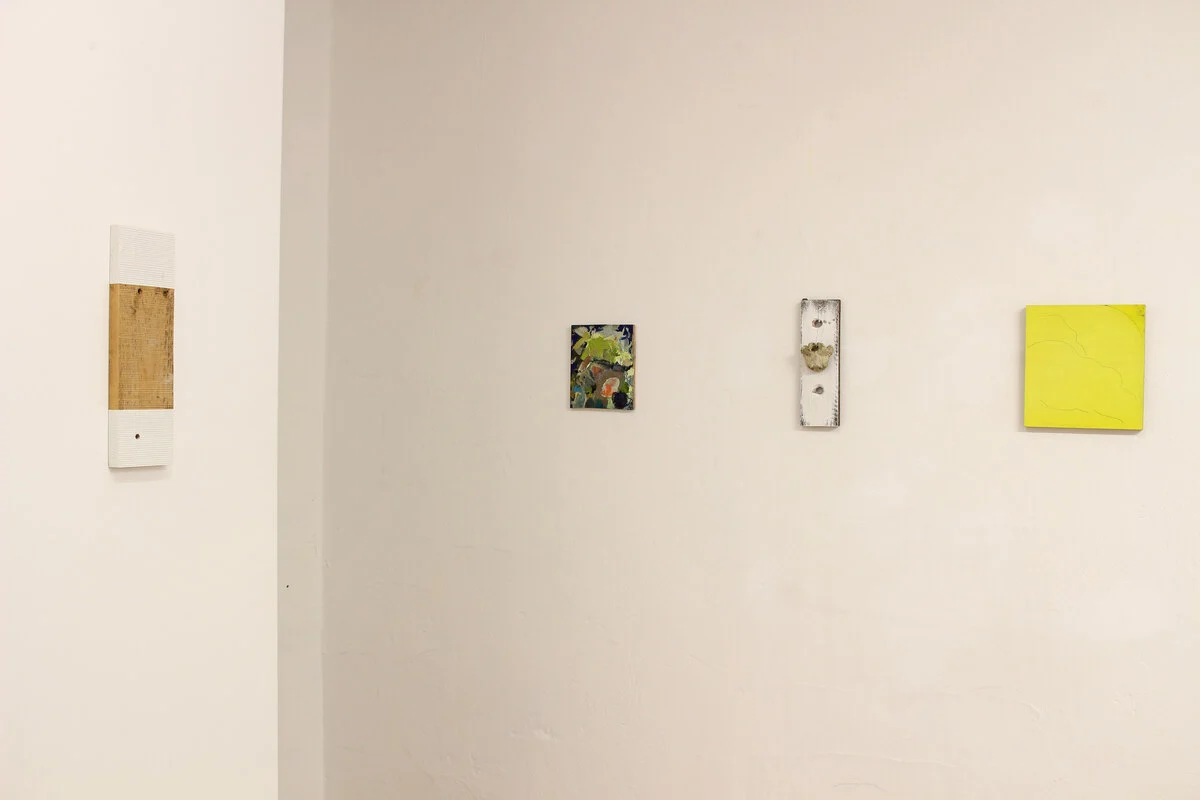
In the heart of Berlin-Kreuzberg, tucked away beneath the bustling streets in a quiet, unassuming cellar space known as Klek, an artistic dialogue with the mundane is taking place. Sebastian Lettner, an artist whose practice is as much about the act of discovery as it is about the act of creation, is currently presenting his latest exhibition, no more home.
The atmosphere in the gallery is deliberate: the air carries the faint, sharp scent of fresh oil paint, and the room is soundtracked by a low, rhythmic hum of jazz. It is an intimate setting, one that demands a shift in perspective. Here, painting is not a grand, monumental gesture on expansive canvases; rather, it is a quiet meditation on the discarded, the forgotten, and the found.
The Philosophy of the Found Object
At its core, no more home is an exploration of the "Found Object"—the objet trouvé. Lettner does not merely collect; he engages in a process of curation and reclamation. His process begins with travel, with the aimless drifting that defines his artistic research. As he moves through various landscapes, he gathers materials that have been cast aside—scraps of wood, weathered cardboard, and fragments of fabric.
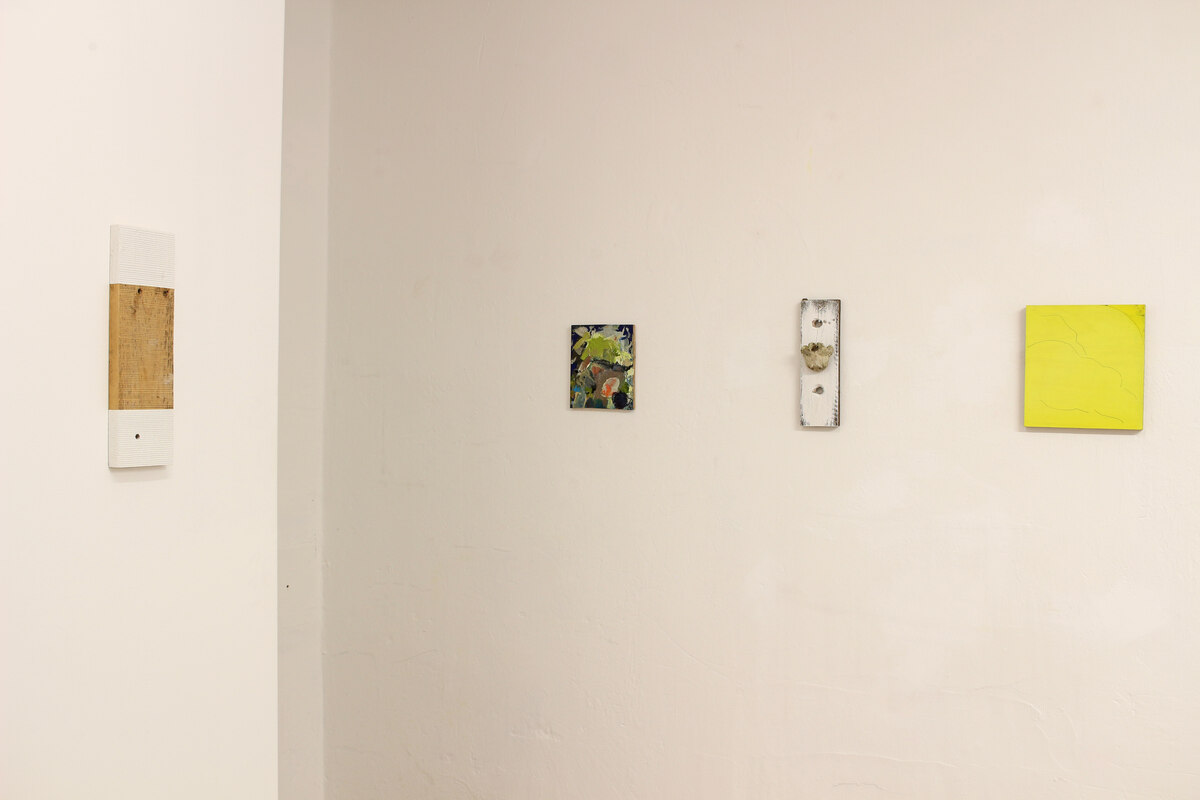
These items are not "art" in their original state; they are remnants of a life already lived. However, under Lettner’s brush, they are granted a new identity. In the gallery, these small, rectangular, and irregular shapes are meticulously arranged against three stark, white walls. The contrast between the clinical, minimalist white of the gallery and the organic, worn textures of the objects creates a tension that defines the viewer’s experience.
Chronology and Evolution of the Work
Lettner’s artistic development is deeply rooted in his formal education and his subsequent departure from traditional constraints. A former student of the acclaimed painter Sean Scully, Lettner inherited a sense of geometric rigor and structural integrity. Yet, where Scully’s work often relies on a grand, architectural scale, Lettner’s approach is one of fragmentation.
The chronology of his recent work suggests a transition from pure painting toward a hybrid form of installation and assemblage. Over the past few years, his focus has shifted from the surface of the canvas to the materiality of the substrate itself.

- The Exploratory Phase: Early sketches and field notes, often captured in his Seenotizen (Sea Notes), reflect a preoccupation with the sea—not as a picturesque motif, but as a site of volatility and flux.
- The Acquisition Phase: The gathering of materials. This is where the "home" is lost and found. Each piece of driftwood or scrap of carton is selected for its inherent history—a scratch here, a weathered edge there.
- The Intervention: The application of color. By painting over these fragments, Lettner does not obscure their history; he dialogues with it. As seen in his piece "small sunrise," a five-sided piece of wood is bathed in vibrant orange and turquoise oil paint, yet the raw, light-colored wood remains visible at the edges, serving as a reminder of the object’s previous existence.
Supporting Data: The Language of Materiality
The exhibition offers a sensory analysis of how we relate to the objects we discard. A circular piece of wood, painted in deep, oceanic blues, evokes the image of a storm-tossed sea. Opposite it sits a piece with a gray-blue finish, representing the calm after the tempest.
Perhaps the most poignant example of Lettner’s methodology is a piece of driftwood, partially coated in stark white wall paint. Beneath the layer of white, one can still discern the name "Lily" scrawled in blue ink. This is a trace of the past—a name left by a previous owner or creator. By painting over it, Lettner asserts a change in ownership, a transformation of a functional object into an aesthetic one. The white paint acts as a veil, both hiding and preserving the ghost of the object’s past life.
Artistic Context and External Influences
Lettner’s work does not exist in a vacuum. His artistic lineage, shaped by the structural sensibilities of Sean Scully, is being pushed into new territories. By incorporating "found objects," Lettner challenges the permanence of the traditional art object.

His collaborative efforts, such as his work with the writer and artist Cyrill Lachauer, further broaden his practice. The upcoming presentation of his project Seenotizen at the KSTN project room in Kreuzberg (Schönleinstraße 10, October 4th, 2 PM to 10 PM) underscores his belief that painting is not the final stage of expression. For Lettner, the image is a fluid concept that migrates into poetry, photography, and ephemeral installation.
Implications for the Contemporary Art Scene
The significance of no more home extends beyond the aesthetic. In an era where the art market is often dominated by high-gloss, high-value spectacle, Lettner’s work represents a return to the humble and the human-scale.
The exhibition implicitly poses questions about the nature of "home" and "belonging." If a piece of wood can find a new home in a gallery, stripped of its original utility and rebranded as a piece of art, what does that say about our own desire for stability? The objects in Klek do not demand attention; they simply exist. They are fragments of an unknown order, inviting the viewer to find their own meaning within the silence.

Moreover, the venue itself—a self-managed, independent space in Kreuzberg—is a testament to the resilience of the local art scene. At a time when independent creative spaces face rising rents and political pressure, the survival of venues like Klek is crucial. They are the petri dishes for innovation, providing a necessary counterpoint to the commodified art world.
Conclusion: The Quiet Resonance
Sebastian Lettner’s no more home is a quiet, powerful reminder of the beauty inherent in the transition. By taking things that have been lost and giving them a space to be seen, he creates a sanctuary for the discarded. The exhibition invites visitors to slow down, to look closer, and to recognize that even the smallest fragment of wood or cardboard has a story worth telling.
As the jazz plays softly in the background of the Kreuzberg basement, one is left with the feeling that the search for "home" is not a destination, but a process—a constant gathering and re-framing of the fragments that make up our world. Whether through the blue ink of a name on driftwood or the orange glow of a painted sunrise, Lettner reminds us that even when we feel displaced, there is art to be found in the shifting tides of our existence.