By Editorial Staff | September 18, 2026
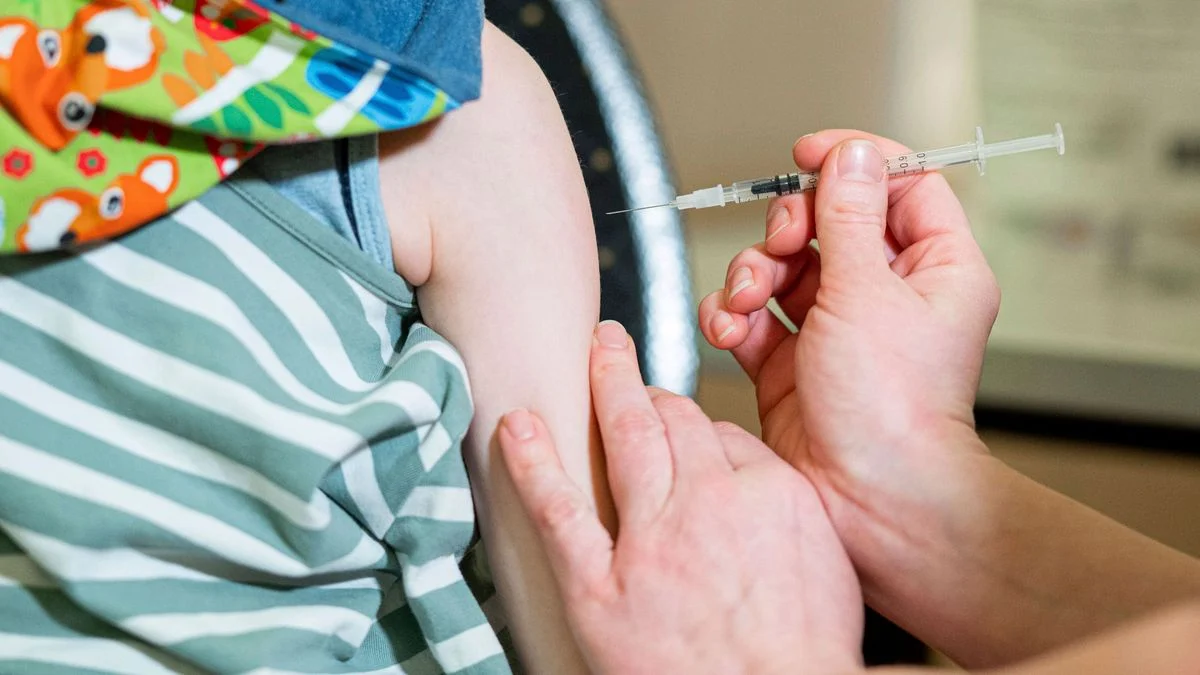
For decades, the story of public health in the European Union has been one of triumph. Through rigorous immunization schedules, the continent successfully pushed debilitating diseases like polio, measles, rubella, and tetanus to the fringes of memory. Yet, a shadow has fallen over these achievements. According to a landmark study published in the journal The Lancet Regional Health – Europe, the EU is currently grappling with a concerning, widespread decline in childhood vaccination coverage—a trend that experts warn could dismantle the hard-won gains of the last century.
The Core Findings: A Continent at Risk
The research, led by a team under the direction of Luigi Russo from the Università Cattolica del Sacro Cuore in Rome, provides a comprehensive analysis of World Health Organization (WHO) and UNICEF data spanning from 1980 to 2024. The results are sobering: while long-term trends had been overwhelmingly positive for forty years, the recent trajectory has shifted toward stagnation or, in many cases, a sharp reversal.
The study indicates that 16 of the 27 EU member states have seen declining trends in at least four of the seven key immunization indicators tracked by the researchers. Germany, a nation long considered a standard-bearer for medical infrastructure, is among those struggling, with five of the seven examined vaccines showing a downward trend. Only the Hepatitis B vaccine and the first dose of the measles vaccine have maintained a slight upward momentum in the German population.
Chronology of a Crisis: From Pandemic to Polarization
While the study was not explicitly designed to pinpoint causality, the timeline of the decline is unmistakable. In many regions, the slide began between 2019 and 2022—a period synonymous with the COVID-19 pandemic and its turbulent aftermath.
The pandemic acted as a double-edged sword for public health. While the focus on vaccines reached an all-time high, it also ushered in an era of unprecedented misinformation, social polarization, and erosion of institutional trust. Health experts hypothesize that the pandemic’s disruption to routine medical services, coupled with a surge in anti-vaccination sentiment fueled by digital echo chambers, has created a "perfect storm."

Historically, vaccination programs were seen as an unquestioned pillar of societal safety. Today, that consensus is fracturing. The rise of vaccine hesitancy is not merely a political or social disagreement; it is a measurable clinical threat that has already led to the re-emergence of vaccine-preventable diseases across the continent.
Data Breakdown: Which Vaccines Are Falling Behind?
The research highlights a heterogeneous landscape, where different vaccines face varying levels of public acceptance and access. The most widespread declines were observed in vaccinations against Haemophilus influenzae type b (Hib) and polio, with 20 EU countries showing negative trends.
- Hib: A bacterium capable of causing severe conditions in infants, including bacterial meningitis and epiglottitis.
- Polio: A highly infectious, debilitating virus that can lead to permanent paralysis.
- Hepatitis B: Declines were noted in 18 countries.
- DTP-3 (Diphtheria, Tetanus, Pertussis): Declines in 17 countries.
- Pneumococcal and Rubella vaccines: Declines in 16 and 15 countries, respectively.
Measles presents the most volatile data set. While it shows a relatively balanced pattern—with 14 countries seeing an increase and 13 seeing a decrease—the instability is alarming. Given that measles is one of the most contagious diseases known to man, even a minor dip below the 95% threshold can lead to rapid, explosive outbreaks.
The 95 Percent Benchmark: A Slippery Target
Public health officials universally cite 95% coverage as the "gold standard" for herd immunity. When immunization rates drop below this threshold, communities lose their collective shield, leaving infants, the elderly, and immunocompromised individuals vulnerable to outbreaks.
The data reveals a stark divide across the EU. Only two countries, Luxembourg and Portugal, successfully achieved or maintained a 95% coverage rate across all seven indicators. In contrast, Romania recorded rates below 80% for every single indicator, signaling a critical public health emergency.
Germany’s position is particularly precarious, with five of its seven indicators failing to meet the 95% target in 2024. The researchers emphasize that national averages can be deceptive; even in a country with a 90% national average, a local pocket of vaccine hesitancy or a marginalized community with low coverage can serve as a catalyst for a localized epidemic.

Implications: Beyond the Statistics
The consequences of this trend are not theoretical. The United States has already experienced significant measles outbreaks in recent years, serving as a warning to Europe of what happens when the "vaccine safety net" begins to fray. Furthermore, 2026 has seen a catastrophic outbreak in Bangladesh, resulting in over 1,000 deaths—a tragedy that the WHO directly attributes to falling immunization rates.
The implications for the European Union are multifaceted:
- Economic Strain: Treating preventable diseases is infinitely more expensive than administering a vaccine. An outbreak of polio or measles requires massive resources, isolation wards, and public health intervention that could have been avoided.
- Societal Trust: The erosion of trust in medical expertise is perhaps the most difficult variable to reverse. As myths about vaccine efficacy and safety proliferate online, the job of the pediatrician becomes increasingly difficult.
- Vulnerability of the Weakest: The primary victims of these declining rates are those who cannot be vaccinated for medical reasons—those with cancer, immune deficiencies, or infants too young to receive the doses. A drop in population immunity is, effectively, a betrayal of the most vulnerable members of society.
Official Responses and the Road Ahead
Health authorities across the EU are now under pressure to address the "immunization gap." In Germany, for instance, there is a push to optimize the schedule for pediatric check-ups, such as the U10 examination, to ensure that children do not slip through the cracks of the healthcare system at critical developmental stages.
However, policy adjustments are only half the battle. Experts suggest that the next phase of public health strategy must move beyond simple reminders. It requires:
- Combatting Misinformation: Proactive communication strategies that address parental fears with empathy and scientific clarity.
- Removing Access Barriers: Ensuring that rural and socioeconomically disadvantaged communities have the same ease of access to immunization as urban centers.
- Restoring Credibility: Strengthening the role of family doctors and pediatricians as the primary, trusted sources of medical information for parents.
Conclusion: A Wake-Up Call
The findings in The Lancet Regional Health – Europe serve as a blunt wake-up call for the European Union. We are currently living in the shadow of a success so profound that many have forgotten the terrors of the diseases we once contained. Polio, diphtheria, and measles are not "historical" illnesses; they are biological realities that remain waiting at our doorstep.
The decline in vaccination rates is a quiet crisis, one that grows in the dark until it manifests in a hospital ward. As we move through 2026, the data provides a clear directive: the preservation of public health requires more than just the availability of vaccines; it requires a renewed, vigorous, and unwavering commitment to the science of immunization. Without a concerted, EU-wide effort to reverse these trends, the continent risks trading a healthy, protected generation for one increasingly susceptible to the preventable scourges of the past.