Berlin, Germany – The political landscape of Berlin has been abruptly shaken by the revelation that Steffen Krach, the Social Democratic Party’s (SPD) leading candidate for the upcoming 2026 Berlin state elections, is under investigation by the Hanover public prosecutor’s office. The probe centers on serious allegations, including the initial suspicion of "acceptance of benefits" in two distinct instances, alongside a separate complex case involving alleged anti-competitive agreements in public tenders, compounded by violations of business secrets and confidentiality obligations under German corporate law. This high-profile investigation has cast a long shadow over the SPD’s campaign, which is currently in full swing for the pivotal 2026 Abgeordnetenhaus (House of Representatives) election.
The news, which first broke on Wednesday through reports from "Tagesspiegel" and "Berliner Morgenpost," sent ripples of concern across the political spectrum. While the initial reports hinted at corruption allegations, the public prosecutor’s office in Hanover has now provided explicit details regarding the nature of the charges, confirming the gravity of the situation facing one of Berlin’s most prominent political figures. The timing of these developments, occurring squarely amidst an intense election campaign, amplifies the political sensitivity and potential ramifications for both Krach personally and his party.
The allegations stem from Krach’s tenure as the Regional President of the Hanover Region, a significant administrative role he held prior to his current political aspirations in Berlin. This geographical separation of the alleged offenses from his current political base adds another layer of complexity, yet the political fallout is acutely felt in the capital. The comprehensive nature of the allegations, spanning from personal benefits to corporate malfeasance, suggests a thorough and wide-ranging inquiry by the authorities.
Adding to the dramatic unfolding of events, law enforcement personnel executed search warrants on Wednesday, targeting multiple locations associated with Krach. These included his former office premises in Hanover, his private residence in Berlin’s Schöneberg district, and notably, the state headquarters of the SPD in Berlin-Wedding. During these coordinated raids, Krach’s mobile phone was seized, indicating the investigators’ intent to gather electronic evidence crucial to their case. The sheer scale of these operations underscores the seriousness with which the public prosecutor’s office is pursuing the matter.
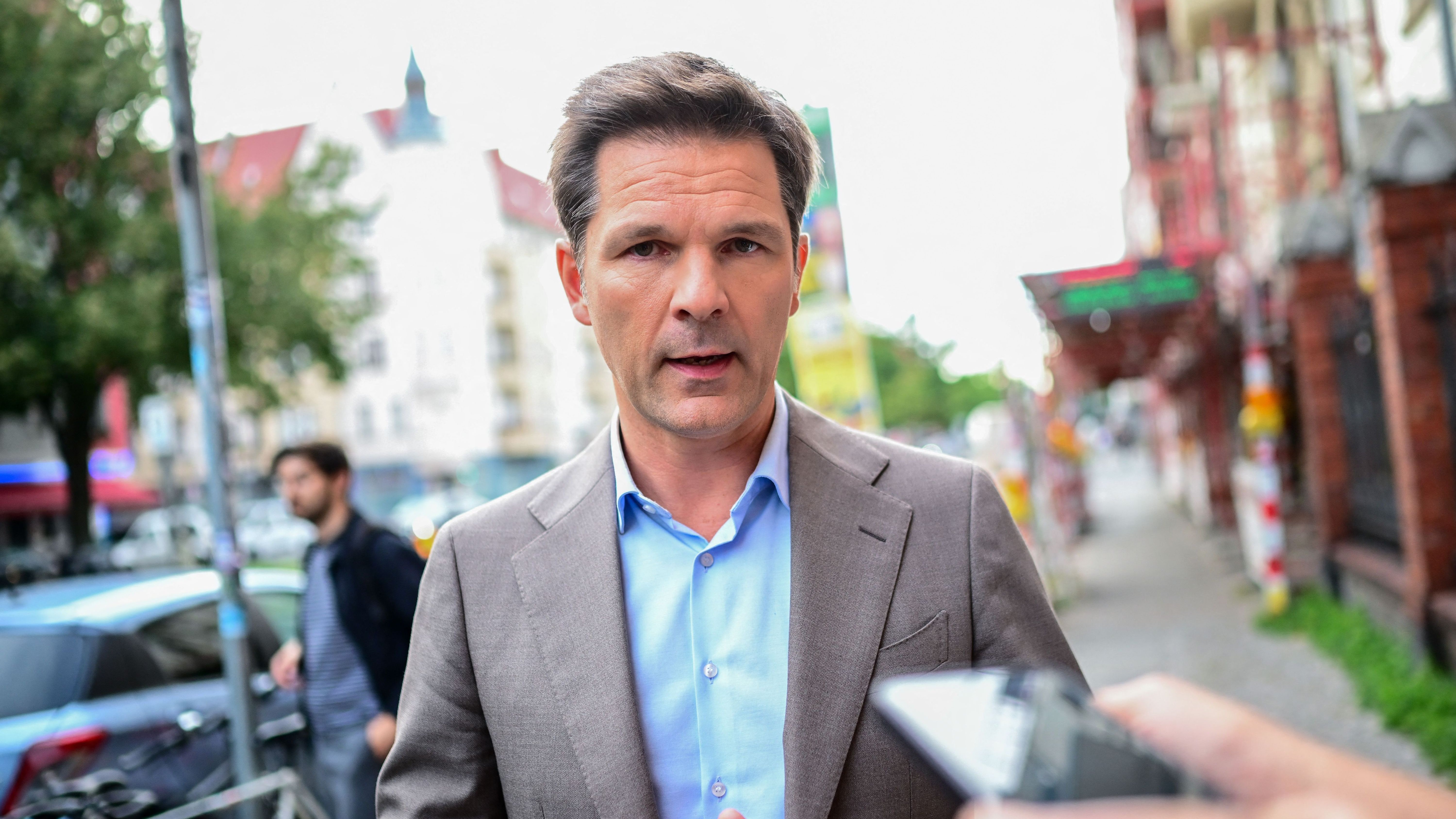
Steffen Krach, in a robust public statement issued on Thursday, unequivocally rejected all accusations, labeling them as "groundless" and asserting his innocence. He proactively addressed what he presumed were corruption allegations, stating emphatically, "I have never privately accepted money. And I have never, as SPD chairman here in Berlin, accepted a donation." Demonstrating a posture of transparency, he declared, "I have nothing to hide," and extended an open invitation for investigators to examine his bank accounts. His firm denial and readiness to cooperate are crucial in managing the immediate political fallout, though the legal process will ultimately determine the veracity of the claims.
Main Facts: A Political Earthquake in Berlin
The core of the unfolding scandal revolves around Steffen Krach, a figure who had been positioning himself as a key contender in Berlin’s political future. The Hanover Public Prosecutor’s Office initiated its investigation on September 3rd, focusing on multiple serious charges.
Firstly, Krach is suspected of "acceptance of benefits" (Vorteilsannahme) in two separate instances. This legal concept in Germany refers to a public official or a person entrusted with public duties accepting a benefit (money, gifts, services) for themselves or a third party, where the benefit is given or promised in connection with their official duties, even if there is no explicit quid pro quo. It is a less severe offense than bribery (Bestechlichkeit), as it does not require an explicit agreement for a specific illegal act, but rather the acceptance of a benefit that could influence official conduct or create an appearance of impropriety. The fact that two distinct cases are being investigated suggests a pattern or separate incidents rather than an isolated event.
Secondly, a more intricate set of allegations involves "anti-competitive agreements in tenders" (wettbewerbsbeschränkende Absprachen bei Ausschreibungen). This charge points towards potential collusion or manipulation of public procurement processes, which are designed to ensure fair competition and efficient use of public funds. Such agreements undermine market integrity and can lead to inflated costs for taxpayers. This is further compounded by "violation of business secrets" (Verletzung von Geschäftsgeheimnissen) and "violation of confidentiality obligations under the GmbH law" (Verletzung der Geheimhaltungspflicht nach dem Gesetz zu Gesellschaften mit beschränkter Haftung). The GmbHG (German Limited Liability Companies Act) imposes strict confidentiality duties on managing directors and other company officers regarding business secrets. These combined charges suggest that Krach, in his former capacity as Regional President, may have used privileged information or influence to steer tenders in a non-competitive manner, potentially benefiting specific companies or individuals, while simultaneously breaching statutory duties of secrecy. This complex charge points to a potential misuse of power and position within public administration.
The investigations, now public, are directly impacting the 2026 Berlin election campaign, where Krach is leading the SPD’s efforts. His role as "Spitzenkandidat" means he is the face of the party and its presumed candidate for mayor if the SPD wins. The timing of these revelations is therefore particularly damaging, threatening to derail the party’s momentum and public trust at a critical juncture. The seizing of his mobile phone and the searches of his office, home, and party headquarters indicate a serious investigative effort aimed at uncovering potentially incriminating evidence.

Chronology of Events: From Whispers to Public Outcry
The timeline of the investigation provides critical context to the current political turmoil.
The Hanover Public Prosecutor’s Office officially launched its investigation into Steffen Krach on September 3rd. This date marks the formal commencement of legal proceedings, indicating that preliminary information or complaints had been gathered and deemed credible enough to warrant an official inquiry. While the specifics of what triggered the investigation on this particular date remain undisclosed, it signifies a point where authorities moved beyond mere suspicion to active investigation.
The allegations themselves, however, are said to relate to events that occurred "during Krach’s term as Regional President of the Hanover Region." Steffen Krach served in this capacity, overseeing a significant administrative body with broad responsibilities, before transitioning to Berlin politics. This places the alleged wrongdoing firmly within a period when he held substantial public power and access to sensitive information regarding regional projects and tenders. The investigations are therefore retrospective, examining past conduct that has only now come to light or gained sufficient traction for official action.
The existence of the investigation became public knowledge on Wednesday, as reported by prominent Berlin newspapers "Tagesspiegel" and "Berliner Morgenpost." This public disclosure likely forced the hand of the public prosecutor’s office, prompting them to issue a more detailed statement later that evening to clarify the nature of the charges, moving from general "corruption allegations" to specific legal terms like "Vorteilsannahme" and "wettbewerbsbeschränkende Absprachen."
On that same Wednesday, a series of coordinated and extensive search operations were carried out by law enforcement. These searches targeted Krach’s former official office spaces in Hanover, which would likely contain records pertinent to his time as Regional President. Concurrently, his private apartment in Berlin-Schöneberg was searched, signifying a search for personal records or electronic devices. Most notably, the state headquarters of the SPD in Berlin-Wedding was also subjected to a search, indicating that investigators might be looking for party-related communications or records that could be linked to the allegations, or perhaps even for evidence related to the alleged acceptance of benefits in a broader political context, though Krach explicitly denied accepting donations as SPD chairman. During these raids, Krach’s mobile phone was confiscated, a standard procedure in investigations of this nature to access digital communications, emails, and other data that could shed light on the alleged offenses.
By Thursday, in the wake of the public revelations and the raids, Steffen Krach himself made a comprehensive public statement. He chose to directly confront the allegations, which he anticipated would be framed as corruption, and issued a strong denial of any wrongdoing. His immediate and detailed response was a clear attempt to control the narrative, reassure his party, and maintain his credibility with the electorate. He offered transparency by inviting investigators to review his personal bank accounts, aiming to demonstrate his lack of illicit financial gains. This swift and firm reaction marked a critical moment in the political handling of the burgeoning scandal.
Supporting Data: Understanding the Legal Framework and Political Landscape
To fully grasp the implications of the investigation into Steffen Krach, it’s essential to understand the German legal definitions of the alleged offenses and the broader political context in Berlin.
Vorteilsannahme (Acceptance of Benefits) vs. Bestechlichkeit (Bribery):
In German criminal law, §§ 331 and 332 of the Criminal Code (Strafgesetzbuch – StGB) differentiate between "acceptance of benefits" and "bribery."
- Vorteilsannahme (§ 331 StGB): This offense applies when a public official or a person entrusted with public service demands, allows themselves to be promised, or accepts a benefit for themselves or a third party for the performance of an official act, which is either lawful or unlawful. The key distinction from bribery is the absence of a specific quid pro quo or corrupt agreement for an unlawful act. It penalizes the mere creation of an appearance of impropriety, where a benefit could influence official decisions or create an unfair advantage. It aims to protect public trust in the impartiality and integrity of public administration. The penalty is generally less severe than for bribery, often involving a fine or imprisonment up to three years.
- Bestechlichkeit (§ 332 StGB): This is the more severe offense of bribery. It requires a specific agreement where a public official accepts a benefit in return for an unlawful official act, or for an official act where they have violated their duties. The penalty for bribery is higher, reflecting the more direct and egregious breach of duty and public trust.
The current investigation against Krach specifies "initial suspicion of Vorteilsannahme in two cases," suggesting that the prosecutor believes he accepted benefits in connection with his official duties without necessarily having a direct corrupt agreement for an unlawful act. However, even Vorteilsannahme is a serious ethical and legal transgression for a public official.
Wettbewerbsbeschränkende Absprachen bei Ausschreibungen (Anti-Competitive Agreements in Tenders):
This refers to violations of fair competition principles, typically falling under the Act against Restraints of Competition (Gesetz gegen Wettbewerbsbeschränkungen – GWB) and potentially also criminal law. Public tenders are competitive bidding processes used by government agencies to procure goods, services, or construction works. They are designed to ensure transparency, fairness, and the best value for public money. Anti-competitive agreements in this context can include:

- Bid rigging: Competitors secretly agree on who will win a bid and at what price, or agree not to bid at all.
- Price fixing: Competitors agree on prices rather than competing.
- Market allocation: Competitors agree to divide markets or customers among themselves.
Such practices eliminate genuine competition, leading to higher costs for the public and unfair advantages for the colluding parties. When a public official is involved, as alleged with Krach, it points to a serious breach of trust and potentially criminal conspiracy.
Verletzung von Geschäftsgeheimnissen (Violation of Business Secrets) and Verletzung der Geheimhaltungspflicht nach dem GmbHG (Violation of Confidentiality Obligations under GmbH Law):
These charges further complicate the anti-competitive agreements.
- Violation of Business Secrets: This refers to the unauthorized disclosure or use of confidential information that has commercial value and is protected by reasonable secrecy measures. In the context of tenders, this could mean revealing sensitive information about other bidders or about the tender process itself to a favored party, giving them an unfair advantage.
- Violation of Confidentiality under GmbHG: If Krach was involved with any GmbHs (limited liability companies) during his tenure as Regional President, either directly or indirectly in a decision-making capacity, this charge suggests he breached his statutory duties of confidentiality associated with that role. Managing directors of a GmbH, for instance, have a duty to keep business secrets confidential. This could relate to information gained through his public office and then misused in connection with private or third-party company interests.
These legal distinctions are crucial as they define the potential scope of penalties and the evidence required for conviction. The combination of these charges paints a picture of systemic abuse of power and privilege.
Steffen Krach’s Background and Political Context:
Steffen Krach is a prominent figure within the SPD. His role as Regional President of Hanover was a significant administrative position, requiring oversight of a large regional government and considerable public resources. His transition to Berlin politics, culminating in his selection as the SPD’s "Spitzenkandidat" for the 2026 elections, marks him as a high-potential political leader. The SPD in Berlin is a major political force, and the upcoming elections are critical for its future direction in the capital. The party is seeking to maintain or regain its leading role, and a scandal involving its top candidate could severely undermine its electoral prospects. Public trust in politicians is a recurring theme in German politics, and allegations of corruption, even at the level of "acceptance of benefits," are taken very seriously by both the media and the electorate. The photo showing Krach at an election event for the 2026 Berlin House of Representatives underscores the current campaign intensity and the direct collision of this investigation with his political ambitions.
Official Responses: Denials and Legal Statements
The immediate aftermath of the news has seen swift, albeit contrasting, responses from the key parties involved: the Hanover Public Prosecutor’s Office and Steffen Krach himself.

Hanover Public Prosecutor’s Office:
The public prosecutor’s office, through a spokesperson, confirmed the ongoing investigation and provided clarity on the nature of the allegations. Their statement, released Wednesday evening, was crucial in detailing the specific legal grounds for the probe, moving beyond generalized "corruption suspicions." The spokesperson explicitly stated that investigations are underway against the Berlin SPD top candidate, Steffen Krach, for, among other things, the "initial suspicion of acceptance of benefits in two cases." This formal articulation of the charge indicates that the legal threshold for initiating a criminal investigation has been met, meaning there are sufficient factual indications to suggest a criminal offense might have occurred.
Furthermore, the prosecutor’s office elaborated on the third, more complex set of allegations, involving "anti-competitive agreements in tenders in conjunction with the violation of business secrets and the violation of confidentiality obligations under the Limited Liability Companies Act (GmbHG)." This detailed breakdown highlights the multifaceted nature of the investigation, suggesting that it delves into the intricacies of public procurement and corporate governance, potentially involving multiple actors and transactions during Krach’s previous role as Regional President of Hanover. The confirmation that the investigation commenced on September 3rd and relates to actions during his time in Hanover provides a precise temporal and geographical scope for the alleged offenses. The public prosecutor’s office, by confirming the details of the search operations – including the seizure of Krach’s mobile phone and raids on his offices, home, and party headquarters – demonstrated the proactive and serious nature of their inquiry, signaling that they are systematically gathering evidence.
Steffen Krach’s Response:
Steffen Krach adopted a confrontational and assertive stance in his public statement on Thursday, directly addressing the allegations. He vehemently denied any wrongdoing, describing the accusations as "groundless" (haltlos). Recognizing the severity of the situation, especially the public perception of corruption, he proactively tackled this head-on.
"I have never privately accepted money," Krach declared, drawing a clear line between his personal finances and his public duties. He further emphasized his clean record regarding political financing: "And I have also never as SPD chairman here in Berlin accepted a donation." This statement aims to disarm any suggestions of illicit financial gain, whether for personal enrichment or illegal party funding. His choice to highlight his role as SPD chairman in Berlin might also be an attempt to shield the party from direct implications of the alleged Hanover-era offenses.
In a move designed to project transparency and confidence in his innocence, Krach stated, "I have nothing to hide." He went a step further by openly inviting investigators to scrutinize his bank accounts, asserting that they would find no evidence of illicit transactions. This public offer is a significant gesture, signaling a willingness to cooperate fully and provide comprehensive insight into his financial dealings, presumably to counter any suspicions of financial impropriety.

Krach’s strong denial and proactive defense are critical for his political survival and the SPD’s campaign. While legal proceedings will take their course, his immediate public response is aimed at mitigating political damage and maintaining the trust of his constituents and party members.
Implications: A Campaign in Crisis and Shaken Public Trust
The investigation into Steffen Krach carries profound implications, not only for his individual political career but also for the Social Democratic Party (SPD) and the broader political climate in Berlin, particularly with the 2026 state elections on the horizon.
Impact on Steffen Krach’s Political Career:
For Steffen Krach, the allegations represent an existential threat to his political ambitions. As the "Spitzenkandidat" (lead candidate) for the SPD in Berlin, he is the public face of the party’s electoral efforts and the presumptive candidate for Governing Mayor should the SPD win. Even an "initial suspicion" of offenses such as acceptance of benefits and anti-competitive practices, regardless of the eventual legal outcome, casts a severe shadow over his integrity and judgment.
- Erosion of Trust: Public trust is the bedrock of political leadership. Allegations of corruption, however defined, immediately erode this trust. Voters expect their representatives to be beyond reproach, especially in matters concerning public funds and fair competition.
- Campaign Disruption: The timing of the investigation, in the midst of an active election campaign, is devastating. Instead of focusing on policy platforms and engaging with voters on substantive issues, Krach and the SPD are now forced to dedicate significant resources and attention to damage control, legal defense, and crisis communication. This diverts energy and momentum away from their campaign goals.
- Leadership Challenge: Should the investigation proceed and especially if charges are formally pressed, Krach’s position as Spitzenkandidat could become untenable. The SPD would face immense pressure, both internally and externally, to reconsider his leadership, potentially leading to a divisive internal debate and a scramble to find a replacement candidate close to the election.
- Reputational Damage: Even if Krach is ultimately exonerated, the mere fact of a high-profile investigation will leave an indelible mark on his reputation, potentially hindering future political aspirations or public appointments.
Impact on the SPD’s Election Campaign in Berlin:
The scandal directly impacts the SPD’s electoral prospects in Berlin, a city where it has historically played a dominant role.
- Negative Association: The party becomes associated with the scandal, even if the allegations are against one individual and relate to a previous administrative role outside Berlin. This "guilt by association" can alienate undecided voters and even demoralize loyal party members.
- Voter Disillusionment: In an era of increasing political cynicism, corruption allegations can lead to widespread voter disillusionment and apathy, potentially reducing turnout or driving voters towards protest parties or other established parties perceived as cleaner.
- Strategic Disadvantage: Opposing parties will undoubtedly seize upon these allegations, using them as a powerful weapon to question the SPD’s integrity and fitness to govern. This forces the SPD onto the defensive, making it harder to project a positive vision for Berlin.
- Internal Divisions: The stress of the investigation could create internal divisions within the SPD, particularly if some factions believe Krach’s continued candidacy is harming the party’s chances.
Broader Implications for Public Trust in Politicians:
Beyond Krach and the SPD, this investigation contributes to a broader narrative of declining public trust in political institutions and elected officials across Germany. Each high-profile case of alleged corruption or misconduct, regardless of outcome, fuels public skepticism about the integrity of the political class. This can lead to:
- Increased Cynicism: A belief that all politicians are self-serving or corrupt, undermining democratic processes.
- Political Polarization: A fertile ground for populist movements that capitalize on anti-establishment sentiments.
- Difficulty in Governance: A public that distrusts its leaders may be less willing to accept difficult policy decisions or participate in civic life.
The Legal Process Moving Forward:
The investigation by the Hanover Public Prosecutor’s Office is in its initial stages. It will involve:
- Evidence Gathering: Further analysis of seized documents, electronic data from Krach’s phone, interviews with witnesses, and examination of tender documents from his time in Hanover.
- Interrogation: Krach will likely be formally interrogated by investigators, where he will have the opportunity to present his defense.
- Decision on Charges: Based on the gathered evidence, the prosecutor will decide whether there is sufficient evidence to press formal charges (Anklage erheben). If so, the case will proceed to court. If not, the investigation will be closed.
- Presumption of Innocence: Throughout this process, Steffen Krach benefits from the presumption of innocence, a fundamental principle of German law, meaning he is considered innocent until proven guilty in a court of law.
The resolution of this case will be closely watched, not only by political observers in Berlin but across Germany, as it touches upon fundamental principles of public service, transparency, and accountability in a democratic society. The political fate of Steffen Krach and the immediate trajectory of the Berlin SPD now hang in the balance, subject to the meticulous work of legal investigators and the judgment of public opinion.