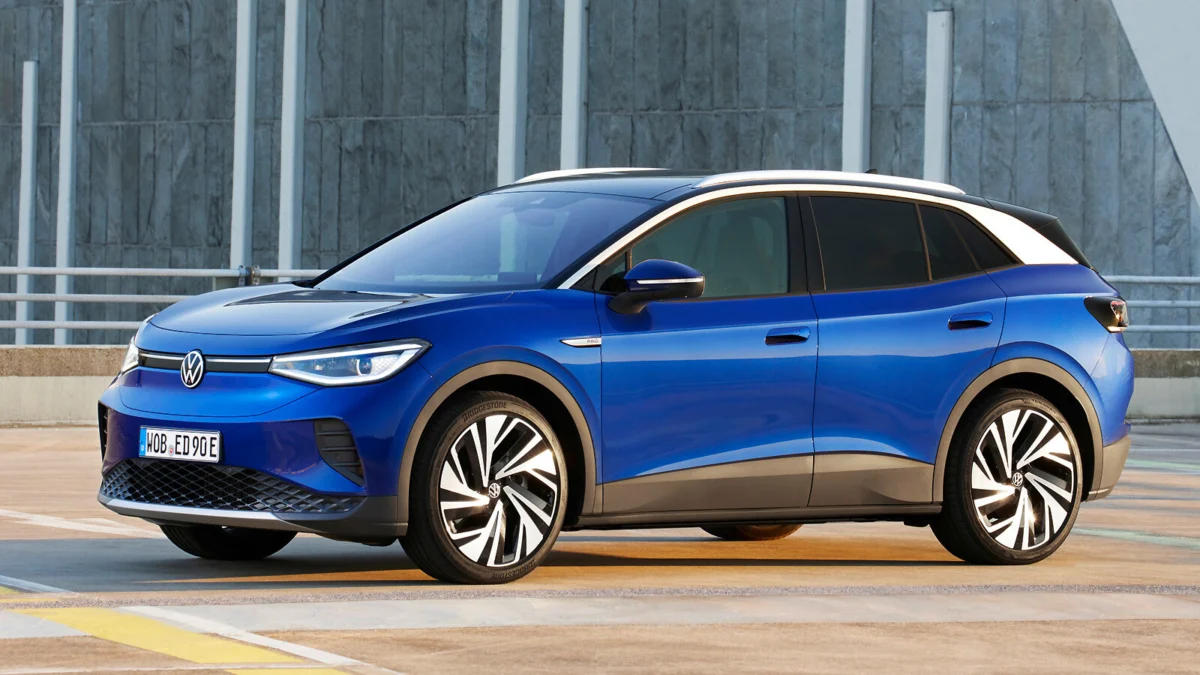
For millions of German drivers, the annual summer vacation has long been synonymous with the rhythmic hum of internal combustion engines and the ritualistic stops at traditional petrol stations. However, as the summer of 2026 hits its peak, a quiet revolution is unfolding on the Autobahn. The "range anxiety" that once defined the narrative of electric vehicle (EV) ownership is rapidly dissipating, replaced by a robust, high-speed, and increasingly ubiquitous charging network that spans the nation.
Data from the Federal Network Agency (Bundesnetzagentur) confirms that Germany’s charging infrastructure has undergone a massive expansion, positioning the country as a leader in European mobility. With over 204,000 publicly accessible charging points now operational, the logistical hurdles of long-distance electric travel are becoming a thing of the past.
The State of Play: Infrastructure at a Glance
The numbers paint a picture of aggressive growth. As of the latest reporting period, the Bundesnetzagentur registry lists 204,078 publicly accessible charging points across Germany. To put this in perspective, this represents a 16 percent increase in just twelve months—a significant acceleration compared to the roughly 177,100 points recorded in June 2025.
This is not merely a quantitative expansion; it is a qualitative leap forward. The infrastructure is shifting rapidly toward high-power charging (HPC) solutions, which are critical for long-distance travel. Currently, approximately 26 percent of all public charging points are classified as fast chargers. Of particular note is the surge in ultra-fast chargers capable of delivering 150 kilowatts or more.
For the average EV driver, this translates into a dramatic reduction in "dwell time." While early adopters were often forced to plan their routes around hours-long charging stops, modern travelers can now top up their batteries in the time it takes to grab a coffee or use the restroom. Currently, the average German driver is never more than a five-minute drive from a public charging station, a metric that comfortably exceeds the ambitious targets set by the European Union.
A Chronology of Growth: From Niche to Necessity
The transition to an electrified transport sector in Germany has been a multi-year effort, marked by distinct phases of infrastructure development and market adoption.
2023–2024: The Foundation Phase
During this period, the focus was on sheer volume. Municipalities and utility providers began installing standard AC chargers in urban centers to support commuters and those without private charging facilities at home.
2025: The Acceleration Phase
By June 2025, the network reached a milestone of 177,100 charging points. This period saw the first major wave of "highway corridor" charging, as private investors and energy giants realized that the business case for ultra-fast charging on major transit routes was finally solidifying.
2026: The Maturity Phase
With over 204,000 points now active, the focus has shifted toward reliability and user experience. The integration of "Plug & Charge" technology and improved payment interoperability across different providers has simplified the process, making the transition seamless for the casual holiday traveler.
The Engine Room: Who is Building the Network?
While government policy provided the initial spark, the heavy lifting has been performed by the private sector. According to the German Association of Energy and Water Industries (BDEW), more than 80 percent of all public charging points are operated by member companies of the energy industry.
These traditional utilities are not acting alone. The ecosystem has diversified significantly. Today, an electric vehicle owner is just as likely to find a reliable charger at a supermarket chain, a major hotel, or within a multi-story car park as they are at a dedicated roadside charging hub. This "opportunistic charging" model—where the vehicle charges while the driver is engaged in other activities—is proving to be the backbone of the convenience factor that the EV market desperately needed.
The Parallel Surge: EV Ownership on the Rise
The infrastructure expansion is perfectly timed to meet the rising tide of electric vehicle adoption. The numbers from the German automotive market are striking:
- 2025 Performance: Germany saw over 545,000 new electric vehicle registrations, accounting for 19.1 percent of the total market share. By January 1, 2026, the cumulative number of electric cars on German roads surpassed the two-million mark for the first time.
- 2026 Momentum: The upward trajectory has continued into the current year. In the first half of 2026, electric models accounted for 24.8 percent of all new registrations, amounting to 368,000 vehicles.
Despite this surge in vehicles, there is no evidence of a "charging crunch." Data from the BDEW indicates that the average utilization rate of public charging points remains remarkably low, hovering around 12 percent. This suggests that the infrastructure build-out has effectively "front-loaded" capacity, ensuring that the network is ready for the millions of additional EVs expected to hit the road in the coming years.
Official Responses and Strategic Challenges
Kerstin Andreae, CEO of the BDEW, highlights that the industry has invested heavily in anticipation of a green transition. "The industry has built this capacity based on the belief in stable regulatory frameworks," Andreae stated. "The infrastructure is currently far ahead of demand, which means no one needs to worry about being stranded this summer."
However, the BDEW remains cautious about the future. While supply is currently robust, the association warns that the demand side requires more consistent political support. "We need an electromobility policy that is coherent," Andreae noted. "Reliable tax incentives, which have proven successful in our neighboring countries, are essential to maintain the momentum."
The industry is also keeping a wary eye on European legislative developments. There is significant concern regarding attempts to soften fleet emission limits, which many manufacturers view as the primary driver for EV innovation. The BDEW is urging the German government to act as a firm advocate for the current EU automotive package, arguing that any dilution of these targets would undermine the massive investments companies have already made in charging infrastructure.
Implications for the Future of Mobility
The implications of this infrastructure success are profound, extending far beyond the convenience of a summer road trip.
1. Decoupling Mobility from Fossil Fuels
Germany’s ability to build a charging network faster than the adoption rate of vehicles creates a "safety net" that encourages hesitant buyers to finally make the switch. When range anxiety is removed from the equation, the primary argument against EVs disappears, leaving only the economic and environmental benefits.
2. Economic Competitiveness
By creating a surplus of charging infrastructure, Germany is positioning itself as a testbed for the future of the automotive industry. The expertise gained in managing high-capacity grids and ultra-fast charging stations is an exportable commodity, potentially offering German firms a competitive edge in the global transition to sustainable transport.
3. Urban Planning and Energy Integration
The shift toward charging at workplaces, hotels, and shopping centers signals a change in urban planning. As more "destination charging" becomes available, the reliance on massive, centralized "gas station" style hubs will likely decrease. This encourages a more decentralized energy model where electric vehicles act as mobile storage units, potentially helping to balance the grid during peak hours—a concept known as Vehicle-to-Grid (V2G) technology, which is the next major frontier for the German energy industry.
Conclusion
As Germany heads into the summer of 2026, the narrative surrounding electric mobility has undergone a fundamental shift. It is no longer a story of technological struggle or limited range. Instead, it is a story of massive industrial investment, successful public-private cooperation, and the quiet triumph of logistics.
For the driver, the road ahead is clear. With a charger within five minutes of almost every destination and a network that is consistently outpacing demand, the electric summer is not just a possibility—it is the new standard. While challenges remain in terms of long-term policy consistency and the need for further demand-side incentives, the infrastructure foundation is now rock solid. Germany has effectively built the highway of the future; now, it is simply a matter of the rest of the market catching up to the speed of the transition.