From the schoolyards of the 1990s to the digital zeitgeist of 2026, the oversized-footed, dungaree-clad Diddl mouse has returned. What was once dismissed as kitschy "girl culture" is now being reclaimed as a symbol of empowerment, aesthetic irony, and a longing for analog connection in an increasingly turbulent world.
The Main Facts: An Unlikely Resurgence
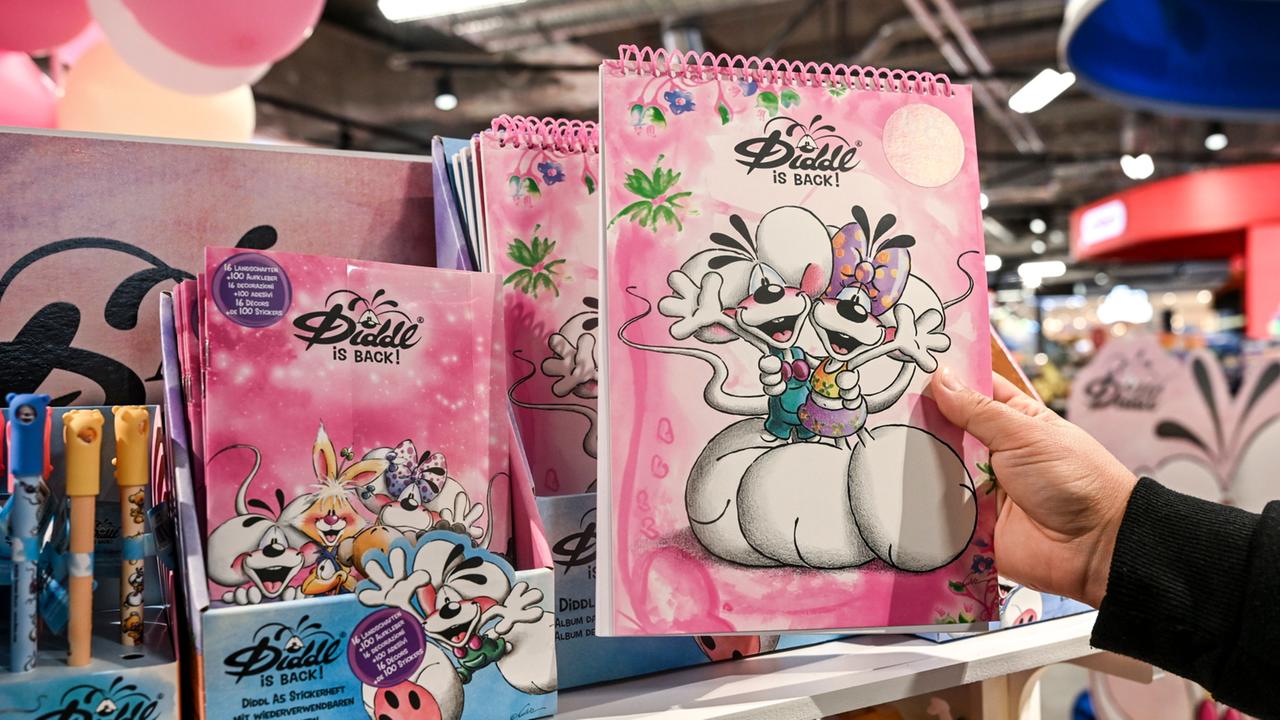
The Diddl mouse, a cartoon character created by German illustrator Thomas Goletz, has officially returned to retail shelves. After years of absence, the character—originally conceived as a kangaroo before evolving into the iconic mouse—is seeing a surge in demand that has caught retailers off guard. In cities like Berlin, staff at major bookstores and stationery shops report that the new Diddl pads and collectibles are being "torn from their hands" by customers.
This is not a slow-burn revival; it is a full-blown commercial phenomenon. In France, where the new collection saw a preliminary launch, several product lines sold out within days, and rare vintage pieces from the 1990s are currently trading on collector forums for hundreds of euros. The resurgence of Diddl is the latest chapter in a broader cultural fascination with the 1990s, a decade that has become the aesthetic North Star for Generation Z.
Chronology of a Cultural Icon
To understand the significance of Diddl’s return, one must look back to its meteoric rise. In the mid-1990s, Diddl was the undisputed monarch of the German schoolyard. Alongside the rise of Eurodance, the Spice Girls, and iconic German pop acts like Blümchen and Tic Tac Toe, Diddl items—friendship books, stationery, pencil cases, and plush toys—formed the backbone of a specific brand of youth culture.
- 1990–1995: The Birth of a Mascot. Thomas Goletz introduced Diddl, initially sketching the character as a kangaroo. It quickly shifted into the mouse persona that would become a household name.
- 1996–2005: The Golden Age. During this period, Diddl became an obsession. Trading "Diddl-Blätter" (the perforated sheets from specialized stationery pads) became a currency of social standing among pre-teens.
- 2006–2020: The Decline. As digital technology took over and tastes shifted toward gaming and social media, the physical culture of collecting Diddl items faded into the background, often viewed as a relic of a "tacky" era.
- 2021–2026: The Retro Renaissance. Driven by social media trends and a growing appreciation for 90s kitsch, the brand began to see renewed interest. In July 2026, this culminated in a full-scale retail relaunch.
Supporting Data: Why the 90s Never Really Left
The revival of Diddl is not merely a product of corporate marketing; it is a grassroots phenomenon. Merlin Schommer, a party promoter in Cologne who has been organizing "90s Theme Parties" for over a decade, notes that the audience has remained consistently young. "The 1990s were never really gone," Schommer observes. "Our audience is primarily aged 18 to 40, and the demand for neon makeup, bubble machines, and the soundtrack of our youth is stronger than ever."
Historian Tobias Becker, from the Free University of Berlin, argues that the current "revival" is distinct because it is being driven by people who have no direct, lived experience of the 1990s. "Most of the people fueling these trends were not even born when Diddl first dominated the schoolyards," Becker says. "They are interacting with a curated, aesthetic version of the decade: neon, platform shoes, and the perceived simplicity of a pre-smartphone world."
Official Perspectives and Expert Analysis
The return of the Diddl mouse has sparked a broader academic and sociological debate regarding the nature of "girl culture" and how society judges the interests of young women.
The "Camp" Aesthetic
Sociologist and author Nadia Shehadeh suggests that the current obsession with Diddl is a form of "Camp." As defined by cultural critic Susan Sontag, Camp is the love of the exaggerated, the "off," and the kitschy. By embracing items once deemed "tacky," younger generations are subverting the elitist hierarchies that historically mocked girls’ interests.
"For the first time," Shehadeh notes, "people can be unapologetically, iron-free enthusiastic about things they love. The shame that was attached to being a ‘girly’ girl in the 90s is being replaced by a sense of pride and collective joy."
Challenging the Nostalgia Narrative
Historian Tobias Becker warns against over-romanticizing the 1990s. While the current generation sees a world of endless sunshine and Eurodance, the reality of the 90s included significant systemic issues, including rampant sexism, homophobia, and high youth unemployment following German reunification.
"It is important to remember that the 1990s were not a paradise," Becker adds. "Television programs frequently featured casual sexism that would be rightfully rejected today. When stars like the Spice Girls were interviewed, or when entertainers like Thomas Gottschalk engaged in behavior that we now recognize as problematic, it was treated as standard practice. There was no ‘political correctness’ in the way we understand it now."
Implications: A Shift in Societal Values
The resurgence of Diddl serves as a lens through which we can view the current "crisis mode" of the 2020s. In an era defined by geopolitical instability, the climate crisis, and the relentless pressure of the digital age, the 1990s offer a psychological refuge.
The Desire for Analog Connection
Diddl represents a tactile, analog world. It represents the "H.D.G.D.L" (a German abbreviation for "I like you a lot") written in a physical friendship book, rather than an ephemeral push notification or a fleeting direct message. For many young people, the mouse is a symbol of a time that feels slower, more manageable, and more optimistic.
The Empowerment of "Girlpower"
The most significant implication of the Diddl revival is the validation of female-coded interests. In the 90s, if a boy liked sports or hip-hop, it was "cool." If a girl collected Diddl sheets, it was "superficial" or "trashy." By reclaiming these items, the current generation is effectively rewriting the narrative. They are asserting that the things that brought girls joy—the colors, the characters, the stationery—were never actually "meaningless." They were vital components of social bonding and emotional expression.
Is it Marketing or Meaning?
While some critics might dismiss the Diddl revival as a cynical cash grab by toy companies, the persistence of the trend suggests otherwise. When a character is adopted by contemporary artists—such as the Berlin-based rapper Ikkimel, who incorporates Diddl-esque aesthetics into her subversive, zeitgeist-driven performances—it becomes clear that the mouse has transcended its original commercial purpose. It has become a symbol of a reclaimed identity.
Conclusion: The Mouse as a Mirror
Whether Diddl will remain a long-term fixture of the modern retail landscape or fade back into obscurity remains to be seen. However, its return has already achieved something more profound than a sales spike: it has forced a national conversation about the history of our own tastes.
We are no longer looking back at the 1990s with the shame of the "cringe-worthy" past. Instead, we are looking at them as a foundation for a new, more inclusive way of defining culture. The Diddl mouse, with its oversized feet and unassuming smile, has become the perfect vessel for this transition—a reminder that what we once deemed "silly" was, in fact, a vital part of the human experience.
In a world that feels increasingly fragmented, the simple act of trading a piece of paper with a cartoon mouse on it is an act of defiance. It is a declaration that even in a digital, high-stakes future, there is always room for the small, the cute, and the undeniably human.