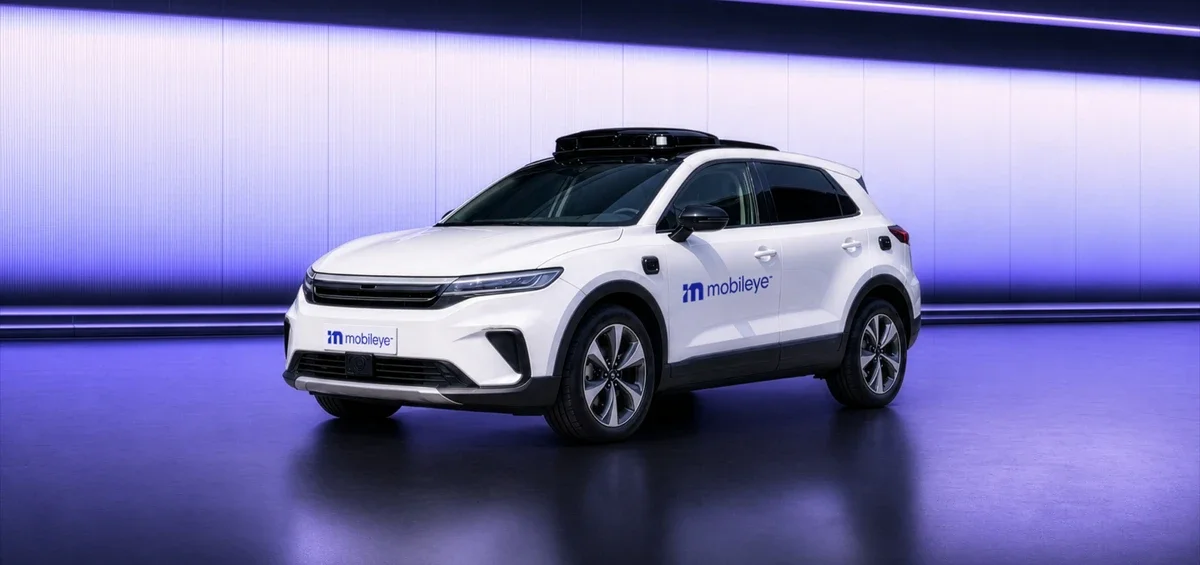

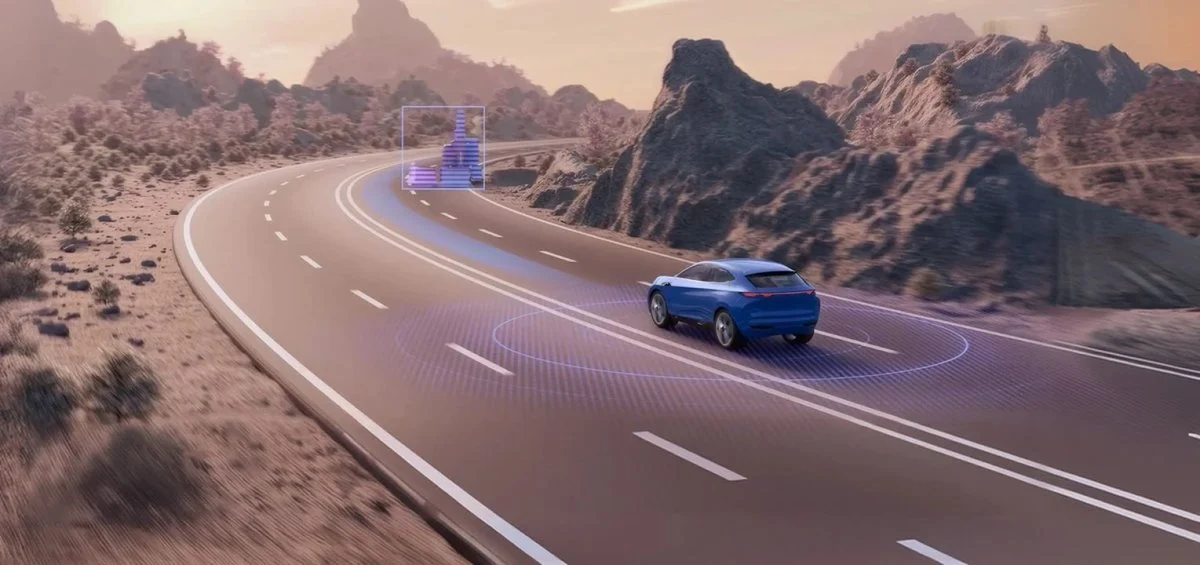
The automotive landscape is undergoing a tectonic shift as software-defined vehicles transition from a futuristic concept to a tangible reality. In a significant move aimed at cementing its technological footprint, the global automotive powerhouse Stellantis has announced a strategic partnership with the Israeli tech pioneer Mobileye. The collaboration will see the integration of Mobileye’s "Cloud-Enhanced ADAS" (Advanced Driver Assistance System) into a range of future Stellantis vehicles, marking a pivotal step in the evolution of semi-autonomous driving.
This integration is not merely an incremental upgrade; it represents the adoption of sophisticated "swarm intelligence" designed to refine how vehicles perceive and navigate the world. With the first of these next-generation vehicles slated to hit the global market starting in 2027, the industry is closely watching how this marriage of mass-market manufacturing and high-end data processing will reshape the safety and efficiency standards of daily driving.
Main Facts: The Core of the Collaboration
At the heart of this agreement is Mobileye’s proprietary Cloud-Enhanced ADAS, a system that transcends traditional, sensor-reliant driver assistance. While standard ADAS relies solely on the immediate sensory data captured by a car’s onboard cameras and radar, Mobileye’s platform utilizes a dynamic, cloud-connected loop.
The system is underpinned by Mobileye’s "Road Experience Management" (REM) technology. REM operates on the principle of crowd-sourced mapping. Vehicles equipped with Mobileye’s "EyeQ" System-on-Chip (SoC) serve as mobile data collectors. As they traverse roads, these vehicles continuously identify and map critical infrastructure—traffic signs, lane markings, pedestrian crossings, speed limits, and traffic light positioning.
These data points are anonymized and uploaded to a centralized cloud server. Once processed, this massive dataset is converted into a high-definition, up-to-date map of the global road network. This database is then pushed back to the fleet, providing vehicles with "foresight" beyond the range of their own physical sensors. Essentially, if one car in the swarm identifies a newly installed lane restriction or a temporary traffic pattern, the entire connected fleet effectively "learns" of this change within moments.
Chronology: A Roadmap to Integration
The journey toward this partnership reflects the rapid maturation of AI-driven mobility. While the official announcement was made recently, the groundwork for this integration has been laid over several years:
- 2020–2023: Scaling the Infrastructure: Mobileye spent these years aggressively scaling its REM platform. By partnering with various OEMs (Original Equipment Manufacturers) worldwide, Mobileye achieved a massive footprint, with over eight million vehicles currently acting as sensors on public roads.
- Early 2024: Strategic Negotiations: Stellantis, seeking to unify its diverse brand portfolio under a common, high-performance software architecture, identified Mobileye’s REM as the ideal solution to enhance its upcoming STLA-based vehicle platforms.
- Late 2024 (Announcement): Both companies formally confirmed the supply agreement, detailing the rollout of the technology for select future models.
- 2027 (The Launch Window): The industry anticipates the commercial debut of the first Stellantis vehicles incorporating this Cloud-Enhanced ADAS. While specific models remain under wraps, analysts expect the integration to begin with flagship vehicles across the Stellantis group, which includes brands like Opel, Peugeot, Citroën, Fiat, Chrysler, and Jeep.
Supporting Data: The Power of the Swarm
The efficacy of Mobileye’s approach lies in its sheer scale. To understand why Stellantis chose this specific partner, one must look at the quantitative capabilities of the REM network.
Unprecedented Global Coverage
Mobileye reports that its fleet of over eight million vehicles processed roughly 54 million kilometers of road data in the last year alone. This is not a static map; it is a living, breathing digital twin of global infrastructure. Currently, the system has achieved a coverage rate of over 95 percent of all public roads across the United States and Europe. This includes everything from high-speed, controlled-access motorways to complex, narrow streets in dense, historic urban centers.
The Role of the EyeQ SoC
The intelligence behind this system is the EyeQ System-on-Chip. These chips are designed specifically for the rigorous demands of computer vision. By offloading complex processing tasks to the SoC, the vehicle can interpret its surroundings in real-time while simultaneously preparing data packets for cloud transmission. The efficiency of this chip is critical, as it ensures that the vehicle’s primary safety systems remain prioritized, preventing latency issues in critical driving scenarios.
Official Perspectives and Industry Implications
While Stellantis has been tight-lipped regarding which specific models will be the first to feature the new technology, the implications of the deal are clear. For Stellantis, this partnership is a defensive and offensive move. By outsourcing the development of the mapping and swarm-intelligence layer to a specialized expert like Mobileye, Stellantis can focus its internal R&D resources on interior experience, propulsion technology, and the physical design of its vehicles.
The Stance of the Industry
Mobileye has consistently positioned itself as the "enabler" of the automotive industry. Their mission, as articulated in various investor briefings, is to provide the "eyes and the brain" for vehicles, allowing traditional manufacturers to skip the multi-decade process of building proprietary mapping software from scratch.
For Stellantis, a group that manages a massive portfolio of diverse, international brands, the benefit is standardization. If the software architecture for an Opel in Germany can share data with a Chrysler in the United States, the overall safety profile of the entire Stellantis fleet improves exponentially.
Implications: The Future of Assisted Driving
The integration of Cloud-Enhanced ADAS signals several major shifts in the automotive market:
1. From "Reactive" to "Proactive" Safety
Current ADAS systems are largely reactive; they detect an obstacle and react to it. With REM, the vehicle becomes proactive. It can anticipate a sharp curve based on crowd-sourced data, even if the road signs are obscured by rain or snow. It can adjust speed in anticipation of a change in speed limit that it hasn’t physically reached yet. This "horizon" of awareness is the next frontier in road safety.
2. Privacy and Data Security
The transition to a "connected fleet" naturally raises questions regarding data privacy. Mobileye has emphasized that the data collected is anonymized and stripped of identifying information before it reaches the cloud. However, as these systems become more pervasive, the regulatory scrutiny regarding how data is handled—and who owns the "map" of our public streets—will likely intensify. Stellantis and Mobileye will need to navigate an increasingly complex landscape of data protection laws, particularly in the European Union.
3. The Democratization of Autonomy
Historically, high-end automated driving features were reserved for luxury vehicles. By integrating this technology into the broader Stellantis portfolio—which ranges from affordable compacts to family SUVs—the safety benefits of high-definition, cloud-assisted driving are being democratized. This could lead to a significant reduction in accident rates across a wider demographic of drivers.
4. Competitive Pressure on Other OEMs
This move puts immense pressure on other major automotive groups. With Stellantis securing a deal with the market leader in REM, competitors like Volkswagen, Ford, and Toyota must now evaluate whether to accelerate their own internal software development or seek similar partnerships with tech giants. The "arms race" for the most accurate digital map of the world is now firmly underway.
Conclusion: A New Chapter for Stellantis
As we approach 2027, the automotive industry will be watching the rollout of these Stellantis models with great interest. The partnership between Stellantis and Mobileye is more than just a procurement deal; it is a recognition that in the modern era, the value of a car is no longer defined solely by its engine or its chassis, but by its connectivity and its ability to learn from the collective experiences of the road.
By leveraging the "swarm intelligence" of millions of vehicles, Stellantis is positioning itself to offer a driving experience that is not only safer and more intuitive but also inherently more capable of evolving over time. As the cloud continues to become a permanent passenger in our vehicles, the 2027 model year may well be remembered as the moment the car truly became a participant in a connected, intelligent, and proactive transportation network.