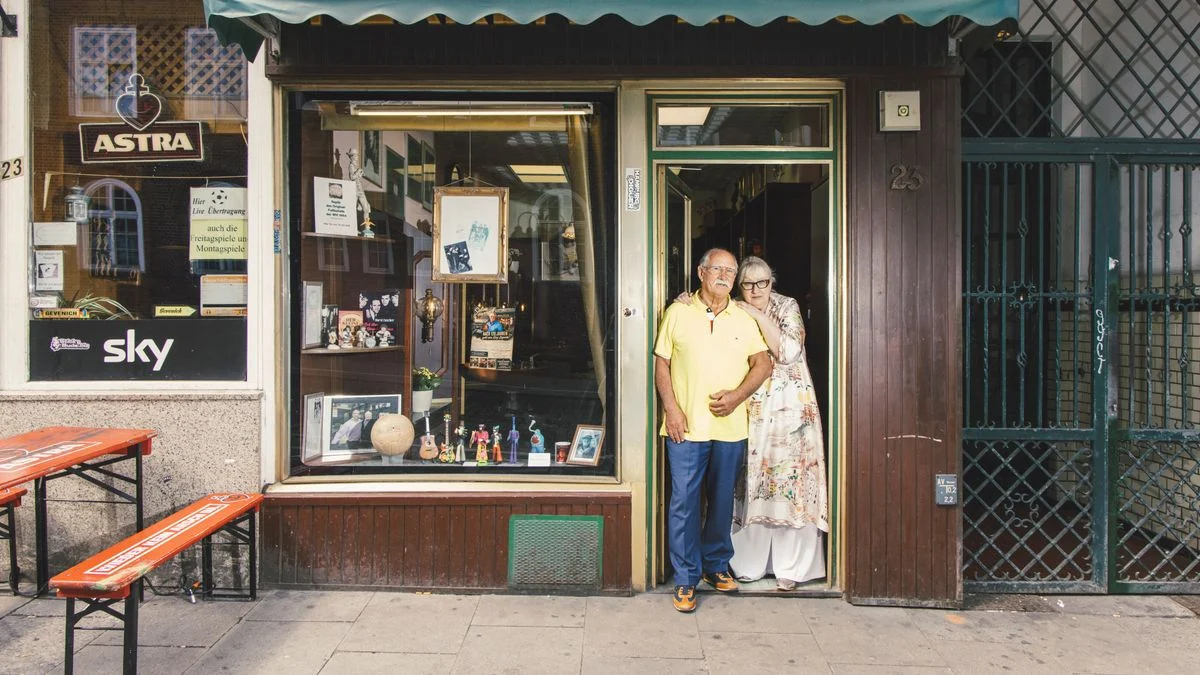
For over half a century, a small, unassuming shop on Hamburg’s Reeperbahn has served as a silent witness to the city’s transformation from a gritty port district to a global cultural hub. Now, as the scissors are set down for the final time, the closure of Harry’s hair salon marks the end of an era for the legendary St. Pauli district.
Main Facts: The End of an Iconic Institution
In the heart of Hamburg’s St. Pauli district, a neighborhood defined by its nocturnal energy and historical rebellion, one of its most enduring landmarks is closing its doors. Harry’s Hair, a modest barber shop that became part of local folklore, has officially ceased operations. The shop, which gained international notoriety for its connection to the formative years of The Beatles, was more than just a business; it was a museum of rock-and-roll history.
The closure comes amidst the rapid gentrification of the Reeperbahn area, where rising commercial rents and the changing demographics of Hamburg’s entertainment district have made it increasingly difficult for legacy businesses to survive. While the shop’s owner has not cited a single factor for the closure, the transition represents a broader trend of "vanishing history" in Germany’s most famous red-light district.
A Chronology: From Port City Origins to Global Fame
To understand the significance of Harry’s, one must look back at the early 1960s. Hamburg was the crucible in which The Beatles were forged. Before they became the "Fab Four" who took the world by storm, they were a scrappy, leather-clad band playing grueling, multi-hour sets in the dank clubs of the Grosse Freiheit and the Reeperbahn.
1960–1962: The Beatlemania Genesis
It was during these formative years that the band members—John Lennon, Paul McCartney, George Harrison, and original bassist Stuart Sutcliffe—sought out local barbers to manage their unruly mops. Harry’s became a sanctuary for the young musicians. It was here, amidst the smell of talcum powder and hair tonic, that the iconic "mop-top" or "pilzkopf" (mushroom head) haircut began to take shape.
1970s–1990s: The Cult Status
As The Beatles’ fame exploded, the shop became a pilgrimage site for fans of 1960s music. Throughout the 70s and 80s, Harry’s remained an authentic holdout. While the surrounding neighborhood saw the rise of modern clubs and tourist traps, the shop maintained its original aesthetic—a time capsule of wood paneling, vintage chairs, and walls adorned with fading photographs of the band.
2000s–2024: The Final Scissors
In recent years, the shop transitioned from a working barber shop to a living monument. The owner, Harry, became a fixture of St. Pauli culture, sharing stories of the "boys" with tourists and local historians alike. The closure in 2024 concludes a 60-year run that spanned the transition from post-war recovery to the digital age.
Supporting Data: The Changing Face of St. Pauli
The closure of Harry’s is not an isolated incident but a data point in the rapid economic shift of Hamburg’s central districts.
- Commercial Real Estate Trends: According to municipal records, commercial rents in the St. Pauli-Reeperbahn corridor have increased by approximately 45% over the last decade.
- Legacy Business Retention: A 2023 report by the Hamburg Chamber of Commerce indicated that nearly 30% of businesses operating for over 40 years in the district have shuttered since 2015, replaced largely by franchise outlets, chain hotels, and luxury housing developments.
- Tourism Impact: While tourism remains the lifeblood of the Reeperbahn, the "authenticity index"—a metric used by urban planners to measure the presence of non-corporate, historic local businesses—has plummeted in the district, signaling a decline in the area’s unique cultural identity.
Official Responses and Public Sentiment
The news of the closure has prompted an outpouring of grief from local officials and the international music community.
"Harry’s was not just a place to get a haircut; it was a bridge to our city’s most significant cultural export," said a spokesperson for the Hamburg Culture Department. "The loss of such a space reminds us that heritage is fragile. When the physical sites associated with our history disappear, the stories become much harder to tell."
Local residents have held informal vigils outside the shop, leaving flowers and notes expressing their gratitude for the role the shop played in keeping the "real" St. Pauli alive. Many have criticized the city for failing to offer grants or protections that might have allowed such culturally significant landmarks to persist as museum-quality heritage sites.
Implications: The Price of Progress
The shuttering of Harry’s raises critical questions about how global cities balance development with cultural preservation. When a neighborhood becomes a "brand"—as St. Pauli has—the very elements that made it desirable (its grit, its history, its working-class roots) often become the victims of that success.
The "Museumification" Trap
Urban sociologists argue that cities often fall into a trap where they celebrate their history after they have already destroyed the physical remnants of it. By allowing historic storefronts to be converted into generic retail spaces, the city loses the "texture" of its history.
The Cultural Vacuum
For the music industry, the loss of sites like Harry’s represents a decoupling from the origins of rock music. If future generations of musicians visit Hamburg looking for the spirit of the early Beatles, they will find polished glass and steel, not the intimate, human-scale environments where legends were made.
The Future of St. Pauli
The challenge for the Hamburg Senate moving forward is to determine how to support "cultural anchors" that do not necessarily produce high tax revenue but provide immense intangible value. Without intervention, St. Pauli risks becoming a hollowed-out tourist destination, losing the bohemian soul that once attracted the world’s most famous band to its streets in the first place.
Conclusion: A Legacy That Endures
While the doors to Harry’s may be locked, the legacy of the shop remains etched into the history of music. The "pilzkopf" haircut is perhaps the most recognizable visual symbol of the 1960s, a style that defined a generation of rebellion and artistic revolution.
Hamburg is currently exploring ways to honor the site, perhaps through a permanent plaque or an archive of the shop’s interior, but as the locals know, a plaque is a poor substitute for the presence of the real thing. The closure of Harry’s serves as a poignant reminder that even the most legendary landmarks are subject to the inexorable march of time.
For those who lived through the era, and for the millions of Beatles fans worldwide, the shop will forever be the place where history was cut, trimmed, and styled into the look that changed the world. As St. Pauli continues to modernize, the absence of this humble barber shop will be felt by anyone who appreciates the intersection of urban history and popular culture. The "Final Cut" has been made, and with it, a piece of rock-and-roll history passes into the realm of memory.