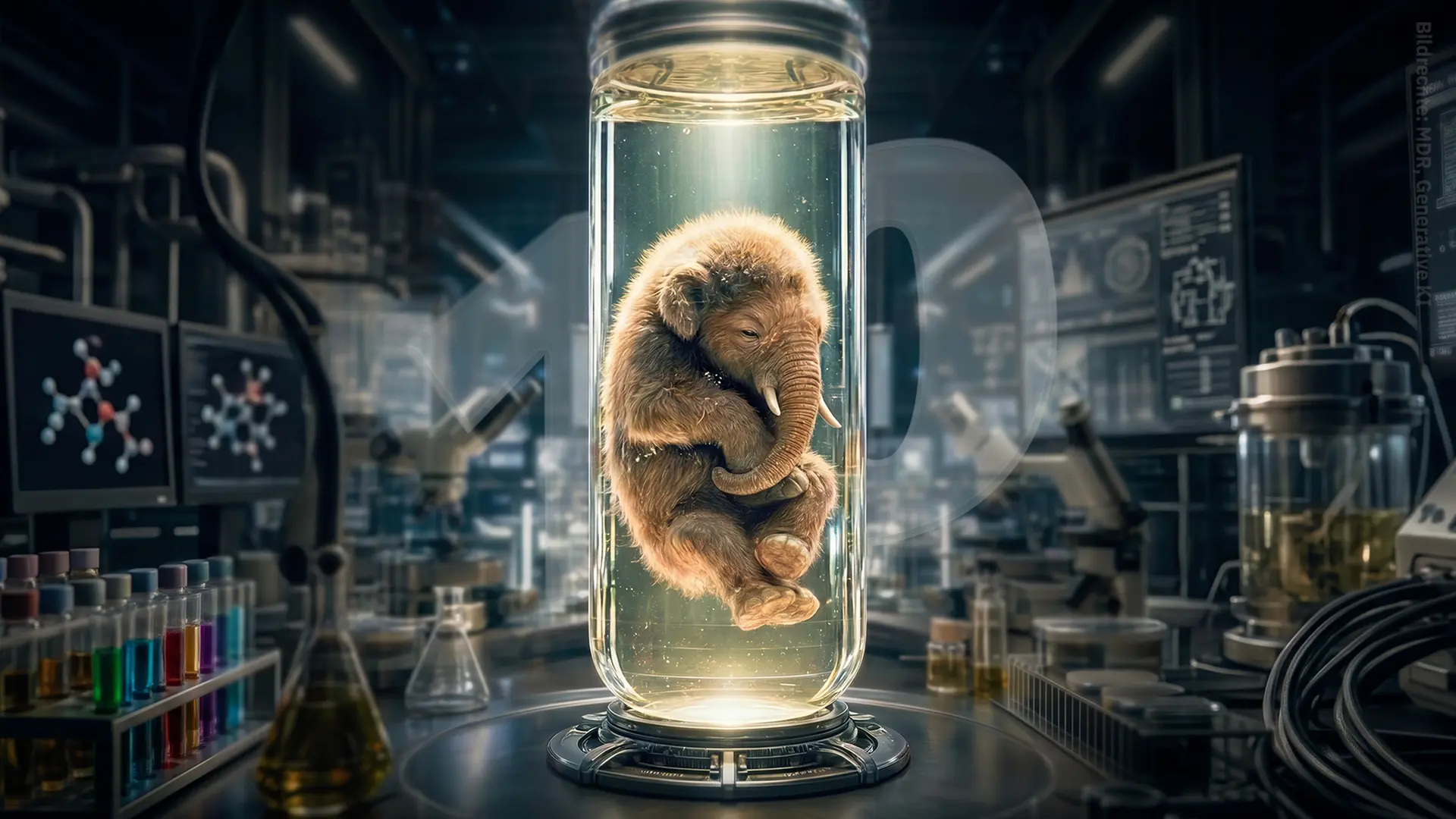
The promise is bold, almost mythic in its scope: a creature that has been extinct for thousands of years walking the earth once again. By 2028, the American biotechnology firm Colossal Biosciences claims it will orchestrate the birth of the first mammoth calf since the last of the species vanished from the Siberian tundra. While the headlines evoke the cinematic spectacle of Jurassic Park, the reality is a complex tapestry of cutting-edge genomics, ethical debate, and a rigorous scientific challenge that separates high-stakes corporate ambition from biological possibility.
The Core Objective: Engineering a Proxy
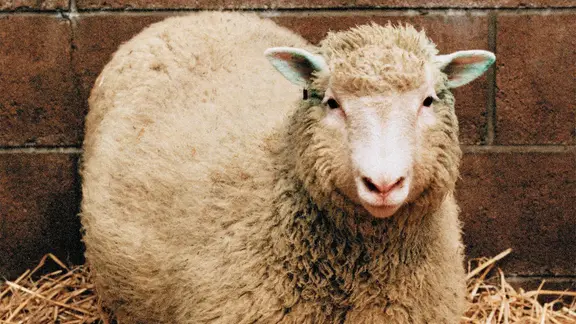
To understand the gravity of this project, one must first dismantle the misconception of "cloning." Cloning, as demonstrated by the famous sheep Dolly in 1996, requires a living cell with an intact nucleus. For the woolly mammoth (Mammuthus primigenius), which went extinct roughly 4,000 years ago, no such viable cells exist. The specimens found in the permafrost are biological time capsules, but their DNA is fragmented, degraded by millennia of environmental exposure and ice crystals.
Consequently, Colossal Biosciences is not attempting a literal "resurrection." Instead, they are employing a process of "proxy-species engineering." By utilizing CRISPR-Cas9—a revolutionary gene-editing tool—scientists are taking the genome of the Asian elephant (Elephas maximus), the mammoth’s closest living relative, and splicing in key genetic traits that defined its extinct cousin. The goal is not a carbon copy of a mammoth, but an "arctic-adapted elephant"—a creature capable of surviving in freezing climates, possessing the thick, insulating fur, subcutaneous fat deposits, and specialized hemoglobin of the mammoth.
A Chronology of Scientific Ambition
The journey toward this biological milestone has been a decade-long acceleration of genetic research:
- 1996: The successful cloning of Dolly the sheep proves that adult cells can be reprogrammed to create a new, genetically identical organism.
- 2010s: Advancements in high-throughput DNA sequencing allow researchers to decode the complete genome of the woolly mammoth from permafrost-preserved samples.
- 2021: Colossal Biosciences is founded by geneticist George Church and tech entrepreneur Ben Lamm, injecting massive private funding into the field of de-extinction.
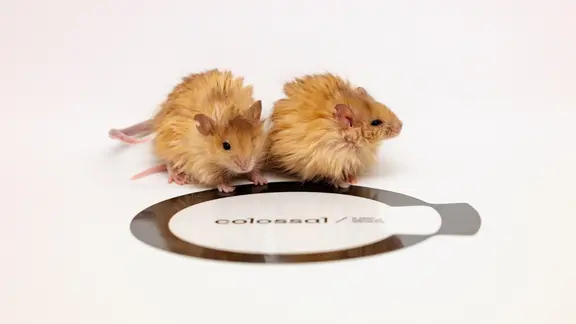
- 2023–2025: Research pivots from theoretical computer models to practical lab-based CRISPR applications, including the creation of mouse models that exhibit mammoths’ hair-growth patterns.
- 2026: Current state of play. The timeline remains fixed on a 2028 target, though the scientific community remains divided on whether this is a realistic deadline or a strategic marketing milestone.
Supporting Data and Genetic Hurdles
The genetic overlap between the Asian elephant and the woolly mammoth is approximately 99.6 percent. While that 0.4 percent difference sounds negligible, it represents thousands of genes. A mammoth is not merely a "hairy elephant"; it is a complex biological system built on 20,000 genes interacting in ways that are still being mapped.
"We are essentially trying to rewrite the operating system of an elephant," notes one leading geneticist. "Even if we identify the genes for hair, fat, and cold-tolerance, we have no guarantee how those genes will interact with the rest of the elephant’s developmental biology."
The "proxy" nature of the project is the primary point of contention. Critics point out that an animal’s phenotype—its physical manifestation—is not just the result of a genetic blueprint. Epigenetics, maternal environment, and social learning play massive roles in the development of megafauna. An elephant raised in a lab, lacking the social structure of a herd, may face significant developmental hurdles, regardless of how much "mammoth DNA" it possesses.
Official Responses and Ethical Critique
The scientific establishment has reacted to the 2028 timeline with a mix of fascination and deep skepticism. While the technical progress made by the team at Colossal is undeniably impressive, the ethical implications are being debated in academic circles worldwide.
The Marketing vs. Science Dilemma
Many experts argue that the 2028 date is a calculated PR move designed to maintain investor interest. "De-extinction" captures the human imagination in a way that traditional conservation biology rarely does. Critics argue that the hundreds of millions of dollars being poured into bringing back a single species could be far more effectively used to protect the hundreds of thousands of species currently threatened with extinction.
The Moral Weight of De-Extinction
Dr. Katrin Böhning-Gaese of the Senckenberg Biodiversity and Climate Research Centre has been a vocal proponent of prioritizing living ecosystems over "resurrected" ones. The argument is twofold:
- Ecological Displacement: If a mammoth-like creature is released into the wild, what impact will it have on existing, fragile Arctic ecosystems that have spent 4,000 years evolving without them?
- Animal Welfare: Is it ethical to create a hybrid animal that has never existed in nature? Will it suffer from health complications? The history of cloning is littered with animals that suffered from premature aging, organ failure, and developmental issues.
Implications: What Defines a Species?
Perhaps the most profound impact of the mammoth project is the philosophical shift it forces upon us. For centuries, biology treated "species" as fixed, immutable categories. The work being done today suggests that a species is, in fact, a fluid collection of traits that can be edited and swapped.
If we can create a "wolly elephant," where do we draw the line? Does the animal have the right to be called a mammoth? If it behaves like an elephant but looks like a mammoth, does it belong in a zoo, a wildlife sanctuary, or the open tundra?
The project has triggered a global conversation about the anthropocentric desire to control nature. In our effort to "fix" the mistakes of the past—specifically the extinction of megafauna during the late Pleistocene—we may be creating an entirely new category of animal, one that exists purely as a testament to human technological prowess.
The Verdict: 2028 and Beyond
Will we see a "mammoth" in 2028? If by that we mean a genetically engineered Asian elephant with cold-adapted features, it is within the realm of possibility. If by that we mean a true Mammuthus primigenius, the answer is a definitive "no."
The project serves as a mirror for modern humanity: we are capable of editing the very fabric of life, yet we are still struggling to define the wisdom with which we should wield that power. Whether the 2028 deadline is met or not, the "De-Extinction" movement has successfully shifted the boundaries of biology. We are moving toward an era where the past is not merely something to be studied in a museum, but a library of genetic data that can be re-compiled and re-animated.
The real question remains: just because we can bring back the ghosts of the past, should we? As the clock ticks toward 2028, the world watches with bated breath, waiting to see if science can truly bridge the gap between a 4,000-year-old memory and a living, breathing, woolly reality. Regardless of the outcome, the fundamental relationship between humanity and the natural world has been irrevocably altered.