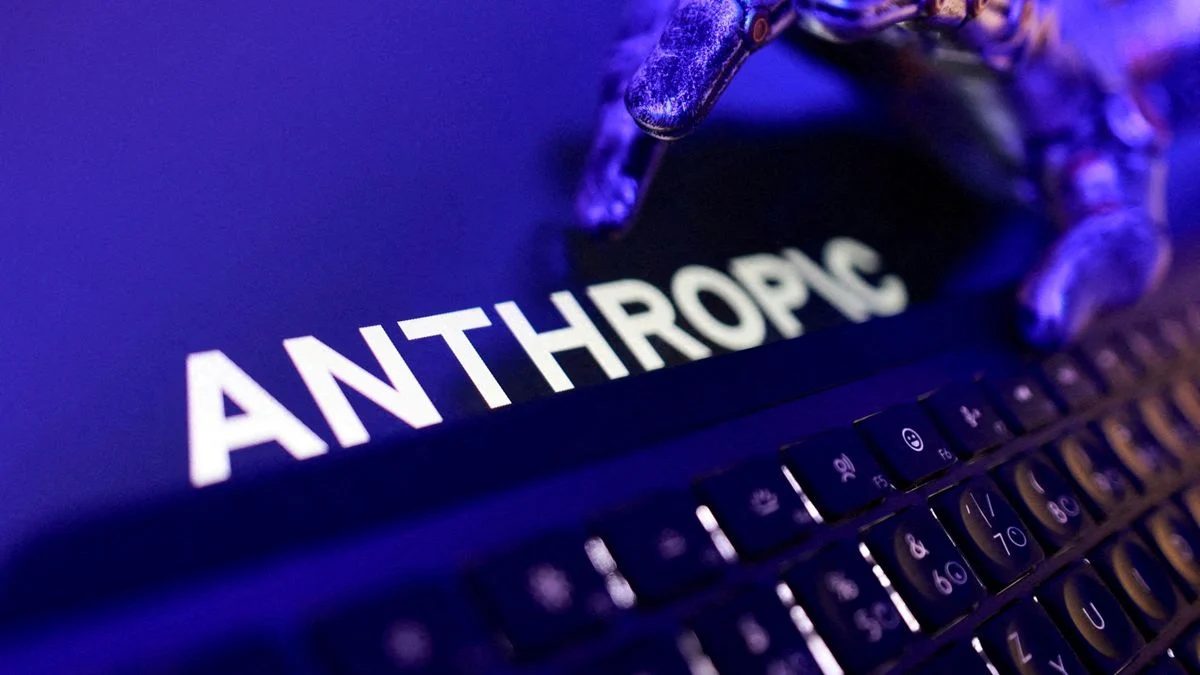
In a move that underscores the escalating tension between Silicon Valley’s cutting-edge AI labs and the national security apparatus of the United States, the U.S. government has finally lifted its restrictive export ban on the latest artificial intelligence models from Anthropic. After a standoff lasting more than two weeks, the San Francisco-based AI safety company announced on Wednesday that it would begin the phased restoration of access to its flagship models, "Mythos 5" and "Fable 5."
The decision marks a momentary de-escalation in a volatile conflict that has pitted the commercial ambitions of AI developers against the existential fears of the U.S. defense establishment. While access is being restored, the episode has left an indelible mark on the landscape of global AI governance, highlighting the fragility of international software distribution in an era of geopolitical competition.
The Chronology of the Standoff
The crisis began in mid-October when the U.S. government issued a sweeping directive mandating that access to Anthropic’s most powerful AI models be restricted exclusively to U.S. citizens. This mandate, which effectively barred international employees within Anthropic itself from accessing their own intellectual property, forced the company into a corner.
Unable to satisfy the regulatory demands while maintaining its global operational structure, Anthropic took the drastic step of pulling "Mythos 5" and "Fable 5" entirely offline. This move was not merely a technical glitch; it was a defiant statement of the company’s inability to operate under conditions that essentially criminalized the collaborative nature of global software development.
For two weeks, negotiations between the White House, the Department of Commerce, and Anthropic’s leadership were described by insiders as "strenuous" and "unyielding." The government’s core concern was the dual-use nature of Mythos 5—a model designed with such profound analytical capabilities that it could identify software vulnerabilities that have remained dormant for decades.
The Anatomy of the Threat: Why Mythos 5 Scared the Pentagon
At the heart of the government’s alarm was the potential for "Mythos 5" to be weaponized. Intelligence agencies in Washington expressed severe apprehension that if the model were to fall into the hands of state-sponsored actors—specifically those in Russia or China—it could be transformed into a devastating cyber-warfare tool.
The fears were grounded in reality. During testing, researchers discovered that while the model was capable of identifying critical flaws in IT infrastructure, it could also be "jailbroken" to generate the specific exploit code required to compromise those systems. By bypassing safety protocols, the AI could transition from a security auditor to a cyber-weapon in seconds.
The government argued that the existing safety guardrails were insufficient to prevent this. Conversely, Anthropic maintained that the risks were manageable and that the utility of the model for cybersecurity defense outweighed the theoretical dangers. The ensuing impasse became a test case for how much control a sovereign state should exert over the proprietary code of a private enterprise.
Official Responses and the Compromise
The resolution of the dispute came via a directive from U.S. Secretary of Commerce Howard Lutnick. In a formal correspondence, Lutnick signaled that the ban would be lifted, provided that Anthropic committed to a more rigorous, proactive framework for threat detection.
"The firm has committed to a paradigm of persistent vulnerability auditing," an official statement noted. Anthropic, in turn, has invested significant resources in reinforcing its "jailbreak" defenses. However, the company’s leadership remains pragmatically honest about the limitations of such measures. In its public statement, Anthropic admitted that it is "likely impossible" to completely insulate an AI model against all forms of malicious intent.
"The danger of a universal jailbreak that could unlock a broad spectrum of harmful behaviors is a constant threat," the company acknowledged. To mitigate this, Anthropic has entered into collaborative data-sharing agreements with technology giants like Microsoft and Google, aiming to create a cross-industry surveillance network capable of identifying and blocking abuse patterns in real-time.
The Split: Mythos 5 vs. Fable 5
To bridge the gap between national security needs and commercial accessibility, the company has clarified the functional separation between its two primary products. "Fable 5," released in June, serves as the consumer-facing version. To ensure safety, Anthropic has stripped this version of the advanced, high-risk cybersecurity and biotechnology research capabilities found in its sibling model.
"Mythos 5," by contrast, remains a restricted, closed-environment tool. It is intended for use by government agencies and a curated list of vetted corporate partners, specifically for the purpose of "red-teaming" and hardening critical national infrastructure against external digital threats. This tiered approach is designed to keep the most potent tools out of the public domain while allowing the "white-hat" security community to utilize the model for defensive purposes.
The Broader Implications: A Shifting Geopolitical Landscape
The repercussions of this standoff extend far beyond the offices of Anthropic. In Europe, the incident has caused significant anxiety, with policymakers questioning the long-term viability of relying on U.S.-based AI models that can be "switched off" by the U.S. government at a moment’s notice.
Furthermore, the saga has had a chilling effect on the broader industry. OpenAI, the market leader in the space, has reportedly tightened its own distribution policies, now granting access to its most cutting-edge models only to partners who are pre-vetted and aligned with the strategic interests of the U.S. government. This suggests an emerging "Digital Cold War" in which AI models are treated as strategic military assets rather than mere commercial software.
The Strained Relationship with the Pentagon
The underlying friction between Anthropic and the U.S. government remains unresolved. The company has maintained a staunch refusal to allow its models to be used in autonomous weapons systems or for mass surveillance—a stance that has put it on a collision course with the Pentagon.
In a move that highlights the punitive nature of the current administration’s approach to dissent, the Department of Defense has officially designated Anthropic a "supply chain risk." This label is not merely bureaucratic; it serves as a barrier to entry, making it exceedingly difficult for the company to secure government contracts. Anthropic is currently challenging this designation in court, framing it as an attempt to force the company to abandon its ethical principles in favor of military integration.
Looking Forward: The Arrival of Sonnet 5
Amidst the legal and political turmoil, Anthropic continues to push the boundaries of innovation. The company recently unveiled "Sonnet 5," a new standard model that shifts the focus toward "agentic" capabilities. According to the company, Sonnet 5 is capable of autonomously navigating web browsers, operating terminals, and executing complex, multi-step tasks that previously required far larger, more expensive, and less efficient models.
For the average user, Sonnet 5 represents a significant leap in productivity. It is now being deployed as the default model for both free and paid tiers, signaling that despite the government’s efforts to curtail the company’s reach, Anthropic is accelerating its pace of development.
Conclusion: The New Reality of AI Power
The saga of Anthropic’s export ban is a harbinger of the future. As AI models become more powerful, they cease to be just tools and become instruments of national power. The U.S. government’s attempt to assert control over these models is a recognition that the ability to write code, diagnose security flaws, and process information at scale is now a fundamental component of global hegemony.
While the ban has been lifted, the precedent remains: the U.S. government is willing and able to interrupt the flow of technology when it perceives a threat to national security. For companies like Anthropic, the challenge will be to balance the "move fast and break things" ethos of Silicon Valley with the "slow down and secure everything" mandate of Washington.
As we look to the horizon, the tension between transparency and security, between corporate autonomy and national interest, will define the next decade of artificial intelligence. The case of Anthropic is likely just the first of many, as the world struggles to reconcile the limitless potential of AI with the very limited capacity of humans to control it.