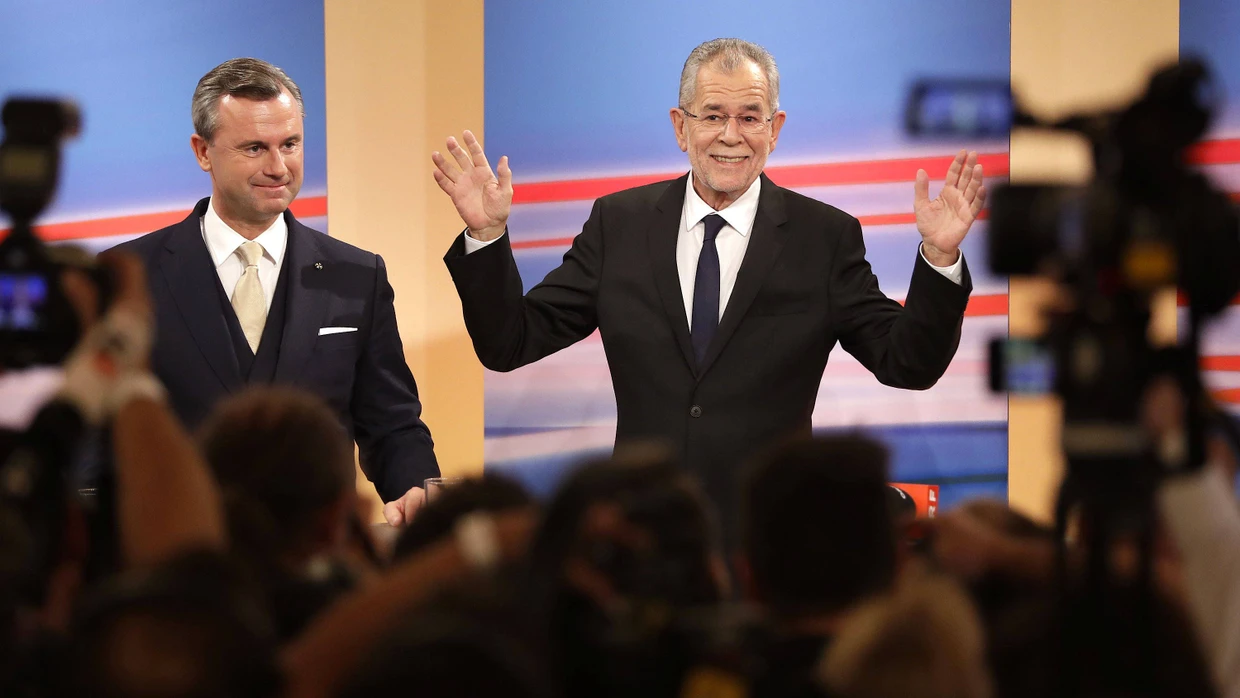
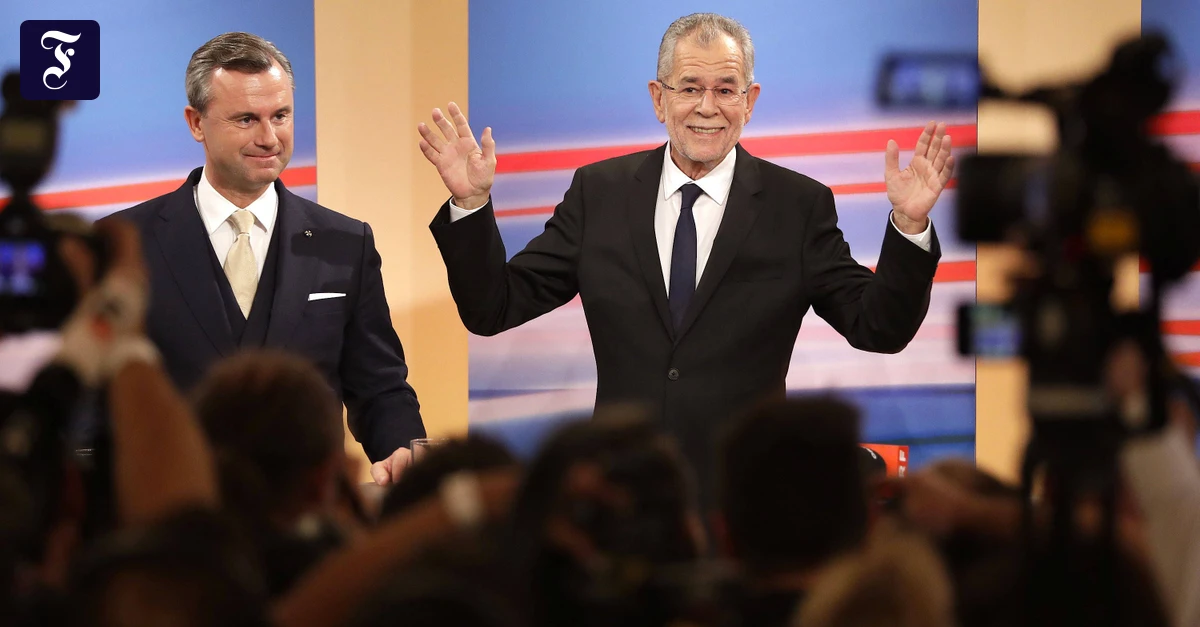
Vienna, Austria – December 4, 2016 – In a watershed moment for Austrian democracy, Alexander Van der Bellen has emerged victorious in the presidential election, narrowly defeating his far-right rival, Norbert Hofer. This hard-fought contest, which has captivated the nation and garnered international attention, has been interpreted not as a resounding endorsement of left-liberal ideals, but rather as a decisive rejection of Hofer’s populist platform and the Future of the Freedom Party (FPÖ). While Van der Bellen’s win offers a reprieve for many, the FPÖ’s persistent strength in opinion polls suggests that the underlying currents that propelled Hofer’s campaign remain potent forces within Austrian society.
The election, a rerun of a controversial May ballot annulled due to procedural irregularities, concluded with Van der Bellen, an independent candidate supported by the Green Party, securing victory. The tight race underscored a deeply divided electorate, with the outcome hanging precariously in the balance until the final ballots were tallied. This repeated electoral process, while ultimately resolving the leadership question, has also cast a shadow over the nation’s ability to conduct its most crucial democratic exercises smoothly, raising concerns about public trust in the electoral system.
The Presidential Race: A Deeply Divided Electorate
The presidential election in Austria has been a prolonged and often acrimonious affair, culminating in a dramatic rerun of the May election. The initial outcome, where Van der Bellen narrowly defeated Hofer, was subsequently overturned by the Constitutional Court due to irregularities in the vote counting process. This unprecedented decision plunged Austria into a period of electoral uncertainty, forcing a second round of voting that once again pitted the independent, Green-backed candidate against the FPÖ’s representative.
Alexander Van der Bellen, a former leader of the Green Party, ran as an independent, aiming to appeal to a broader spectrum of voters. His campaign emphasized environmental protection, social justice, and a pro-European stance. He positioned himself as a unifying figure, a safeguard against the nationalist and anti-immigrant rhetoric espoused by his opponent.
Norbert Hofer, the candidate for the Freedom Party of Austria (FPÖ), presented a starkly different vision. His campaign tapped into widespread concerns about immigration, economic insecurity, and a perceived disconnect between the political establishment and the everyday citizen. Hofer’s platform advocated for stricter border controls, a more nationalistic approach to policy, and a critical stance towards the European Union. His charismatic appeal and populist messaging resonated strongly with a significant portion of the electorate, particularly in rural areas and among working-class voters.
The second round of voting, held on December 4, 2016, saw a record turnout, reflecting the high stakes of the election. The results, announced late in the evening, declared Van der Bellen the winner with a margin of approximately 31,000 votes. This victory, while celebrated by his supporters, was achieved by a slender lead, underscoring the deep societal divisions that the election had brought to the fore.
Chronology of a Contentious Election
The path to Van der Bellen’s victory was far from straightforward, marked by a series of dramatic events and close calls:
- May 22, 2016: The first round of the presidential election takes place. Alexander Van der Bellen wins by a narrow margin of approximately 31,000 votes over Norbert Hofer.
- July 1, 2016: The Constitutional Court annuls the May election results following an appeal by the FPÖ, citing irregularities in the postal vote count. The court orders a rerun of the election.
- October 2, 2016: The rerun presidential election is initially scheduled. However, it is postponed just weeks before the vote due to defects in the ballot papers.
- December 4, 2016: The presidential election is finally held for the second time. Alexander Van der Bellen secures victory, narrowly defeating Norbert Hofer.
This extended electoral process not only tested the patience of the Austrian electorate but also raised fundamental questions about the efficiency and reliability of the country’s democratic institutions. The repeated postponements and the eventual annulment of results fueled public frustration and provided fodder for populist narratives that often criticize established systems.
Supporting Data: A Divided Nation’s Verdict
The election results painted a picture of a country deeply split along political and ideological lines. While Van der Bellen secured the presidency, the close margin of victory highlighted the significant support for Norbert Hofer and the FPÖ’s agenda.
Key Election Data (December 4, 2016):
- Alexander Van der Bellen (Independent/Green): 53.8% of the vote
- Norbert Hofer (FPÖ): 46.2% of the vote
While Van der Bellen’s victory was a clear mandate, the FPÖ’s performance demonstrated its considerable influence. Opinion polls conducted in the lead-up to the election and in its aftermath consistently showed the FPÖ as the leading party in Austria. This suggests that the sentiment driving Hofer’s support – a dissatisfaction with the status quo, concerns about immigration, and a desire for a stronger national identity – remained a powerful force, even in defeat.
The regional breakdown of the vote revealed further nuances. Van der Bellen tended to perform stronger in urban centers and more affluent regions, while Hofer found significant support in rural areas and in some of the more economically challenged provinces. This geographical divide often reflects differing concerns and perspectives on issues such as immigration, globalization, and economic policies.
Official Responses and International Reactions
Following the announcement of the results, both candidates addressed the nation.
Alexander Van der Bellen, in his victory speech, emphasized the need for unity and reconciliation. He called on all Austrians to come together, regardless of their political affiliations, and to work towards a common future. He pledged to be a president for all Austrians, committed to upholding the democratic values and principles of the country. Van der Bellen also acknowledged the concerns raised by Hofer’s supporters and expressed a desire to address them.
Norbert Hofer, while expressing disappointment at the outcome, congratulated Van der Bellen on his victory. He thanked his supporters for their dedication and commitment throughout the campaign. Hofer indicated that he would continue to serve the people of Austria and that the FPÖ would remain a strong voice in the political landscape. He also hinted at a possible future political career, suggesting that this election was not necessarily the end of his pursuit of national leadership.
Internationally, the election results were met with a mixture of relief and cautious optimism. Many European leaders and commentators expressed satisfaction that Austria had chosen a path that aligned with mainstream European values and rejected the rise of far-right populism. The outcome was seen as a positive signal in a year marked by populist victories in other countries, such as the Brexit referendum in the United Kingdom and the election of Donald Trump as President of the United States.
However, the close nature of the vote also served as a stark reminder of the challenges facing liberal democracies. The continued strength of the FPÖ suggested that the underlying factors contributing to the rise of populism – including economic anxieties, cultural shifts, and concerns about immigration – were deeply ingrained and would continue to shape the political landscape.
Implications for Austria and Beyond
Van der Bellen’s victory has several significant implications for Austria and offers broader insights into contemporary political trends:
1. A Reprieve for Liberal Democracy: The election result was widely seen as a victory for liberal democracy and a rejection of the nationalist and anti-immigrant agenda championed by the FPÖ. It provided a much-needed boost to those who feared a further lurch towards populism and authoritarianism in Europe.
2. The Enduring Strength of Populism: Despite Hofer’s defeat, the FPÖ’s continued strong showing in opinion polls indicates that the underlying forces driving populist movements remain potent. Issues such as immigration, economic inequality, and a sense of cultural displacement continue to resonate with a significant segment of the Austrian population. This suggests that Van der Bellen’s presidency will face ongoing challenges in bridging the societal divide.
3. The Future of the Green Party: Van der Bellen’s success as an independent candidate, backed by the Green Party, could offer a model for other political movements seeking to broaden their appeal beyond their traditional base. However, it also raises questions about the Green Party’s future identity and its ability to translate this electoral success into broader political gains.
4. The European Context: Austria’s presidential election was closely watched across Europe. The outcome was interpreted as a counterpoint to populist trends seen elsewhere, offering a glimmer of hope for those advocating for greater European integration and a more inclusive political discourse. However, the continued rise of right-wing parties in other European nations suggests that the continent remains fertile ground for populist movements.
5. The Challenge of Governance: The close election results underscore the deep divisions within Austrian society. Van der Bellen faces the significant challenge of governing a nation that is not entirely united behind him. His success will depend on his ability to foster dialogue, address the concerns of those who voted for Hofer, and steer the country towards a more cohesive future. The enduring strength of the FPÖ means that they will remain a significant force in Austrian politics, likely continuing to shape the national debate on key issues.
In conclusion, Alexander Van der Bellen’s victory in the Austrian presidential election represents a significant moment, primarily as a vote against Norbert Hofer and the FPÖ’s agenda. It offered a temporary reprieve for liberal democracy in Europe. However, the underlying societal currents that fueled Hofer’s campaign remain powerful, and the challenge for Van der Bellen and for Austria as a whole will be to navigate these divisions and forge a path towards a more united and inclusive future. The long-term implications of this election will undoubtedly continue to unfold in the years to come, shaping the trajectory of Austrian politics and its place within the broader European context.