By Nora Große Harmann, MDR (Reporting from Chemnitz)
Date: June 18, 2026
Chemnitz, a city long synonymous with industrial resilience and structural transformation, has officially transformed into the epicenter of international performing arts. As the host of the prestigious "Theater der Welt" festival—an event that migrates every three years to a new host city—Chemnitz is currently welcoming 500 artists from every continent, turning the urban landscape into a vibrant, polyphonic laboratory of human experience. Through July 5, the city will serve as a bridge between disparate realities, challenging audiences to reconsider their perceptions of identity, justice, and the power of the stage.
The Core Facts: A Marathon of Global Storytelling
The festival is a massive undertaking, featuring over 250 individual events that defy traditional categorization. It is not merely a theater festival in the conventional sense; it is an immersive, multi-disciplinary experience. The program includes classic drama, avant-garde figure theater, contemporary concerts, and sprawling, interactive installations that reclaim the city’s public spaces.
In total, 33 distinct productions have been selected for the main program. These pieces are not just performances; they are conduits for complex sociological discourse. Since receiving the bid for this prestigious event in 2023, the city of Chemnitz has prepared for an influx of cultural dialogue that aims to position the city as a permanent beacon of international artistic exchange.
Chronology of a Cultural Milestone
The path to "Theater der Welt" 2026 began years ago, tied to the city’s broader strategic vision for cultural regeneration.
- 2023: Chemnitz is officially awarded the hosting rights for the 2026 iteration of "Theater der Welt," a decision celebrated as a triumph for the city’s evolving cultural identity.
- 2024–2025: An international curatorial team is assembled, tasked with scouting global productions that move beyond Western-centric narratives.
- June 2026: The festival kicks off with Tanya Tagaq’s "Split Tooth: Saputjiji," setting a tone of indigenous empowerment.
- July 5, 2026: The festival concludes, leaving behind a legacy of international connections and local debates regarding the future of the city’s own cultural infrastructure.
Supporting Data: Similar Conflicts, Different Worlds
Despite the vast geographical distances between the participating countries, the festival highlights a remarkable convergence of themes. Whether through the lens of a performance from the Arctic Circle or a production from rural Japan, the underlying concerns remain strikingly consistent: the struggle for visibility, the weight of historical injustice, and the fluidity of identity.
The Rise of Indigenous Perspectives
One of the most compelling aspects of this year’s program is the prominence of indigenous voices, which have historically been marginalized in Western theatrical canon.
- "Tirvv. Divided": This Norwegian-Russian collaboration explores the plight of the Sami people. The narrative captures the existential vertigo of waking up in a different country due to shifting political borders caused by conflict, highlighting how geopolitical instability tears through the fabric of indigenous lives.
- "Kuste": A performance piece detailing the impact of infrastructure projects on the Ainu people in northern Japan, providing a stark commentary on how "development" and state-building often result in the erasure of ancestral heritage.
The Opening Act: A Statement of Intent
The festival’s opening production, "Split Tooth: Saputjiji," serves as the programmatic heartbeat of the event. Tanya Tagaq, a powerhouse of North American indigenous art, blends literature, music, and performance to examine the complexities of self-empowerment. Set in the harsh yet beautiful landscape of the Arctic, the piece serves as a poignant reminder that theater is, at its core, a tool for confronting historical trauma.
The Curatorial Philosophy: Beyond the Western Gaze
The artistic direction of "Theater der Welt" represents a departure from traditional European curation. The leadership team—comprising Stefan Schmidtke (former program director of the European Capital of Culture), Christoph Dittrich (General Intendant of Theater Chemnitz), and Inge Ceustermans (Festival Academy Brussels)—made a deliberate decision to outsource the selection process.
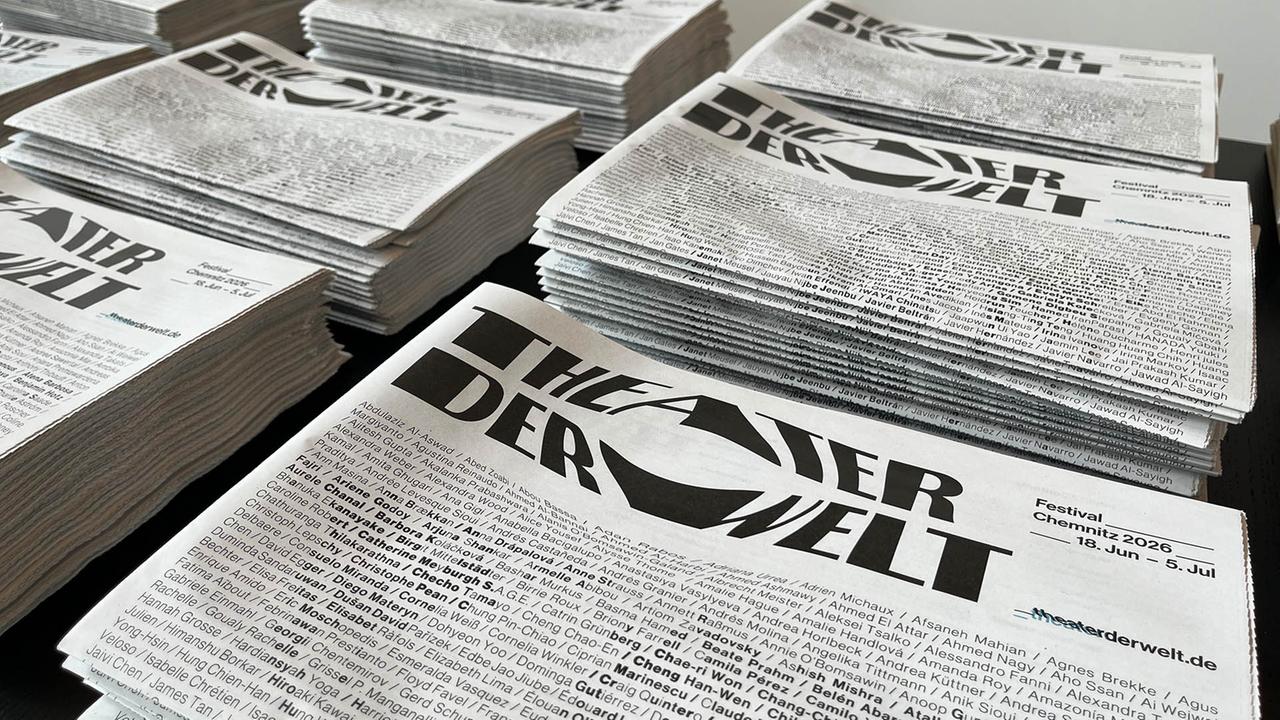
Nine international curators were given the autonomy to select pieces from their respective regions. As Stefan Schmidtke noted in an interview with MDR KULTUR: "The people living in their regions know their environment far more intensely than we ever could. The goal was for the curators to tell stories from their world, rather than having a European team select only what aligns with our own preconceived aesthetic tastes."
This approach has resulted in a program that thrives on friction and contrast. It is not an exercise in satisfying a specific "taste," but rather an honest, unfiltered look at global artistic production. As Schmidtke explains, the festival is a medium for storytelling, incorporating everything from headphone-based immersive walks through city cellars to large-scale dance and musical performances.
Official Responses and Key Highlights
General Intendant Christoph Dittrich emphasizes that the festival’s ultimate goal is to probe the question of "human justice." He posits a central inquiry that echoes through every production: "Who is permitted to speak, and how do we listen to them?"
One of the most anticipated highlights is the South African pop-opera, "Nkoli: A Fierce & Fabulous Life." The production chronicles the life of Simon Tseko Nkoli, a legendary anti-apartheid, gay, and AIDS activist. The work is a masterclass in synthesis, merging the raw emotion of historic protest anthems with contemporary club beats and the expressive, defiant movements of the "Voguing" dance style. The massive demand for tickets—spanning both the younger, pop-culture-savvy generation and the traditional opera-going crowd—suggests that this piece has already become a cultural touchstone for the festival.
Implications: A City at a Cultural Crossroads
While the festival is a celebration of international reach, it arrives at a moment of profound local uncertainty. Chemnitz is currently navigating a heated political debate concerning the potential renovation or complete reconstruction of its own Schauspielhaus.
Juliane Zellner, Director of the German Center of the International Theatre Institute (ITI), has voiced concerns that the city’s political leadership may be failing to grasp the correlation between cultural investment and urban vitality.
"From my perspective, the attractiveness and pulling power of Chemnitz depend entirely on its internationalism and openness to the world," Zellner remarked. She expressed "strong astonishment" that the city could successfully host a world-class international festival while simultaneously discussing significant budget cuts to its local cultural institutions. For Zellner, these cuts represent a short-sighted strategy that undermines the very future the city is trying to build.
Conclusion: Sustaining the "Chemnitz Spirit"
Despite the local political friction, the festival’s leadership remains optimistic. Schmidtke and Dittrich view "Theater der Welt" as the ideal engine to propel the "Capital of Culture" legacy into the future. By injecting the city with a sense of movement, courage, and global awareness, they hope to demonstrate that culture is not a peripheral luxury but the essential infrastructure of a modern, resilient society.
As the festival progresses, the streets of Chemnitz are no longer just a backdrop; they are an active participant in a global conversation. Whether or not this energy translates into long-term policy remains to be seen, but for the duration of these three weeks, Chemnitz has proven that it is capable of holding the world’s gaze—and, more importantly, its ear.