

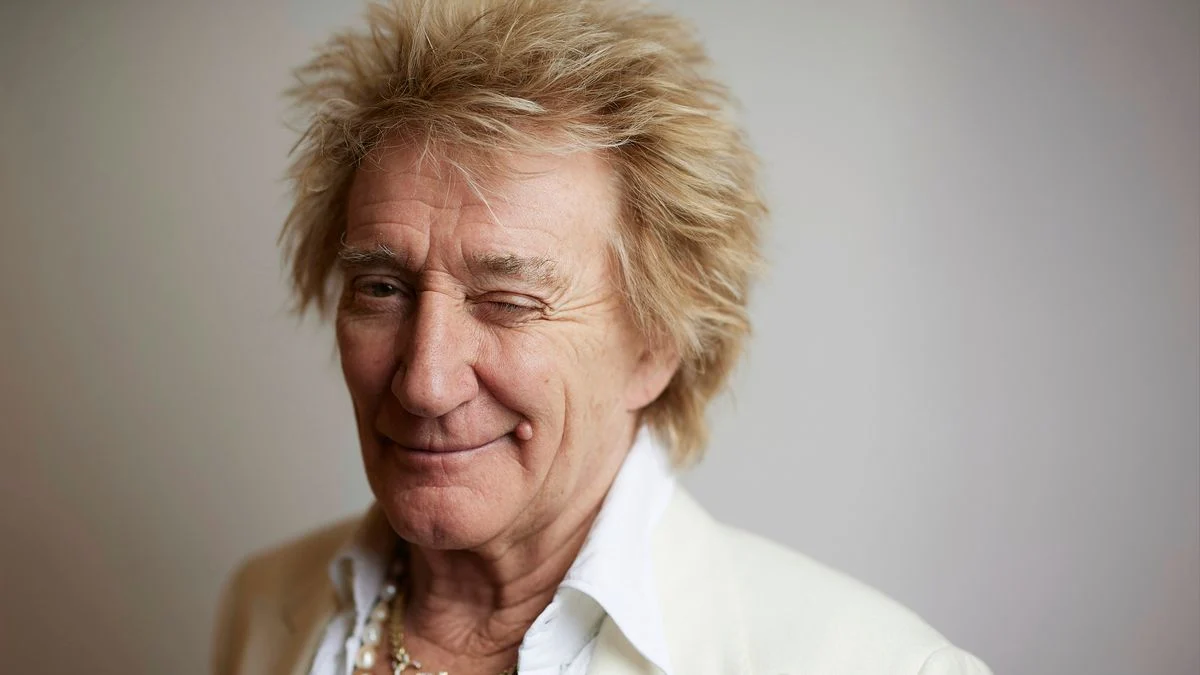
The music industry has long been defined by the endurance of its icons, but few have demonstrated the sheer tenacity of Sir Rod Stewart. At 81, the British rock legend—whose gravelly voice and stage presence have defined generations of music with hits like "Maggie May," "Sailing," and "Da Ya Think I’m Sexy?"—recently found himself at the center of a poignant moment that underscores both the fragility of age and the indomitable spirit of a lifelong performer.
During a recent concert in Utah, Stewart’s physical struggles became visibly apparent to the thousands in attendance. As footage captured by TMZ shows, the singer was seen wincing in pain and relying heavily on stage equipment for support. In a striking turn of events, a crew member was forced to bring a supplemental oxygen tank to the edge of the stage, allowing the rock star to continue his set. This incident has sparked a global conversation about the physical toll of legendary careers and the evolving relationship between aging artists and their loyal fanbases.
The Chronology of a Career in Motion
Rod Stewart’s journey is one of the most storied in rock and roll history. Rising to prominence in the late 1960s and early 1970s, he evolved from a blue-collar musician to a global superstar known for his flamboyant fashion, raspy delivery, and uncanny ability to bridge the gap between hard rock, folk, and soulful pop.
The Recent Health Setbacks
In early 2026, the reality of Stewart’s octogenarian status collided with his rigorous touring schedule. Earlier this month, the singer was forced to postpone or cancel several dates on his current US tour, citing unspecified health reasons. While his representatives have been careful to avoid disclosing private medical details, the recent events in Utah have provided a stark window into the challenges he faces.
The Utah Incident: A Night of Resilience
On the night of the performance, the atmosphere was charged with the high-energy anticipation typical of a Rod Stewart concert. However, as the set progressed, it became clear that the physical exertion was taking a severe toll. Witnesses noted that Stewart appeared to be in visible discomfort, struggling with balance and movement.
When the oxygen tank was brought to the stage, the crowd reacted not with alarm, but with profound support. As Stewart caught his breath, he addressed the situation with the characteristic dry wit that has endeared him to audiences for decades. "I tried to give you a few dance steps here and almost fainted," he joked, before asking the audience, "Do you mind if I sit down for a bit?" The roar of approval that followed served as a testament to the bond between the performer and his fans. Stewart ultimately completed the show, performing the remainder of his set from a chair.
Supporting Data: The Longevity of Rock Icons
The phenomenon of the "legacy artist" touring well into their 80s is a relatively recent development in the history of popular music. Advances in medical care, nutrition, and performance logistics have allowed artists like Stewart, Mick Jagger, and Paul McCartney to remain active long past the traditional retirement age.
The Physical Toll of Touring
Touring is arguably one of the most physically demanding occupations in the entertainment industry. The combination of high-altitude travel, changing time zones, sleep deprivation, and the intense cardiovascular requirement of maintaining a multi-hour stage performance creates a unique physiological stressor.
- Cardiovascular Strain: Performing at a high intensity for two hours places significant demand on the heart and lungs, particularly for performers over the age of 75.
- Musculoskeletal Issues: Decades of stage movement, often involving heavy footwear and strenuous posture, frequently lead to chronic back and joint pain.
- Vocal Preservation: Maintaining the "signature" raspy tone of an artist like Stewart requires immense vocal cord care, which can be compromised by the dry air and respiratory demands of stadium environments.
Reflections on Mortality and the Stage
Two years ago, in a candid interview with The Sun, Stewart provided a glimpse into his internal philosophy regarding aging and the future of his career. "I am aware that my days are numbered, but I have no fear," he stated. "We all have to go sometime, so we are all in the same boat."
This acceptance does not equate to resignation. Stewart has been vocal about his desire to remain on stage, viewing the performance space not as a place of labor, but as the core of his identity. While he has acknowledged that the era of grueling, year-long world tours is likely behind him, he has firmly rejected the idea of formal retirement. His perspective serves as a meditation on the concept of "purposeful aging"—the idea that continuing to do what one loves is a vital component of longevity and mental health.
Official Responses and Industry Context
Neither Stewart’s management team nor his medical representatives have released a formal statement regarding the specific medical necessity of the oxygen usage in Utah. However, industry insiders suggest that such precautions are becoming increasingly common for veteran performers who refuse to bow out of the industry.
"The concert experience has changed," says music industry analyst Marcus Thorne. "We are seeing a move toward ‘staged endurance.’ Fans are no longer going to see a high-energy dance performance; they are going to see a living legend. If that means the artist needs to sit, or needs medical support, the audience is generally more than willing to accommodate that because they understand the history they are witnessing."
The industry has largely rallied around Stewart, with fans and peers alike praising his commitment to his craft. The incident has also sparked a debate on social media regarding whether legendary artists should continue to tour at such high physical stakes, with the consensus leaning heavily toward the artist’s autonomy.
Implications: The Future of the Legacy Tour
The sight of an 81-year-old icon continuing a show with the aid of oxygen is a powerful metaphor for the current state of the music industry. As the generation of artists who defined the 20th century reaches the twilight of their careers, the industry must grapple with new standards of care and performance.
1. The Shift in Expectations
We are moving toward a paradigm where the "authenticity" of a performance is no longer defined by how many miles an artist runs on stage, but by the emotional connection they maintain with the audience. Stewart’s willingness to be vulnerable—to laugh at his own physical limitations—may have actually strengthened his rapport with his fans.
2. The Ethics of Touring
The incident raises ethical questions for promoters and managers. Where is the line between supporting an artist’s passion and ensuring their safety? It is likely that future tours for legacy artists will incorporate more robust medical support teams, shorter setlists, and more frequent rest days to accommodate the realities of aging.
3. The Legacy of the "Show Must Go On"
Stewart’s declaration that "the show must go on" is more than just a cliché; it is a fundamental tenet of the rock and roll ethos. It represents a defiance of time and a refusal to let the inevitable decline of the body dictate the end of the artistic spirit.
As Rod Stewart continues his current tour, he remains a symbol of an era that is slowly fading, yet refusing to disappear quietly. His ability to acknowledge his mortality while simultaneously refusing to abandon the stage offers a template for how we might redefine aging in the public eye. For his fans, the Utah concert will not be remembered for the oxygen tank or the chair; it will be remembered as the night the legend showed that even in the face of physical fragility, the music—and the man behind it—remains unbreakable.