ZURICH, Switzerland – In the rarefied air of international sports diplomacy, few figures command as much attention, and indeed, as much self-belief, as FIFA President Gianni Infantino. A recent satirical "diary entry," ostensibly penned by Infantino himself and published by a prominent German newspaper, has cast a revealing, albeit fictionalized, light on the self-perception of the world’s most powerful football executive. Titled "The World Cup Diary of the FIFA President: Darling of the Greatest," the piece playfully imagines Infantino’s interactions with royalty, celebrities, and even religious leaders, painting a picture of a man convinced of his indispensable role on the global stage.
While the "diary" is a work of satire, it resonates with public discussions and perceptions surrounding Infantino’s leadership, offering a poignant, if exaggerated, commentary on FIFA’s immense soft power and its president’s frequently public displays of influence. This article aims to explore the themes presented in the satirical diary through a professional journalistic lens, examining the factual backdrop, the implied chronology, supporting data on FIFA’s operations, typical official responses from the organization, and the broader implications of Infantino’s distinct leadership style.
Main Facts: A President’s Regal Allure
The satirical diary entry positions Gianni Infantino as a central magnet for the world’s elite. "Everyone who is anyone wants to sit next to Gianni Infantino," the fictional entry begins, listing "kings, princesses, and many others." This hyperbolic statement, while humorous, underscores a fundamental truth about FIFA’s position: as the governing body of the world’s most popular sport, it wields unparalleled influence, drawing political and cultural leaders into its orbit, particularly during major events like the FIFA World Cup.
The "diary" specifically highlights several high-profile encounters:
- Japanese Princess Hisako Takamado: Described as a football connoisseur, expressing delight at sitting beside Infantino during the "1,000th World Cup match" – a fictional future event dated June 22, 2026, which cleverly projects Infantino’s anticipated longevity and importance.
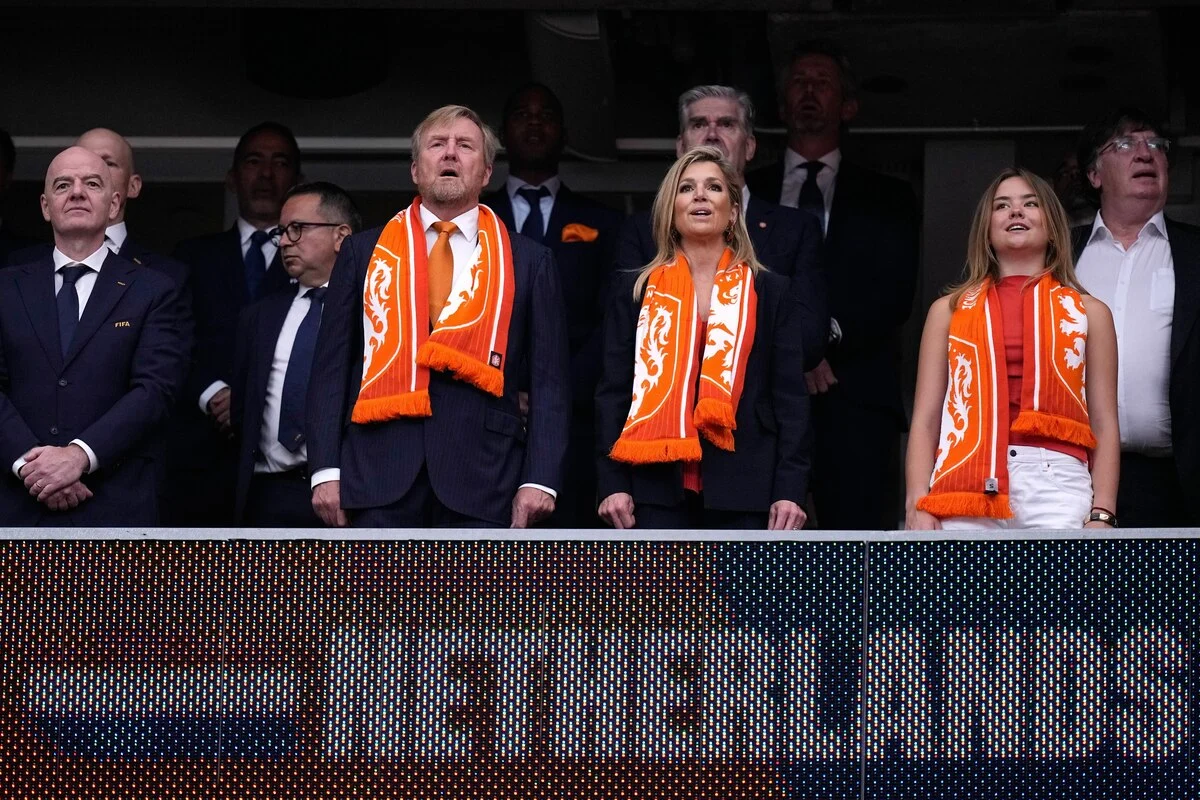
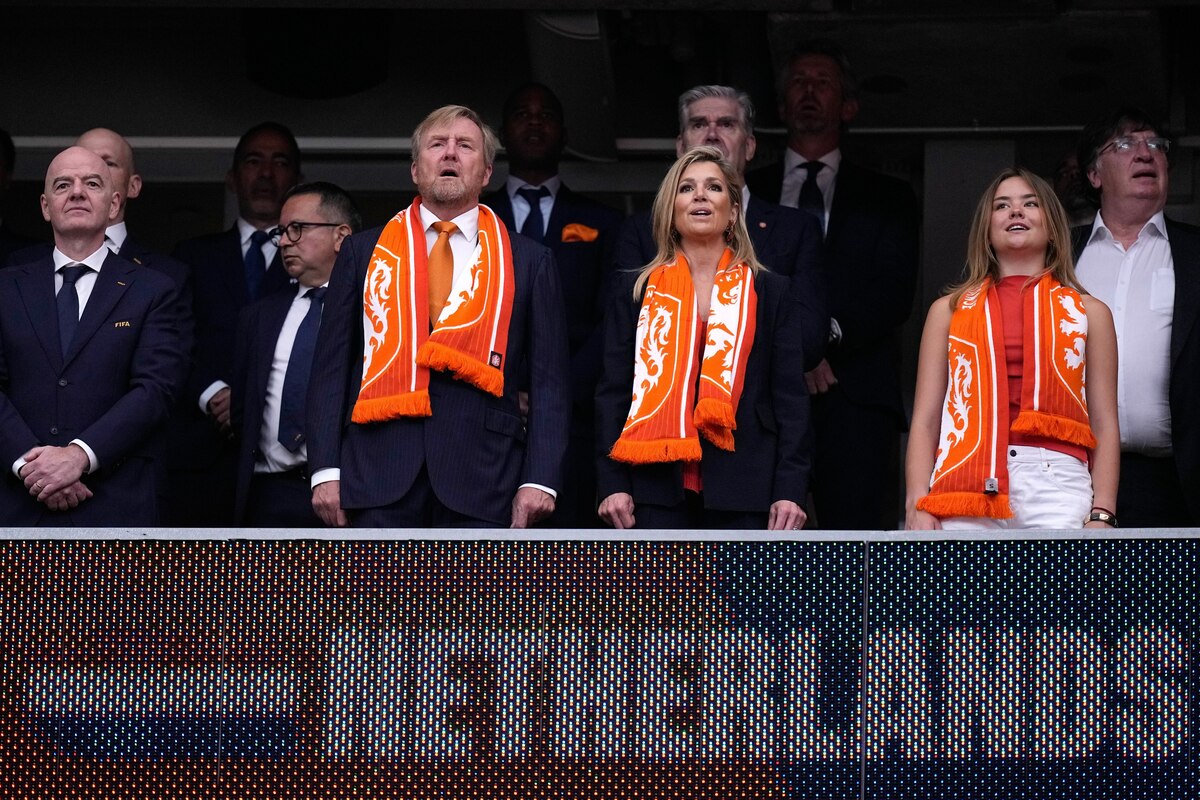
- Dutch Royal Family: King Willem-Alexander, Queen Máxima, and Princess Ariane are depicted as eagerly seeking Infantino’s attention, with the King supposedly "bouncing with excitement" and attempting to be humorous. A photograph accompanying the satirical piece shows the Dutch royals seated next to Infantino on a stadium tribune, lending visual authenticity to the narrative of his proximity to power.
- Hollywood and Music Icons: Salma Hayek is portrayed as thrilled to be photographed with him, while pop superstar Shakira is humorously accused of "stalking" him, a nod to the deep entanglement of global football with entertainment and celebrity culture.
- Pope Francis: Perhaps the most striking interaction described is with Pope Francis, where Infantino claims a mutual envy of their respective offices, even imagining himself as "Pope Gianni I." This illustrates the immense, almost spiritual, authority Infantino perceives for his role.
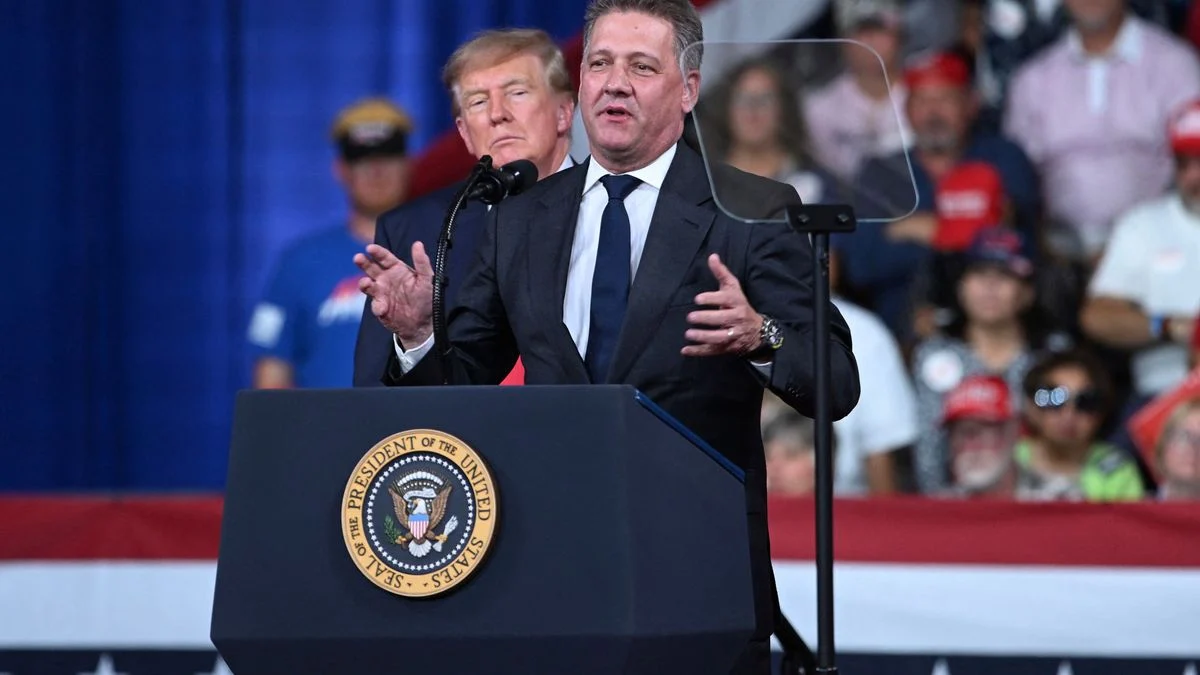
- Donald Trump: The diary suggests a reserved seat for Donald Trump, tied to a speculative plan to pre-emptively award the USA a "FIFA Fair Play Award" at the World Cup final, a cynical jab at political maneuvering within sports.
These interactions, real or imagined, serve to emphasize the unique blend of political, cultural, and economic power that Infantino, as FIFA President, embodies.
Chronology: A Self-Styled Destiny Unfolds
While the diary entry lacks a strict linear chronology, it weaves together past, present, and a satirically imagined future, constructing a narrative of Infantino’s preordained rise to global prominence.
Past Encounters and Self-Mythologizing:
The entry retroactively details a meeting with Pope Francis "a few years ago," where the mutual admiration and Infantino’s fantasy of a papal transition ("Pope Gianni I") hint at a long-standing self-perception of extraordinary influence. This personal history then delves into a more distant, formative past: Infantino’s birth. He describes reading newspaper clippings about his dramatic arrival, requiring donor blood due to jaundice, and the discovery of his "extremely rare blood type." This origin story, framed as a "dramatic race against time," is presented as early evidence of his special destiny, a narrative he dramatically compares to the humble beginnings of Jesus. This self-mythologizing reinforces the "chosen one" trope, suggesting his current position is not merely achieved but fated.
The Current World Cup and Royal Engagements (2026, Fictional):
The primary setting for the diary’s current events is a future World Cup, specifically dating an entry to "June 22, 2026." This is a crucial element of the satire, placing Infantino at the helm of an event that, in reality, would be the FIFA World Cup hosted by the USA, Canada, and Mexico. The interaction with Japanese Princess Hisako Takamado is anchored to the "1,000th World Cup match," a significant, if arbitrary, milestone that further elevates the perceived importance of his presence. His casual offer to the Princess to sit beside him again for the "2,000th World Cup match" playfully underlines his expected long tenure and the continuous demand for his company.

Anticipating Future Influence and Political Maneuvers:
Looking ahead, the diary entry concludes with Infantino musing on whom else he might "offer a seat" during the ongoing (fictional) World Cup, noting the "long list of supplicants." His contemplation of a call to "Donald" (presumably Trump) regarding a reserved seat and a strategically timed "Fair Play Award" for the USA illustrates the transactional nature of high-level political engagement often associated with global sporting events. This future-oriented speculation reinforces the idea of Infantino as a strategic operator, constantly leveraging his position for perceived diplomatic and personal gain.
Supporting Data: FIFA’s Power and Perceptions of its President
The satirical diary, while fictional, draws heavily on existing public perceptions and criticisms of Gianni Infantino and the FIFA organization under his leadership.
FIFA’s Global Footprint and Financial Power:
FIFA is one of the wealthiest and most influential sports organizations globally. Its revenue, primarily from World Cup broadcasting rights, marketing, and licensing, runs into billions of dollars. This financial might translates into significant political leverage, allowing FIFA to engage with heads of state, international organizations, and corporate giants on an equal, if not superior, footing. The desire of world leaders and celebrities to be seen with Infantino is not merely a matter of personal admiration but often a strategic play to align with the global spectacle and positive associations of the World Cup. Host nations, in particular, rely on FIFA’s approval and cooperation, giving Infantino immense bargaining power.
Controversies and the Search for Legitimacy:
Infantino’s presidency began in 2016 following the devastating FIFA corruption scandal that led to the downfall of his predecessor, Sepp Blatter. While Infantino pledged to reform FIFA, his tenure has not been without controversy. He has faced scrutiny over his travel expenses, his role in the Qatar World Cup, and his ambitious plans to expand the World Cup to 48 teams, which critics argue is driven more by financial motives than sporting integrity.

The "diary’s" portrayal of Infantino as a "darling of the greatest" can be seen as a satirical counterpoint to these criticisms. By emphasizing the constant validation he receives from powerful figures, the diary implicitly highlights his perceived need for external affirmation, perhaps to bolster his image against persistent questions about governance and ethics within FIFA. His comparison of his birth to that of Jesus, and his fantasy of becoming "Pope Gianni I," while humorous, touch upon a perceived messianic complex that some observers have attributed to his leadership style.
Sports Diplomacy and Soft Power:
The interactions described in the diary are emblematic of "sports diplomacy." FIFA, under Infantino, actively engages with governments worldwide, using football as a tool for cultural exchange, economic development, and political influence. The presence of royalty and heads of state at World Cup matches is not just about enjoying the game; it’s a demonstration of national prestige and an opportunity for informal diplomacy. Infantino’s perceived role as a central figure in these interactions underscores his understanding and utilization of FIFA’s soft power.
Official Responses: Navigating Public Image and Scrutiny
Since the "diary" is a satirical piece, there is no direct official response from FIFA or Infantino to its content. However, one can infer how such a narrative aligns with, or deviates from, FIFA’s carefully curated public image.
FIFA’s Public Narrative:
FIFA consistently presents itself as a global institution dedicated to developing football worldwide, promoting fair play, and uniting people through sport. Its official communications emphasize its commitment to integrity, transparency, and social responsibility. Infantino, in his public statements, often highlights FIFA’s efforts in areas like human rights, sustainability, and grassroots development. He frequently meets with world leaders, framing these encounters as crucial for advancing football’s mission and fostering international cooperation.

Contrast with the Satirical Depiction:
The satirical diary offers a stark, exaggerated contrast to this official narrative. While FIFA projects an image of collective leadership and institutional purpose, the diary portrays Infantino as an almost singular, self-obsessed figure, driven by personal validation and a desire for absolute recognition. The casual dismissal of his "boss" status over Princess Takamado ("But of course I didn’t tell her that. Humility is important in my office") is a classic satirical jab, implying a performative humility that masks a profound self-importance.
If such a diary were genuinely released, the official response from FIFA would undoubtedly be swift and condemnatory, discrediting it as fake or misrepresentative. The organization would likely reiterate its commitment to its values and emphasize that Infantino’s focus remains squarely on football development rather than personal aggrandizement. However, the very existence of such satire indicates a public perception that FIFA, and its president, operate with a degree of pomp and self-regard that makes them ripe for such comedic critique.
Implications: The Cult of Personality and FIFA’s Future
The satirical "diary" serves as a powerful commentary on several key implications of Gianni Infantino’s presidency and FIFA’s evolving role in the 21st century.
The Cult of Personality:
The most overt implication is the perceived cult of personality surrounding Infantino. The diary’s central theme—that everyone wants to sit next to him, that he is the "darling of the greatest"—suggests a leader who enjoys, and perhaps cultivates, an image of unparalleled individual importance. In an era where many institutions face declining trust, the reliance on a charismatic, if controversial, leader to personify an organization can be both a strength and a vulnerability. It allows for decisive action and a clear public face, but also centralizes power and risks obscuring institutional accountability.

The Blurring Lines of Sport, Politics, and Entertainment:
The interactions with royalty, political figures like Trump, and celebrities like Salma Hayek and Shakira highlight the increasingly blurred lines between sport, politics, and the entertainment industry. The World Cup is no longer just a football tournament; it is a global cultural event, a diplomatic platform, and a marketing spectacle. Infantino’s "diary" playfully acknowledges his role at the nexus of these worlds, where a "Fair Play Award" can be a political tool and a pop star’s attention is a badge of honor. This trend raises questions about the commercialization of sport and its potential to overshadow its fundamental values.
Governance and Accountability:
The "Pope Gianni I" fantasy, while humorous, subtly touches on concerns about governance within FIFA. The idea of a leader envisioning himself with quasi-papal authority, even satirically, can be interpreted as a commentary on the perceived lack of checks and balances within the organization. While Infantino has introduced reforms aimed at improving transparency, critics continue to question the concentration of power and decision-making within his office. The satirical suggestion of manipulating awards for political figures further underlines these concerns, implying a potential for a transactional approach to FIFA’s ethical principles.
Longevity and Succession:
The dating of an entry to 2026 and the mention of the "2,000th World Cup match" playfully underscore the widespread expectation, and perhaps Infantino’s own ambition, for a long tenure. Having already secured re-election, Infantino is positioned to lead FIFA for the foreseeable future. This raises questions about succession planning, the potential for entrenched leadership, and the long-term vision for global football beyond a single individual’s personality.
In conclusion, while "The World Cup Diary of the FIFA President: Darling of the Greatest" is a masterclass in satire, it serves as a potent reflection on the complex reality of Gianni Infantino’s leadership and FIFA’s immense global standing. It mirrors public discourse about the blurred lines between sport and power, the controversies that continue to dog global football governance, and the powerful, often self-aggrandizing, persona of the man at its helm. The diary, in its humorous exaggeration, ultimately invites a serious journalistic consideration of the impact of one of the world’s most influential, and certainly most self-assured, figures.