The integrity and transparency of political office are cornerstones of any healthy democracy. In Germany, a recurring and often contentious issue that tests these principles is the supplementary income earned by members of the Bundestag, the federal parliament. While a basic salary is provided to ensure financial independence, many parliamentarians engage in activities beyond their legislative duties, leading to significant additional earnings. These "Nebeneinkünfte," as they are known in German, consistently fuel public debate, raise questions about potential conflicts of interest, and challenge the public’s trust in their elected representatives. The discussion often oscillates between the perceived necessity for politicians to maintain ties to professional life and the imperative for absolute transparency to prevent undue influence and prioritize public service.
This comprehensive report delves into the intricate world of German politicians’ side incomes, examining the various facets of this complex issue. We will explore the types of supplementary earnings, the history of legislative efforts to regulate them, the quantitative data available, the arguments put forth by both proponents and critics, and the far-reaching implications for German democracy and public confidence. The goal is to provide a detailed, journalistic account of a debate that continues to shape perceptions of political accountability in one of Europe’s leading nations.
Main Facts: The Scope of Supplementary Earnings in the Bundestag
The term "Nebeneinkünfte" encompasses all income derived by a member of parliament (MP) from activities outside their mandate as an elected representative. This can range from modest fees for lectures to substantial earnings from legal work, consulting, supervisory board positions, or income generated from business ventures and real estate holdings. While the primary role of a Bundestag MP is to represent their constituents, participate in legislative processes, and oversee government actions, many continue to maintain professional connections or pursue additional economic activities.
The rationale behind these side incomes, as often articulated by politicians themselves, includes the desire to retain professional expertise, to avoid a complete detachment from the "real world," and in some cases, to supplement their parliamentary salary. Proponents argue that a ban on such activities could deter qualified professionals from entering politics, thereby impoverishing the quality of parliamentary work. They also emphasize that many side activities are legitimate and do not inherently pose a conflict.
However, critics frequently highlight the inherent tension between private financial interests and public duty. The core concerns revolve around:
- Conflicts of Interest: Decisions made in parliament could directly or indirectly benefit a politician’s private business interests or those of their clients.
- Time Commitment: Significant side activities might detract from the time and focus required for parliamentary work, including committee meetings, constituency duties, and legislative drafting.
- Influence Peddling: There is a persistent worry that financial ties could open doors for lobbyists or special interest groups to exert undue influence on policy-making.
- Transparency and Public Trust: The lack of granular detail in income disclosures, often presented in broad categories rather than exact figures, contributes to a perception of opacity and erodes public trust in the integrity of the political system.
The German system, unlike some others, does not impose an outright ban on side activities but rather focuses on disclosure and, more recently, on certain limitations regarding lobbying for third parties. The ongoing challenge lies in finding a balance that allows politicians to maintain professional relevance without compromising their primary commitment to public service or creating an environment ripe for ethical breaches.
A Chronology of Transparency Efforts and Scandals
The issue of politicians’ side incomes is not new to German politics; it has been a persistent theme throughout the Federal Republic’s history, marked by waves of reform often triggered by public outcry and high-profile scandals.
Early Regulations and Initial Debates
In the early decades of the Federal Republic, regulations concerning MPs’ supplementary earnings were relatively lax. While a basic understanding of ethical conduct existed, formal rules for disclosure were minimal. The focus was primarily on ensuring that MPs received adequate remuneration for their parliamentary duties. As the economy grew and political life became more complex, the potential for conflicts of interest arising from private economic activities began to draw more attention. Early debates often centered on the principle of parliamentary independence and the need for MPs to be free from external financial pressures. However, concrete legislative action was slow to materialize.
Landmark Reforms and Increased Scrutiny
The late 20th and early 21st centuries saw significant shifts towards greater transparency. The first major step came in the 1990s, driven by a growing demand for political accountability. New rules were introduced that mandated the disclosure of certain types of side incomes. Initially, these disclosures were often made in broad categories, making it difficult for the public to ascertain the exact amounts earned. This period also saw the establishment of a register for lobbyists, an attempt to bring more light into the interactions between politicians and external interest groups, though its effectiveness has often been debated.
Further tightening of regulations occurred in the 2000s and 2010s, incrementally increasing the scope of what needed to be disclosed and making the information more accessible to the public. These reforms were often a direct response to public pressure and media investigations that exposed gaps in the existing framework. The introduction of income tiers, rather than exact figures, became a standard, allowing MPs to declare their earnings within specific ranges (e.g., €1,000-3,500, €3,501-7,000, etc.) without revealing precise amounts. While an improvement, this still left room for ambiguity.
High-Profile Scandals and Public Outcry
The history of side incomes in Germany is punctuated by various scandals that have repeatedly brought the issue to the forefront of public consciousness. While specific names are often associated with these incidents, the general pattern involves:
- Undisclosed Earnings: Cases where MPs failed to declare significant side incomes, leading to accusations of deliberate obfuscation.
- Lobbying Activities: Instances where politicians were found to be working for specific companies or industries while simultaneously shaping legislation that directly impacted those interests.
- Consultancy Fees: Controversies surrounding high fees paid for consultancy services, often raising questions about the actual work performed and the potential for these payments to be a form of disguised lobbying or influence buying.
- "Maskenaffäre" (Mask Scandal): A particularly damaging series of events during the COVID-19 pandemic, where several MPs from the ruling conservative bloc were implicated in profiting from brokering deals for face masks. This scandal, which involved significant sums and raised severe ethical questions during a national crisis, led to widespread public outrage and intensified calls for immediate and more stringent reforms.
These scandals, regardless of their specific details, consistently highlight the need for robust oversight and stricter ethical guidelines. They erode public trust, fuel cynicism about the political class, and often become catalysts for legislative change, albeit sometimes incremental.
The Current Regulatory Framework
In response to the "Maskenaffäre" and persistent public demand, Germany implemented some of its most significant reforms in recent years. The current framework mandates:
- Broader Disclosure: A wider array of activities and income sources must now be declared.
- Increased Specificity (for some activities): While income tiers remain for many side activities, there are now requirements for more specific details regarding the nature of the activity, the client, and the duration.
- Prohibition of Lobbying for Remuneration: A crucial new rule prohibits MPs from receiving payment for lobbying activities on behalf of third parties while holding office. This aims to directly address the conflict of interest inherent in being both a legislator and a paid advocate.
- Stricter Sanctions: Penalties for non-compliance or false declarations have been increased, including fines and potential loss of parliamentary rights.
- Online Accessibility: All declared side incomes are now published digitally on the Bundestag’s website, making them more accessible to the public and facilitating journalistic scrutiny.
Despite these advancements, debates continue regarding the adequacy of income tiers (as opposed to exact figures), the effectiveness of enforcement, and whether the reforms go far enough to truly prevent conflicts of interest and restore full public confidence.
Supporting Data: Quantifying the Supplementary Income
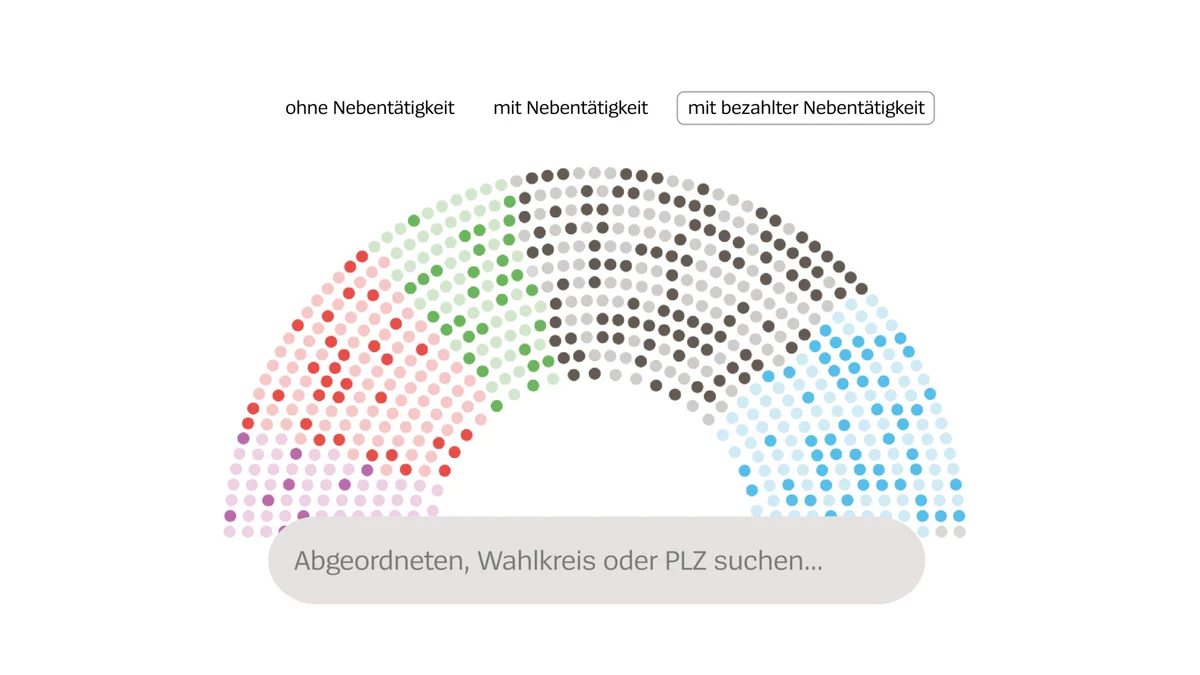
Analyzing the "Nebeneinkünfte" of Bundestag members provides critical insights into the financial dynamics of German politics. While exact figures remain elusive due to the tiered disclosure system, the published data offers a substantial overview of the scale and distribution of these supplementary earnings.
Disclosure Tiers and Public Access
Under current regulations, MPs are required to declare their side incomes within specific gross income categories. These categories typically range from "Category 1" (over €1,000) up to "Category 10" (over €250,000), with several increments in between. For instance, an MP might declare income from a legal practice in Category 6, indicating earnings between €30,001 and €50,000. While this system offers a degree of privacy, it also means that the public, and even journalists, can only estimate the precise amounts. A politician declaring "over €250,000" could be earning €250,001 or several million Euros, making a significant difference in the perception of their financial independence.
This tiered system applies to various sources, including:
- Income from self-employment (e.g., lawyers, consultants).
- Income from employment outside the Bundestag.
- Fees for lectures, publications, or expert opinions.
- Income from supervisory or advisory board positions.
- Income from company shares or business holdings.
All these declarations are publicly available on the Bundestag’s website, allowing for a degree of transparency that was absent in earlier decades. Independent organizations and media outlets frequently analyze this data to identify trends, potential conflicts, and instances where the spirit of the disclosure rules might be circumvented.
Sectoral Analysis
Analysis of the disclosed data consistently shows that certain professional backgrounds are more prone to generating significant side incomes.
- Lawyers: Members of parliament who are also active lawyers frequently declare substantial earnings from their legal practices. This is often attributed to their specialized knowledge and the ability to command high fees for legal services.
- Consultants: MPs with a background in consulting or business advisory roles also tend to report considerable supplementary income. These positions often involve high hourly rates and can sometimes raise questions about the nature of the advice provided.
- Supervisory Board Memberships: Positions on the supervisory boards of companies, particularly larger corporations, are another common source of significant side income. These roles often involve less time commitment than active employment but can come with substantial remuneration.
- Real Estate and Business Holdings: Income from rental properties, dividends from company shares, or profits from private businesses also contribute to the total side income of some MPs.
It is important to note that the distribution is not uniform. A significant number of MPs declare no side incomes or only very modest amounts, often from lecturing or publishing. The data consistently reveals that a relatively small percentage of parliamentarians account for a disproportionately large share of the total reported supplementary earnings.
Disparities Among MPs
The statistics underscore a clear disparity among members of the Bundestag. While the average MP’s salary is designed to be sufficient for a comfortable living and to prevent financial pressures, some parliamentarians accumulate considerable wealth through their "Nebeneinkünfte." This creates a perception of a two-tier system within parliament, where some members are fully dedicated to their legislative roles, while others maintain active and often lucrative parallel careers.
Critics argue that this disparity can affect the quality of parliamentary work, as those with substantial outside commitments might have less time or focus for their legislative duties. Furthermore, it can create an uneven playing field, where financially well-off individuals might be more attracted to politics, potentially excluding those from less privileged backgrounds who cannot afford to scale back lucrative private careers.
The Challenge of Full Transparency
Despite the reforms, the tiered disclosure system remains a significant point of contention. Transparency advocates, including organizations like Transparency International Germany, consistently call for the disclosure of exact figures rather than broad categories. They argue that only full transparency can genuinely allow the public and media to assess potential conflicts of interest and ensure accountability. Without precise figures, it is difficult to determine the true extent of financial entanglement.
The argument against full disclosure often cites privacy concerns and the potential for public resentment or even harassment based on individual wealth. However, proponents of full transparency counter that public office inherently involves a higher degree of scrutiny and that the public’s right to know outweighs individual privacy in matters concerning public service and potential influence. The ongoing debate highlights the complex tension between individual rights and the demands of democratic accountability.
Official Responses and Political Discourse
The discourse surrounding politicians’ side incomes in Germany is multi-layered, involving various political actors, civil society organizations, and academic experts. Each group brings distinct perspectives and proposals to the table, reflecting the inherent complexities of balancing individual freedoms with the demands of public office.
Arguments for Side Incomes
Proponents of allowing parliamentarians to earn supplementary income typically articulate several key arguments:
- Maintaining Professional Expertise: Many politicians argue that continuing to practice their original profession (e.g., law, medicine, business) allows them to stay connected to the realities of the professional world and bring valuable, real-world expertise into parliamentary debates. This, they contend, enriches the legislative process.
- Financial Independence: A diversified income stream can provide a degree of financial independence, potentially reducing the temptation for corruption or undue influence from external sources. It also ensures that a political career does not lead to financial ruin for those with high earning potential outside politics.
- Attracting Talent: Some argue that overly strict restrictions on side incomes could deter highly qualified individuals, particularly from lucrative professions, from entering politics. If becoming an MP means a drastic reduction in income, the talent pool for public service might shrink, leading to a less competent parliament.
- Freedom of Profession: The German Basic Law (Grundgesetz) guarantees the freedom of profession. While public office comes with responsibilities, a complete ban on all outside economic activity could be seen as an infringement on this fundamental right.
- Limited Impact: Many side activities, such as writing books or giving academic lectures, are often seen as harmless and even beneficial, contributing to public discourse without posing significant conflicts of interest.
Calls for Stricter Regulations
Conversely, a wide array of voices consistently advocates for stricter regulations, often going beyond the current framework.
- Opposition Parties: Historically, opposition parties, regardless of their ideological leanings, have often been vocal in demanding greater transparency and stricter rules, using the issue as a point of leverage against the ruling coalition. They frequently propose reforms such as an outright ban on certain types of side activities or mandatory disclosure of exact income figures.
- Non-Governmental Organizations (NGOs): Organizations like Transparency International Germany are at the forefront of the movement for enhanced political ethics. They consistently publish analyses of disclosed data, highlight loopholes, and advocate for comprehensive reforms, including:
- Full Disclosure of Exact Amounts: Replacing income tiers with precise figures to allow for genuine public scrutiny.
- Independent Oversight Body: Establishing an independent ethics committee with investigatory powers and the authority to impose sanctions.
- Clearer Definitions of Conflicts of Interest: Developing more robust guidelines to prevent situations where private interests could sway public duties.
- Cooling-Off Periods: Introducing mandatory waiting periods before former politicians can take up lobbying roles related to their previous legislative work.
- Academics and Legal Experts: Scholars specializing in constitutional law, public administration, and political ethics often provide detailed analyses of the existing legal framework, pointing out its deficiencies and proposing reforms based on best practices in other democracies. They frequently emphasize the importance of public trust and the symbolic value of politicians upholding the highest ethical standards.
- Public Opinion: Opinion polls consistently show strong public support for greater transparency and stricter rules regarding politicians’ side incomes. Scandals, in particular, galvanize public demand for accountability, with many citizens feeling that their representatives should be solely focused on their public duties.
Government’s Stance and Legislative Initiatives
The response from successive German governments and parliamentary majorities has typically been characterized by a cautious approach to reform. While acknowledging the importance of transparency, they often balance it against the arguments for maintaining professional ties and attracting qualified individuals to politics. Legislative initiatives, as seen with the recent reforms after the "Maskenaffäre," tend to be reactive, occurring in the wake of public pressure rather than proactively.
Governments often argue that:
- Existing Rules Are Sufficient: They contend that the current disclosure requirements, combined with parliamentary codes of conduct, provide an adequate framework for managing conflicts of interest.
- Over-regulation Could Be Detrimental: There is a concern that overly stringent rules might make political office less attractive, especially for individuals from highly paid professions, potentially leading to a decline in parliamentary expertise.
- Privacy Concerns: Governments often cite data protection and privacy rights as reasons against full disclosure of exact income figures.
- Practical Implementation Challenges: Implementing complex new regulations, particularly those involving independent oversight or detailed financial audits, can be administratively challenging.
The political discourse thus remains a dynamic interplay between the perceived need for reform to enhance trust and the practical and ideological resistance to changes that might fundamentally alter the nature of parliamentary work.
Implications for Democracy and Public Trust
The debate surrounding politicians’ side incomes extends far beyond individual financial matters; it delves into the fundamental health of German democracy and the delicate balance of public trust. The manner in which these supplementary earnings are regulated and perceived has profound implications for how citizens view their political system and their elected representatives.
Erosion of Trust
Perhaps the most significant implication is the potential for the erosion of public trust. When citizens perceive that their politicians are prioritizing private financial gain over public service, or that their decisions might be influenced by external interests, confidence in the democratic process inevitably wanes. Each scandal, each instance of opaque disclosure, contributes to a growing cynicism, fostering the belief that politics is a self-serving enterprise rather than a genuine commitment to the common good. This erosion of trust can manifest in lower voter turnout, increased support for populist movements, and a general disengagement from political participation, all of which weaken democratic institutions.
Potential for Conflicts of Interest
Despite regulations, the potential for conflicts of interest remains a critical concern. A politician who sits on a company’s supervisory board, for example, might be faced with voting on legislation that directly impacts that company’s bottom line. Similarly, a lawyer who advises corporate clients could find themselves debating laws relevant to those clients’ industries. While many politicians maintain they can compartmentalize their roles, the inherent psychological and ethical challenge is undeniable. Even the appearance of a conflict of interest can be damaging, as it undermines the public’s belief in the impartiality and objectivity of their representatives. The new prohibition on paid lobbying for third parties is a step in the right direction, but the broader spectrum of financial entanglements still poses challenges.
The Professionalization of Politics
The ability to earn substantial side incomes also contributes to the professionalization of politics. While a basic salary is provided, the additional income can make political office particularly attractive to individuals who already possess high-earning potential outside parliament. This can lead to a political class that is increasingly drawn from specific professional backgrounds (e.g., law, business consulting) and might be less representative of the broader population’s diverse experiences. Such a trend can create an elite cadre of career politicians, potentially widening the gap between the governing class and the citizenry, further fueling feelings of detachment and alienation.
Impact on Legislative Work
A more subtle but equally important implication is the potential impact on the quality and intensity of legislative work. While some argue that side activities keep politicians "grounded," critics suggest that significant external commitments can distract from the demanding duties of an MP. Parliamentary work involves extensive reading, research, committee meetings, constituency engagement, and participation in debates. If a substantial portion of an MP’s time and mental energy is diverted to private business ventures, their capacity to fully engage with their public mandate may be compromised. This could lead to less thorough legislative scrutiny, reduced engagement with complex policy issues, and ultimately, less effective governance.
The Path Forward: Balancing Transparency and Attractiveness to Talent
The ongoing debate about "Nebeneinkünfte" in Germany underscores a fundamental tension in modern democratic governance: how to ensure maximum transparency and prevent conflicts of interest while simultaneously attracting a diverse and highly qualified pool of individuals to public service.
Future reforms will likely continue to grapple with several key areas:
- Moving Beyond Tiers: The persistent call for the disclosure of exact income figures rather than broad categories will likely remain at the forefront of transparency demands.
- Strengthening Independent Oversight: Establishing an independent ethics body with real investigatory and sanctioning powers, similar to systems in other countries, could provide a more robust mechanism for accountability.
- Refining Conflict of Interest Rules: Clearer and more comprehensive definitions of what constitutes a conflict of interest, coupled with stricter enforcement, are essential.
- Promoting a Culture of Service: Beyond legal frameworks, fostering a stronger ethical culture within parliament that emphasizes public service above private gain is crucial.
Ultimately, the goal is to build a system where the public can have unequivocal confidence that their elected representatives are acting solely in the public interest, unburdened by the perception or reality of conflicting financial motivations. Achieving this balance is a continuous journey, but it is one that is vital for the health and legitimacy of German democracy.