As Apple prepares for a significant executive transition, with John Ternus poised to succeed Tim Cook as CEO, the tech giant is setting the stage for one of the most ambitious product cycles in its history. According to reports from Bloomberg’s Mark Gurman, Apple is architecting a "product avalanche" scheduled between late 2025 and 2028. This period is expected to define the company’s trajectory for the next decade, moving beyond the smartphone-centric era toward a future dominated by ambient computing, artificial intelligence, and robotics.
The Strategic Vision: Innovation as a Legacy
The upcoming product pipeline is not merely an iterative update of existing hardware. Instead, it represents a fundamental overhaul of Apple’s ecosystem. Under the impending leadership of John Ternus, who has overseen the company’s hardware engineering division, Apple is signaling a shift toward hardware that is thinner, more intelligent, and more integrated into the user’s environment.
The strategy hinges on the maturation of "Apple Intelligence." By weaving multi-modal AI into every device—from the desktop Mac to the next generation of smart glasses—Apple aims to transform Siri from a basic voice assistant into an omnipresent, context-aware agent.
Chronology of the Transformation: 2025–2028
Late 2025 – Early 2026: The Mac and Smart Home Pivot
The cycle begins with a major overhaul of the MacBook Pro line. Expected to arrive late this year or early in 2027, these machines will feature the M6 Pro and Max chips, signaling a significant leap in performance. More importantly, the hardware design is slated for a radical departure: Apple is reportedly planning to integrate the "Dynamic Island" interface, a touchscreen display, and a significantly thinner chassis.
Concurrently, the Mac Studio is expected to see a long-awaited refresh. Stalled previously by global memory market volatility, the new iteration will likely transition to the M5 series of chips (Max/Ultra), providing a powerhouse option for creative professionals.
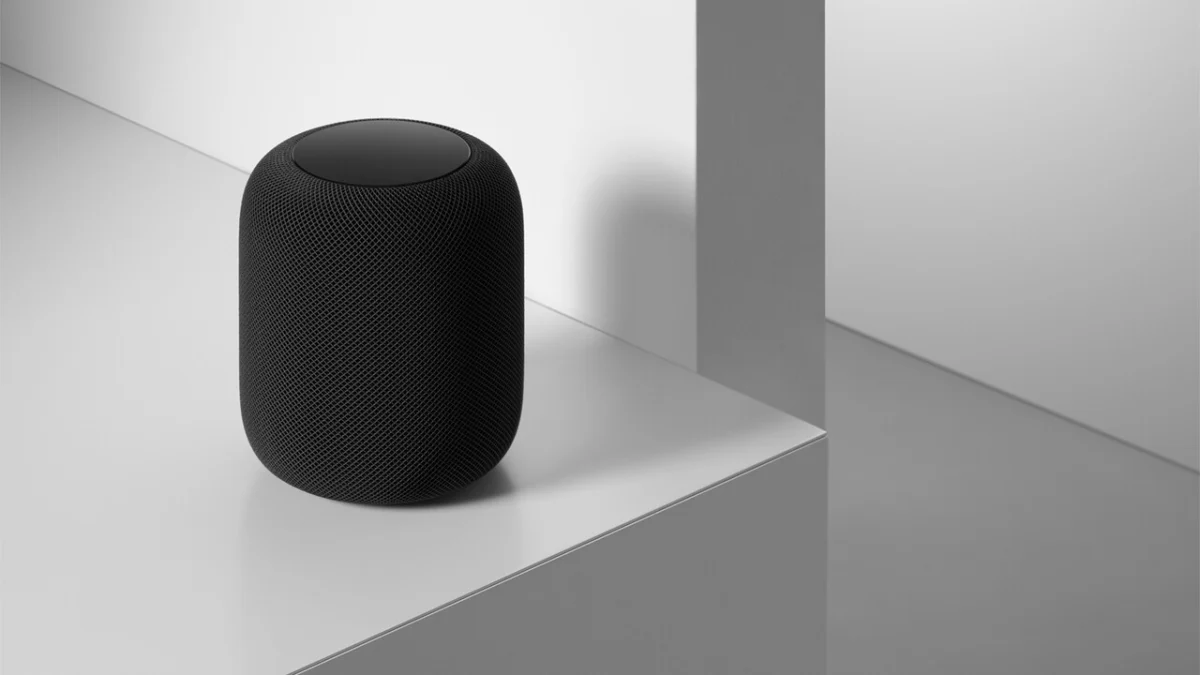
In the Smart Home sector, 2026 will serve as the launchpad for Apple’s renewed focus on the home environment. The company plans to release a revamped Apple TV and a dedicated smart home hub equipped with a display. These devices will be the first to feature deep integration with Apple Intelligence, allowing for complex, multi-modal automation. An updated HomePod mini is also in the pipeline, focusing on improved acoustic fidelity and tighter integration with the broader AI ecosystem.
2027: The Year of Visual Intelligence
The second half of 2027 is expected to be the most critical juncture for Apple’s hardware evolution. This period will witness the launch of the iPhone 20 Pro series—a device anticipated to feature a complete internal and external redesign—and the debut of Apple’s first foray into dedicated AI glasses.
The infrastructure for these glasses is already being laid via "Visual Intelligence." With the release of iOS 27, Apple has begun enabling the iPhone to analyze a user’s immediate surroundings through the camera. The proposed AI glasses will take this concept to its logical conclusion, providing a heads-up, hands-free interface that allows the user to query their environment in real-time. To bolster this data-gathering capability, new iterations of the AirPods are expected to feature integrated cameras, turning the audio peripherals into environmental sensors that feed data to the primary AI engine.
2028: The Robotics Frontier
By 2028, Apple plans to enter the robotics market. Initial reports suggest a "Robo-screen"—a device consisting of a display mounted on a motorized, articulating arm that can follow the user around a room. This marks Apple’s transition from static computing to dynamic, physical intelligence, leveraging the spatial mapping technologies developed during the Vision Pro project.
Supporting Data and Economic Realities
While the product roadmap is ambitious, it is tempered by the harsh realities of the current supply chain. Apple has explicitly confirmed that consumers should prepare for inevitable price increases across its hardware portfolio. The volatility in the memory market, coupled with the massive R&D costs associated with AI and custom silicon, has forced a recalibration of the company’s pricing strategy.
Furthermore, the "memory crisis"—the rising cost of high-bandwidth memory required for advanced AI processing—is a significant headwind. Investors and consumers alike should anticipate that future "Pro" models will command a premium, reflecting the high costs of the onboard AI capabilities and advanced display technologies.
Official Stances and Market Context
Apple has remained characteristically tight-lipped regarding specific release dates, maintaining its policy of only confirming products when they are ready for mass production. However, the company’s recent WWDC keynote provided a clear roadmap for the software underpinning these hardware goals. By presenting Siri as a "multi-modal agent" capable of understanding screen content and personal context, Apple has signaled that it is moving away from cloud-dependent processing toward on-device intelligence.
The company is clearly watching its competitors closely. While Meta has made strides with its "Project Orion" AR glasses and Google has a long history of experimentation with wearable computing (dating back to the original Google Glass), Apple’s approach remains uniquely ecosystem-centric. Apple is betting that its ability to control both the silicon (the M-series and A-series chips) and the operating system (tvOS, iOS, visionOS) will allow for a level of latency-free, private AI interaction that competitors cannot replicate.
Implications for the Future of Tech
The End of the "Phone-First" Era
The most profound implication of this roadmap is the eventual obsolescence of the smartphone as the sole gateway to the digital world. By 2028, the iPhone may function more as a processing hub for the user’s other peripherals—the AI glasses, the AirPods, and the home robotics—rather than the primary interface.
Privacy as a Product Feature
Apple is doubling down on its "Privacy First" mantra as a differentiator. By shifting the burden of AI processing to on-device silicon, Apple is attempting to solve the privacy concerns inherent in persistent, camera-equipped wearable technology. Whether this will satisfy regulators and privacy advocates remains to be seen, but it is a cornerstone of their competitive advantage.
A New Cultural Paradigm
The introduction of a robot arm that follows users and glasses that interpret reality suggests that Apple is aiming to normalize "ambient computing." This represents a transition from a world where we "go" to the internet, to one where the internet and intelligence exist in the physical space around us.
Conclusion: A High-Stakes Transition
The next three years represent a high-stakes transition for Apple. Under John Ternus, the company is betting that it can reinvent its core products while simultaneously inventing entirely new categories. The "product avalanche" is not just about keeping the company relevant; it is about securing Apple’s position as the primary architect of the next phase of human-computer interaction.
As the company moves through this cycle, the success of these products will depend on the seamless integration of its AI ambitions with its proven hardware reliability. If Apple can successfully transition its users from the screen-bound interaction of the iPhone to the spatial, intelligent world of 2028, it will likely maintain its dominance in the global technology market for another generation. However, the margin for error is razor-thin; in a landscape defined by rapid AI development and shifting consumer expectations, Apple must prove that its "walled garden" is the best place to host the future of intelligence.