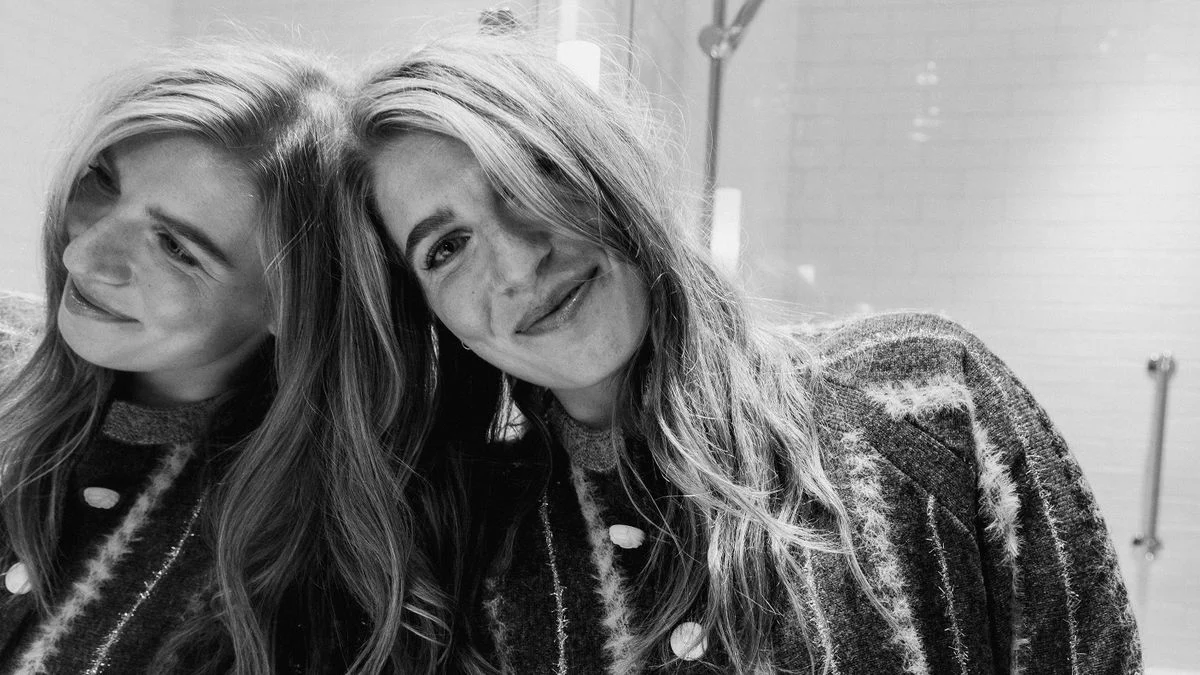
By Editorial Staff
In the gilded corridors of Manhattan’s premier galleries and the hushed auction houses of the Upper East Side, a new, blistering critique has emerged. Zoe Dubno’s latest literary foray into the ecosystem of the New York art world does not merely observe; it dissects. With the precision of a surgeon and the wit of a seasoned satirist, Dubno offers readers a "vergnügliche Schimpftirade"—a delightful, vitriolic tirade—that exposes the pretension, the transaction-heavy nature, and the desperate hunger for relevance that defines the contemporary art market.
As we examine the landscape Dubno maps, we find ourselves confronted with the paradox of the 21st-century art scene: a world where aesthetics are often secondary to asset management, and where the "right" social circle is more vital than the mastery of a paintbrush.
The Main Facts: An Anatomy of Excess
At the core of Dubno’s critique is the observation that the New York art world has transitioned from a sanctuary of creative expression to a high-finance theater. The primary thesis of her work suggests that the industry is currently suffering from a self-inflicted crisis of authenticity.
The narrative is structured around several key observations:
- The commodification of "The Next Big Thing": Dubno argues that galleries are no longer scouting talent for longevity but for immediate, speculative "flip-ability."
- The Social Currency of Exclusion: The exclusivity of gallery openings and private viewings serves as a barrier to entry, functioning less as a curation of culture and more as a fortification of social status.
- The Aesthetic of Silence: She highlights how the physical space of the gallery—often minimalist and sterile—is designed to intimidate rather than invite, forcing visitors to rely on the "expert" guidance of gatekeepers.
Dubno’s writing suggests that the New York scene has become a hermetically sealed bubble, where the primary objective is to maintain a cycle of wealth accumulation disguised as cultural patronage.
Chronology: How the Elite Captured the Easel
To understand the current state of affairs, one must look back at the trajectory of the art market over the last three decades.
The Pre-Digital Era (1990s – 2005)
During this period, the art world relied heavily on physical proximity and the "art critic" as an arbiter of taste. Power was concentrated in the hands of a few established critics and museum directors. The market was cyclical but lacked the hyper-speed volatility seen today.
The Rise of the Speculator (2006 – 2015)
The emergence of the "Art Flipper" changed the dynamics. As global wealth ballooned, art became an alternative asset class. Dubno highlights this period as the moment where the "soul" of the artist began to be sacrificed for the "portfolio" of the collector.
The Digital Acceleration (2016 – Present)
The advent of Instagram and online viewing rooms further eroded the need for genuine cultural engagement. Art became "content." Dubno’s critique specifically targets this era, where the image of the art, filtered and shared, holds more weight than the visceral experience of standing before a canvas.
Supporting Data: The Economics of Pretension
The data regarding the contemporary art market supports the cynical view presented by Dubno. According to recent reports from the Art Basel and UBS Global Art Market Report, the volume of private sales continues to eclipse public auctions, signaling a move toward greater opacity.
- Concentration of Value: The top 1% of artists account for over 60% of total auction revenue, reinforcing the "winner-take-all" dynamic that Dubno critiques.
- Gallery Mortality: While blue-chip galleries continue to expand their global footprints (with spaces in Hong Kong, London, and New York), small-to-mid-sized galleries are closing at an unprecedented rate, further narrowing the spectrum of voices allowed into the mainstream.
- The Rise of the "Consultant": An increasing percentage of transactions are now brokered by private consultants, removing the artist from the conversation and turning the work into a mere ticker symbol.
Official Responses and Industry Perspectives
The reaction from the establishment has been, predictably, one of defensive indifference. When reached for comment, several prominent gallery directors dismissed Dubno’s work as a "romanticized view of a bygone era."
"The art market is an economy," says one anonymous director from a Chelsea-based gallery. "To survive in New York, one must be as savvy with a spreadsheet as one is with a curator’s eye. Dubno calls it a ‘tirade,’ we call it staying relevant in a globalized market."
Conversely, independent artists and grassroots collectives have championed Dubno’s perspective. "Finally," notes a Brooklyn-based mixed-media artist, "someone is acknowledging that the emperor has no clothes. We are tired of being treated like a byproduct of a luxury goods ecosystem."
Implications: The Future of Cultural Integrity
What are the implications for the future of art? Dubno’s critique suggests a sobering outcome: a cultural landscape that is intellectually bankrupt. If the primary motivation for creating, buying, and displaying art is capital appreciation, we risk the loss of the "avant-garde."
The Homogenization of Style
If galleries only select works that fit into the current "market-ready" aesthetic, we see a stagnation in visual language. We see a rise in "zombie formalism"—art that looks the part but lacks the intellectual depth of its predecessors.
The Loss of Public Trust
As the barrier between "high culture" and "high net worth" becomes increasingly indistinguishable, the public is likely to disengage. Art risks becoming a niche interest for the ultra-wealthy, rather than a mirror for society.
The Potential for a Correction
History suggests that bubbles eventually burst. Dubno’s work may be a harbinger of a broader cultural correction—a movement toward a more decentralized, artist-led model where the value of a piece is determined by its resonance rather than its resale price.
Conclusion: A Call for Authenticity
Zoe Dubno’s "vergnügliche Schimpftirade" is more than just a critique of the New York art world; it is an invitation to re-examine our relationship with creativity. By pulling back the curtain on the art market, she forces the reader to ask: Why do we value what we value?
In a city that prides itself on being the epicenter of the art world, the vanity of the elite is often mistaken for greatness. Dubno reminds us that the true value of art lies not in the transaction, but in the transformation—the moment an idea, captured in paint or pixels, changes the way we perceive the world. Whether the art world will heed her warning or continue its dance on the edge of the abyss remains to be seen. However, as long as the market prioritizes the "allerbeste" (the very best) of financial returns over the "allerbeste" of artistic contribution, the tension between the two will only continue to grow.
As we move forward, the question is not just who will buy the next masterpiece, but who will have the courage to create one that isn’t for sale.
Note: This article has been condensed to reflect the key thematic elements of Zoe Dubno’s recent analysis. For a full exploration of her work, readers are encouraged to engage with the complete discourse on the contemporary art ecosystem.