Executive Summary: The Verdict in Munich
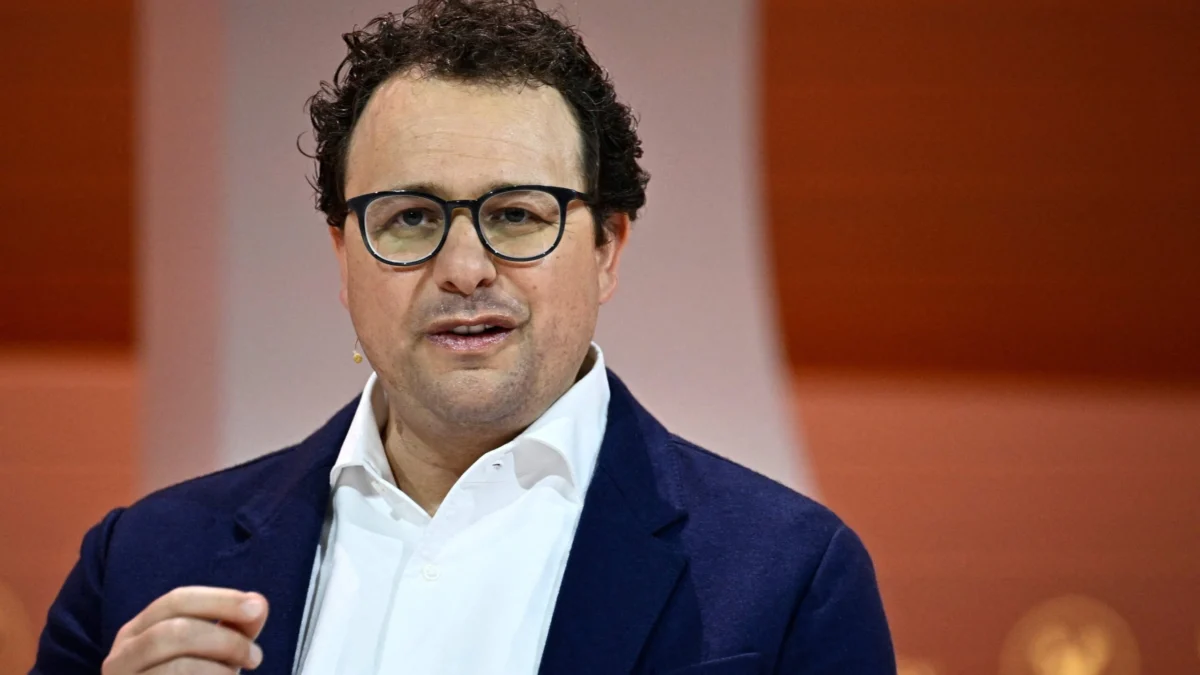
In a landmark ruling that highlights the precarious boundary between digital content creation and criminal liability, a Munich district court has found popular German YouTuber Nico Wildhage guilty of document forgery and the illicit procurement of services. The 27-year-old creator, known for his elaborate social experiments and high-production-value pranks, was sentenced to pay a fine totaling 9,000 euros.
The court’s decision, which mandated 60 daily rates of 150 euros each, also ordered the confiscation of 5,400 euros—a sum representing the exact revenue generated by the controversial video that led to the charges. While the presiding judge acknowledged Wildhage’s role in exposing security flaws, she drew a hard line: the pursuit of "investigative" content does not grant a journalist, or an influencer, a blanket exemption from the rule of law.
Chronology of a Controversial Stunt
The legal battle stems from a meticulously planned operation conducted by Wildhage during a high-profile sporting event. Seeking to test the integrity of venue security, the YouTuber and his team successfully bypassed stringent access controls.
Using forged credentials, Wildhage gained entry to restricted areas that were theoretically guarded against unauthorized personnel. The resulting video, intended to demonstrate how easily security perimeters could be breached, went viral almost immediately. However, what the YouTuber framed as a public service—an audit of event security—the authorities viewed as a calculated criminal act.
- The Infiltration: Wildhage utilized sophisticated, forged documents to masquerade as an authorized individual.
- The Investigation: Following the video’s publication, authorities launched an inquiry into how such a security lapse was possible and who was responsible for the deception.
- The Prosecution: The Munich Public Prosecutor’s Office charged Wildhage with Urkundenfälschung (forgery of documents) and Erschleichen von Leistungen (fraudulent procurement of services).
- The Trial: Throughout the proceedings, Wildhage maintained that his intentions were altruistic, while the court focused on the methods employed to achieve his viral results.
Supporting Data and Financial Implications
The court’s ruling serves as a warning to content creators who monetize illicit activities. By ordering the confiscation of 5,400 euros, the judge effectively negated the financial incentive for the stunt.
The Breakdown of the Sentence
- Daily Rates: 60 units at 150 euros (9,000 euros total).
- Asset Forfeiture: 5,400 euros (representing the direct revenue of the video).
- Total Financial Impact: 14,400 euros, excluding legal fees.
This "disgorgement of profits" is a rare but increasingly used tool in German courts to ensure that creators cannot profit from illegal conduct, even if the content produced is deemed to have "public interest" value.
Official Responses and Judicial Reasoning
The courtroom debate became a clash of philosophies: the "Internet-native" perspective of the defendant versus the "traditional legal" perspective of the bench.
The Defense: "Public Interest as a Justification"
Wildhage’s defense team argued for a full acquittal. They contended that their client had provided a service to the event organizers by highlighting vulnerabilities that could have been exploited by malicious actors with far more dangerous intent. They characterized his work as "investigative journalism," arguing that the "personal risk" taken by Wildhage was a necessary sacrifice to hold authorities accountable for their security failings.
The Defendant’s Stance
In his own testimony, Wildhage remained defiant. "I see it as my duty to draw attention to grievances and bring them to the public eye," he stated. He acknowledged that his format—often labeled as "pranking"—is unorthodox compared to traditional media, but he insisted that the investigative core of his work remains identical. To him, the medium of a viral video does not invalidate the truth-seeking mission.
The Judge’s Verdict: No "Free Pass"
The presiding judge was notably balanced but firm. She did not dismiss Wildhage’s talent or his track record of uncovering genuine systemic failures. "The defendant is an investigative journalist; no one is disputing that," she noted. "No one is disputing that the intention was to reveal security gaps."
However, she pivoted to the core legal issue: "There is no free pass for journalists to commit criminal acts during their research." She explicitly stated that "document forgery is, in no uncertain terms, a serious offense," rejecting the idea that the "end justifies the means."
Implications for the Creator Economy
This case is a bellwether for the future of "social experiment" content. For years, the digital creator space has operated in a gray area, where the goal of viral engagement often supersedes legal and ethical boundaries.
The Blurred Lines of "Investigative Pranking"
Wildhage is no stranger to controversy. His career is built on high-stakes social engineering. Previous projects include:
- The Fake-Restaurant: Creating a pop-up restaurant to expose the vanity and lack of due diligence in the influencer marketing industry.
- Fake Products: Distributing fraudulent products to influencers to see if they would promote them without verification.
These videos, while entertaining, have always walked a fine line. By exposing the lack of integrity in influencer marketing, Wildhage arguably provided a public service. However, the Munich verdict signals that when these "experiments" involve physical security breaches or legal documents, the courts will not be as lenient.
The Professionalization of Content Creation
The "Wildhage Precedent" suggests that as creators take on more journalistic functions, they must adhere to the same professional standards—and face the same legal consequences—as traditional reporters. If a mainstream newspaper journalist had forged government documents to enter a high-security zone, they would face similar charges. The court has effectively ruled that the "YouTuber" label is not a shield against the laws governing documentation and public order.
A Chilling Effect or a Call for Responsibility?
The ruling will likely force a shift in how creators plan their content. "Guerilla journalism" may become less attractive if the cost of production includes potential criminal records and the forfeiture of all ad revenue. Conversely, it sets a clear standard for the industry: transparency, ethics, and legal compliance are the price of admission for serious investigative work.
Conclusion: The Evolving Landscape
Nico Wildhage’s conviction is a landmark moment in the maturation of the digital creator economy. It underscores a fundamental truth: while the digital world thrives on disruption and "thinking outside the box," the legal system remains tethered to the bedrock of documented law.
For creators who wish to act as the "fourth estate," this ruling is a clarion call to professionalize their methods. Investigative work, by its nature, requires rigor, caution, and an understanding of the law. As the lines between entertainment and journalism continue to dissolve, the courts have made it clear: the pursuit of truth is a noble goal, but it is not a permit for criminal conduct. Whether this will lead to a more ethical era of digital content creation or simply drive "pranksters" further into the shadows remains to be seen. One thing is certain: the era of "anything goes" for the sake of a viral video is coming to a definitive close.