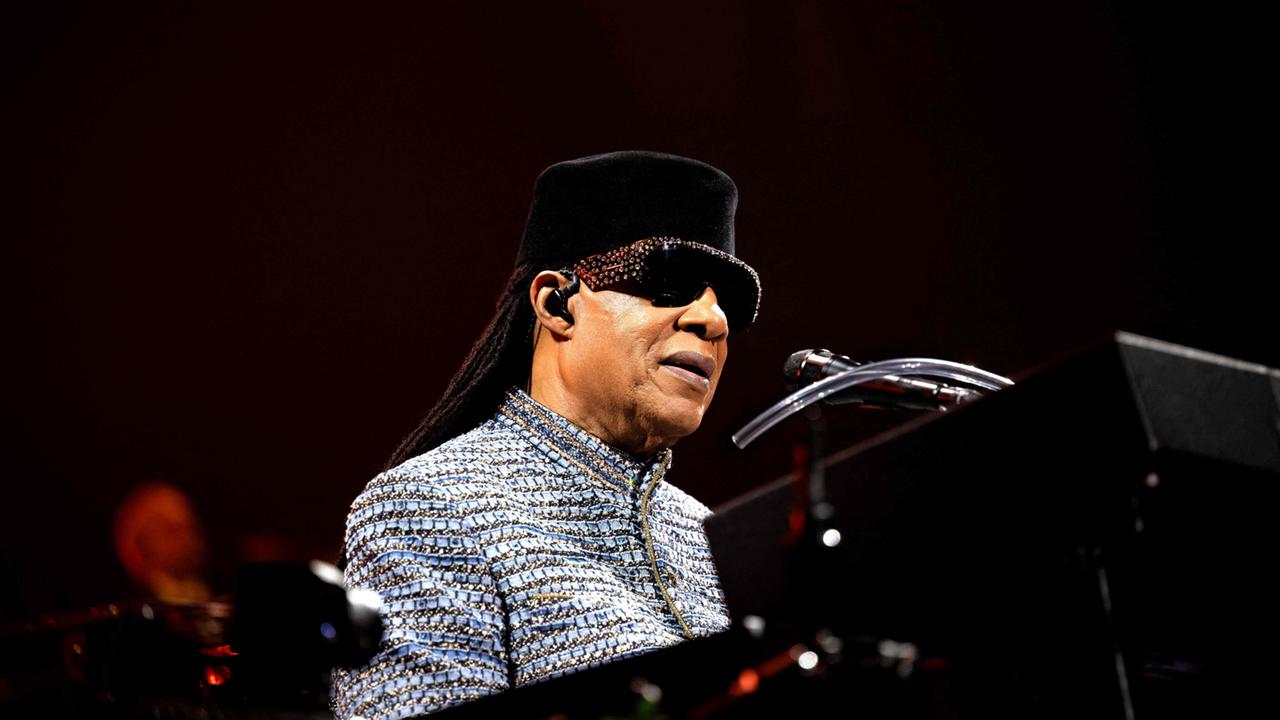
From the civil rights movement to the modern era of polarized elections, Stevie Wonder has transcended the role of the musician to become a moral compass for American society. As the music industry grapples with its influence in an era of intense political division, the legacy of Wonder serves as a case study for the intersection of art and activism.
Main Facts: The Resonance of a Soul Icon
Stevie Wonder is not merely a global superstar with over 100 million records sold and 25 Grammy Awards to his name; he is a historical figure whose artistic output has consistently challenged the status quo. For decades, the singer, songwriter, and multi-instrumentalist has utilized his platform to campaign for civil rights, condemn systemic racism, and advocate for international peace.
While the casual listener may recognize his hits as celebratory anthems—most notably the 1980 classic "Happy Birthday"—the lyrical content of his discography is deeply rooted in social commentary. "Happy Birthday" was not written for a private party; it was a calculated, successful political campaign to have the birthday of Dr. Martin Luther King Jr. established as a federal holiday in the United States, a goal achieved in 1986.
This blending of pop sensibility with political activism is a hallmark of Wonder’s career. As he tours through Europe and continues to perform, his influence remains a subject of intense debate among cultural historians: Can a pop song actually change the course of a nation?
A Chronology of Activism: From Motown to the Modern Stage
Stevie Wonder’s political evolution mirrors the changing landscape of American society. To understand his impact, one must look at the timeline of his commitment:
- The 1960s (Early Awareness): Entering a segregated music industry where the term "Race Music" was used to marginalize Black artists, Wonder witnessed firsthand the inequities of Jim Crow. His early interest in activism was signaled by his powerful interpretation of Bob Dylan’s "Blowin’ in the Wind," a song that became an anthem for equality and human rights.
- The 1970s (The Golden Era of Protest): During his most creative decade, Wonder transitioned into direct political commentary. Albums like Innervisions (1973) and Songs in the Key of Life (1976) tackled systemic racism, urban poverty, and the corruption of the Nixon administration. Songs like "Living for the City" offered a stark critique of the American justice system, while "You Haven’t Done Nothin’" targeted political apathy.
- The 1980s (Global Advocacy): Wonder’s activism moved to the international stage as he became a vocal opponent of the South African Apartheid regime. When he dedicated his 1984 Oscar for "I Just Called to Say I Love You" to the then-imprisoned Nelson Mandela, his music was promptly banned by the South African government—a badge of honor that underscored the power of his voice.
- 2007–Present (The Obama Era and Beyond): Wonder’s endorsement of Barack Obama in 2007 was a cultural milestone, with the singer famously comparing the candidate to a fusion of John F. Kennedy and Martin Luther King Jr. His continued involvement, culminating in an appearance at the 2024 Democratic National Convention, proves that his influence remains sought after by the political establishment.
Supporting Data: Music as a Mobilization Tool
The efficacy of celebrity endorsements and protest music is often debated, yet the empirical evidence of Wonder’s impact is substantial.
According to Wilfried Raussert, Professor of North American Literature and Culture at the University of Bielefeld, the success of the MLK holiday campaign was a turning point in the relationship between pop culture and legislative change. "Wonder did not just sing about change; he organized the cultural sentiment necessary to make that change politically palatable," Raussert notes.
However, the modern era presents a more fractured landscape. While musicians like Tom Morello of Rage Against The Machine continue to curate festivals—such as the "Power to the People" event in Maryland—aimed at mobilizing voters for the midterm elections, the impact is harder to quantify. The proliferation of social media has created an echo chamber where musical influence is often confined to existing political silos. Despite this, the presence of stars like Bruce Springsteen, Joan Baez, and Cypress Hill at these events highlights a continued reliance on the "celebrity megaphone" to drive voter turnout.
Official Responses and Diverse Perspectives
The role of the pop star in politics is not without its critics. Thorsten Philipp, a communications researcher at the Technical University of Berlin, argues that the "political content" of music is inherently unstable.
"Take ‘Happy Birthday’ by Stevie Wonder," Philipp explains. "It is played at every birthday party in the Western world, yet the vast majority of people singing along are completely unaware of the song’s origin as a protest against the absence of a federal holiday for Martin Luther King Jr. The political meaning is often stripped away by the sheer ubiquity of the melody."
Conversely, supporters argue that music functions as a "gateway" to political consciousness. Even if the casual listener does not immediately grasp the protest origins of a song, the emotional connection established by the artist creates a foundation upon which political education can be built.
Furthermore, the "politicization" of the music industry is not limited to the left. The Trump campaign has frequently utilized high-profile artists, including rappers like Nicki Minaj and country stars like Jason Aldean, to reach demographic groups that feel alienated by mainstream cultural narratives. This suggests that the battle for the "musical heart" of America is as fierce as the battle for the ballot box.
Implications: The Future of the Pop Icon in the Political Arena
As we look toward the future, the implications of Wonder’s legacy are clear: music remains a potent, if unpredictable, instrument of soft power.
1. The Desensitization Effect
One of the primary challenges for modern artists is the "noise" of the digital age. With endless content streams, an artist’s political message can easily be diluted. Unlike the 1970s, where an album release was a monocultural event, today’s fractured media landscape makes it difficult for a single song to unify a national movement.
2. The Authenticity Factor
The public’s perception of "authenticity" is critical. Stevie Wonder’s decades-long commitment—spanning from the 1960s to his recent appearances in 2024—gives him a moral authority that younger, more transient influencers often lack. Audiences are increasingly wary of "performative activism," preferring artists who demonstrate a lifelong commitment to the causes they champion.
3. The Shift in Mobilization
The shift from the "protest song" to the "mobilization rally" represents a change in how music interacts with policy. Musicians are no longer just writing about problems; they are acting as curators of political spaces. By hosting festivals and leveraging their massive social media followings, they are effectively functioning as modern-day political organizers.
Conclusion: A Legacy of Persistence
Stevie Wonder’s career stands as a testament to the belief that art is never truly apolitical. Whether he is performing at a stadium in Hannover or addressing a political convention in Washington, the core message remains the same: music is an expression of our shared humanity.
While the political landscape of the 2020s is vastly different from the era of the Civil Rights movement, the fundamental need for voices that advocate for "peace, love, and community" remains unchanged. Stevie Wonder may have stepped back from the front lines of day-to-day political debate following recent electoral cycles, but his influence is baked into the DNA of modern activism.
As new generations of artists emerge, they would do well to look at the Wonder model: not just as a creator of melodies, but as a creator of meaning. In an age of deepening division, the power of a single voice—supported by the right melody—remains one of the few forces capable of bridging the gap between political apathy and social change.
Ultimately, the power of pop music in politics is not found in the lyrics alone, but in the persistent, unwavering commitment of the artist to use their fame as a bridge to a better world. Stevie Wonder remains the gold standard for that pursuit, proving that while politicians may pass laws, it is the artists who often change the culture that makes those laws possible.