In a landmark development for digital rights and platform accountability, the German Federal Court of Justice (Bundesgerichtshof – BGH) has referred a high-profile defamation case involving Green Party politician Renate Künast and the tech giant Meta to the European Court of Justice (ECJ). The ruling hinges on a fundamental question of the internet era: To what extent are social media platforms legally responsible for identifying and purging "functionally identical" copies of illegal content?
The Core Dispute: A Fabricated Narrative
The legal battle, which has captivated civil liberties advocates and tech policy experts alike, centers on a malicious piece of digital misinformation. Several years ago, a doctored image—commonly referred to as a "meme"—began circulating across Facebook. The graphic featured a photograph of Renate Künast paired with a fabricated quote: "Integration starts with you, as a German, learning Turkish."
Künast, a prominent figure in German politics, never uttered these words. The post was a calculated attempt to misrepresent her political stance on immigration and social integration, designed to trigger outrage and hostility. While the "original" post that initiated the legal complaint has since been removed by Meta, the nature of the internet is such that the content proliferated in various, slightly altered iterations—a phenomenon known as "kerngleiche" (functionally identical) content.
Künast is suing Meta not only for the initial violation of her personality rights but is demanding a broader mandate: she wants the platform to proactively search for and delete all variations of the defamatory post. Her legal team argues that it is technically and logistically impossible for a private citizen to monitor the global expanse of a platform like Facebook to report every single instance of the illegal content.
Chronology of a Protracted Legal Battle
The legal journey has been a marathon of judicial scrutiny, reflecting the complexities of applying 20th-century defamation laws to 21st-century digital architecture.
- Initial Infringement: The defamatory meme gains traction on social media, leading to severe public backlash against Künast based on the fabricated quote.
- The Pursuit of Remedy: Künast initiates legal proceedings against Meta, seeking both injunctive relief (the deletion of the content) and damages amounting to at least €10,000 for the psychological and professional toll caused by the smear campaign.
- The Frankfurt Ruling (2024): The Higher Regional Court (OLG) of Frankfurt am Main ruled in favor of Künast regarding the injunctive relief, confirming that the content violated her rights. However, the court denied her claim for monetary compensation, setting the stage for a further appeal to the BGH.
- BGH Intervention (February 2025): The Federal Court of Justice reviewed the case but opted to pause proceedings, awaiting clarity from the ECJ on related cases concerning platform liability.
- The Current Referral (October 2026): The BGH, recognizing the lack of clear precedent on the scope of platform duties for "identical" content, officially referred the case to the European Court of Justice in Luxembourg for a preliminary ruling.
The Argument for "Proactive Responsibility"
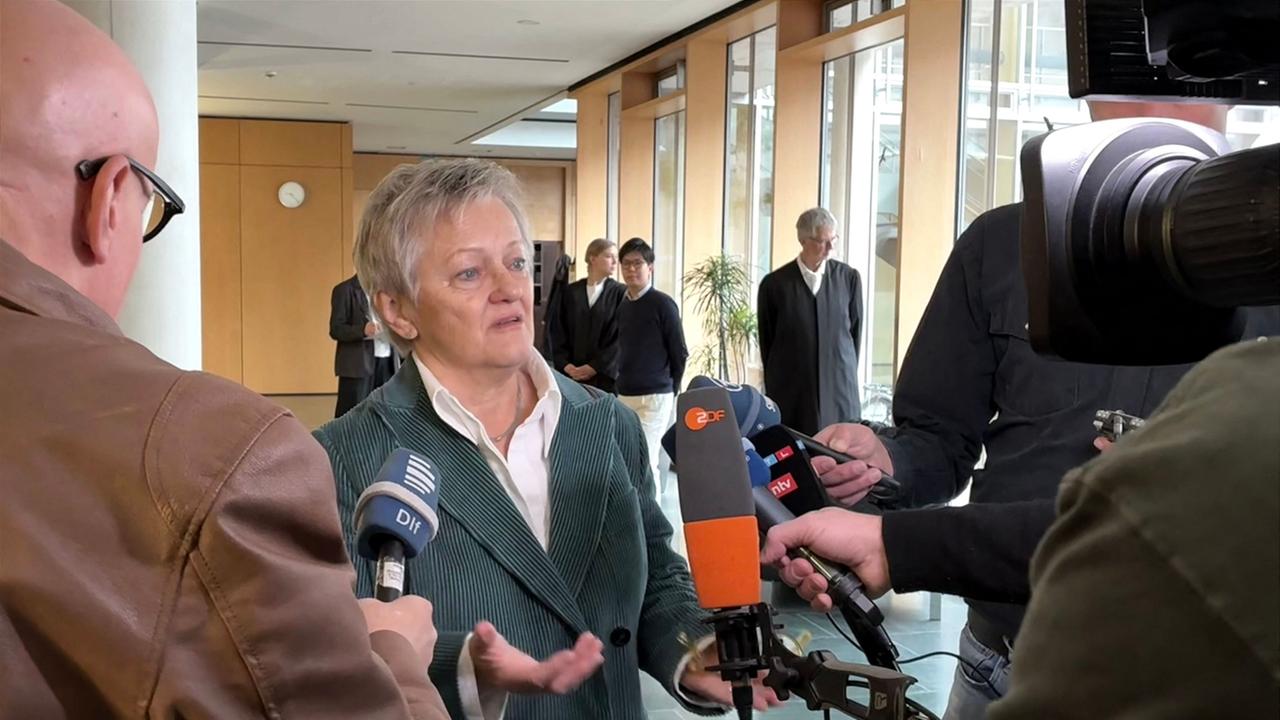
In her testimony before the BGH, Renate Künast delivered a stinging critique of the current status quo. "Why [must I do this]?" she asked. "Because I cannot." Her argument is rooted in the sheer imbalance of power between the individual and the corporation.
Künast contends that requiring a victim of defamation to act as a full-time moderator for a global platform is a violation of the victim’s right to protection. She argues that once a court has declared a specific piece of content illegal, the platform, equipped with advanced AI and moderation tools, should bear the "job of the corporation" to sweep the platform for duplicates.
From her perspective, the current "notice-and-takedown" system is reactive and inefficient, effectively allowing illegal content to remain online long enough to cause irreparable harm to a person’s reputation before the victim can even identify the new, slightly altered URL.
The Meta Defense: The "Neutral Host" Doctrine
Meta, the parent company of Facebook, maintains a staunchly different position. The company characterizes itself as a "neutral hosting provider." According to Meta’s legal counsel, their responsibility is limited by the current legal frameworks (such as the Digital Services Act and its predecessors) to act only upon specific notification of illegal content.
Meta argues that if they were required to perform a proactive, automated, and global search for every "functionally identical" version of a post, it would necessitate constant, invasive monitoring of all user communication. They contend that this would not only be a technical overreach but would also pose a significant threat to freedom of expression, as automated filters are often prone to "over-blocking" legitimate speech that might share certain keywords or visual markers with the forbidden content.
The ECJ Connection: Lessons from Online Marketplaces
The BGH’s decision to involve the ECJ is not arbitrary. It follows a significant ruling in late 2025 concerning online marketplaces. In that case, the ECJ determined that platforms facilitating sales must take a more active role in vetting advertisements containing sensitive or unlawful personal data.
The ECJ ruled that these platforms are responsible for preventing the unlawful copying and republication of data-heavy listings across the web. The BGH is now testing whether the logic applied to e-commerce can—or should—be applied to social media discourse.
However, the BGH expressed hesitation, noting that the political nature of the Künast case differs from commercial advertising. The judicial body is seeking guidance on whether the "duty of care" for an online marketplace can be translated into a "duty of suppression" for a social network.
Broader Implications for Democracy and Tech
The outcome of this case will likely serve as a foundational pillar for European internet law for years to come. The implications are three-fold:
1. The Burden of Moderation
If the ECJ rules in favor of Künast, it could mandate that platforms move away from purely reactive moderation toward a system of "algorithmic accountability." This would force companies like Meta to invest significantly more in content moderation technology, shifting the burden from the victim to the platform provider.
2. Freedom of Speech vs. Personality Rights
The case highlights the perennial conflict between protecting an individual’s reputation and the platform’s role as a digital public square. Critics of the "proactive deletion" model argue that it grants platforms the power to act as censors, potentially stifling political satire or dissent if the definitions of "functionally identical" are too broadly construed.
3. The Future of the Digital Services Act (DSA)
While the EU’s Digital Services Act has already established new rules for large online platforms (VLOPs), the Künast case will test the interpretation of these rules. It will clarify the boundaries of "due diligence" and whether the law requires platforms to act as curators of truth rather than merely passive pipes of data.
Conclusion: A Turning Point in Luxembourg
As the file moves to Luxembourg, the eyes of the digital policy world are fixed on the European Court of Justice. The case of Künast v. Meta is no longer just about one politician or one false meme; it is about the fundamental design of our digital society.
Should the ECJ uphold the duty for platforms to scrub their networks of illegal content, it would represent a significant victory for those who argue that the "Wild West" era of social media must come to an end. Conversely, a ruling that limits platform liability would leave the status quo intact, maintaining the current paradigm where the responsibility for cleaning up the digital ecosystem remains largely with the individual, regardless of their resources or capacity.
For now, the legal proceedings remain suspended, pending the judgment from the ECJ. Until then, the case stands as a stark reminder of the challenges inherent in governing the global digital sphere through national courts—a challenge that, in an era of borderless information, can only be resolved by the highest judicial authority in Europe.
Aktenzeichen VI ZR 64/24