The year was 1974. The stage was the European Cup. For the 1. FC Magdeburg, a club from the German Democratic Republic (GDR) that had just conquered Europe, a clash with the star-studded FC Bayern Munich was more than just a football match—it was a collision of two worlds, two ideologies, and two footballing philosophies.
The Historical Context: A Divided Footballing Landscape
In the autumn of 1974, the footballing world was still vibrating from the aftershocks of the FIFA World Cup held in West Germany. The host nation had claimed the title, fueled by the brilliance of the Bayern Munich core—Sepp Maier, Franz Beckenbauer, Hans-Georg "Katsche" Schwarzenbeck, Uli Hoeneß, and the legendary Gerd Müller.
On the other side of the Iron Curtain, 1. FC Magdeburg was writing its own history. Under the meticulous guidance of coach Heinz Krügel, the "Blue-Whites" had achieved the unthinkable by winning the European Cup Winners’ Cup, defeating AC Milan in the final. They were the pride of the GDR, a team built on collective discipline, technical fluidity, and a deep-seated tactical intelligence that allowed them to compete with the giants of the West.
When the draw for the second round of the 1974/75 European Cup pitted the reigning European Cup Winners’ Cup holders against the European Cup champions, the football world stopped. It was not merely a club match; it was the ultimate test of the GDR’s top footballing talent against the gold standard of West German professional football.
Chronology of a Classic: The Battle of the Titans
The Munich Ambush: The First Leg
On October 23, 1974, the Olympiastadion in Munich hosted the first leg. The atmosphere was electric, heavy with the weight of political and sporting expectations. Few expected the Magdeburg side to survive the onslaught of a Bayern team that had just been crowned kings of Europe.
However, from the opening whistle, Heinz Krügel’s men silenced the doubters. Martin Hoffmann stunned the home crowd by opening the scoring in the very first minute. The goal was a masterclass in swift transition, catching the Bayern defense completely off guard.
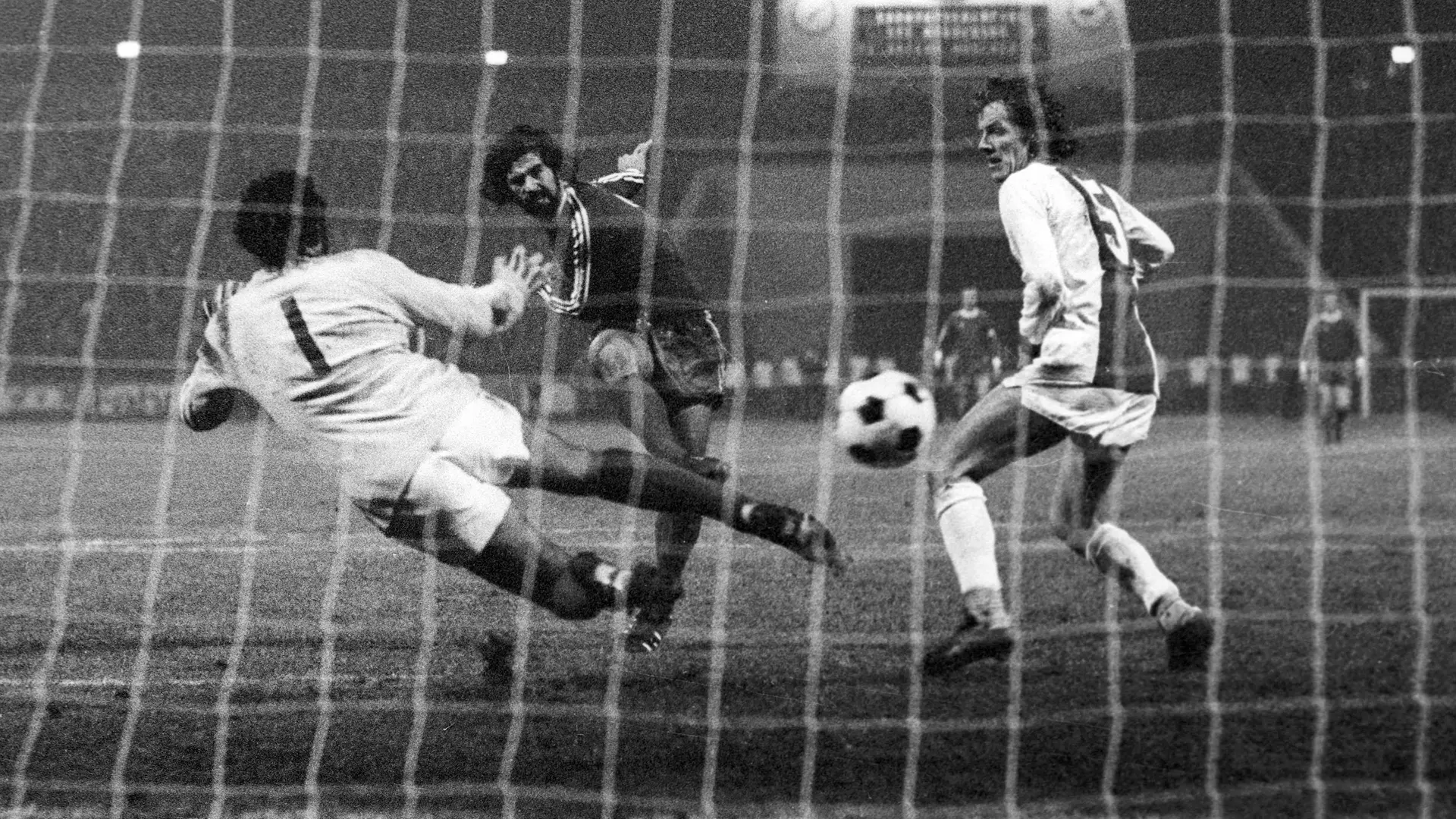
Magdeburg did not retreat into a shell; they dictated the pace. As the game progressed, the visitors’ confidence grew, and in the 44th minute, Jürgen Sparwasser—the man who would later become a national icon for his goal against West Germany in the World Cup—doubled the lead.
Heading into the halftime break with a 2-0 lead, the impossible seemed within reach. But Bayern Munich, a team defined by the "Bayern-dusel" (the fortune of the greats) and the relentless persistence of Gerd Müller, were far from beaten.
In the second half, the game shifted. Bayern pushed forward with wave after wave of attacks. The turning point came through the sheer clinical presence of Gerd Müller. The "Bomber of the Nation" struck twice to level the score. A late, tragic own goal by Detlef Enge sealed a 3-2 victory for Bayern, a result that felt incredibly cruel for the Magdeburg side, who had played arguably their best football on the grandest stage.
The Return Leg: The Ernst-Grube-Stadion Drama
Two weeks later, on November 6, 1974, the return leg in Magdeburg brought the city to a standstill. Over 33,000 spectators packed the Ernst-Grube-Stadion, creating a cauldron of noise and hope.
Magdeburg needed a win, but Bayern arrived with the experience of a team that knew how to manage high-stakes European ties. Once again, Gerd Müller proved to be the difference-maker. By the 54th minute, he had struck twice more, effectively suffocating the home team’s hopes of a comeback.
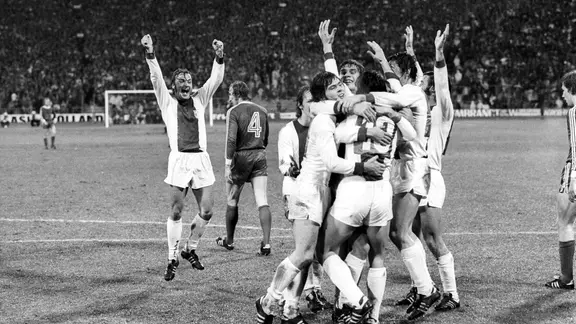
Jürgen Sparwasser managed to pull one back for Magdeburg, keeping the score at 1-2, but the deficit from the first leg proved insurmountable. Despite the defeat, the performance of the Magdeburg players—Manfred Zapf, Wolfgang Seguin, and the rest—earned the respect of the entire continent. Bayern went on to defend their title, eventually defeating Leeds United in the final, but the two matches against Magdeburg remained etched in the memories of those who witnessed them as a rare, high-stakes encounter between the best of the East and the West.
Supporting Data: The Tactical Divide
The 1974 matchups highlighted the differing professional landscapes. Bayern Munich operated in the high-stakes, commercial environment of the Bundesliga, relying on individual brilliance and the psychological edge of being world champions.
Magdeburg, conversely, represented the pinnacle of the East German state-sponsored sports model. Their tactical organization was rigid yet highly sophisticated. Data from the era suggests that while Bayern held the edge in sheer attacking efficiency, Magdeburg’s defensive structure, led by captain Manfred Zapf, was statistically one of the most disciplined in Europe.
The two legs saw a total of seven goals, with Gerd Müller accounting for four of them. This statistic alone highlights the central theme of the tie: it was a battle of team cohesion versus the singular, unstoppable force of the greatest goalscorer in history.
Official Responses and Post-Match Reflections
In the aftermath of the tie, the sentiment from the German press was one of mutual respect. Coach Heinz Krügel was praised for his tactical courage, with many pundits noting that had Magdeburg secured the 2-0 lead in the first leg, the outcome of the competition might have shifted drastically.
"We played with our hearts," said one Magdeburg player in a retrospective documentary produced years later. "We didn’t fear the world champions. We just played our game."
Bayern’s leadership, meanwhile, acknowledged the difficulty of the tie. Franz Beckenbauer often spoke of the intensity of those matches, noting that the East German teams possessed a hunger and a tactical sharpness that was frequently underestimated by the professional clubs in the West.
The Long-Term Implications: A Legacy of "What Ifs"
The 1974 showdown serves as a poignant reminder of the potential that existed within East German football. The rivalry was not limited to that one autumn; it echoed through the decades.
Perhaps the most famous echo occurred in November 2000, when the two clubs met again in the DFB-Pokal. By this time, the political landscape had transformed, and the gulf between the two clubs had widened significantly. Magdeburg, then in the Oberliga (fourth tier), faced a Bayern side containing icons like Oliver Kahn, Giovane Elber, and Hasan Salihamidžić.
In a match that defies logic, the underdog prevailed. A 5-3 victory in a penalty shootout for the FCM is now enshrined in the club’s folklore as the "Miracle of 2000." It was a spiritual successor to the 1974 matches, proving that while the resources and status might change, the competitive spirit of 1. FC Magdeburg remained a constant force.
Conclusion
The story of the 1974 encounter between 1. FC Magdeburg and FC Bayern Munich is not just a footnote in European football history. It is a narrative of ambition, a snapshot of a divided Germany, and a testament to the unpredictable beauty of the sport.
Whether it was the clinical precision of Gerd Müller or the collective defiance of the Magdeburg side, the games served as a bridge between two worlds that rarely intersected. Today, as fans look back on these matches, they see more than just a scoreline. They see the passion, the political weight, and the undying spirit of a club that, for two nights in 1974, stood toe-to-toe with the very best the world had to offer.
The legacy of the 1. FC Magdeburg lives on in their passionate fan base and the ongoing pursuit of excellence in the 2. Bundesliga, but the memory of those nights against the Bavarian giants remains a permanent fixture in the pantheon of German football history—a reminder that in football, as in life, the result is never decided until the final whistle blows.