By International News Desk
Updated: October 27, 2026
The search for a permanent home for Germany’s high-level radioactive waste—a challenge spanning decades and generations—reached a critical milestone this Tuesday. The Federal Company for Radioactive Waste Disposal (BGE) released its latest interim report, further narrowing the geographic scope of potential sites for a deep geological repository. As the scientific process moves from broad national mapping to more focused sub-surface analysis, the map of Germany is changing, with several federal states now officially excluded from consideration.
The Core Challenge: A Million-Year Safety Standard
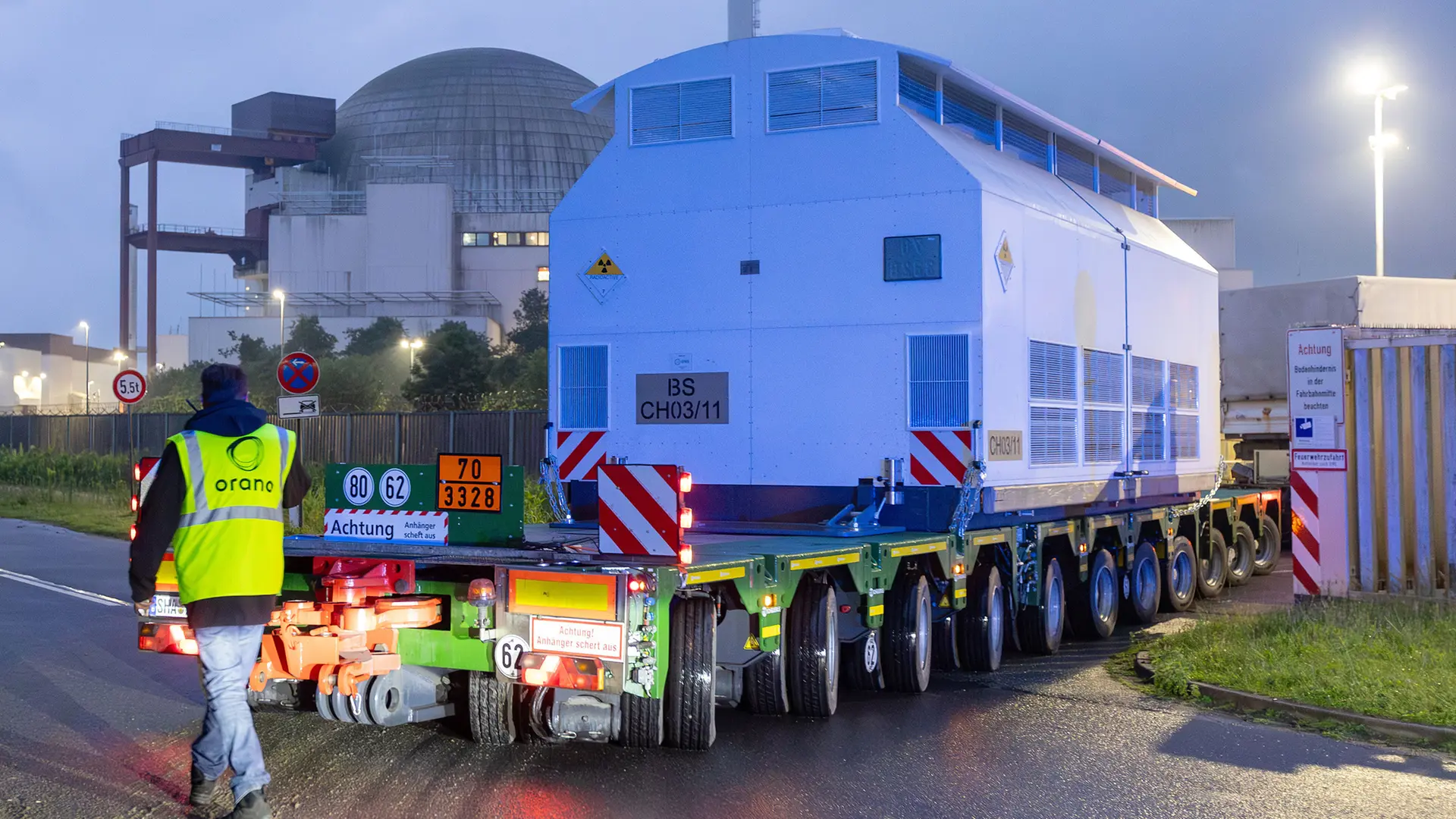
Germany’s nuclear exit, completed in recent years, left the nation with a profound legacy: approximately 27,000 cubic meters of high-level radioactive waste. This volume, roughly equivalent to 350 large overseas shipping containers, must be isolated from the biosphere for a period of one million years.
The geological requirements for such a facility are stringent. The repository must be constructed in a stable environment, typically deep underground, where crystalline structures, salt deposits, or clay formations can provide a natural barrier against the migration of radionuclides. As Professor Thorsten Stumpf, director of the Institute of Resource Ecology at the Helmholtz-Zentrum Dresden-Rossendorf, explains, the presence of groundwater is the primary enemy of long-term storage.
"Water is the primary transport medium for released radio-nuclides," Stumpf noted. "Our ultimate mandate is to ensure the absolute safety of these materials for the next one million years, regardless of geological shifts or climatic changes."
Chronology of a Scientific Marathon
The search for a repository is not merely a political task; it is a systematic, data-driven process designed to be transparent and immune to political interference.
In the early stages of the selection process, the BGE scrutinized the entirety of Germany’s subsurface. By 2024 and 2025, preliminary maps identified vast areas of interest based on tectonic stability and host rock suitability. However, the latest update marks a significant acceleration in the refinement process.
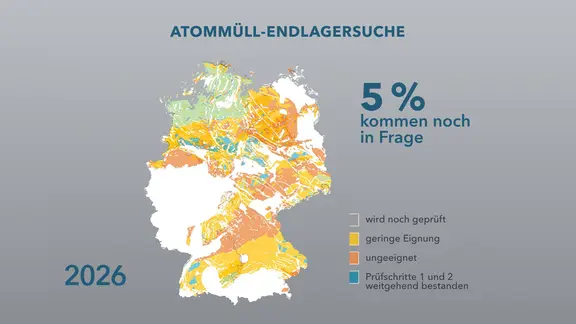
According to Iris Graffunder, Chair of the BGE management board, the pace is picking up. "Within just one year, our scientists have managed to reduce the investigation area from roughly one-quarter of the nation’s total surface to less than five percent," Graffunder stated during Tuesday’s press conference.
This reduction is not arbitrary. It follows a rigorous set of criteria that prioritize geological suitability above all else. With each step, the "safety threshold" is raised, meaning that areas that were once considered "suitable" in a preliminary sense are being downgraded or discarded as more precise seismic and hydrogeological data becomes available.
Geographic Shifts: Winners, Losers, and Exclusions
The latest report provides clarity for several regions that have been lobbying for or against inclusion.

Saxony Excluded
Perhaps the most notable development is the total exclusion of the state of Saxony. Previously, small sections of the Bautzen, Mittelsachsen, Sächsische Schweiz-Osterzgebirge, and Erzgebirge districts had been identified as potential areas of interest. Today, those areas have been downgraded. The BGE has determined that these regions do not meet the stringent criteria required for a permanent repository, effectively removing Saxony from the list of potential host states. Similar exclusions apply to Berlin and Hesse, joining Rhineland-Palatinate and the Saarland, which were disqualified in previous rounds.
The Role of Saxony-Anhalt
Conversely, Saxony-Anhalt remains at the center of the debate. Because the state possesses a diverse range of geological formations—including clay, salt domes, and crystalline structures—it continues to feature prominently in the BGE’s models.
Environmental activist Andreas Fox, who has been closely monitoring the search, points out that the geological diversity of the region is both its greatest asset and its biggest challenge. "We are seeing that the northern and southern parts of the state, particularly the Harz region and the area between Halle and Sangerhausen, remain high-priority zones because they offer exactly the kind of stable, deep-seated formations required for permanent containment," Fox said.
Developments in Thuringia
Thuringia has seen a mixed outcome. Several regions, including parts of the Unstrut-Hainich district, the Ilm-Kreis, and the Werra-Fulda basin, have been removed from the list of prospective sites. However, the Thuringian Basin, specifically in the Sömmerda district, remains under evaluation. The presence of rock salt in the subsurface here has kept it in the running as a potential candidate, pending further detailed geological surveys.
The Search Process: A Technical and Social Endeavor
The BGE emphasizes that the current narrowing of the map is based purely on "science-led" criteria. By the end of 2027, the agency aims to further consolidate these areas, proposing a significantly smaller number of regions for underground exploration.

This process is being monitored by the National Monitoring Committee (NBG), an independent body tasked with ensuring the selection process remains fair, transparent, and legally compliant. The consensus among independent experts is that the BGE has maintained a high level of transparency, which is critical to public trust.
Julia Neles, head of the "Disposal" group at the Öko-Institut, emphasized the importance of this methodology. "The public needs to see that the process is systematic and rule-bound," she noted. "There are clear criteria that are being upheld. It is essential that the public perceives this as a search for the safest possible location, rather than a process driven by political convenience or backroom deals."
Future Implications: The Path to 2050
While the current progress is significant, the road ahead is long. The final selection of a site is not expected until at least 2050. The implications of this timeline are substantial:
- Technological Evolution: The long duration allows for the development of new technologies in radioactive waste management, including potential recycling methods that could reduce the volume or longevity of the hazardous material.
- Political Continuity: Because the decision-making process spans decades, it requires cross-party support that survives election cycles. The Bundestag will have the final say, but the groundwork is being laid by non-partisan scientific bodies.
- Public Engagement: The success of the project relies on the "social license to operate." Continued transparency and the ability of local communities to engage with the scientific findings are paramount.
Conclusion
The narrowing of the search area to less than five percent of Germany’s surface is a testament to the scientific rigor being applied to one of the most difficult environmental tasks in the country’s history. As regions like Saxony are removed from consideration and others like Saxony-Anhalt remain in the spotlight, the focus shifts from broad geological surveys to intensive, site-specific investigations.
For the citizens of the affected regions, the uncertainty remains, but for the scientists at the BGE, the path forward is becoming clearer. The quest for a repository that can guarantee safety for a million years is a project that transcends current politics, focusing instead on the long-term stewardship of the planet. As the 2027 deadline for the next phase of narrowing approaches, the nation remains committed to a process that puts safety, science, and societal consensus at the forefront of its radioactive legacy.
For more information on the criteria used by the BGE and to view the latest interactive maps of potential repository sites, citizens are encouraged to visit the official federal portals, which provide comprehensive data on the geological surveys conducted to date.