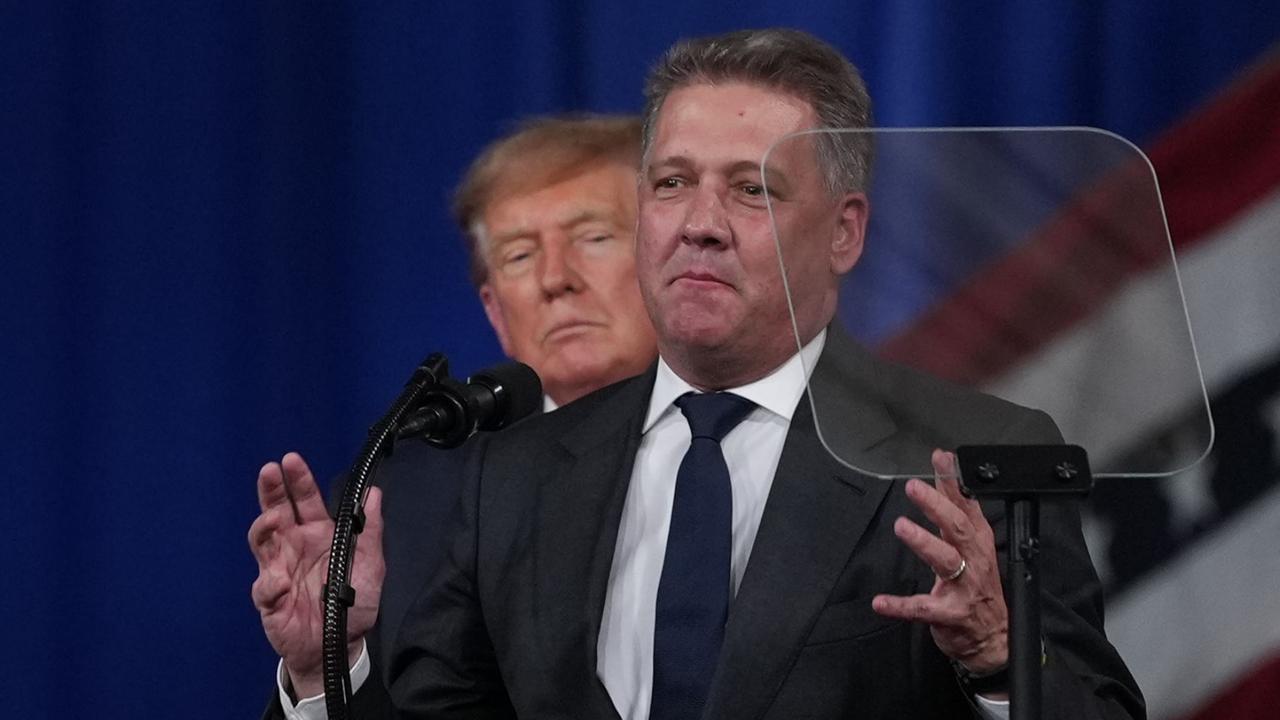
INGOLSTADT/WASHINGTON D.C. – Audi CEO Gernot Döllner is embroiled in a significant controversy following his appearance alongside former U.S. President Donald Trump at a Republican campaign event in Georgia. The high-profile display, intended to announce a substantial $4.2 billion investment in Audi’s first U.S. manufacturing plant, has ignited a firestorm of criticism across Germany, prompting widespread condemnation from political figures, labor unions, and even within the Volkswagen Group, Audi’s parent company. Critics allege that Döllner’s participation amounted to providing electoral assistance to a highly divisive political figure whose policies are often seen as detrimental to German industry, while simultaneously highlighting concerns over corporate ethical guidelines and potential job cuts at home.
The incident has swiftly escalated beyond a simple business announcement, evolving into a broader debate about the role of corporate leaders in partisan politics, especially when national economic interests and corporate values are perceived to be at stake. Audi, in its defense, maintains that Döllner’s presence was solely in the company’s best interest to secure a pivotal investment, yet acknowledges the negative political perception it has generated.
Main Facts: A High-Stakes Announcement Turned Political Minefield
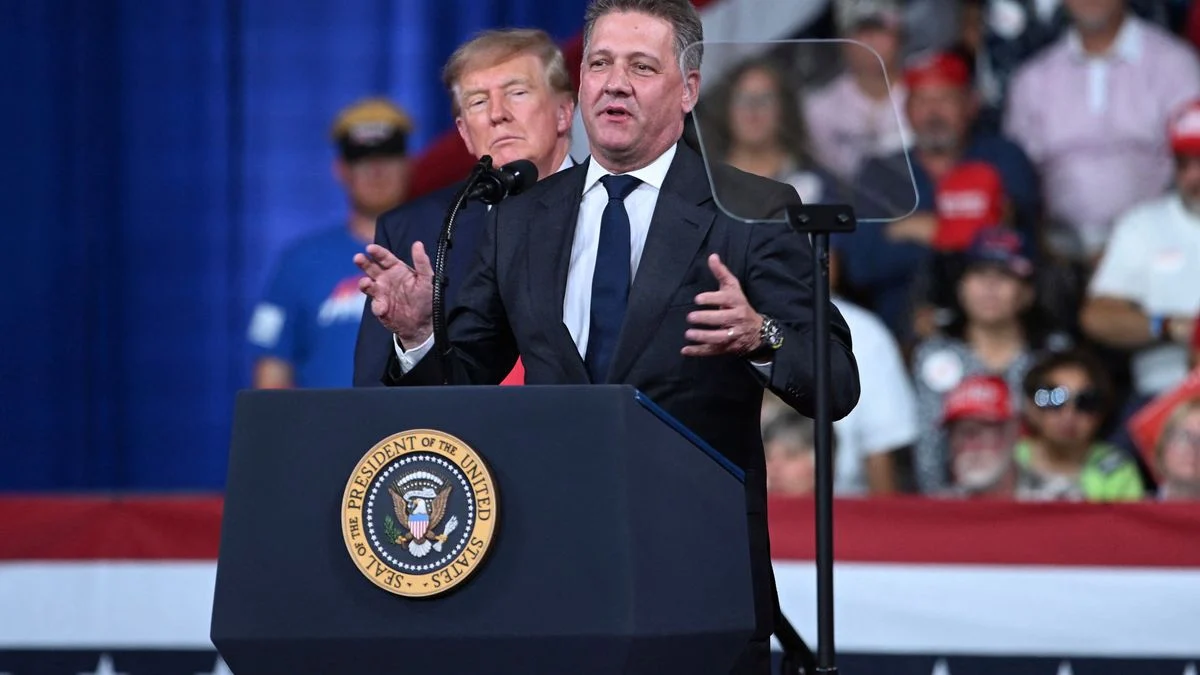
On Saturday, October 26, Audi CEO Gernot Döllner appeared on stage with former U.S. President Donald Trump at a Republican campaign rally in Georgia. The primary purpose of Döllner’s presence was to publicly announce Audi’s commitment to building its first production facility in the United States, a massive investment valued at $4.2 billion (approximately €3.6 billion). This strategic move is projected to create around 4,500 jobs in Georgia, a key swing state in the upcoming U.S. presidential election.
While the investment itself is a significant development for Audi’s global expansion and market strategy, particularly in a crucial market like the U.S., the context of its announcement has overshadowed the economic implications. Döllner’s appearance at a partisan political event, standing shoulder-to-shoulder with a candidate known for his "America First" protectionist trade policies and often confrontational rhetoric towards European allies, immediately drew a wave of indignant reactions in Germany. The controversy swiftly moved from a business decision to a perceived breach of corporate neutrality and ethical conduct, casting a pall over Audi’s public image and raising uncomfortable questions for its corporate governance.
Chronology of Controversy: From Rally Stage to Political Firestorm
The events unfolded rapidly, with Döllner’s appearance serving as the initial spark for the widespread condemnation:
- Saturday, October 26: Audi CEO Gernot Döllner attends a Republican campaign rally in Georgia. He appears alongside Donald Trump to announce Audi’s plans for a new $4.2 billion U.S. manufacturing plant, slated to create 4,500 jobs. The optics of a German automotive executive endorsing, or at least appearing to endorse, a political candidate in such a highly charged environment immediately draw attention.
- Immediate Aftermath (Saturday Evening/Sunday): Initial reports and images of Döllner’s appearance begin to circulate in German media and social networks. Labor unions, particularly IG Metall and the Volkswagen Group Works Council, are among the first to voice strong criticism, accusing Döllner of violating corporate ethical guidelines regarding political neutrality. Concerns are also raised about the juxtaposition of a major investment abroad while job security in German plants, such as Neckarsulm, remains a contentious issue.
- Monday, October 28: Political figures from across the spectrum join the chorus of criticism. Tim Klüssendorf, General Secretary of the Social Democratic Party (SPD), denounces the act as a "scandal," suggesting Döllner is rewarding Trump’s protectionist trade policies with "campaign assistance and new factory construction" while Volkswagen Group plans job cuts in Germany. He demands "consequences" within the VW Group.
- Tuesday, October 29: The Left Party’s co-chairman, Luigi Pantisano, goes further, explicitly calling for Döllner’s resignation, stating he must "take his hat off." Pantisano emphasizes the responsibility of the state of Lower Saxony, a significant shareholder in Volkswagen, to address the matter. Olaf Lies, the SPD Minister-President of Lower Saxony, while acknowledging the strategic potential of a U.S. plant, criticizes the choice of a campaign rally as "not the right place" for such an announcement, describing Döllner as having become "part of a political staging."
- Wednesday, October 30: The criticism intensifies with statements from other prominent politicians. Dennis Radtke, head of the CDU’s labor wing, highlights Trump’s detrimental impact on German industry and challenges Volkswagen’s leadership to uphold its ethics and compliance rules. Cem Özdemir, the Green Party Minister-President of Baden-Württemberg (home to Audi’s Neckarsulm plant), expresses "considerable discomfort," linking the Georgia investment to the future of German sites.
- Audi’s Official Response (Throughout the week): Audi issues statements defending Döllner’s actions, explaining that a delegation was in Georgia to advance negotiations for the planned plant. The company states it was "asked" to present the plans alongside the U.S. President and followed this invitation in the company’s interest. While acknowledging that the "framework of the announcement was perceived as a political signal," Audi insists on its "party-political neutrality" and affirms that its internal "Booklet of Policies" regarding corporate conduct remains intact. This defense, however, does little to quell the outrage from critics who point to the explicit prohibition of "publicly effective appointments with parties and politicians standing for election" in the very guidelines Audi references.
Supporting Data: The Economic and Political Context
The controversy surrounding Gernot Döllner’s appearance is underpinned by several key pieces of information that highlight the broader economic and political stakes:
- The Investment: Audi’s planned $4.2 billion (approximately €3.6 billion) investment in Georgia represents a significant strategic commitment. This would be Audi’s first manufacturing facility in the U.S., a move long considered essential for major global automakers to mitigate currency risks, reduce tariff exposure, and better serve the North American market. The announced creation of 4,500 jobs is a substantial economic boon for the state of Georgia.
- Trump’s Tariff Policy and "America First": Donald Trump’s previous presidency was marked by aggressive protectionist trade policies, including the imposition of tariffs on imported goods, such as steel, aluminum, and even threats of tariffs on European automobiles. His "America First" agenda prioritized domestic manufacturing and job creation, often at the expense of international trade relations. For German automakers, these policies presented a significant challenge, driving many to consider or expand U.S. production to avoid punitive tariffs and maintain market access. Döllner’s appearance is seen by many critics as a direct reward or implicit endorsement of these very policies, which have historically harmed German industry.
- German Job Concerns: The announcement of 4,500 new jobs in Georgia comes amidst ongoing discussions within the Volkswagen Group, including Audi, about efficiency programs and potential job reductions in Germany. SPD General Secretary Tim Klüssendorf explicitly highlighted this tension, arguing that Döllner was "rewarding the tariff policy of Donald Trump with campaign assistance and new factory construction" while the VW Group simultaneously seeks to cut jobs in Germany. This perceived contradiction fuels concerns among labor representatives and politicians about the long-term commitment to German manufacturing sites, particularly the Audi plant in Neckarsulm, Baden-Württemberg, which is considered vulnerable.
- Lower Saxony’s Stake in VW: The state of Lower Saxony holds a significant 20% voting stake in Volkswagen AG, Audi’s parent company. This makes the state a major shareholder with considerable influence on the company’s strategic direction and corporate governance. Lower Saxony’s Minister-President Olaf Lies (SPD) plays a dual role: as a political leader and as a representative of a key stakeholder in the VW Group. His critical comments underscore the political and public accountability expected from a company with such close ties to the German government.
- Corporate Ethics Guidelines ("Booklet of Policies"): The internal "Booklet of Policies" for the Volkswagen Group and its subsidiaries like Audi is central to the controversy. According to Daniela Cavallo, Chairwoman of the Volkswagen Group Works Council, these guidelines explicitly stipulate "neutrality in dealing with parties" for employees and "prohibit publicly effective appointments with parties and politicians standing for election." The clear wording of these rules provides a strong basis for the allegations that Döllner’s actions constituted a "flagrant" violation of the company’s own ethical framework.
Official Responses: A Chorus of Condemnation and a Corporate Defense
The reactions from German political and labor circles have been largely unified in their criticism, painting Döllner’s actions as a serious misstep with potential repercussions.
From Political Leaders:
- Tim Klüssendorf (SPD General Secretary): Described Döllner’s appearance as a "scandal." He argued forcefully that Döllner was effectively providing "campaign assistance and new factory construction" as a reward for Trump’s protectionist tariff policies, all while the Volkswagen Group contemplates job cuts in Germany. Klüssendorf demanded "consequences within the VW Group," emphasizing the stark contrast between investing heavily abroad and potentially shedding jobs domestically.
- Luigi Pantisano (Co-Chairman of The Left Party): Took the strongest stance, unequivocally demanding Döllner’s resignation. Pantisano stated that Döllner must "take his hat off," stressing that, especially at Volkswagen, where the state of Lower Saxony shares responsibility, such an incident "must have consequences."
- Olaf Lies (SPD Minister-President of Lower Saxony): While acknowledging the potential strategic validity of an Audi plant in the U.S., Lies sharply criticized the venue for the announcement. He asserted that a "campaign event is not the right place" to unveil such an investment. Lies added that Döllner became "part of a political staging," which caused "considerable unease," particularly given Lower Saxony’s 20% voting rights as a major shareholder in the Volkswagen Group.
- Dennis Radtke (Head of CDU Labor Wing): Emphasized the damaging nature of Trump’s policies to German industry, including the automotive sector. Radtke challenged the integrity of Volkswagen’s ethics and compliance rules, stating that if they are more than mere "management calendar slogans and wall tattoos," then the board and supervisory board "must now clearly position themselves" on the matter.
- Cem Özdemir (Green Party Minister-President of Baden-Württemberg): Expressed "considerable discomfort" at Döllner allowing himself to be leveraged for the U.S. President’s campaign. Özdemir, whose state hosts Audi’s Neckarsulm plant (considered vulnerable), also linked the Georgia investment to the future of German sites, demanding clarity: "Anyone who invests a lot of money in Georgia must also say how things can continue in Neckarsulm."
From Labor Representatives:
- Daniela Cavallo (Chairwoman of the Volkswagen Group Works Council): Delivered a scathing critique, accusing Döllner of a "blatant" violation of Audi’s own "Booklet of Policies," which mandates "neutrality in dealing with parties" and prohibits "publicly effective appointments with parties and politicians standing for election." Cavallo lambasted the executive for allowing himself to be turned into a "puppet in [Trump’s] propaganda show" by a "highly questionable political figure who violates almost every one of our corporate values."
- Christiane Benner (Head of IG Metall): Echoed Cavallo’s sentiments, labeling Döllner’s appearance as "politically unacceptable" and a "flagrant" breach of the company’s own rules.
Audi’s Official Response:
An Audi spokesperson defended Döllner’s actions, stating that an Audi delegation was in Georgia to advance negotiations for the planned plant. The company explained that it was "asked" to present the plans together with the U.S. President and decided to follow this invitation "in the interest of the company." While acknowledging that "the framework of the announcement was perceived as a political signal," which Audi takes "very seriously," the spokesperson reiterated that "party-political neutrality is an important principle for Audi." The company maintained that its "Booklet of Policies" on corporate conduct was not being called into question by Döllner’s actions. This explanation, however, has failed to satisfy critics who point to the clear language of the policy document itself.
Implications: Navigating the Intersection of Business, Ethics, and Politics
The controversy surrounding Gernot Döllner’s appearance with Donald Trump carries significant implications for Audi, the broader Volkswagen Group, and the role of corporate leadership in an increasingly politicized global landscape.
For Audi’s Reputation and Brand Image:
The immediate fallout has undeniably tarnished Audi’s image in Germany and potentially across Europe. A brand that prides itself on precision, innovation, and a certain level of sophisticated detachment from overt political partisanship now faces accusations of ethical compromise and political opportunism. The perception of Döllner aligning with a figure often seen as hostile to European interests could alienate customers and stakeholders who value corporate social responsibility and ethical conduct. Rebuilding trust and restoring its reputation will require careful communication and potentially demonstrable adherence to its stated values.
Corporate Governance and Ethical Standards:
The most direct implication relates to corporate governance and the enforcement of internal ethical guidelines. The explicit statements from the Volkswagen Group Works Council and IG Metall, citing specific violations of the "Booklet of Policies," put the supervisory board and management board of both Audi and VW under intense scrutiny. If Döllner’s actions are deemed to have violated these rules, the question of "consequences" – as demanded by several politicians – becomes paramount. Failure to act decisively could undermine the credibility of the company’s entire ethical framework, suggesting that rules can be bent or ignored for perceived business advantages, particularly for top executives. This could set a dangerous precedent for future corporate engagements with controversial political figures.
The Dilemma of Global Business in Politicized Environments:
This incident highlights the increasingly complex dilemma faced by multinational corporations operating in diverse and often politically charged environments. Companies must navigate the need to secure investments and market access with the imperative to maintain political neutrality and adhere to ethical standards. When a business opportunity requires engagement with a divisive political figure, the line between strategic pragmatism and perceived political endorsement becomes incredibly fine. The Audi case serves as a stark reminder that what might be considered a necessary business engagement in one country can be viewed as a profound ethical lapse in another, particularly in the highly interconnected global media landscape.
German-U.S. Business Relations:
While the investment itself could be seen as a positive step for German-U.S. economic ties, the controversy surrounding its announcement complicates the narrative. It underscores the anxieties within Germany regarding Trump’s potential return to power and the implications of his protectionist policies for German industry. The criticism from German politicians reflects a broader concern about safeguarding German economic interests and values in the face of potentially disruptive U.S. trade policies. The incident could further strain diplomatic and economic relations, particularly if German political leaders perceive a lack of solidarity or ethical compromise from major German corporations.
The Future of German Manufacturing and Job Security:
The contrast between the multi-billion-dollar investment in the U.S. and ongoing concerns about job security at German plants like Audi’s Neckarsulm factory is a potent symbol of globalization’s dual edge. For labor unions and politicians, it raises legitimate questions about corporate priorities and the commitment to domestic employment. The controversy forces a difficult conversation about how German automakers balance global expansion with their responsibilities to the domestic workforce and manufacturing base, especially when considering the potential impacts of a protectionist U.S. administration.
In conclusion, Gernot Döllner’s appearance with Donald Trump has evolved into a far-reaching ethical and political crisis for Audi and the Volkswagen Group. It serves as a powerful illustration of the delicate balance multinational corporations must strike between pursuing strategic business opportunities and upholding their stated corporate values and ethical responsibilities in an increasingly interconnected and politically charged world. The ultimate resolution of this controversy will likely set an important precedent for how German industry navigates the complexities of global politics in the years to come.