The Current State of Affairs: A Club in Turmoil
The optimism that greeted Sandro Wagner’s arrival at the Heinz von Heiden Arena just one month ago has evaporated with alarming speed. For Hannover 96, a club with aspirations of climbing the ranks of the 2. Bundesliga, the reality has proven to be a sobering, difficult, and increasingly tense experience. Following a dismal run of results that culminated in a stinging 0-2 defeat in the Niedersachsenderby against Eintracht Braunschweig, the “Roten” find themselves languishing in 16th place—a relegation playoff spot that nobody at the club envisioned at this stage of the campaign.
With only one point from his first three league matches at the helm, the 38-year-old former assistant to Julian Nagelsmann is facing his first real test of leadership. The narrative of a "long-term process" and the necessity of patience is being put to the fire as the pressure from fans and the reality of the league table begin to mount.
Chronology of a Failed Start
To understand the gravity of the situation, one must look at the timeline of the season. Hannover 96 began the campaign under Christian Titz, whose tenure was marked by inconsistency, resulting in just four points from the first five matches. The club’s leadership opted for a change, parting ways with Titz and installing Lars Barlemann as an interim solution. Under Barlemann, the team saw a momentary glimmer of hope with a 2-1 victory over Bochum, a result that briefly suggested the team was heading in the right direction.
When the club announced Sandro Wagner as the permanent successor, the announcement was met with a sense of "Aufbruchstimmung"—a spirit of renewal. Fans and pundits alike expected the former professional, known for his tactical acumen and intensity, to stabilize the ship. Instead, the team has regressed.
- The Magdeburg Debut: Wagner’s tenure began with a sobering 0-3 loss away at 1. FC Magdeburg. The defeat exposed defensive vulnerabilities and a lack of creative impetus in the final third.
- The St. Pauli Stalemate: A 1-1 draw at home against FC St. Pauli provided a brief moment of defensive resilience, but it was not enough to spark the offensive momentum needed to climb the table.
- The Derby Disaster: The most damaging blow came this past Sunday. The Niedersachsenderby against Eintracht Braunschweig is arguably the most important fixture of the year for the Hannover faithful. A 0-2 defeat not only cemented the team’s slide toward the bottom of the table but also deepened the rift between the supporters and the club hierarchy.
Supporting Data: Why the Numbers Don’t Lie
The statistical reality facing Wagner is stark. Since taking over, Hannover 96 has managed to score only once in three league outings. This lack of productivity in front of goal has turned what was supposed to be a revitalized attacking unit into a stagnant force.
- Points Tally: Under Wagner, the team has collected just 1 out of a possible 9 points.
- Table Position: The club currently sits at 16th place with a total of eight points.
- Goal Differential: The inability to find the net has left the team with a negative goal difference, further exacerbating the pressure in a league as competitive as the 2. Bundesliga.
The "Home Curse" has also returned to haunt the club. After breaking their home-ground struggles under interim coach Barlemann, the team has failed to leverage the energy of their own stadium under Wagner, leaving the supporters increasingly restless as the season progresses into the cold autumn months.
Official Responses: Boldt Stands Firm Amidst Criticism
In the aftermath of the derby defeat, Sport Managing Director Jonas Boldt was forced to address the growing chorus of doubters. Standing on the pitch at the Eintracht-Stadion, visibly frustrated by both the team’s performance and the regrettable fan violence that marred the event, Boldt offered a candid assessment of the situation.
"We aren’t sugar-coating things—that is clear," Boldt stated in an interview with the NDR. "We were not present in the first half, neither in terms of footballing quality nor in our physical commitment. That simply cannot happen in a game of this magnitude."
When pressed on whether he felt the decision to appoint Wagner was a mistake, Boldt was unequivocal. "No!" he replied, signaling that the board’s patience—while being tested—has not yet reached a breaking point. Boldt emphasized that the solution must come from within: "We have to work through the things that aren’t functioning. We cannot wait for a ‘wonder-healer’ to arrive. The responsibility lies entirely in our own hands."
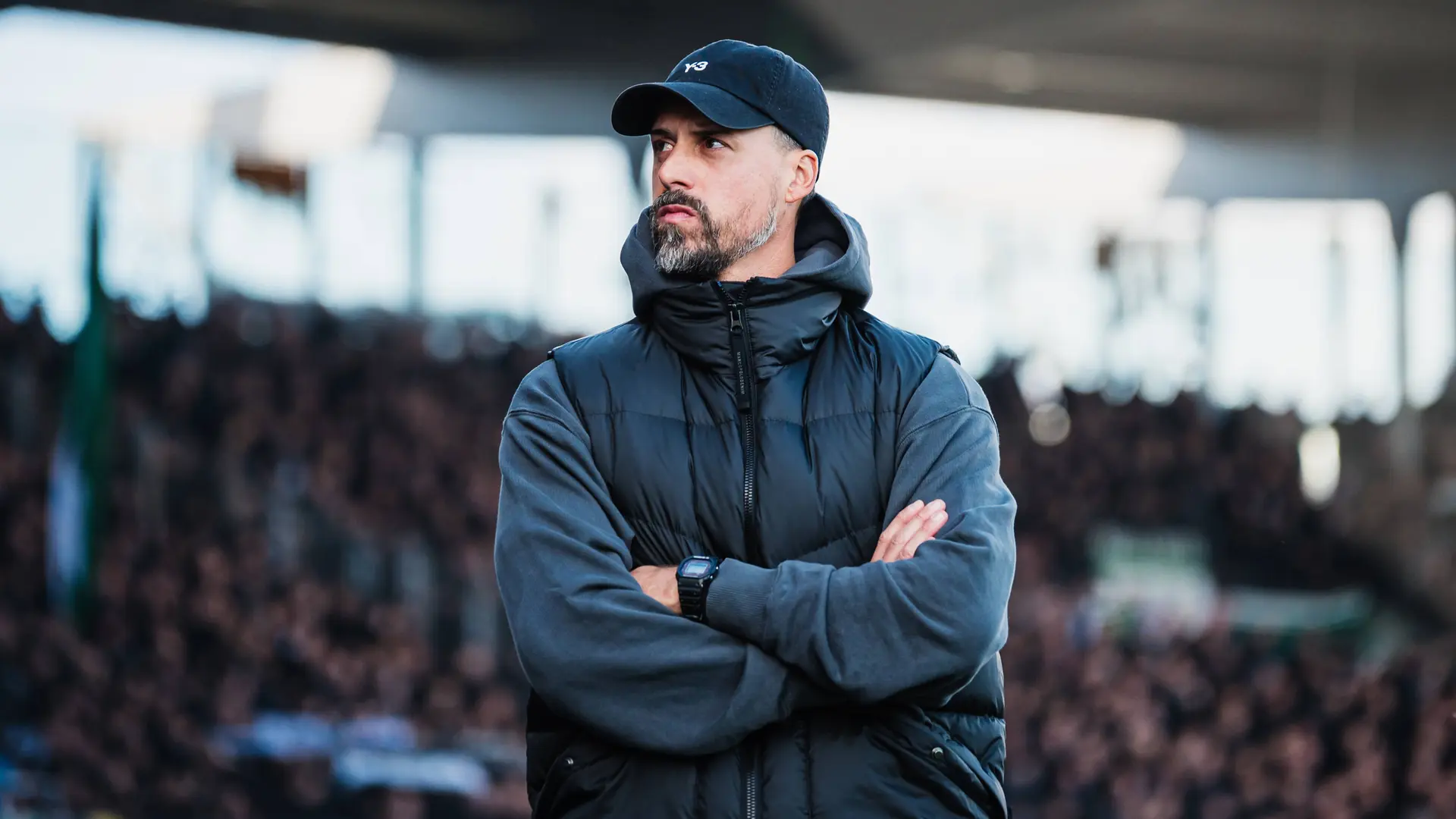
Wagner himself has adopted a similar, albeit more cautious, tone. "The table is not pretty," the coach admitted. "The team is currently lacking lightness; they are not in the ‘flow.’ It is crucial that we return to our core content and fight our way out of this."
The Psychological Burden: Managing the "Flow"
Wagner’s philosophy, which he brought from his time in the national team setup, revolves around intensity and belief. However, he acknowledges that the transition has been difficult. "I have said from the beginning that this would be a difficult time, a challenge to find our rhythm again," Wagner noted.
The psychological state of the players appears to be the primary obstacle. In football, confidence is often a self-fulfilling prophecy. When a team begins to doubt its own system, the tactical discipline that Wagner preaches starts to break down under pressure. The players are not just struggling with their opponents; they are struggling with the weight of expectations from a fanbase that expected a quick ascent rather than a battle for survival.
Implications: A Defining Week Ahead
The next seven days are arguably the most critical of the season for Hannover 96. The club finds itself at a crossroads.
The DFB-Pokal Opportunity
On Wednesday, Hannover 96 faces the 1. FC Kaiserslautern in the second round of the DFB-Pokal. While the league remains the priority, a cup run could serve as the perfect catalyst to "reset" the season. A victory against a strong opponent could provide the much-needed emotional boost, proving to the fans that Wagner’s system is capable of producing results in high-pressure scenarios.
The Dresden Showdown
Following the cup match, the focus shifts immediately back to the 2. Bundesliga. On Sunday, Hannover will host Dynamo Dresden in a match that has been billed as a "relegation six-pointer." With Hannover sitting in 16th and Dresden just behind them, the stakes could not be higher. A loss in this match would not only drop the team deeper into the danger zone but would almost certainly force the club’s leadership to hold emergency meetings regarding the future of the coaching staff.
The Broader Consequences
If the results do not improve, the implications for the club are severe. Relegation from the 2. Bundesliga would be a catastrophe for a club of Hannover’s stature, impacting finances, player retention, and the long-term viability of the current management structure. The "work in progress" narrative, while intellectually sound, is rarely tolerated in the high-stakes environment of German professional football.
Conclusion: The Path Forward
Sandro Wagner stands at the precipice. He was brought in to ignite a fire under the squad and lead them toward the top of the table. Instead, he finds himself firefighting. The support from Jonas Boldt provides him with the necessary runway to implement his ideas, but the clock is ticking.
The match against Kaiserslautern is no longer just a cup game; it is a referendum on the team’s current direction. The match against Dresden is no longer just a league fixture; it is a battle for the club’s dignity. For Wagner, the time for "process" is quickly giving way to the time for "results." If he can guide his team to back-to-back victories this week, the narrative of his early tenure could shift from "crisis" to "turning point." If he fails, the questions regarding the direction of Hannover 96 will only grow louder, and the job security of the man who promised to "ignite" the club will inevitably become the central topic of discussion in German football circles.
The fans, the players, and the management are waiting. The challenge is immense, but in the unpredictability of the 2. Bundesliga, one week can change everything. Whether that change is for the better or for the worse remains to be seen in the coming days at the Heinz von Heiden Arena.