In the quiet, rural corners of Saxony, where the landscape is still defined by the rhythmic pulse of agriculture and the echoes of industrial history, a remarkable preservation project is underway. Stephan and Timon Schellenberger, a father-son duo, have transformed a personal passion into a living museum that stands as a testament to German engineering heritage. What began as a fascination with stationary steam engines has evolved into an expansive, curated collection that serves as a vital link between the agricultural revolutions of the 19th century and the mechanical advancements of the modern era.
While modern technology rapidly moves toward automation and artificial intelligence, the Schellenbergers have chosen to anchor themselves in the visceral, tactile reality of heavy machinery. Their collection, which includes rare steam-powered apparatuses and vintage tractors that have long since vanished from the commercial fields of Europe, offers a rare window into the mechanical soul of the past.
Main Facts: A Legacy in Motion
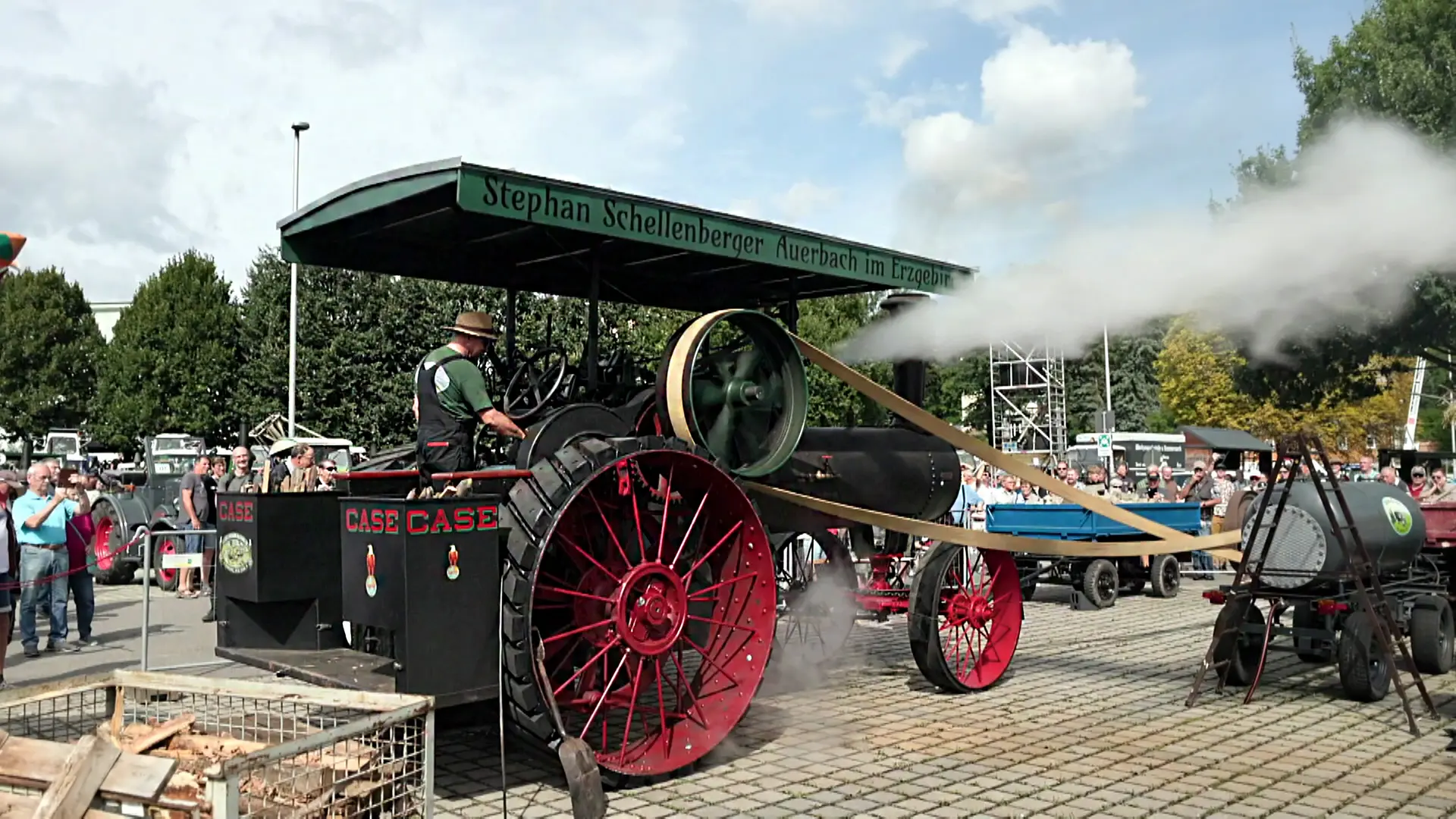
The core of the Schellenberger collection is not merely an accumulation of metal, but a functional archive. At the heart of their holdings are several steam traction engines—colossal, coal-fired beasts that once powered the threshing machines of pre-war Germany. These machines, which were the precursors to the modern tractor, are notoriously difficult to maintain. They require not only deep mechanical knowledge but also an understanding of high-pressure boiler safety and steam mechanics, a craft that is rapidly dying out.
Accompanying the steam engines are a series of vintage tractors that chart the evolution of the combustion engine in agriculture. From the early "Bulldog" style engines that rattled the foundations of rural villages to the refined designs of the mid-20th century, the collection tracks the transition from animal labor to mechanical power.

The significance of this collection lies in its operability. Unlike museum pieces that are scrubbed, painted, and static, the Schellenberger machines are "living." The father-son team spends thousands of hours annually sourcing obsolete parts, forging missing components, and calibrating engines that have not seen a working field in over half a century.
Chronology: From Hobby to Historical Mission
The trajectory of the Schellenberger collection can be traced back over two decades. It began with a single, derelict steam engine that Stephan Schellenberger acquired with the intention of a simple restoration. What started as a weekend project in a small barn quickly outgrew its confines.
- Early 2000s: The acquisition of the first stationary steam engine. Initial efforts focused on basic cleaning and cosmetic restoration.
- 2008: The realization that steam engines require specialized maintenance. Stephan began mentoring his son, Timon, in the arts of boiler-making and mechanical engineering.
- 2014: The shift toward mobile agricultural machinery. The duo expanded their scope to include tractors, recognizing that the history of steam was inseparable from the history of land cultivation.
- 2020-Present: The collection reaches "critical mass," leading to the formalization of their restoration workshops. The site has become a destination for enthusiasts and historians seeking to understand the specific engineering challenges of the early industrial period.
This chronology is marked not by dates of acquisition, but by the milestones of mechanical "rebirth"—each year representing a new machine brought back to full functionality.
Supporting Data: The Cost and Complexity of Preservation
Maintaining such a collection is an exercise in both financial and intellectual endurance. The data regarding the preservation of steam-era machinery is sobering.

- Fuel and Resource Consumption: A single steam traction engine can consume hundreds of kilograms of coal and hundreds of liters of water in just a few hours of operation. The logistical challenge of providing the necessary fuel and water pressure is immense.
- Maintenance Man-Hours: For every hour a machine is under steam, it requires approximately ten hours of maintenance. This includes boiler inspection, bearing lubrication, and firebox cleaning.
- The Scarcity of Parts: Many of the components required for these machines are no longer manufactured. The Schellenbergers have invested in specialized machining equipment, including lathes and milling machines, to fabricate parts from original schematics—or, in cases where schematics are lost, from reverse-engineered components.
The economic reality is that the value of these machines as scrap metal is negligible, but their value as historical artifacts is immeasurable. The preservation work effectively subsidizes the cost of history through the personal labor of the owners.
Official Perspectives and Expert Assessment
The work performed by the Schellenbergers has not gone unnoticed by the broader historical and engineering communities. Industrial heritage experts emphasize that the preservation of "technological memory" is crucial for understanding how societies evolved.
"When we look at a tractor from 1950, we aren’t just looking at a tool," says Dr. Hans Richter, a specialist in industrial archaeology. "We are looking at the solution to a specific set of problems: labor shortages, soil compaction, and the demand for higher crop yields. By keeping these machines running, the Schellenbergers allow us to see the ‘thought process’ of the engineers who designed them."
Furthermore, the regional agricultural boards have lauded the project for its contribution to local culture. While these machines are no longer used for production, they remain a symbol of the regional identity of rural Saxony. During local festivals, the sight and sound of the steam engines serve as a living history lesson for younger generations, grounding them in the reality of their ancestors’ daily labor.

The Broader Implications of Mechanical Heritage
The significance of the Schellenberger project extends far beyond the borders of their property. It touches upon a growing global debate regarding the "Right to Repair" and the sustainability of modern technology.
1. The Lesson in Sustainability
Modern agricultural equipment is increasingly digital and proprietary. When a modern tractor breaks down, the owner is often locked out by software restrictions, requiring a manufacturer-authorized technician to perform the repair. The Schellenberger collection represents the antithesis of this trend. Their machines are entirely transparent; if it is broken, it can be seen, understood, and fixed. The collection serves as a powerful argument for the durability and repairability of mechanical systems.
2. The Intergenerational Transfer of Skill
Perhaps the most critical implication of this work is the transmission of knowledge. By working alongside his father, Timon Schellenberger has gained a skill set—blacksmithing, steam physics, and heavy metal fabrication—that is increasingly rare. This father-son dynamic ensures that the knowledge required to operate these machines does not die with the previous generation.
3. Cultural Resilience
In an era of rapid change, there is an inherent human need for connection to the physical past. The steam engine is a loud, hot, and aggressive machine; it demands attention. By preserving these machines, the Schellenbergers provide a sensory experience that digital archives simply cannot replicate. They are preserving the "vibration" of history.
Future Outlook: A Living Museum
The Schellenbergers are currently looking toward the future of their collection. While they have no desire to turn their site into a commercial theme park, they are exploring ways to ensure that the collection remains intact for future generations. This includes the digitization of their archives—documenting every repair, every part fabricated, and every operational lesson learned—to create a "living manual" for other restorers worldwide.
As the sun sets over the Saxon fields, and the faint scent of coal smoke drifts through the air, it is clear that the Schellenberger collection is more than a hobby. It is a quiet, persistent rebellion against the disposable nature of modern life. It is a reminder that with enough patience, skill, and respect for the past, we can keep the fires of history burning.

The work of Stephan and Timon Schellenberger ensures that the heavy, rhythmic thrum of the steam engine will continue to echo, reminding us all of the mechanical foundation upon which our modern world was built. Their dedication stands as a beacon for those who believe that the past is not meant to be buried, but to be maintained, operated, and shared.