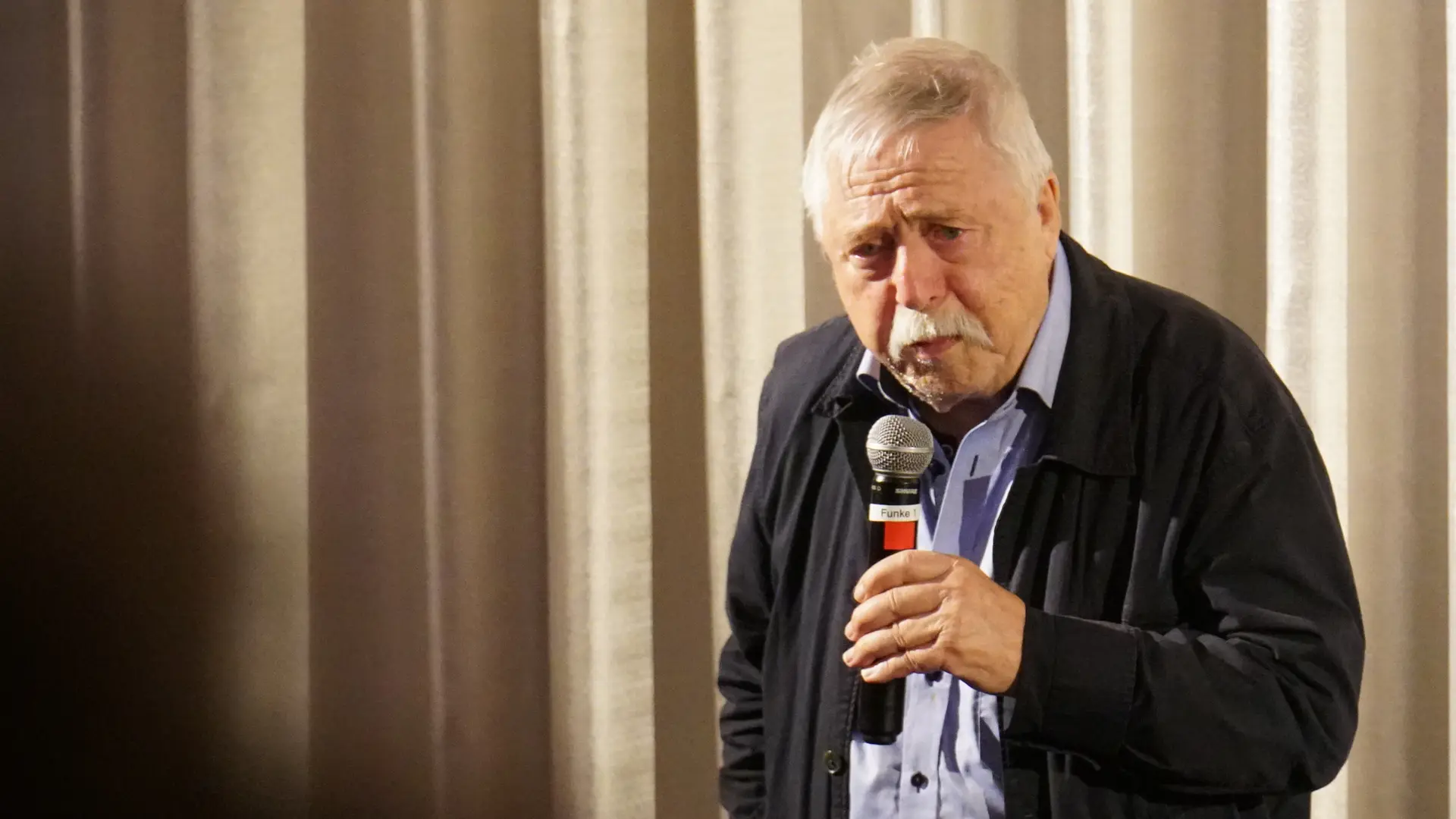
As the autumn leaves settle in Leipzig, the city—long a crucible of German political transformation—played host to a poignant, standing-room-only event. The Passage Kinos witnessed the premiere of the new documentary Biermann, a cinematic portrait of a man whose name is synonymous with the volatile, creative, and often brutal history of a divided Germany. With the poet and singer-songwriter approaching his 90th birthday on November 15, the film serves not merely as a retrospective, but as a living testament to the power of dissent.
Wolf Biermann, a figure who has occupied the roles of exile, dissident, and cultural icon, remains a polarizing yet essential voice in the German discourse. As he stood before the Leipzig audience, receiving a rapturous ovation, he reminded them that his connection to the city transcends simple nostalgia. For Biermann, Leipzig is the site of his emotional return to the East in 1989—a moment he describes as more intense than the fateful Cologne concert in 1976 that led to his permanent expulsion from the GDR.
The Man Who Challenged the State: A Chronology of Resistance
To understand the weight of the documentary Biermann – Warte nicht auf bess’re Zeiten (Don’t Wait for Better Times), one must first grasp the trajectory of its subject. Born in Hamburg in 1936 to a communist, Jewish family, Biermann’s life was marked by tragedy early on. His father, Dagobert, was a resistance fighter murdered in Auschwitz. In 1953, driven by a youthful belief in the socialist project, a teenage Biermann moved from the West to the East—a decision that would ultimately place him on a collision course with the very ideology he sought to uphold.
The Rise of the Dissident
Throughout the 1960s, Biermann became the GDR’s most prominent lyrical critic. His songs were not merely ballads; they were sharp-edged critiques of the Berlin Wall, the ossification of the Socialist Unity Party (SED), and the erosion of human rights. By 1965, the state’s patience had evaporated. He was slapped with an official performance and publication ban. Yet, his voice could not be stifled. His tapes were smuggled across the border, finding an audience in both East and West, effectively becoming the soundtrack of quiet, intellectual rebellion within the GDR.
The 1976 Turning Point
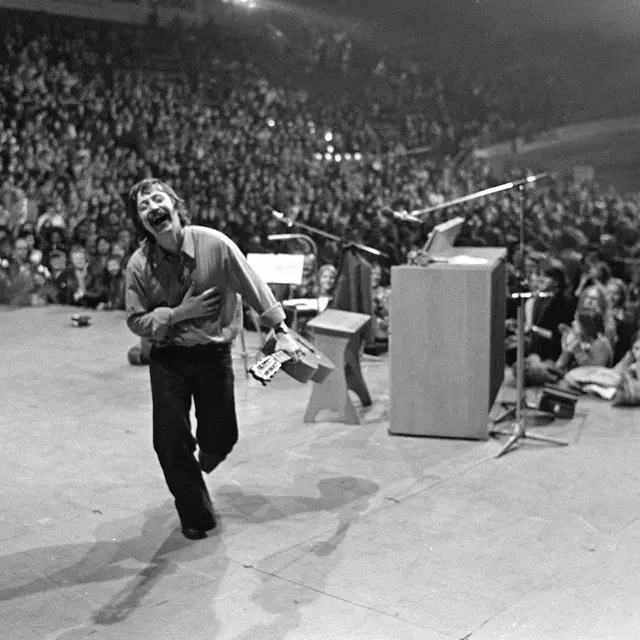
The defining moment of his political life occurred in November 1976, during a televised concert at the Cologne Sporthalle. The broadcast was viewed by millions in the GDR. The state’s reaction was swift and draconian: upon his return, the SED revoked his citizenship, permanently exiling him from the country he considered his home. This act of state violence sparked an international outcry and signaled the beginning of the end for the moral authority of the East German regime.
The Return
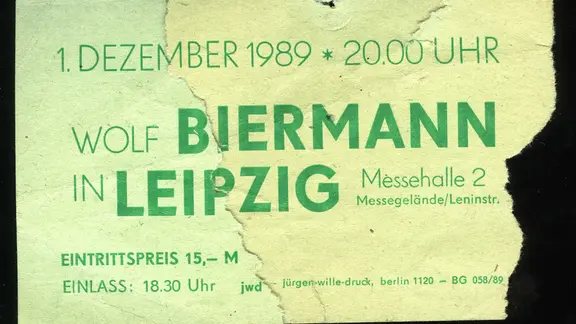
Thirteen years later, in December 1989, as the Berlin Wall crumbled, Biermann performed again in Leipzig. It was a homecoming that carried the emotional baggage of a lost decade, a moment of profound reconciliation and pain that the new documentary captures with searing intimacy.

The Cinematic Lens: Intimacy and Archive
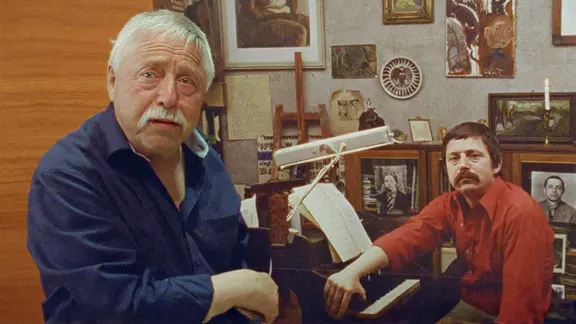
Directed by Jens Meurer, the documentary is the culmination of three years of close-quarters filming. Meurer manages to strip away the "icon" status to reveal the human being. The film oscillates between the quiet, vulnerable moments—Biermann relaxing in a bathrobe on the Baltic coast—and the fiery, combative stage performances that defined his career.
Meurer faced the Herculean task of condensing nine decades of history into two hours. "Jemand, der fünf Deutschlands erlebt hat," (Someone who has lived through five Germanys), Meurer remarked during his visit to MDR Kultur. From the Third Reich to the post-reunification era, Biermann’s life is a microcosm of the 20th century.
The documentary also utilizes Stasi archives, presenting chilling evidence of the systematic surveillance that shadowed Biermann’s every move. Microphones in his apartment, agents in his hallway, and the constant, crushing psychological pressure of knowing that his life could be ended or stolen at any moment—these are not just historical footnotes in the film; they are the visceral reality of a man who lived with the constant expectation of arrest or violence.
Cultural Implications and Official Perspectives
The documentary does not exist in a vacuum; it features reflections from figures across the political and artistic spectrum. Former German President Joachim Gauck, a key figure in the peaceful revolution, highlights Biermann’s "audacity." For Gauck, Biermann’s refusal to be silent served as a vital, if uncomfortable, stimulant for the German democratic process.
Modern musicians—from the punk-rock legend Campino of Die Toten Hosen to younger artists like Lina Maly—are also featured. They do not merely pay homage; they actively engage with his work, reinterpreting his songs for a contemporary generation. This cross-generational dialogue underscores a core theme of the film: the enduring relevance of dissent.
The Philosophy of "Misch dich ein!"
Biermann’s message to the youth of today is rooted in his past: "We were not condemned to go along with everything and let everything be done to us." He views his history as a call to action. In an era marked by the resurgence of war and the fragility of democratic institutions, Biermann’s persistent refrain is, "Mischt euch ein!" (Get involved!).
He argues that apathy is the greatest threat to freedom. The film successfully positions him not as a relic of the Cold War, but as an active, living challenge to modern complacency.
Beyond the Screen: A Multi-Media Celebration
As Biermann approaches his 90th birthday, the documentary is merely one component of a broader cultural moment. In addition to the film’s release on October 29, the public is being treated to:
- Literary Works: A new collection of his personal diaries, a volume of poetry, and a children’s book were released this October.
- Musical Legacy: A new album, Unterm Haar nur Himmel (Only Sky Beneath the Hair), is scheduled for release in November.
- Touring: Biermann will embark on a special anniversary concert tour, continuing to perform at an age when most have long since retired.
Conclusion: A Living History
The documentary Biermann is a reminder that history is not static. It is lived, breathed, and often suffered by individuals whose choices dictate the moral climate of their time. By looking back at the surveillance, the exile, and the defiance of the past, the film forces the audience to look forward at their own responsibilities.
Wolf Biermann has spent his life standing at the intersection of five Germanys, acting as a mirror to the nation’s conscience. As he enters his tenth decade, he remains a defiant, stubborn, and essential figure. Whether in the archives of the Stasi or the bright lights of a cinema in Leipzig, his message remains clear: the price of freedom is the refusal to remain silent. The documentary does not just honor the man; it preserves the spirit of a life lived in service to the truth.