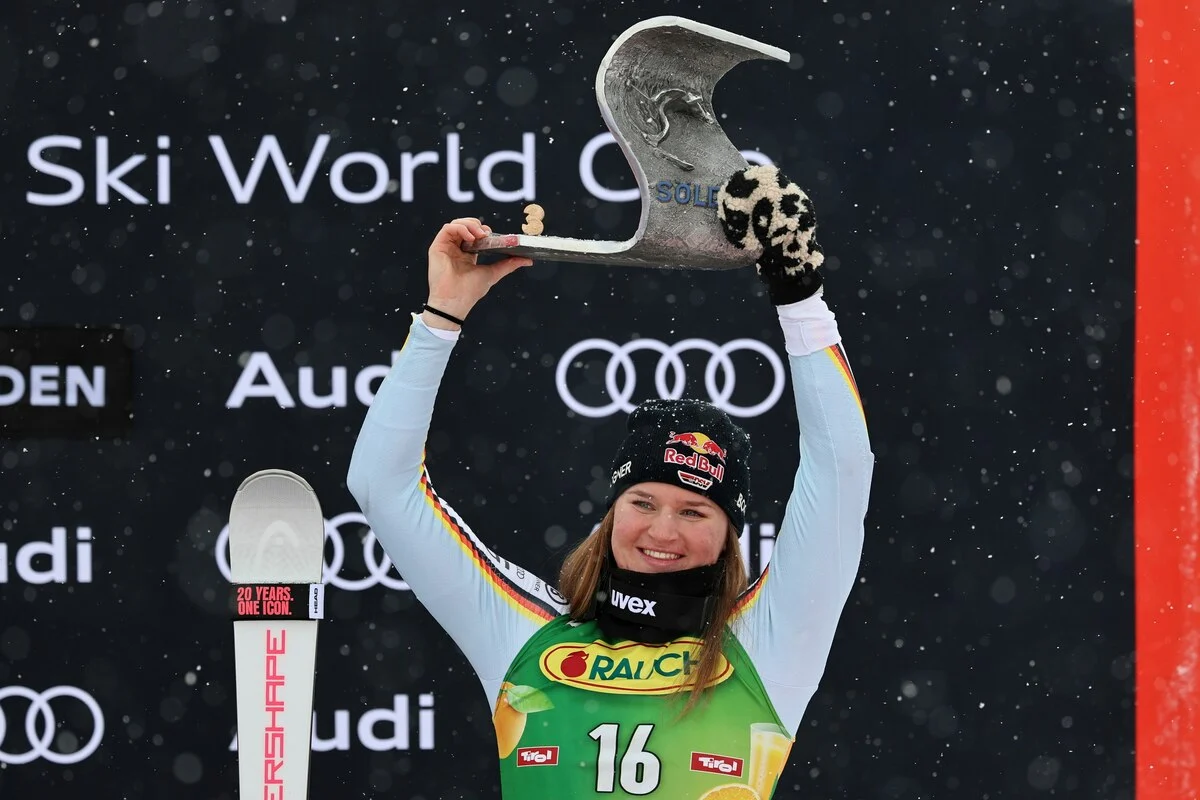
The alpine ski world was shaken this weekend on the icy slopes of the Rettenbach Glacier in Sölden. In a dramatic start to the World Cup season, 22-year-old German skier Emma Aicher delivered a performance that defied expectations, securing a place on the podium in the giant slalom. For many, it was a sudden arrival on the global stage; for those within the German Ski Federation (DSV), it was the inevitable flowering of a talent that had been quietly maturing for years.
As Aicher stood in the finish area, having quickly shed her warm winter parka to swap it for the official race suit required for the podium ceremony, the scene was one of disbelief—not just from the crowd, but from the athlete herself. Aicher, who had previously considered the giant slalom her weakest discipline, had just navigated one of the most technical and unforgiving courses on the circuit to claim a top-three finish.
The Chronology of a Surprise Triumph
The day began under a heavy, grey sky in Sölden. The atmosphere on the glacier was biting, and the competition was as fierce as the terrain. Mikaela Shiffrin, the legendary American skier, had arrived in Austria with a clear mandate: to reclaim her dominance by shifting her focus back to the technical disciplines of giant slalom and super-G. Having finished the first run as the fastest, Shiffrin seemed destined for victory, a prospect that loomed over the rest of the field like an inevitable conclusion.
However, the second run proved to be a different story. The course, notoriously difficult due to its steep gradients and punishing ice, claimed several high-profile victims. When Shiffrin struggled to maintain her rhythm, slipping down the leaderboard to seventh place, the door opened for the chasing pack.
Aicher, who had been sitting in a comfortable position after the first run, maintained her composure. While the weather shifted, providing a brief window of improved light, she executed a flawless second descent. When she crossed the finish line, the math became clear: only two skiers had outperformed her. The young German, who had never before stood on a World Cup podium in this discipline, found herself thrust into the spotlight.
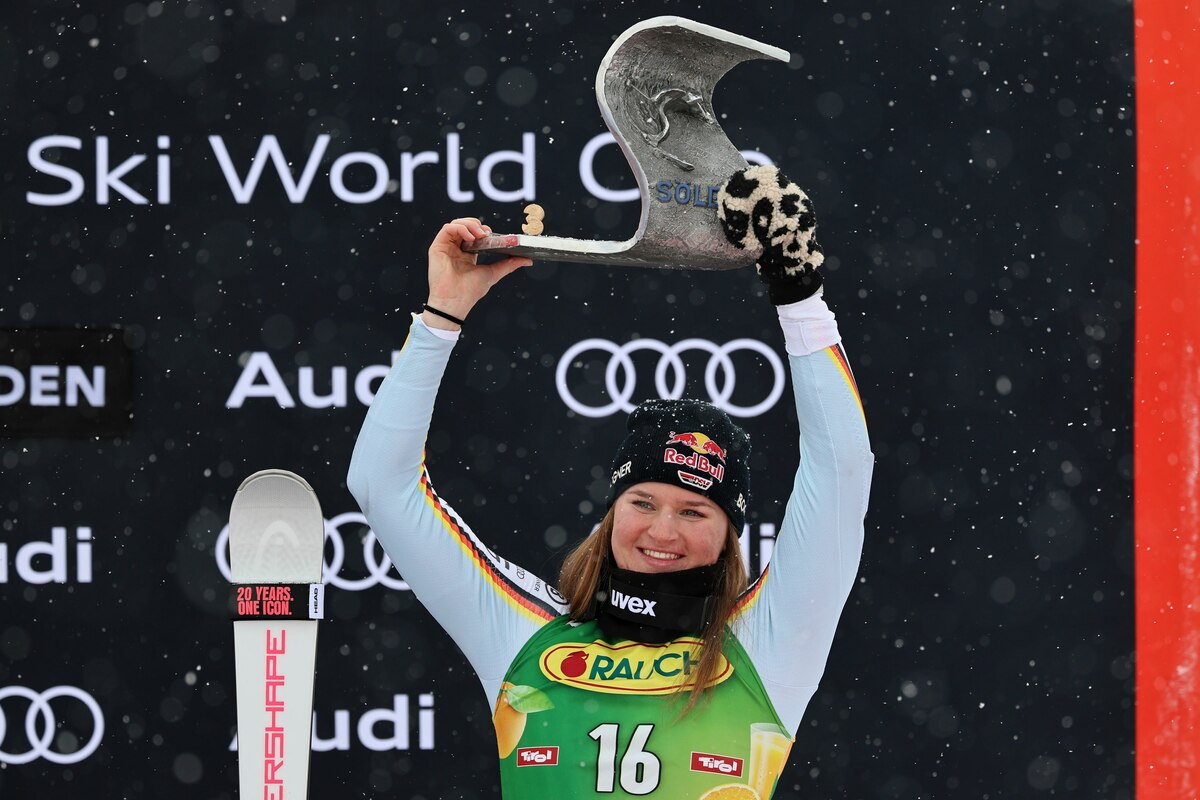
The transition from "competitor" to "medalist" was abrupt. As the reality set in, she was mobbed by teammates, including Kira Weidle-Winkelmann, before having to rush through the protocols of the International Ski Federation (FIS). The parka came off, the race bib was adjusted, and a new face was officially introduced to the podium elite.
Supporting Data: Breaking the Ceiling
To understand the magnitude of Aicher’s achievement, one must look at her recent history. Prior to this weekend, the giant slalom had been a source of frustration for the 22-year-old. Her best previous result in the discipline was a fourth-place finish in Åre, Sweden—a location she calls a "second home" due to her upbringing and schooling there.
However, statistics often fail to capture the nuance of development. Wolfgang Maier, the sports director of the German Ski Federation (DSV), was quick to clarify that this was no fluke. "This is not a coincidence," Maier stated in the aftermath. "She has improved significantly in the giant slalom. It was only a matter of time."
The difficulty of the Sölden track cannot be overstated. It is widely considered one of the most technically demanding courses in the World Cup, a place where many veteran careers have stalled. For Aicher to achieve her first-ever top-three result on such a course speaks volumes about her technical progression and her ability to handle high-pressure environments.
Furthermore, the context of the race adds weight to her result. The absence of top-tier contenders who faltered under the pressure—most notably Austrian star Julia Scheib, who was leading the field before crashing out in the first run—highlights the necessity of consistency in the sport. Aicher capitalized on the instability of the field, combining steady nerves with an aggressive tactical approach.

Official Responses and the "Feet on the Ground" Philosophy
Following the race, the reaction from the German camp was a mix of unbridled joy and calculated restraint. While the media immediately began speculating about Aicher’s potential as a contender for the overall World Cup title, the leadership of the DSV was quick to temper the excitement.
"The result was, of course, sensational," said Wolfgang Maier. "It was a fantastic performance, but we must keep our feet on the ground."
Maier’s caution is a familiar trope in high-performance sports, designed to protect young athletes from the crushing weight of public expectation. He emphasized the need to view the result as a single data point in a long, grueling season rather than a permanent coronation. Even Aicher herself, famously soft-spoken, remained guarded when questioned about the overall crystal globe.
"I want to focus on my own performance and identify what I can improve," Aicher said, deflecting questions about the season-long championship. She acknowledged that for any athlete competing in all four disciplines, the overall title is a long-term goal, but she refused to let the current success distract from her day-to-day development.
The Broader Implications: A Changing of the Guard?
Aicher’s performance in Sölden sends a ripple through the alpine circuit. As the sport faces an existential crisis—grappling with the effects of climate change on traditional winter venues—the need for new, charismatic, and talented stars is more pressing than ever.

The Rise of the Multi-Disciplinarian
Aicher represents a modern breed of skier: a versatile athlete capable of competing across the board. In an era where specialization is often favored to maximize points, the emergence of a young woman who can podium in giant slalom and maintain strength in other disciplines is rare. This versatility makes her a formidable opponent for established stars like Shiffrin, who are now forced to reckon with a new, younger generation of challengers.
Sustainability and the Future of the Sport
The season-opener in Sölden also serves as a reminder of the fragility of the sport. As discussed in recent discourse regarding the "future of winter sports," the reliance on early-season races on glaciers is under scrutiny. The environmental cost of preparing these high-altitude tracks, combined with the unpredictability of snow conditions, remains a point of contention among athletes and environmentalists alike. Aicher’s triumph took place on a "gray, cloudy Saturday," a stark reminder of the volatile conditions that define modern alpine racing.
The Road to the Future
For the German team, Aicher is now the standard-bearer. As the career of veterans like Romed Baumann draws to a close, the focus shifts to the next generation. If Aicher can maintain the momentum from Sölden, she will be the central figure around which the German alpine program is built for the next decade.
However, the challenges ahead are significant. The FIS calendar is unforgiving, and the mental toll of being a "favorite" is vastly different from that of an "underdog." Aicher’s ability to remain "herself"—as suggested by those who know her best—will be the key to her long-term success.
Conclusion
Emma Aicher’s podium in Sölden is more than just a piece of hardware for her trophy cabinet; it is a declaration of intent. She has proven that she can handle the pressure of the world’s most difficult slope, that she can out-ski the best in the business on their "off" days, and that she has the technical maturity to grow into a consistent contender.

As the World Cup circuit moves on to the next venue, the eyes of the alpine world will be on the 22-year-old. Whether or not she becomes a serious threat to the established order for the overall crystal globe remains to be seen, but one thing is certain: the competition now has every reason to keep their winter gear close at hand. The season has only just begun, and the landscape of women’s alpine skiing has just become a little more crowded—and a lot more exciting.