Introduction: A Pioneer of the Small Screen
In the history of German television, few figures managed to transcend their professional role to become genuine cultural icons. Before the era of algorithmic recommendations and streaming interfaces, the transition between programs was guided by human voices—the "Programmansagerinnen" (continuity announcers). Among them, Hanni Vanhaiden stood as a beacon of poise, intellect, and unmistakable style. Though she began her career on the stages of the Hamburg State Opera, her legacy is etched into the collective memory of a generation that saw her as the quintessential face of the German broadcasting landscape during the 1970s.
Vanhaiden was not merely a bridge between programs; she was a cultural intermediary. Her tenure during the golden age of public broadcasting represented a time when television was a communal hearth, and the announcer was a trusted guest in the living room. Today, as we reflect on her life and career, it becomes clear that her influence extended far beyond the script—she was a trendsetter whose signature aesthetic remains a point of reference in modern media studies.
The Path to the Screen: From Ballet to Broadcasting
Hanni Vanhaiden’s journey into the spotlight was far from conventional. Long before she commanded the attention of millions via the cathode-ray tube, she was a trained ballet dancer at the Hamburg State Opera. This early professional training in dance provided the foundation for her extraordinary stage presence. The discipline, the precision of movement, and the ability to maintain composure under the intense heat of stage lights were skills she seamlessly transferred to the television studio.
In an era where television was still maturing, the role of the announcer required a delicate balance of authority and warmth. Vanhaiden moved from the performing arts into broadcasting during a period of transition for German media. As the medium grew in complexity, the need for a humanizing presence—someone to introduce the evening’s slate of films, documentaries, and variety shows—became paramount. Vanhaiden stepped into this role with an elegance that made the transition look effortless.
Chronology: A Career Defined by Elegance
- The Early Years (Pre-1970s): Trained as a professional ballet dancer at the Hamburg State Opera, Vanhaiden developed the poise and physical awareness that would later define her television presence.
- The Rise to Prominence (1970s): Vanhaiden became a fixture of the German television landscape. As a continuity announcer, she was responsible for guiding viewers through the evening’s schedule, offering short, witty, and insightful commentary on the programming to follow.
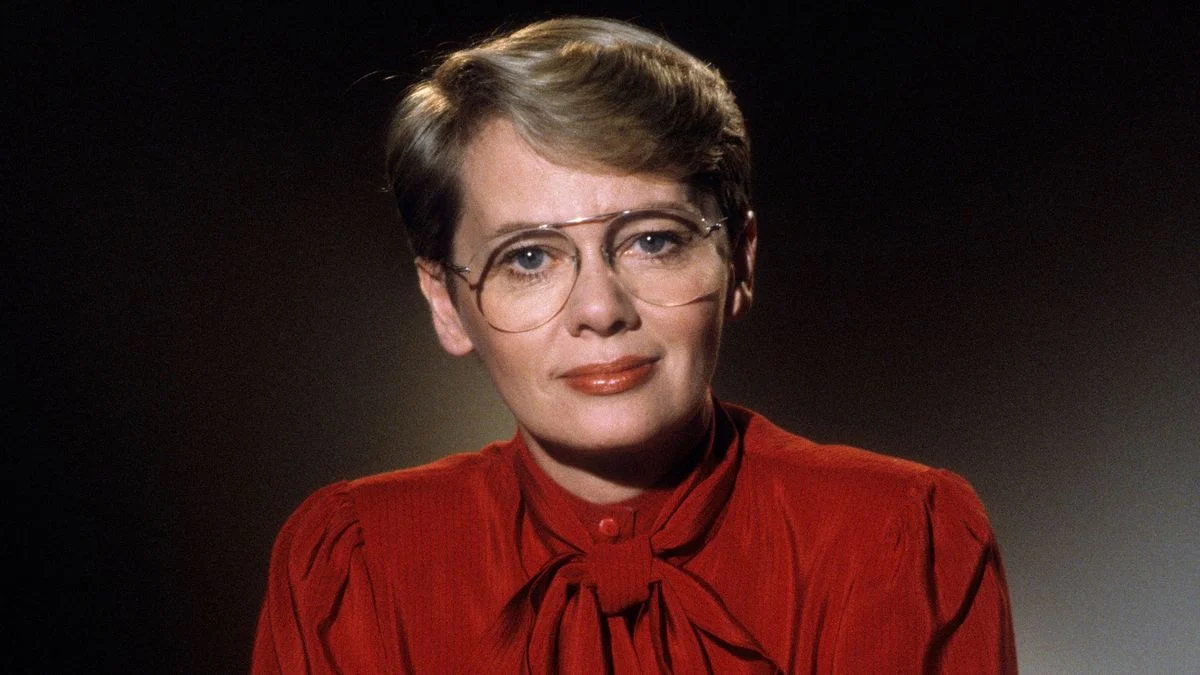
- The Iconic Era: It was during this decade that her style became solidified. Her signature oversized glasses became an instant fashion statement, signaling a blend of intellectualism and modern flair that resonated with the German public.
- The Changing Media Landscape: As the 1980s and 90s approached, the role of the live announcer began to wane. The rise of sophisticated on-screen graphics and pre-recorded bumpers rendered the traditional "live" introduction increasingly redundant.
- The Legacy and Tribute (2023): In a nod to the enduring impact of the medium’s early days, ZDF revived the format of the traditional program announcement to celebrate its 60th anniversary. The event served as a cultural excavation, reminding contemporary audiences of Vanhaiden’s indelible mark on the industry.
Supporting Data: The Phenomenon of the "Vanhaiden Glasses"
Perhaps no accessory in the history of German television has garnered as much cultural weight as Hanni Vanhaiden’s eyewear. In the 1970s, the "Vanhaiden look" was more than a fashion choice; it was a phenomenon. The oversized frames, which appeared to occupy nearly half of her face, became a shorthand for a specific brand of sophisticated, modern womanhood.
Evidence of her influence can be found in the retail trends of the time. According to historical accounts and archival media analysis, the "Hanni Vanhaiden glasses" were not merely a fan favorite but a recognized product category at opticians across the country. If a viewer walked into an optical shop in 1975 and requested a pair of "Hanni Vanhaiden frames," the staff required no explanation. She had successfully transitioned from a television personality to an aesthetic archetype.
Official Responses and Contemporary Re-evaluation
The 2023 ZDF anniversary tribute highlighted the void left by the disappearance of the live announcer. In a piece published by the Süddeutsche Zeitung, the publication offered a poignant reflection on the nature of her screen presence. They noted:
"And then there was, of course, the delicate and fragile-seeming Hanni Vanhaiden, whose glasses seemed to take up the entire lower half of her clever face. Anyone who asked for a Hanni Vanhaiden pair of glasses at the optician in the seventies did not have to deal with helplessly questioning looks from the staff, but was provided with the corresponding model."
This retrospective serves as an official acknowledgment of how deeply Vanhaiden integrated herself into the daily lives of viewers. By moving away from the rigid, detached style of earlier broadcasters, she pioneered a more personal, conversational approach that modern presenters still strive to emulate today.
The Implications: Why the "Announcer" Still Matters
The disappearance of the continuity announcer from modern television is often cited as a move toward efficiency and technological progress. However, the legacy of Hanni Vanhaiden suggests that something vital was lost in this transition.
1. The Human Element of Curation
Modern platforms use algorithms to suggest content, but these systems lack the "curatorial soul" that Vanhaiden provided. When she introduced a film, she gave it context, a sense of occasion, and a personal recommendation. This created a sense of community that current, fragmented viewing experiences struggle to replicate.
2. The Power of Personal Branding
Vanhaiden’s glasses serve as a masterclass in personal branding. In an age of mass-produced influencers, her ability to make a single physical attribute iconic—without the aid of social media—is a testament to the power of authentic television presence. She did not follow trends; she set them by simply being herself, albeit a polished, broadcast-ready version of that self.
3. Cultural Memory and Media Preservation
The revival of the announcement format in 2023 indicates that contemporary broadcasters are aware of the "nostalgia economy." By revisiting the styles and roles of the 70s, networks acknowledge that their history is not just a series of technical milestones, but a tapestry of human connections. Hanni Vanhaiden remains a central thread in that tapestry.
Conclusion: A Lasting Impression
Hanni Vanhaiden’s life and career represent a bridge between the high art of the ballet stage and the burgeoning, democratic medium of television. She proved that even a role defined by brevity and strict formatting could become a platform for personality and style.
While the "Programmansagerin" is a profession that has largely vanished, relegated to the archives of broadcasting history, figures like Vanhaiden ensure that the memory of that era remains vibrant. Her glasses, her poise, and her gentle, intelligent voice continue to occupy a space in the cultural consciousness. As we navigate an increasingly automated media landscape, we would do well to remember the lessons of the Hanni Vanhaiden era: that the most successful communication—whether on a stage, a screen, or a digital feed—is always, at its core, a human connection.