For centuries, the night sky has been interpreted through a relatively simple chromatic lens. Astronomers have long categorized stars based on their temperature, a metric that dictates their visible color: cool stars glow with a deep orange hue, sun-like stars radiate a familiar yellow-white, and the hottest, most energetic stellar bodies burn with a brilliant, pale blue. This classification system has been a cornerstone of astrophysics, helping scientists map the lifecycle of stars from their birth in stellar nebulae to their eventual, often dramatic, demise.
However, a groundbreaking study published in the journal RAS Techniques and Instruments has shattered this long-standing assumption. Researchers from the University of Warwick have unveiled the discovery of a "green" star—a White Dwarf that defies the traditional color spectrum. This discovery suggests that the cosmos is far more vibrant than previously imagined, with a palette of colors determined not just by temperature, but by the complex, high-density chemistry of stellar corpses.
The Nature of the "Stellar Zombie"
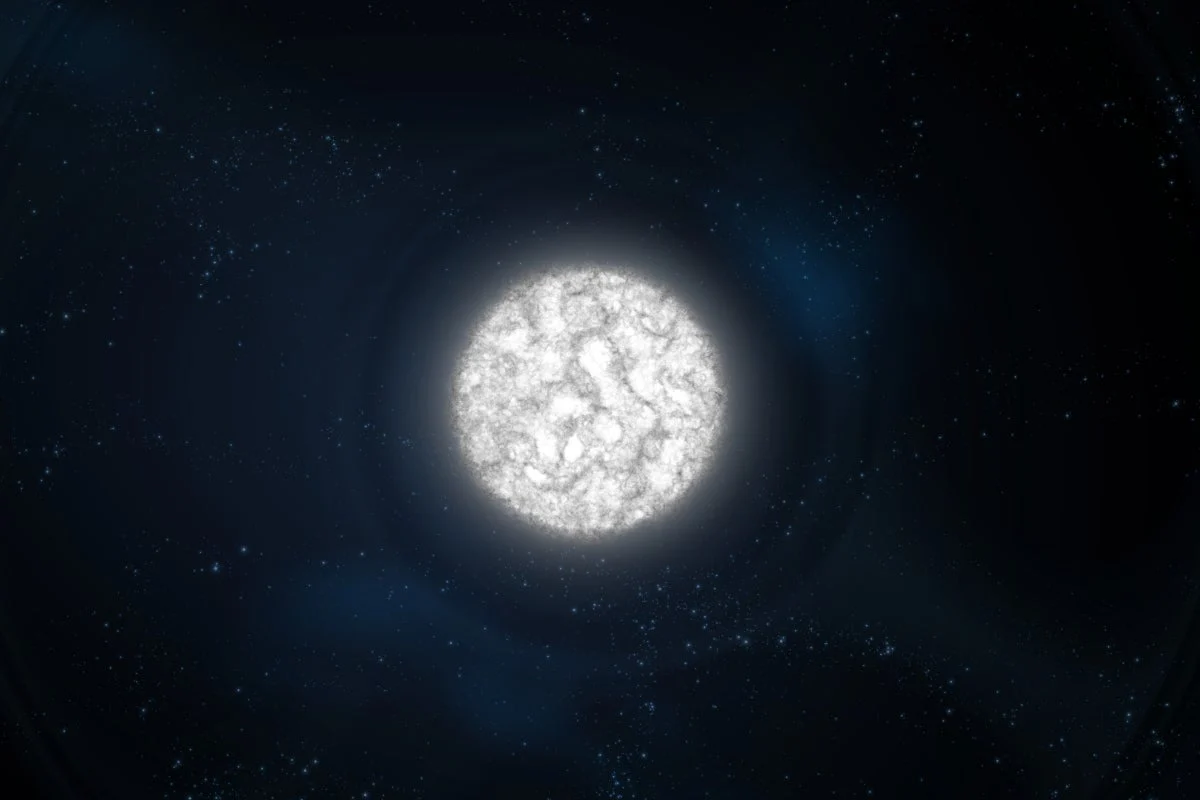
To understand the significance of this discovery, one must first understand what a White Dwarf is. When a star with a mass similar to our Sun exhausts its nuclear fuel, it cannot sustain the fusion processes that keep it shining. It sheds its outer layers and its core collapses, creating an object that is incredibly dense—roughly the mass of the Sun packed into a volume the size of Earth.
These "stellar zombies" are typically characterized by their white or pale-blue light, which is a byproduct of their residual heat. Because they are so compact, the physics governing their light emission are vastly different from those of main-sequence stars. For decades, the assumption was that temperature was the sole determinant of a White Dwarf’s color. As lead researcher Mark Hollands of the University of Warwick noted, "Niemand hatte sich wirklich damit beschäftigt" (No one had really looked into what else might be possible for White Dwarfs).
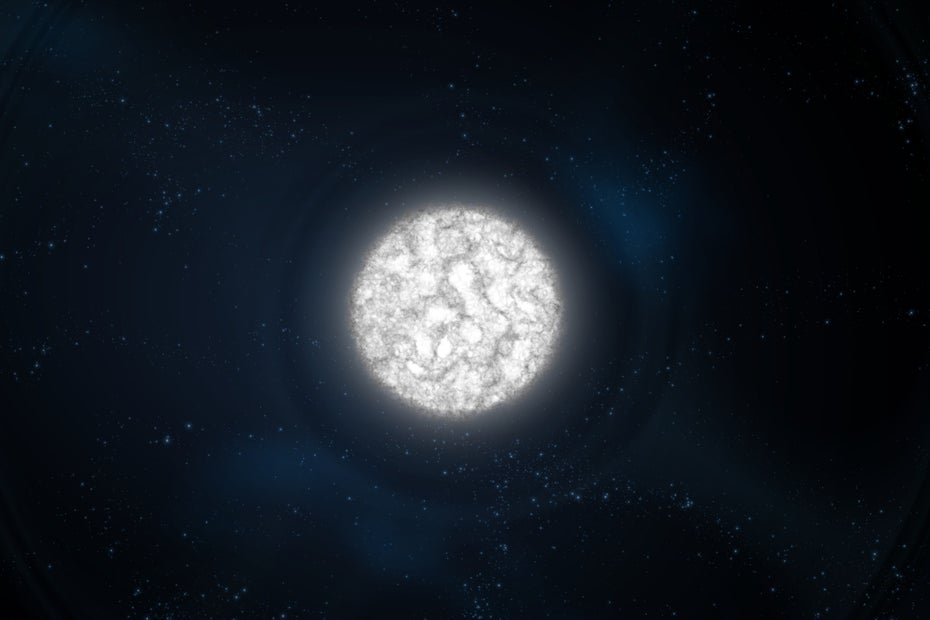
The team’s research has revealed that these dense spheres of matter are capable of producing colors that were previously considered impossible, or at the very least, were dismissed as observational anomalies caused by the immense distance between the stars and our telescopes.
Chronology of a Discovery
The path to identifying the first green star was not a singular "eureka" moment, but a multi-year effort to re-evaluate archival data and apply modern spectroscopic modeling.
- Initial Observations: Astronomers had long observed "odd" light signatures from various White Dwarfs, but these were often discarded as instrumental noise or interpreted through the standard temperature-color framework.
- The Modeling Shift: The University of Warwick team began by creating sophisticated computer models of stellar atmospheres under extreme pressure. They hypothesized that the high density of White Dwarfs would cause elements like carbon, calcium, and sodium to interact with the star’s helium plasma in ways that shift the emitted light.
- The Discovery of WD J1330+6435: By applying these models to known stellar data, the researchers identified a specific White Dwarf, designated WD J1330+6435, located approximately 326 light-years away. Its light signature was not consistent with the expected blue or white spectrum.
- Confirmation: Through detailed analysis, they realized that the star was "feeding" on the remnants of a nearby planetary system. The influx of heavy elements like sodium acted as a filter, absorbing specific wavelengths of light—namely the orange part of the spectrum—leaving behind a distinct, eerie green glow.
Supporting Data: The Physics of Color
The secret behind this colorful phenomenon lies in the interaction between light and high-density matter. In a normal star, light passes through an atmosphere that is relatively transparent. In a White Dwarf, the atmosphere is so dense that it behaves more like a liquid or a highly compressed gas, creating a unique "spectroscopic footprint."
The Role of Heavy Elements
When a White Dwarf consumes material from its surroundings—such as asteroids, comets, or even remnants of planets—that material is vaporized and incorporated into the star’s atmosphere. These impurities, specifically metals like calcium, lithium, and sodium, fundamentally change how the star radiates energy.

- Carbon-Rich Dwarfs: These stars tend to exhibit pink or violet hues due to the way carbon atoms absorb and re-emit light.
- Debris-Rich Dwarfs: Stars that have recently "consumed" rocky material often appear yellowish, as the mineral composition alters the light’s wavelength.
- Hydrogen-Helium Mixes: Cooler White Dwarfs, where hydrogen molecules collide with helium atoms, often appear cyan or light blue.
The green color of WD J1330+6435 is a result of sodium absorption. By stripping away the orange wavelengths, the star’s light is skewed toward the green portion of the visible spectrum. This proves that the environment surrounding a star can be just as important as its internal temperature in determining its visual character.
Official Perspectives: Shifting the Paradigm
The implications of this study are profound, suggesting that the "White" in "White Dwarf" is a misnomer born from limited observation.
Boris Gänsicke, a professor at the University of Warwick and co-author of the study, provided context regarding the rarity of these phenomena. "One in thirty might not sound like a huge proportion, but when you consider the total number of White Dwarfs in the universe, that is a vast number of strangely colored stars out there," he stated.
The researchers emphasize that while the average White Dwarf is indeed white, the "average" is a statistical construct that ignores the rich chemical diversity of the galaxy. By focusing on the outliers, the team has opened a new window into how planetary systems die. When we see a star of an unusual color, we are essentially looking at a "crime scene"—evidence of a star that has devoured its former planets, leaving behind a chemical signature that changes its very color.
Implications for Future Astronomy
This discovery changes how astronomers look for signs of planetary destruction. If a White Dwarf exhibits an unusual color, it serves as a beacon, telling researchers exactly what kind of material the star has recently consumed.
- Exoplanet Research: By analyzing the light of these "colored" stars, scientists can determine the composition of the planets that once orbited them. This provides a rare look at the mineralogy of exoplanetary systems that are otherwise impossible to study directly.
- Refining Stellar Evolution: This study necessitates a revision of current stellar models. If researchers can accurately predict a star’s color based on its atmospheric composition, they can better understand the mass-loss processes that occur at the end of a star’s life.
- Broadening the Search: Future telescope surveys, such as those conducted by the Vera C. Rubin Observatory, will likely identify thousands more of these "colored" dwarfs. The Warwick team’s research provides the theoretical framework needed to interpret this flood of new data.
Conclusion: A More Vivid Universe
The discovery of the green star WD J1330+6435 is more than a curiosity; it is a fundamental shift in our understanding of stellar physics. It reminds us that our initial, simple classifications of the universe were merely the first step in a much longer journey of discovery.
As we look toward the future, the cosmos appears less like a static, predictable collection of spheres and more like a dynamic, chemical laboratory. Whether they are glowing in hues of violet, yellow, or a ghostly, brilliant green, these stellar corpses serve as silent witnesses to the complex histories of their solar systems. The "White" Dwarf, it seems, has been hiding a rainbow all along. Through the work of researchers at the University of Warwick, we have finally learned how to see it.