LEIẞENITZ, BRANDENBURG – In an era where the quintessential German village inn, the Gasthof, is rapidly fading into memory across rural landscapes, the small community of Leißenitz in Brandenburg’s Oder-Spree district has chosen a different path. Rather than witnessing the demise of their beloved "Gasthof Schur," the villagers have united in an inspiring act of collective will, breathing new life into a cherished local institution. This remarkable grassroots effort, bolstered by regional support, not only preserves a physical building but safeguards the very heart of their social cohesion, ensuring a vital space where generations can gather, converse, and reinforce the bonds of community.
The crisis facing rural Gasthöfe is profound, mirroring broader challenges of demographic change, economic pressures, and evolving social habits. For many villages, the closure of the last inn marks the loss of a central gathering point, a place where news was exchanged, celebrations were held, and local democracy informally played out. Leißenitz, however, refused to let its history succumb to this trend. Through the innovative "Dorf.Fragen" (Village.Questions) project, spearheaded by a unique collaboration between residents, architects, and local government, the Gasthof Schur has been reimagined and revitalized, offering a beacon of hope for rural communities nationwide. This initiative demonstrates that with creativity, commitment, and strategic partnerships, the pulse of village life can not only be sustained but invigorated for future generations.
Main Facts: A Community’s Collective Rescue Mission
The Gasthof Schur in Leißenitz, a traditional inn with a history spanning generations, found itself on the brink of closure, a fate increasingly common for rural establishments across Germany. Faced with the cumulative challenges of economic shifts, changing social dynamics, and the devastating impact of the COVID-19 pandemic, Astrid Pagel, the fourth-generation proprietor, struggled to keep the doors open. Her family’s legacy, dating back to her great-grandfather, was under severe threat.
However, the villagers of Leißenitz, situated southeast of Berlin in the scenic Oder-Spree region, recognized the profound importance of their inn. More than just a place to eat and drink, Gasthof Schur served as the village’s social nexus – a venue for family celebrations, local meetings, and spontaneous gatherings. Its potential disappearance represented a critical blow to the community’s identity and cohesion.
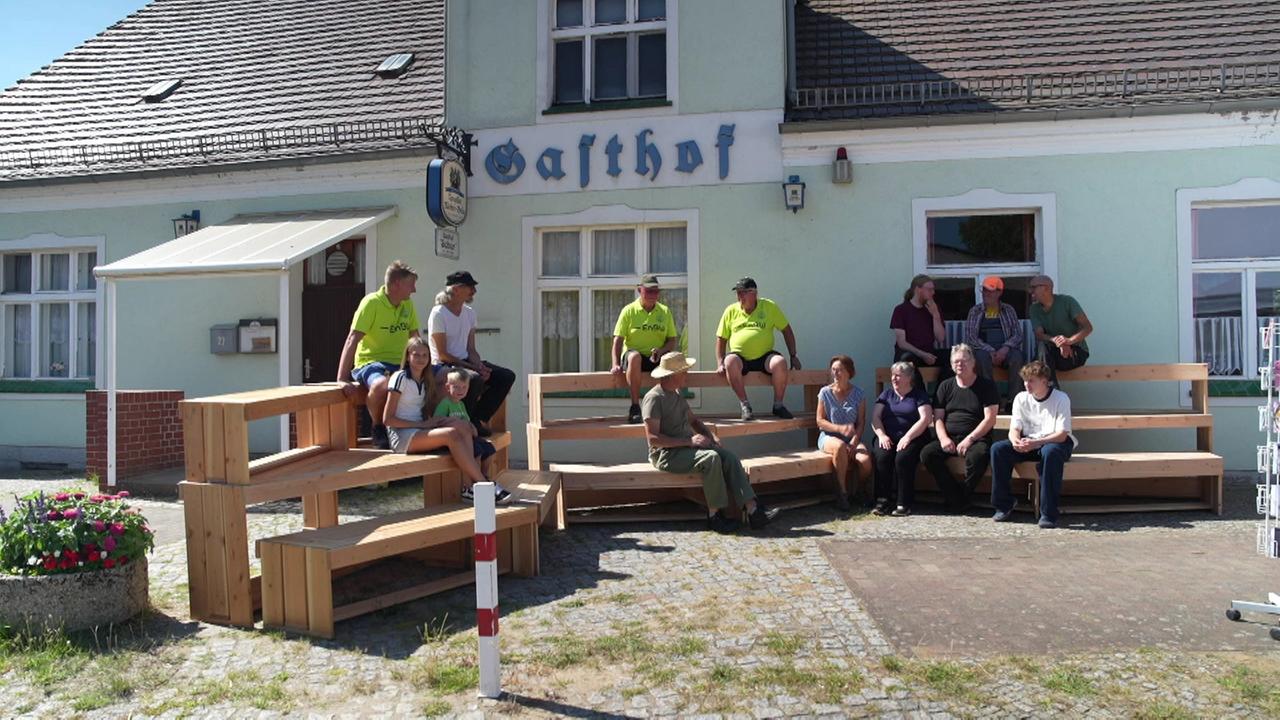
In response, the "Dorf.Fragen" project was born. This collaborative initiative brought together local residents, volunteer groups, and expert architects, all committed to devising a sustainable future for the Gasthof. The core idea was to transform the inn’s outdoor space into a dynamic, publicly accessible meeting point, fostering interaction even when the main establishment was closed. Over the summer months, a flurry of activity saw villagers collectively saw, hammer, and sand, constructing versatile wooden furniture – large tables, benches, and adaptable seating arrangements – that could be configured for various uses, from intimate conversations to larger community events, even serving as a small amphitheater for performances.
The project received crucial financial backing, with an initial funding injection of €65,000 from the Brandenburg Ministry for Science, Research and Culture, supplemented by cultural funding from the Oder-Spree district. This support underscored the regional government’s recognition of the vital role played by such local institutions in maintaining rural vibrancy and preventing social isolation. The newly inaugurated outdoor area stands as a tangible testament to Leißenitz’s collective spirit, a vibrant extension of the Gasthof Schur, symbolizing resilience and the enduring power of community.
Chronology: From Generations of Tradition to a Modern Revival
The history of Gasthof Schur is deeply interwoven with the fabric of Leißenitz itself. For over a century, the inn has been a constant presence, a living chronicle of village life. Astrid Pagel proudly continues a lineage that began with her great-grandfather, making her the fourth generation to helm this cherished establishment. The interior of the Gasthof whispers tales of bygone eras, with its Bordeaux-red curtains framing a modest stage, herringbone parquet floors, and a mustard-colored tiled stove, all retaining the charming patina of age. It’s a place where time seems to slow, preserving the authentic character of a traditional German inn.
However, this rich heritage has not insulated Gasthof Schur from the relentless pressures of modern times. The pivotal year of the German reunification (Die Wende) in 1990 brought with it profound socio-economic shifts, fundamentally altering rural life and consumer habits. The once-bustling village inns began to face new competition from larger supermarkets, changing leisure activities, and an increasing individualization of social life. Astrid Pagel recounts these decades as a "constant up and down," a perpetual struggle to adapt and survive.
The most recent and significant blow came with the global COVID-19 pandemic. Lockdowns, capacity restrictions, and widespread health concerns severely impacted the hospitality sector, pushing many already fragile rural businesses to their breaking point. For Gasthof Schur, reliant primarily on family celebrations and an "outside catering" service to stay afloat, the pandemic exacerbated existing vulnerabilities, casting a shadow of uncertainty over its future.
It was against this backdrop of crisis that the seeds of "Dorf.Fragen" were sown. The project, initiated by the Culture and Sports Management of the Oder-Spree district in collaboration with freelance architects, aimed to empower communities to find creative solutions for strengthening local cohesion. Leißenitz, with its imperiled Gasthof, became a prime candidate.
The summer preceding the inauguration marked an intensive period of communal effort. Villagers, members of local clubs, and dedicated supporters converged on the Gasthof Schur. Over several months, the air outside the inn buzzed with the sounds of hammering, sawing, and drilling. Through a series of workshops, residents actively participated in the design process, contributing their ideas and examining models to shape the future outdoor space. This collaborative approach ensured that the new amenities truly reflected the community’s needs and aspirations.
The result of this collective endeavor was the creation of robust, flexible wooden furniture – large tables and benches – meticulously crafted by the villagers themselves. The final touches, such as smoothing rough edges with sandpaper, were carried out just before the ceremonial inauguration, symbolizing the shared ownership and pride in the project. The red soft drink served to the weary but satisfied volunteers was a small, sweet reward for their significant efforts. The inauguration itself marked a jubilant milestone, not just for the Gasthof but for the entire village, signaling a renewed commitment to its shared future.
Supporting Data: The Fading Heartbeat of Rural Germany
The story of Gasthof Schur is not an isolated incident but a microcosm of a much larger and more concerning trend sweeping across rural Germany: the Gaststättensterben, or the "dying of the inns." For centuries, the local Gasthof or Kneipe (pub) served as the undisputed social, cultural, and often political hub of German villages. It was where farmers discussed harvests, where local Vereins (associations) held their meetings, where births were celebrated and wakes observed, and where the daily rhythms of village life unfolded.
Data from hospitality associations like DEHOGA (Deutscher Hotel- und Gaststättenverband) consistently highlight the severe decline in rural gastronomy. Over the past few decades, thousands of inns have closed their doors permanently. Factors contributing to this decline are multifaceted:
- Demographic Change and Rural Exodus: Younger generations often migrate to urban centers for education and employment, leading to an aging population in villages. This reduces the customer base and, critically, the pool of potential successors for family-run businesses.
- Changing Consumer Habits: Modern lifestyles often involve less frequent visits to local pubs. Supermarkets with longer opening hours offer cheaper drinks, and home entertainment systems compete with the social allure of the inn. There’s also a shift towards more diverse culinary experiences, which traditional inns sometimes struggle to provide.
- Economic Pressures: Rising operating costs (energy, ingredients), increasing labor expenses, and intense competition from chain establishments put immense pressure on independent, often family-run, inns. The razor-thin profit margins leave little room for investment or unforeseen crises.
- Lack of Succession: Many innkeepers, like Astrid Pagel, are part of multi-generational businesses. However, their children often choose different career paths, unwilling or unable to take on the demanding work and financial risks associated with running a Gasthof. This leads to closures when the current generation retires.
- Regulatory Burden: Small businesses often struggle with complex regulations, hygiene standards, and bureaucratic requirements, which can be disproportionately challenging for owner-operators without extensive administrative support.
Arnold Ischinger, Head of Culture and Sports in the Oder-Spree district, starkly articulates this challenge: "In many places, there is still a village community, but fewer and fewer public places where they can meet. Life is increasingly retreating into the private sphere." He emphasizes that without these public spaces, the vital threads of community begin to fray. "Once a village pub closes, it becomes very difficult to bring it back," Ischinger notes, highlighting the urgency of supporting existing establishments to ensure their future viability. The implication is clear: the loss of an inn is not merely an economic event; it represents the erosion of social capital and cultural heritage, leaving a void that is incredibly difficult to fill. The "Dorf.Fragen" project and Leißenitz’s initiative are thus not just about saving a building, but about actively counteracting this pervasive trend of rural decline and preserving the essential public spaces that define and sustain village life.
Official Responses: Policy, Funding, and the "Constitutional Protection" of Community
The "Dorf.Fragen" project is more than just a local endeavor; it represents a significant policy response to the challenges facing rural communities in Brandenburg. Initiated by the Culture and Sports Management of the Oder-Spree district in collaboration with freelance architects, its overarching goal is to fortify community cohesion through creative solutions. Arnold Ischinger underscores the ambitious nature of the project: "We want to achieve a great deal with this project. Above all, cohesion at the village level." He recognizes that vibrant villages require more than just well-maintained private gardens; they need dynamic public spaces where people can interact and foster a shared sense of belonging.
The financial backing provided by the state and district governments was instrumental in bringing the Leißenitz project to fruition. The Brandenburg Ministry for Science, Research and Culture contributed a substantial €65,000 in initial funding, supplemented by funds from the district’s cultural promotion programs. This investment reflects a strategic understanding that cultural and social infrastructure in rural areas requires active support to thrive.
At the festive inauguration of the new outdoor area, Tobias Dünow (SPD), Brandenburg’s State Secretary for Culture, Research and Science, delivered a powerful statement that resonated far beyond Leißenitz. He emphasized the political dimension of preserving rural inns, cautioning against allowing "the wrong people" to take over these crucial community spaces. Dünow’s most striking remark positioned good village inns as "the very best constitutional protection" (der allerbeste Verfassungsschutz).
This statement, though provocative, encapsulates a deep concern about the potential for political frustration and dissatisfaction, particularly in rural areas, to be exploited by extremist or anti-democratic forces. In an environment where traditional social structures weaken and public spaces disappear, individuals can become more isolated and susceptible to narratives that sow division and discontent. Conversely, places where people can genuinely engage in dialogue, exchange ideas, and build interpersonal relationships—like a bustling village inn—serve as essential safeguards. They foster a sense of belonging, shared purpose, and mutual respect, which are fundamental to a healthy democratic society. Dünow’s perspective highlights that supporting local culture and community hubs is not merely a social amenity but a crucial investment in civic resilience and democratic stability. The state’s financial commitment, therefore, is framed not just as cultural promotion but as a strategic effort to strengthen the social fabric and, by extension, the democratic foundations of the region.
Implications: A Blueprint for Rural Revival and Democratic Resilience
The revitalization of Gasthof Schur carries profound implications, both for Leißenitz and as a potential model for countless other rural communities grappling with similar challenges.
Local Impact and Social Cohesion:
For Leißenitz, the immediate impact is tangible and transformative. The newly designed outdoor area, with its flexible wooden furniture, has created an inviting public space where previously there was none. This isn’t just a place for meals; it’s a dynamic arena for social interaction. Villagers can now gather spontaneously, engage in "Dorftratsch" (village gossip), debate local issues, or discuss national politics, even when the inn’s main doors are closed. This continuous accessibility fosters a stronger sense of collective ownership and shared space. The ability to reconfigure the furniture for different events—from small discussion groups to larger performances by the local theater group—means the Gasthof can truly serve as a multi-functional community hub, enhancing the cultural life of the village. For Astrid Pagel, the innkeeper, this new hub offers a crucial opportunity to re-inject vitality into Leißenitz, attracting more frequent visits from residents beyond just special family occasions.
A Model for Rural Development:
The "Dorf.Fragen" project, exemplified by Leißenitz, provides a compelling blueprint for rural development strategies. It demonstrates that effective solutions emerge when external expertise (architects, cultural management) collaborates directly with the community’s intimate knowledge of its needs and traditions. The emphasis on co-creation, through workshops where residents contribute ideas and make decisions, empowers locals and ensures sustainable, locally-driven outcomes. This bottom-up approach, supported by top-down funding, offers a powerful alternative to generic development schemes that often fail to resonate with specific community contexts. Other villages facing the threat of losing their last public spaces can draw inspiration from Leißenitz’s success, adapting the principles of community engagement and creative revitalization to their unique circumstances.
Cultural Preservation and Identity:
Beyond its immediate social function, the project is a powerful act of cultural preservation. The Gasthof is an integral part of German rural heritage. By saving Gasthof Schur, Leißenitz is not just saving a building; it is preserving a piece of its collective memory, its traditions, and its unique identity. In an increasingly homogenized world, maintaining these distinct local cultural markers becomes even more crucial for fostering a sense of belonging and continuity.
Strengthening Democratic Resilience:
State Secretary Tobias Dünow’s assertion that good village inns are "the very best constitutional protection" highlights a critical, often overlooked, implication. In an era marked by rising political polarization and the spread of misinformation, particularly in rural areas where feelings of neglect can fester, spaces for genuine human connection and dialogue are paramount. When people gather face-to-face, engage in respectful conversation, and build relationships across differences, they are less susceptible to divisive rhetoric and more likely to participate constructively in democratic processes. The inn, in this sense, becomes a micro-arena for civic engagement, fostering mutual understanding and strengthening the foundational trust necessary for a healthy democracy.
The Future and Generational Succession:
While the project has secured the immediate future of Gasthof Schur, the long-term question of generational succession remains for Astrid Pagel. Whether her children will choose to continue the family legacy as the fifth generation of innkeepers is still open. However, the revitalized Gasthof, now with a dynamic outdoor extension and a visibly supportive community, presents a far more attractive prospect than a struggling, isolated business. The project has not only given the inn a new lease on life but has also showcased the immense value and support the community places on it. This collective investment could inspire the next generation to embrace the challenge, seeing it not just as a business but as a vital community stewardship.
In conclusion, Leißenitz’s proactive stance in saving Gasthof Schur transcends a mere local renovation. It is a powerful testament to the enduring human need for shared spaces, a blueprint for resilient rural development, and a poignant reminder of how grassroots efforts, when supported by strategic vision, can reinforce the very pillars of community and, by extension, democratic society. The sounds of hammering and sawing in Leißenitz have given way to the hopeful hum of renewed community life, echoing a powerful message across rural Germany: the heart of the village beats strongest when it beats together.