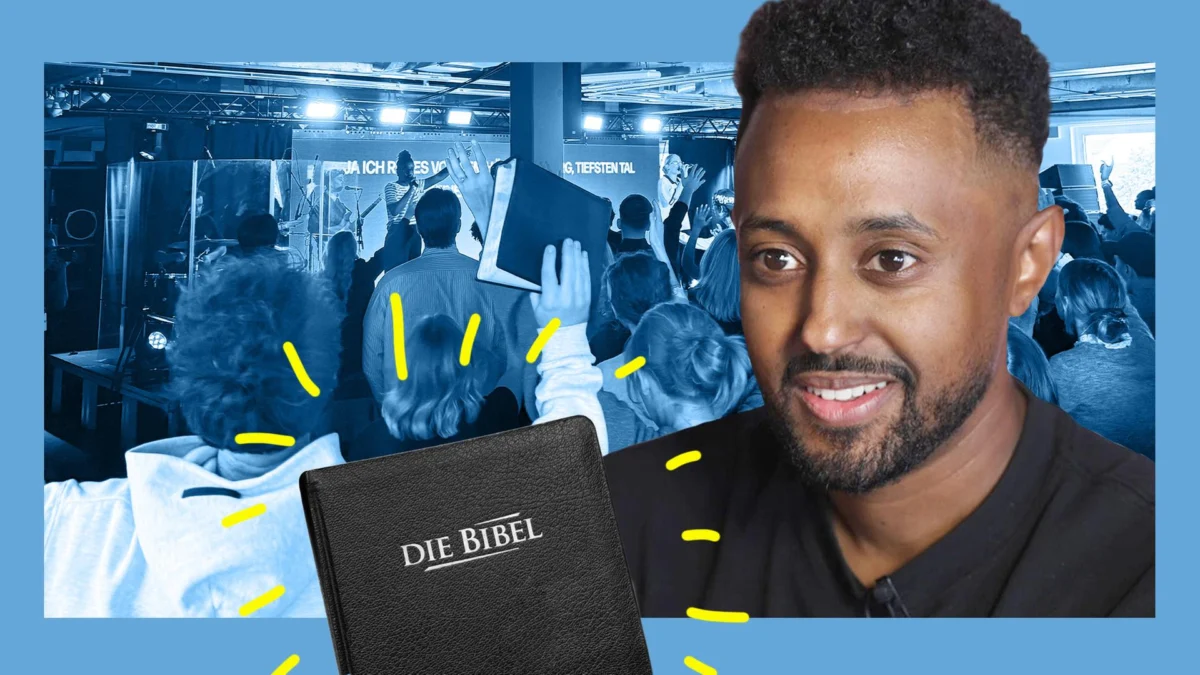
In an unassuming building in the eastern quarter of Frankfurt, the air is thick with the scent of high-end coffee and the palpable intensity of 300 young adults. The stage is bathed in atmospheric lighting, and two young women lead a set of contemporary worship songs that lean more toward modern pop-ballad aesthetics than traditional hymns. At the center of it all stands Pastor Henok Worku, a 31-year-old former aspiring footballer who has traded the pitch for the pulpit.
This is a "Celebration"—the term the Vive Church uses for its Sunday services. To the casual observer, it looks like a concert or a TED Talk event. To its congregants, it is a spiritual lifeline. However, beneath the polished, Instagram-friendly surface lies a theological framework that has drawn both fervent praise from its members and sharp scrutiny from experts regarding the nature of modern evangelical movements.
The Genesis of a Movement: From Silicon Valley to the Main
The Vive Church Frankfurt, established in 2024, is not an isolated phenomenon. It is the first German offshoot of a global movement founded in 2012 by the American couple Adam and Keira Smallcombe in the heart of Silicon Valley. The organization has positioned itself as an urban, tech-savvy alternative to the aging, bureaucratic structures of the traditional state churches in Germany.
The growth has been meteoric. Within months of its inception, the church moved from a fringe startup to a community of hundreds. On an average Sunday, the two "Celebrations" draw roughly 500 attendees, a figure that swells to over 1,000 during high holidays like Easter and Christmas.
For Henok Worku, the secret is simple: authenticity and age. "I believe many young people come here because we, as pastors, are also young," he explains. He argues that Generation Z is undergoing a crisis of meaning, searching for "something real" in a fragmented world, and finding it in a space that doesn’t feel like a dusty, tradition-heavy institution.

Chronology of Expansion
The trajectory of the Vive Church is a case study in modern religious scaling:
- 2012: Adam and Keira Smallcombe launch the first Vive Church in Silicon Valley, California, utilizing a model that emphasizes high-production value and modern branding.
- 2024: After years of global expansion, the movement plants its roots in Frankfurt, Germany.
- 2024–Present: The Frankfurt location establishes itself as a registered association, rapidly building a dedicated volunteer base and a robust social media footprint.
- 2026: The movement continues its momentum, recently opening a new location in Munich, with further expansion plans reportedly in the pipeline.
The "Coffee and Connect" Culture: Anatomy of a Service
The church’s operational model is designed to lower the barrier to entry. Following the service, the transition is seamless: congregants move from spiritual engagement to "Coffee and Connect." The vibe is that of a trendy co-working space or a boutique café, where high-end espresso machines serve as the backdrop for small-group discussions.
Members like 25-year-old Micha Ruppert, who often contributes as an electric guitarist for the worship team, describe the experience as profoundly practical. "The sermons are applicable to everyday life. I can always take something away from them," he says. Others emphasize the social utility of the church. For Shayana Meyer, also 25, the church provided an immediate community. "I was welcomed very warmly. The ability to share faith with other young people is something I hadn’t experienced often before," she notes.
This sentiment of "accessible spirituality" is echoed by 24-year-old Johannes Menge, who praises the lack of "raised-finger" moralizing. He notes the diverse demographics of the congregation, which he claims spans multiple social strata, challenging the stereotype that such churches are echo chambers for a specific demographic.
Digital Evangelism: Why the Bible Works on Instagram
The success of the Vive Church is inextricably linked to its mastery of digital communication. The church’s website is a study in minimalism and user experience, but it is their social media strategy that drives growth. Pastor Worku himself has amassed nearly 25,000 followers on Instagram.

Paula Xue Paschke, a researcher at Goethe University Frankfurt who studies religious communication on social media, identifies a clear strategy. "The Vive Church uses a very strong social media presence—modern colors, modern typography, fast-paced editing, and low-threshold communication," Paschke explains. By blending personal lifestyle content with "snackable" sermon clips, the church meets young people where they already spend their time: on their phones.
This creates a "low-threshold entry," according to Paschke. One does not need to sign a confession of faith to attend a coffee hour. The church provides a sense of community and meaning-making, which is highly attractive to a generation grappling with loneliness and secular alienation.
The Theological Tension: Packaging vs. Substance
While the aesthetic is undeniably modern, the ideological core is traditional—and for some, contentious. The Vive Church’s website explicitly states: "The Bible is infallible, authoritative, and eternal."
This traditionalism creates a friction point regarding the church’s stance on gender and sexuality. While church leaders and members insist that everyone is welcome and "loved," the underlying doctrine often clashes with progressive societal norms. Pastor Worku has, in past sermons, labeled sex outside of heterosexual marriage as "destructive."
This "liberal packaging, conservative content" dynamic is a point of concern for Gero Emmer Menzel, a sociologist of religion who has studied the movement. Menzel observes a common pattern in such churches: "They appear liberal from the outside, and queer individuals may feel they are welcome to attend, but taking on leadership positions is often impossible."

Further complicating matters is the church’s loose association with the ICF (International Christian Fellowship), a Zurich-based network. The Frankfurt ICF pastor, Björn Schäfer, has faced public backlash for past comments suggesting that wives should "submit" to sex within marriage to ensure the relationship functions. While Worku maintains that these are his friends and he cannot speak for the ICF, the lack of explicit distancing from these views has left critics wary.
Supporting Data: The Freikirche Landscape
The rise of the Vive Church occurs against the backdrop of a declining German state church. While the established Catholic and Protestant churches are hemorrhaging millions of members annually—largely due to scandals, institutional stagnation, and the financial burden of the "church tax"—independent free churches (Freikirchen) are positioning themselves as agile, volunteer-driven alternatives.
Experts estimate that roughly 300,000 people in Germany currently belong to independent free churches. Unlike state churches, these organizations are self-funded. The financial model often involves the principle of the "tithe"—donating ten percent of one’s income. While the Vive Church insists this is voluntary, Pastor Worku notes that 20 to 30 percent of his congregation adheres to this practice. When asked about the financial impact, he laughs, noting, "It’s enough to build churches."
Expert Perspectives: When to Sound the Alarm
Is the Vive Church a healthy community or a potentially manipulative structure? Researcher Paula Xue Paschke suggests nuance. "Freikirchen are not inherently bad; media coverage often exaggerates the negative," she says. They offer legitimate benefits like social cohesion and purpose.
However, Paschke provides a list of "alarm signals" that researchers look for:

- Absolute claims to truth: The belief that only one interpretation of the world is correct.
- Black-and-white worldviews: Dividing the world into "us" (the saved) and "them" (the lost).
- Over-exalted leadership: Where the pastor’s authority becomes unquestionable.
- Devaluation of marginalized groups: Subtle or overt exclusion of those who do not fit the doctrinal mold.
- Financial pressure: Excessive focus on donations or high-pressure financial solicitation.
Implications for the Future
The Vive Church is not merely a local congregation; it is a blueprint for the future of evangelicalism in a secularized Europe. By stripping away the ecclesiastical ritual and replacing it with the aesthetics of a tech startup, the movement has successfully cracked the code for engaging a younger generation that had long since checked out of traditional pews.
Yet, the conflict between their modern "vibe" and their traditionalist doctrine remains the central tension of their existence. As they continue to expand from Frankfurt to Munich and beyond, the church will face increasing pressure to reconcile its claims of radical inclusivity with the rigid, conservative biblical stances that underpin its mission.
For now, the music plays, the coffee flows, and the congregation grows. Whether this is a sustainable model for the long term or a fleeting trend fueled by clever marketing remains to be seen. What is clear is that the Vive Church has identified a vacuum in the German religious landscape and is moving with speed and precision to fill it.