By André Zuschlag
In the historic university city of Göttingen, a quiet but high-stakes battle is unfolding. At the center of the controversy is the Jugendzentrum Innenstadt (Juzi), a self-governed youth center that has served as a cornerstone of independent culture and anti-fascist activism for nearly 45 years. Recently, the Göttingen tax office (Finanzamt) initiated a formal review of the center’s charitable status. While officials cite the "principle of neutrality" as the impetus for the audit, critics argue that the move is part of a broader, systemic campaign to stifle left-wing infrastructure across Germany.
For the Juzi, the inquiry is not merely a bureaucratic procedure; it is viewed as a direct ideological strike against independent youth work, anti-fascist organizing, and the very concept of self-governance.
The Trigger: A Question of Neutrality
On the surface, the tax office’s request appears routine. Under German law, organizations that enjoy charitable status—and the associated tax exemptions—must refrain from engaging in overt party politics. The tax office has demanded documentation regarding the Juzi’s activities, specifically questioning how the association reconciles its tax-exempt status with the presence of links and references to "Antifa" events on its official website.
The tax office’s inquiry hinges on a narrow interpretation of the "neutrality mandate." The authorities argue that an organization must not support "individual political or religious groups." By highlighting the Juzi’s digital footprint, the tax office is testing the boundaries of what constitutes "charitable" engagement versus "political" activism.
However, the Juzi’s defenders argue that anti-fascism is a fundamental democratic value, not a partisan political position. They maintain that the tax office is effectively weaponizing tax law to silence dissent, placing the Juzi in the crosshairs of a state apparatus that seems increasingly eager to clamp down on leftist spaces.
A Legacy Under Pressure: 45 Years of the Juzi
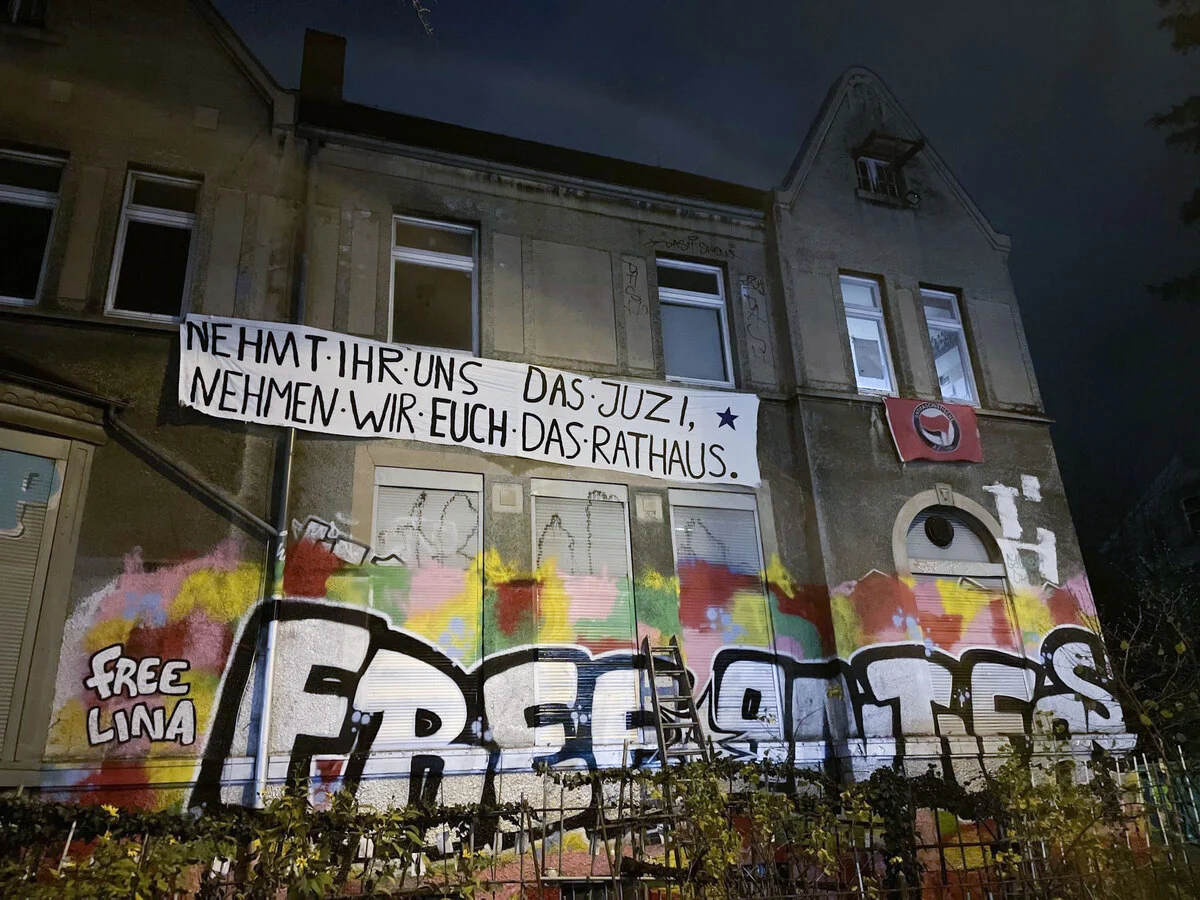
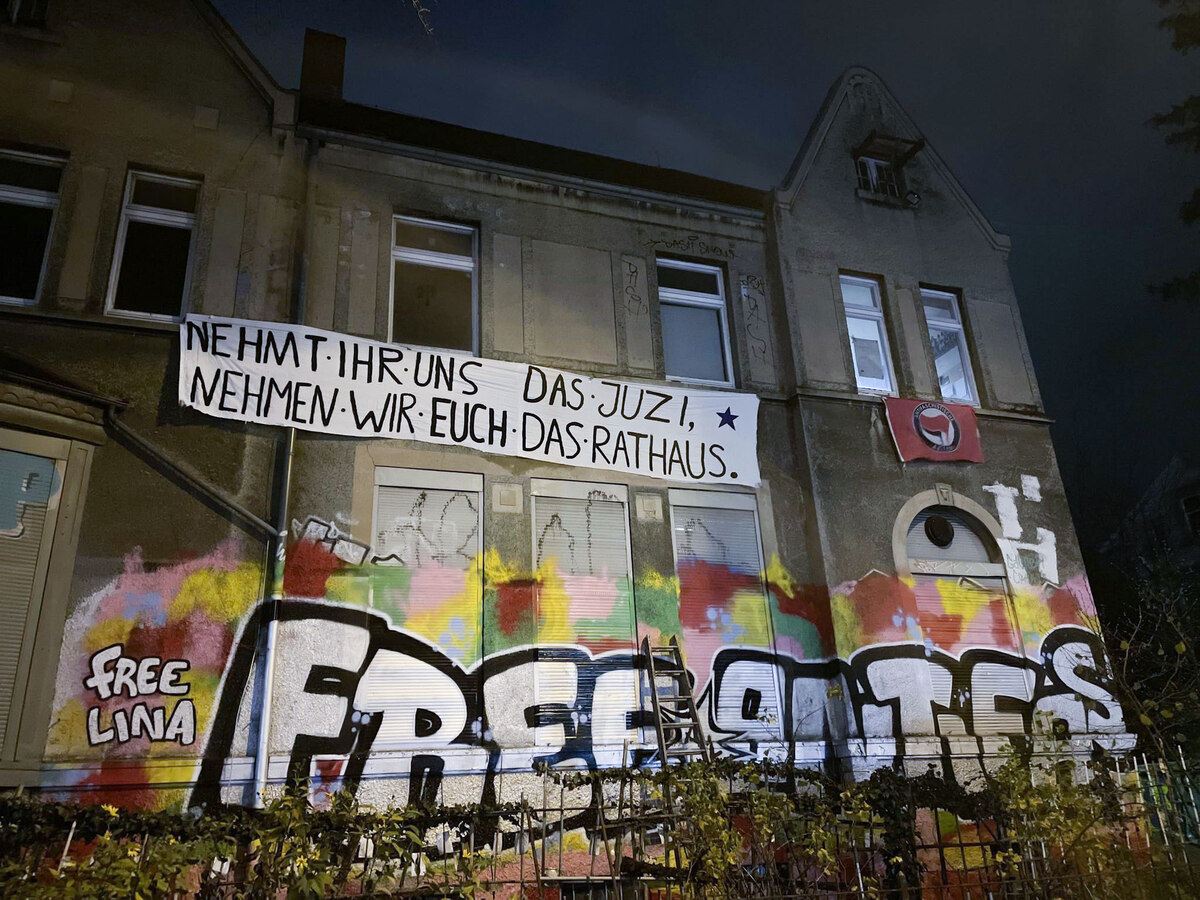
To understand the significance of the Juzi, one must look at its history. Nestled on the slopes of the Göttingen city wall, the Juzi occupies a dilapidated, graffiti-covered building from the Wilhelminian era. For over four decades, it has served as a sanctuary for those outside the mainstream.
Inside its walls, the center provides space for feminist anti-fascist groups, collective kitchens, rehearsal rooms for local bands, and woodworking workshops. It is a hub for organizing, a site for concerts, and a refuge for those who find no home in commercialized leisure spaces. Its identity as a pillar of anti-fascist movement in a city defined by its university history is not a secret; it is its defining feature.

By attacking the Juzi, the state is not merely questioning a tax return; it is questioning the legitimacy of a subculture that has become deeply embedded in the social fabric of Göttingen.
A Pattern of Escalation: The Wider Context
The scrutiny of the Juzi does not exist in a vacuum. It is part of a series of events in Göttingen that suggests a consistent, concerning trend of pressure on left-wing organizations. Observers note that the landscape of political activism in the city has become significantly more hostile over the past year.
The Rote Hilfe Incident
Late last year, the Rote Hilfe, a well-known solidarity association that has been based in Göttingen for over 50 years, faced an existential threat. Both the GLS-Bank and the local Sparkasse Göttingen terminated the organization’s accounts without warning. The banks justified the move by pointing to a fundraising campaign the association launched to support individuals facing "Antifa-Ost" charges and anti-fascists detained in Hungary.
While the Rote Hilfe was able to temporarily reverse these account closures through legal action, the message sent to civil society was clear: financial institutions are increasingly willing to act as arbiters of political morality, effectively de-platforming organizations that support controversial or radical causes.

The Attack on the "Rote Straße"
In March, the pressure intensified when Minister of State for Culture Wolfram Weimer excluded the Rote Straße, one of the oldest left-wing bookstores in Germany, from the prestigious German Bookstore Prize. The justification provided was that there were "findings relevant to the Office for the Protection of the Constitution" (Verfassungsschutz) regarding the shop. The official line was that taxpayer money must not be used to support "political extremists." This move served as a stark reminder that state funding and cultural recognition are increasingly tied to political compliance.
The Physical Threat
The most alarming development, however, occurred in June, when a 23-year-old anti-fascist activist was nearly killed in a stabbing attack by a 17-year-old neo-Nazi. The assailant was part of a "young right-wing crew" that had spent months attempting to challenge the left-wing hegemony of Göttingen. This group had been responsible for defacing memorial plaques, tagging walls with right-wing slogans, and—significantly—firing fireworks at the Juzi.
The convergence of bureaucratic pressure from the state and physical violence from neo-Nazis has created an environment of siege for the city’s left-wing activists.
Official Responses and the "Neutrality" Debate
The tax office in Göttingen has remained largely silent on the specifics of the audit, citing standard privacy protocols regarding tax investigations. This lack of transparency has fueled speculation and fear.

Legal experts point out that the definition of "neutrality" for non-profits has been a subject of intense legal debate in Germany. The Attac ruling by the Federal Fiscal Court several years ago created a precedent that made it more difficult for political organizations to maintain charitable status. However, the Juzi’s case represents an aggressive expansion of this precedent. If the mere mention of "Antifa" on a website is enough to trigger a tax investigation, the threshold for "political activity" has been lowered to a point where any organization with a clear social conscience could be deemed ineligible for support.
Implications for Civil Society
The implications of the Juzi audit are far-reaching. If the state succeeds in stripping the youth center of its charitable status, the financial burden could prove insurmountable, leading to the closure of the facility. This would represent a major victory for the right-wing forces that have been targeting the city’s leftist infrastructure.
Furthermore, it sends a chilling signal to other organizations across Germany. It suggests that if you are loud, if you are anti-fascist, and if you are self-organized, you are a target. The "neutrality" argument is increasingly being used not as a shield for democratic pluralism, but as a sword to carve out space for a specific, state-sanctioned version of "appropriate" political activity.
A Fight for the Future
The Juzi has vowed to fight the audit. In a statement, the center described the move as a "political attack on independent youth work and culture." They argue that the tax office has unwittingly or wittingly placed itself on the same side as the neo-Nazis who have been harassing their facility.

When the tax office investigates the Juzi, it is not just looking at spreadsheets; it is looking at the people who cook together, play music together, and organize against the rising tide of far-right extremism. By choosing to prioritize an investigation into these activists at a time when they are under physical threat, the state is making a choice.
As the investigation proceeds, the residents of Göttingen and beyond are left to ponder a difficult question: Is the state protecting the neutrality of the public sphere, or is it actively participating in the dismantling of the very spaces that keep democracy vibrant and critical? The survival of the Juzi may well be the litmus test for the health of civil society in Germany today.
The struggle is far from over, and the outcome will resonate well beyond the city walls of Göttingen. Whether it is the legal battles of the Rote Hilfe, the cultural gatekeeping of the bookstore prize, or the tax audit of the Juzi, the pattern is clear: the ground is shifting, and the fight for the soul of the city’s independent culture is only just beginning.