A High-Level Diplomatic Engagement in Eastern Germany
The recent visit of the President of Mongolia, Ukhnaagiin Khurelsukh, to the German states of Saxony and Saxony-Anhalt marks a significant milestone in the deepening of bilateral relations between Berlin and Ulaanbaatar. While such diplomatic missions often focus on the federal capital, this visit underscored the importance of regional engagement, as the President specifically toured the cultural and economic hubs of Leipzig and Dresden.
Accompanied by high-ranking officials and an economic delegation, President Khurelsukh’s itinerary was carefully curated to highlight the historical ties, shared cultural appreciation, and potential future cooperation in the fields of technology, sustainable energy, and education. The visit was anchored by a formal meeting with the Minister-President of Saxony, Michael Kretschmer, reflecting a strategic effort to foster sub-national cooperation that complements the overarching German-Mongolian diplomatic framework.
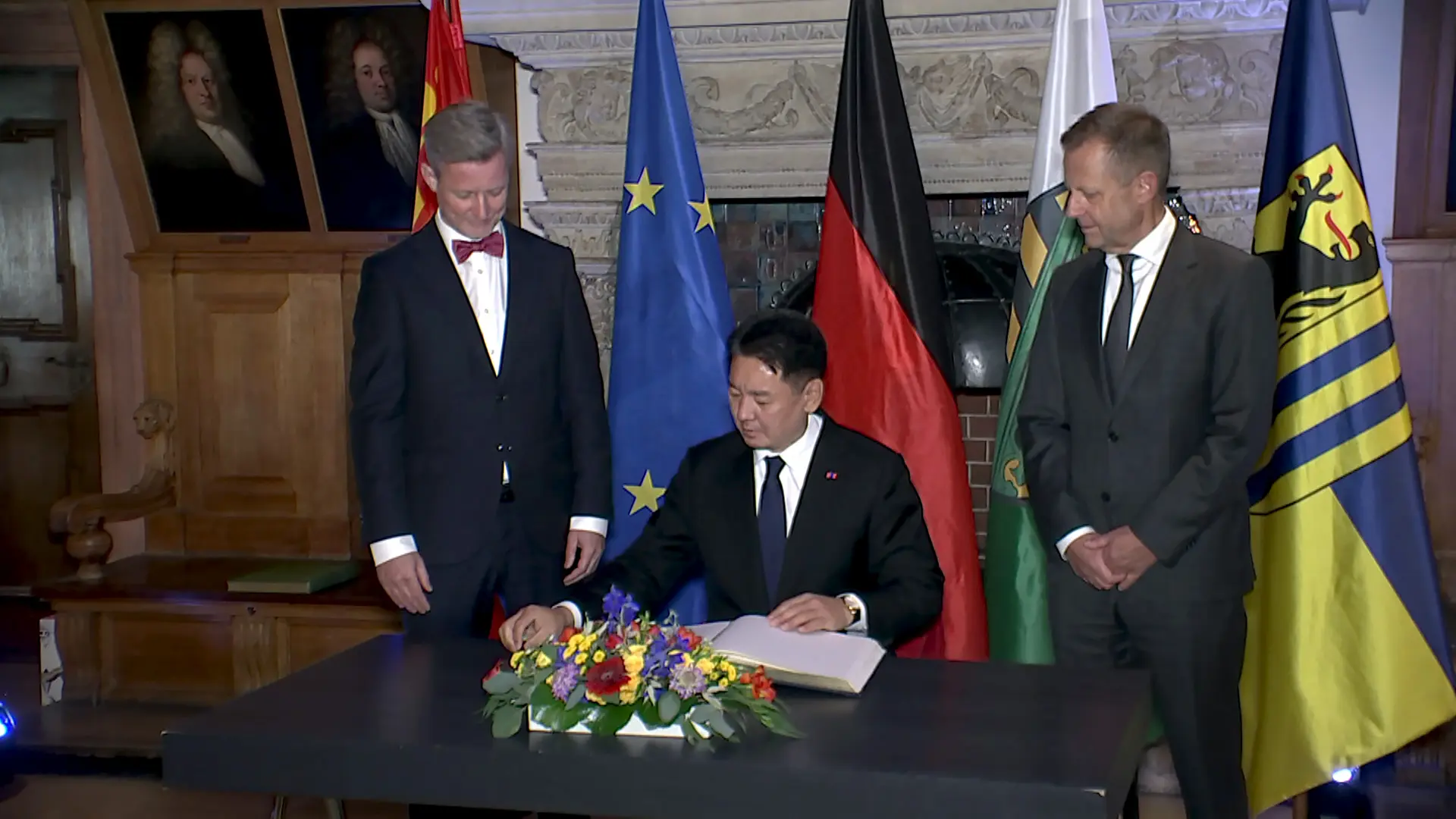
Chronology of the State Visit
The President’s arrival in the region was characterized by a seamless blend of ceremonial protocols and substantive discussions.
Day 1: The Cultural Legacy of Dresden
The visit commenced in the Saxon capital, Dresden. Known for its rich history and world-class art collections, the city provided a backdrop of cultural diplomacy. President Khurelsukh, alongside Minister-President Michael Kretschmer, toured the prestigious Gemäldegalerie Alte Meister (Old Masters Picture Gallery). The choice of venue was symbolic; the gallery houses some of the most significant works of European art, and the tour allowed for discussions on cultural preservation—a topic of growing interest in Mongolia as it seeks to promote its own rich heritage on the international stage.
Following the cultural excursion, the delegation participated in a series of roundtables focused on education and academic exchange. Saxony, with its dense network of universities and research institutes, serves as an attractive partner for Mongolia’s ambitious youth education programs.
Day 2: Industrial Innovation in Leipzig
The second leg of the trip shifted focus to Leipzig, a city synonymous with economic resilience and industrial innovation. The President’s visit included tours of manufacturing facilities and meetings with chambers of commerce. The primary objective in Leipzig was to explore potential partnerships in the logistics sector, green technology, and the modernization of infrastructure—sectors where German expertise could play a pivotal role in Mongolia’s ongoing economic diversification efforts.
Strengthening the Partnership: Supporting Data and Context
The visit of President Khurelsukh does not occur in a vacuum; it is part of a broader trajectory of German-Mongolian cooperation that has been building momentum over the last decade.
Economic Synergies
Mongolia possesses vast reserves of mineral resources, which are essential for the global transition to green energy. Conversely, Germany possesses the high-end industrial machinery and technical know-how required to extract and process these materials sustainably. According to current trade data, the balance of trade between the two nations has shifted toward a more cooperative model, moving away from simple extraction exports toward technology-sharing agreements.

Academic and Technical Cooperation
Data from the German Academic Exchange Service (DAAD) indicates a steady increase in Mongolian students pursuing degrees in engineering and environmental science in Germany. This human capital development is a cornerstone of the bilateral agreement signed during the President’s visit, which outlines plans for joint vocational training centers in Ulaanbaatar.
Official Responses and Diplomatic Statements
During the joint press conference held in Dresden, Minister-President Michael Kretschmer emphasized the strategic value of the relationship. "Mongolia is a bridge between the East and the West, a vibrant democracy with a unique cultural identity," Kretschmer remarked. "Our discussions focused on how Saxony can contribute to the sustainable development of Mongolia’s infrastructure and the expansion of its renewable energy capacity."
President Khurelsukh responded with a strong message of friendship and potential. "We view Germany not only as a crucial economic partner but as a model for democratic stability and technological advancement," he stated. "Our presence here in Saxony is a testament to our desire to decentralize our cooperation, reaching into the heart of Germany’s industrial and cultural centers to find partners who share our long-term vision."
Strategic Implications: Beyond the Visit
The implications of this diplomatic tour are far-reaching and touch upon several critical global themes.
1. Diversification of Supply Chains
For Germany, the visit is strategically vital. As the European Union looks to reduce its dependency on single-source supply chains for critical raw materials, Mongolia offers a stable, democratic, and willing partner. By fostering deep ties with the Mongolian government, Germany secures a seat at the table for future resource negotiations, ensuring that the transition to electric mobility and renewable energy remains viable and sustainable.
2. Geopolitical Balancing
Mongolia exists in a delicate geopolitical space, situated between two global giants: Russia and China. A strengthened partnership with Germany—and by extension, the European Union—provides Mongolia with a "third neighbor" policy anchor. This diplomatic strategy allows Ulaanbaatar to maintain sovereignty and economic independence, utilizing German investment to modernize its economy without falling into a position of total reliance on its immediate neighbors.

3. The "Saxon Model" for Sub-National Diplomacy
The success of the President’s visit to Leipzig and Dresden illustrates the rising importance of "state-to-state" diplomacy. By engaging directly with regional leaders like Minister-President Kretschmer, President Khurelsukh was able to bypass the often-stagnant bureaucracy of national capitals to secure tangible commitments on local investment and academic exchange. This approach may serve as a blueprint for other developing nations seeking to establish deeper roots within the European market.
Addressing Challenges and Future Outlook
While the tone of the visit was overwhelmingly positive, both parties acknowledged the challenges that lie ahead. Mongolia’s geography, being landlocked and subject to extreme climatic variations, poses logistical hurdles for trade. Furthermore, the transition toward a more sustainable, resource-efficient economy requires massive upfront capital investment, which both the German government and private investors are currently evaluating.
The final communique issued at the conclusion of the visit outlined a roadmap for the next five years. Key focus areas include:
- Renewable Energy Projects: Joint investment in solar and wind farms in the Gobi region.
- Logistics Modernization: German engineering firms providing expertise to upgrade Mongolian rail and road networks to facilitate easier export routes.
- Vocational Training: The establishment of a German-standard apprenticeship program for Mongolian workers in the mining and agricultural sectors.
A New Era of Collaboration
As the Mongolian delegation departed, the sentiment among observers was one of cautious optimism. The visit served as more than just a ceremonial exchange; it was a pragmatic, future-oriented dialogue that laid the groundwork for substantive cooperation.
For the people of Saxony, the visit offered a rare glimpse into the modern reality of a nation that is often misunderstood or overlooked in European discourse. For the people of Mongolia, the visit represented a validation of their national trajectory toward modernization and global integration.
The strength of this partnership will ultimately be measured not by the ceremonial handshakes in the Gemäldegalerie or the press statements in Leipzig, but by the concrete results of the investment projects and educational exchanges that are now set in motion. If the spirit of cooperation demonstrated during this visit is sustained, the relationship between Saxony and Mongolia could well become a model for how medium-sized industrial powers and emerging economies can build a mutually beneficial, long-term future.
Conclusion
The diplomatic mission of President Khurelsukh to Saxony was a masterclass in modern, regional-focused diplomacy. By integrating cultural diplomacy with hard-nosed economic strategy, both sides successfully underscored their shared interests. Whether through the lens of critical raw materials, academic exchange, or the simple, enduring value of international friendship, this visit has effectively opened a new chapter in the history of Germany and Mongolia.
As both nations move forward, the "Saxony-Ulaanbaatar" channel remains a vital, albeit perhaps unexpected, artery of cooperation that will undoubtedly play a significant role in the years to come. The groundwork has been laid; the next phase of implementation will be the true test of this burgeoning partnership. As Minister-President Kretschmer aptly noted, "We have started a journey together, and the path ahead is defined by our mutual commitment to progress, sustainability, and shared democratic values."