Introduction: The Crucible of Dresden
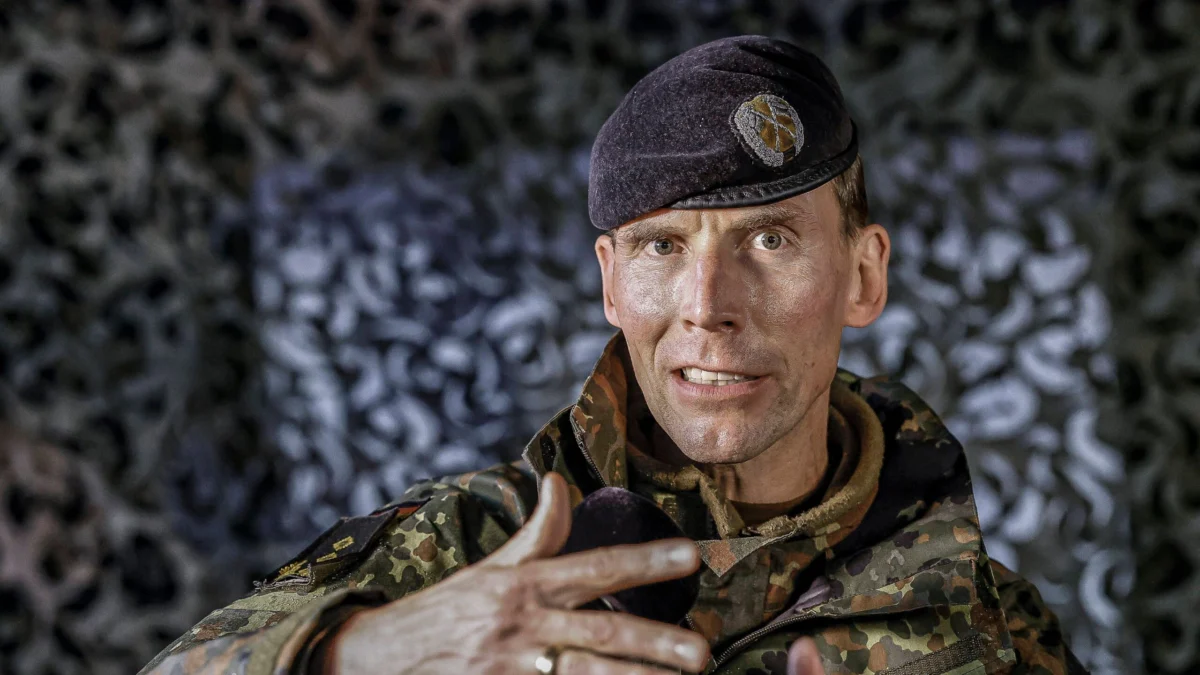
At the historic Offizierschule in Dresden—the premier training ground for the next generation of German military leadership—the atmosphere is charged with a blend of tradition and urgent transformation. Lieutenant General Christian Freuding, the Inspector of the German Army (Inspekteur des Heeres), recently took the stage at the Bundeswehr’s Innovation Forum. While the event was intended to showcase future-tech integration, it served as a high-profile platform for Freuding to address a simmering controversy: the persistent narrative that the German armed forces are merely procuring "scrap metal" and lagging behind the global technological curve.
For Freuding, who oversees the strategic direction of the Landstreitkräfte, the criticism is not just inaccurate—it is an affront to the deliberate, albeit complex, efforts to modernize a force that suffered from decades of underinvestment. Yet, in an exclusive interview on the sidelines of the forum, Freuding’s tone was neither purely defensive nor celebratory. It was marked by a palpable sense of impatience. While he rejects the "scrap metal" epithet, he remains the first to admit that the Bundeswehr’s modernization pace is not yet where the security environment of 2024 demands it to be.
Main Facts: The Procurement Paradox
The debate centers on whether the Bundeswehr’s current procurement cycle is delivering cutting-edge equipment or merely replacing aging assets with updated, yet conservative, technology. Critics argue that Germany continues to prioritize proven, heavy platforms—such as the Leopard 2 tank variants—while potentially overlooking the rapid, disruptive shifts in drone warfare, AI-driven command systems, and cyber-integrated battlefield management.
General Freuding’s counter-argument is rooted in the philosophy of "capability over hype." He maintains that the procurement strategy is a delicate balance between:
- Interoperability: Ensuring new assets function seamlessly within the NATO framework.
- Availability: Prioritizing equipment that can be delivered in significant numbers to fill immediate readiness gaps.
- Sustainability: Avoiding "technological dead ends" that look impressive on paper but cannot be maintained in a high-intensity conflict environment.
"We are not buying the past," Freuding asserted during the forum. "We are bridging the gap between a legacy of austerity and a future of high-intensity, multi-domain warfare. The systems we are bringing online today are the foundation upon which the digital battlefield of tomorrow will be built."
Chronology: From Stagnation to the "Zeitenwende"
To understand the current friction, one must look at the timeline of the German military’s recent history:
- 2010–2021: The Era of Austerity: Following the end of the Cold War and the shift toward expeditionary counter-insurgency operations, the Bundeswehr saw its heavy equipment capabilities atrophy. Procurement was slow, and maintenance backlogs became systemic.
- February 2022: The "Zeitenwende" Speech: Chancellor Olaf Scholz’s announcement of the €100 billion special fund (Sondervermögen) signaled a fundamental pivot. The goal was to rapidly re-equip the Bundeswehr to meet the reality of a resurgent threat in Eastern Europe.
- 2023: The Implementation Phase: The focus shifted from funding to execution. Major contracts were signed for the Puma Infantry Fighting Vehicle (IFV) upgrades, the integration of the Eurofighter’s new capabilities, and the expansion of air defense systems like IRIS-T.
- 2024: The Innovation Forum and Critical Review: As equipment begins to arrive, the discourse has shifted from "where is the money?" to "is this the right equipment?" This brings us to the current friction point, where experts, politicians, and military leaders clash over the pace and nature of innovation.
Supporting Data: The Reality of the Modernized Force
Critics pointing to "scrap metal" often ignore the sheer scale of the ongoing integration efforts. Data provided by the Ministry of Defense indicates that the Army is currently managing several critical procurement streams:
- The Digitization of Land-Based Operations (D-LBO): This is the backbone of the army’s modernization. It involves equipping tanks and vehicles with high-speed data links, allowing for a real-time, shared tactical picture.
- The Puma IFV Modernization: While the Puma program faced significant setbacks in the past, the current fleet is reaching a level of operational readiness that exceeds the aging Marder IFVs, providing superior protection and fire control.
- Indirect Fire Capabilities: The procurement of the RCH 155, a remote-controlled howitzer, represents a significant leap forward in precision and mobility, directly addressing the lessons learned from the conflict in Ukraine.
However, the "impatient" sentiment noted by observers stems from the realization that even these advanced systems take years to reach full operational capacity. While the Sondervermögen has provided the capital, the industrial base in Germany and Europe is still struggling to scale up production to meet the demand of both the Bundeswehr and the need to support Ukraine.
Official Responses and Strategic Vision
General Freuding’s role as the Inspector of the Army is to manage the transition from a "peacekeeping" army to a "combat-ready" force. His response to critics is nuanced. He acknowledges that the bureaucratic hurdles—often referred to as the "German procurement bottleneck"—remain a drag on efficiency.
"We need a culture of risk management, not risk avoidance," Freuding noted. He advocates for:
- Faster Certification Processes: Moving away from the obsession with 100% perfection before fielding, which often leads to years of delays.
- COTS (Commercial Off-The-Shelf) Integration: Leveraging civilian innovation in drones and AI rather than waiting for decades-long military development cycles.
- Personnel-Centric Innovation: Emphasizing that technology is only as effective as the soldiers who operate it. Training, he argues, is the ultimate "force multiplier."
General Carsten Breuer, who recently took the chair of the NATO Military Committee, has echoed similar sentiments. The alignment between the Army’s procurement strategy and NATO’s broader requirements is tight, with Germany committing to high-readiness formations that require the very systems currently being criticized by some industry observers.
Implications: A Military in Transition
The implications of this debate extend far beyond the procurement of tanks or digital radios. They touch on Germany’s role in European security. If the Bundeswehr is perceived as technologically stagnant, its ability to lead NATO’s eastern flank and act as a reliable "framework nation" is questioned by its allies.
The "Speed" Factor
The primary implication of Freuding’s impatience is the realization that time is the one resource that cannot be purchased. The European security architecture is in flux, and the perception of the Bundeswehr as a "slow giant" risks damaging German diplomatic influence.
Industrial Base Dependency
Germany’s reliance on domestic defense giants like Rheinmetall and Krauss-Maffei Wegmann is both a strength and a weakness. While it ensures a secure supply chain, it also limits the Bundeswehr’s ability to "shop around" for the fastest solutions, as political and economic interests often dictate the retention of domestic production lines.
The Human Element
Finally, there is the morale of the soldier. The "scrap metal" narrative is demoralizing for troops tasked with training on complex, often temperamental legacy systems. Freuding’s focus on professionalizing the force, improving infrastructure, and streamlining logistics is aimed at showing the soldier that the leadership is listening—and that a leaner, faster, and more lethal Bundeswehr is not just a slogan, but a reality under construction.
Conclusion: The Path Forward
General Christian Freuding’s message at the Innovation Forum was clear: the Bundeswehr is not where it needs to be, but it is moving with unprecedented speed toward a new paradigm. The "scrap metal" critique is an oversimplification of a transition that involves re-equipping an entire army while simultaneously changing its operational culture.
As the Inspector of the Army, Freuding represents the bridge between the old Bundeswehr and the new. His impatience is perhaps the most valuable asset he brings to the table. In a world where the speed of technological change often outpaces the speed of bureaucracy, a leader who is unsatisfied with the status quo is exactly what the German Army requires. The road to a modernized Bundeswehr is paved with complex procurement, geopolitical pressures, and industrial challenges, but the trajectory, as defined by Freuding, is firmly set toward technological integration and combat readiness. The next five years will be the ultimate test of whether that trajectory is steep enough to secure the nation and its allies in an increasingly volatile global landscape.