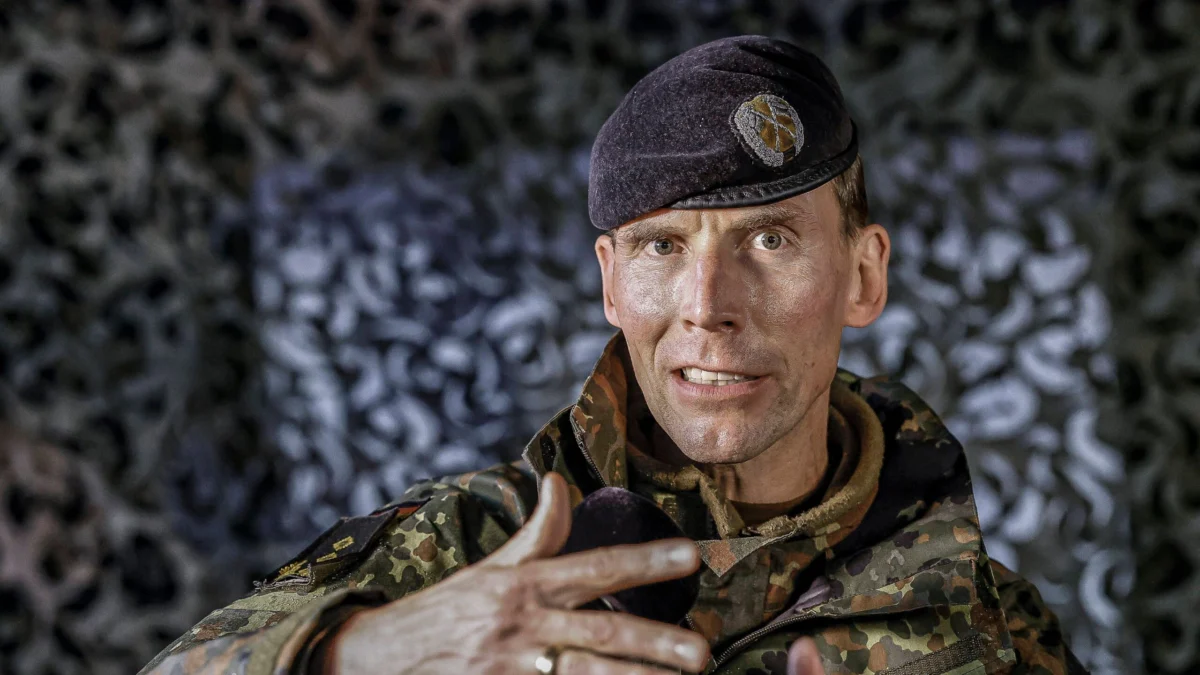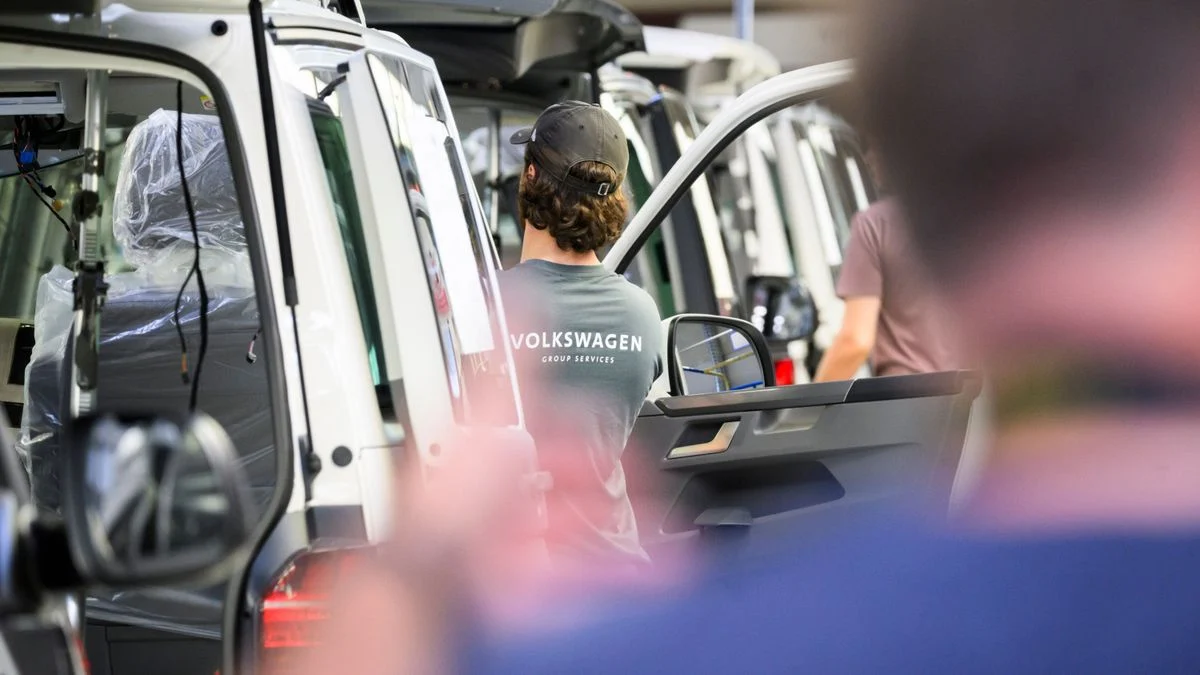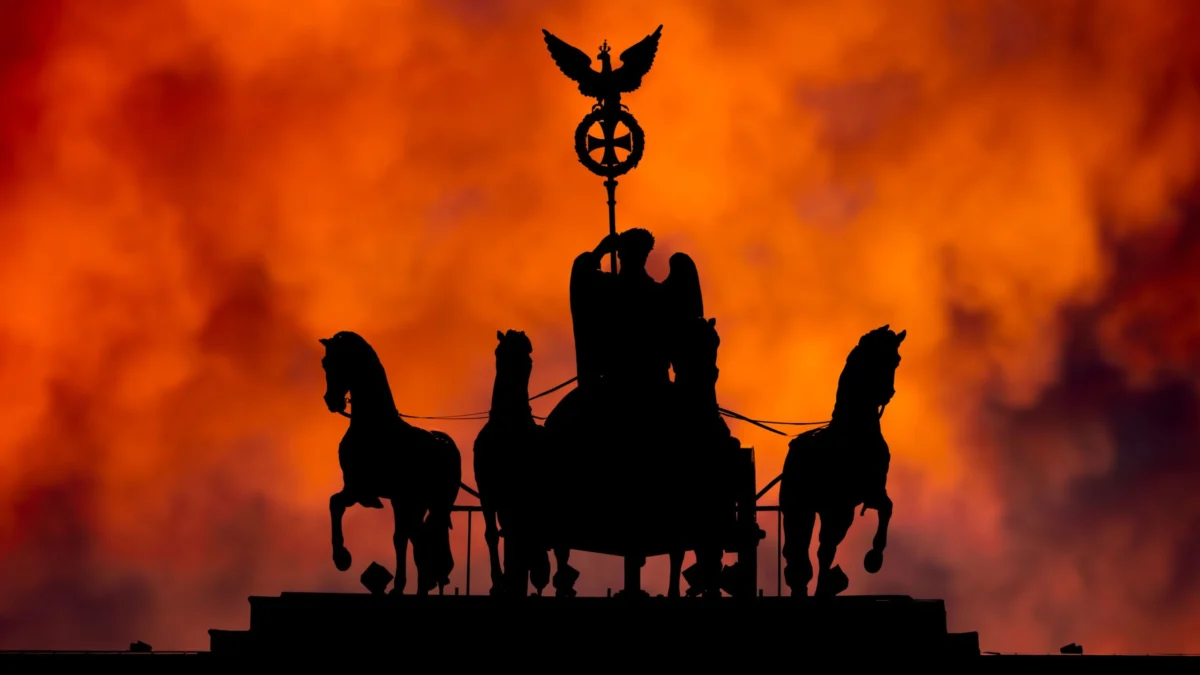
For decades, the German psyche has cultivated a relationship with the apocalypse that can only be described as intimate, if not bordering on the affectionate. In the Federal Republic of Germany, the world appears to be on the precipice of ending with an almost rhythmic frequency. While other nations may view catastrophe as an unfortunate statistical probability or an external threat, the German cultural apparatus treats the "End of Days" as a creative endeavor—a national pastime requiring rigorous imagination, detailed planning, and a distinct sense of foreboding.
Even during moments of celebration, such as the recent "Festival of the Future" hosted by Handelsblatt and Wirtschaftswoche, the shadow of the inevitable looms large. Behind the rhetoric of innovation and growth, there persists a palpable anxiety—a collective urge to begin preparing the funeral arrangements for the future before it has even been fully conceived. Germany, it seems, has become the undisputed world market leader in the business of doom.
Main Facts: The Anatomy of a Cultural Phenomenon
At the heart of this phenomenon lies a peculiar German intellectual tradition often referred to as Untergangspessimismus (decline pessimism). It is not merely a political stance, but a deep-seated cultural predisposition that manifests across media, academia, and private discourse.
- The Narrative Cycle: Whether it is the climate crisis, the collapse of the industrial base, demographic aging, or the fragility of the Euro, the German narrative arc almost invariably trends toward terminal decline.
- The Intellectual "Industry": There is an entire infrastructure of think tanks, cultural critics, and media pundits whose primary function is to articulate the specific mechanisms of the upcoming collapse.
- The Paradox of Success: The phenomenon is uniquely paradoxical because it occurs within one of the world’s most stable, prosperous, and technically advanced societies. Despite high living standards, the "German Anxiety" (German Angst) persists as a defining characteristic of the national mood.
A Chronology of Anticipated Collapses
To understand how Germany arrived at this state of perpetual anticipation, one must look at the historical timeline of its existential fears.
1. The Post-War Reconstruction and the "Limits to Growth" (1970s)
In the early 1970s, the Club of Rome’s report, The Limits to Growth, found its most fertile soil in Germany. While the nation was enjoying the "Economic Miracle" (Wirtschaftswunder), the intelligentsia was already theorizing that the resource-heavy industrial model would inevitably lead to a total systemic failure.
2. The Waldsterben Panic (1980s)
In the 1980s, the fear of Waldsterben (forest death) gripped the nation. While environmental conservation was a legitimate necessity, the discourse surrounding it took on an apocalyptic tone. The death of the German forest was framed not as a manageable policy challenge, but as a final, irreversible judgment on the sins of industrialization.
3. The Digital Transformation and the "Lost Decade" (2000s–2010s)
As the new millennium dawned, the focus shifted toward technological obsolescence. The rise of Silicon Valley and the subsequent digital revolution were viewed in Germany primarily through the lens of what was being lost: the dominance of the German Mittelstand, the sanctity of privacy, and the stability of traditional labor markets.
4. The Era of Polycrisis (2020–Present)
Today, we exist in what is termed the "Polycrisis." From the energy transition (Energiewende) and its associated costs to the geopolitical shifts following the conflict in Ukraine, the apocalyptic narrative has shifted from the hypothetical to the urgent. The current discourse suggests that Germany is not just facing a challenge, but a "final exam" that it is destined to fail.
Supporting Data: The Statistics of Despair
Sociological surveys consistently reflect this pervasive pessimism. According to recent data from the R+V Versicherung annual "Fear Index," Germans are increasingly preoccupied with external and internal systemic threats.
- Economic Anxiety: Over 60% of Germans consistently report fear regarding the long-term viability of the German social security system and the stability of the Euro.
- Climate Dread: Despite extensive investment in green technology, Germany consistently ranks as one of the most "climate-anxious" nations in the European Union, with a majority believing that the consequences of climate change are already irreversible.
- Industrial Pessimism: A survey by the DIW Berlin (German Institute for Economic Research) noted that business leaders in the manufacturing sector are significantly more pessimistic about the next ten years than their counterparts in the United States or Asia, often citing the "burden of regulation" as a terminal condition rather than a manageable hurdle.
Official Responses: The Governance of Fear
The political establishment in Berlin is often caught in a bind. Politicians must balance the need for optimistic reform with the electorate’s ingrained expectation of bad news.
The Role of Regulatory Caution
Government officials often cite the "Precautionary Principle" (Vorsorgeprinzip) as the foundation for German policy. While intended to prevent harm, critics argue that this principle has been weaponized by bureaucratic structures to justify inaction. By framing every policy change as a potential catastrophe, the state inadvertently feeds the public’s anxiety.
The Media’s Role
The German media landscape, particularly the influential weeklies and public broadcasters, often thrives on the "Alarmist Cycle." Headlines highlighting the "end of the industrial model" or the "failure of the transition" generate higher engagement than balanced, moderate reporting. As noted by the Handelsblatt incident, even at festivals dedicated to the future, the keynote speeches frequently pivot to warnings of what must be "saved" rather than what could be "created."
Implications: The Cost of Perpetual Doom
What are the long-term consequences of a nation that views its future as a funeral procession?
1. The Innovation Gap
If a society is convinced that its efforts will eventually be undone by catastrophe, the incentive to invest in long-term, high-risk innovation diminishes. Capital flows toward safety and preservation rather than disruption and creation. This "defensive" investment strategy is a primary reason for the stagnation in Germany’s digital sector.
2. Demographic Malaise
The apocalyptic narrative is a significant driver of demographic anxiety. When the future is framed as a time of suffering, the propensity to plan for the next generation—or to have children at all—declines. The national mood becomes one of "managing the decline" rather than "building the future."
3. The Loss of Global Competitiveness
In a global market that rewards speed, agility, and bold vision, Germany’s tendency to dwell on the negative has become a competitive disadvantage. While other regions view the green transition as a multi-trillion-dollar economic opportunity, Germany frequently frames it as a burden—a "deindustrialization event" that must be mitigated rather than an engine for a new era of prosperity.
Conclusion: Breaking the Cycle
The German relationship with the apocalypse is a sophisticated, deeply embedded cultural phenomenon. It is a protective mechanism—a way of ensuring that no surprise is ever truly a surprise. If one expects the world to end tomorrow, one is never disappointed when the status quo is merely inconvenienced.
However, this "world market leadership in doom" comes at a steep price. By prioritizing the preservation of the past over the imagination of the future, Germany risks turning its apocalyptic fantasies into a self-fulfilling prophecy. The challenge for the next generation of German leaders and thinkers is not to ignore the real threats the world faces, but to move beyond the aesthetic of the apocalypse.
To reclaim its status as a global powerhouse, Germany must learn to celebrate the future with the same intensity it currently reserves for its burial. The funeral is not yet scheduled, and the future, if treated with ambition rather than anxiety, remains an open chapter. It is time for Germany to move from being the world’s most articulate mourner to its most innovative architect.