By International Correspondent
Date: October 24, 2026
When the Federal Republic of Germany and the Republic of Turkey signed the historic labor recruitment agreement on October 30, 1961, the document was viewed by both parties as a temporary solution to an economic bottleneck. The German "Economic Miracle" (Wirtschaftswunder) was in full swing, and the demand for manual labor in the factories of the Ruhr area and the automotive giants of the south outpaced the domestic supply.
Neither Bonn nor Ankara envisioned the profound social, cultural, and political transformation that would follow. They did not anticipate that hundreds of thousands of people would turn a temporary contract into a permanent home, weaving themselves into the fabric of the German nation. Today, sixty-five years later, the descendants of those original "guest workers" are no longer merely guests; they are the bedrock of modern Germany.
The Genesis of a Migration: A Chronology of Change
The story of the Turkish migration to Germany is one of evolution—from transient workers living in barracks to an integral demographic pillar.
- 1961: The recruitment agreement is signed. Germany anticipates that workers will rotate out after a short period, returning to Turkey with savings and industrial skills.
- 1961–1973: Approximately 870,000 Turkish workers arrive in Germany. During this era, there are no formal integration programs, no language courses, and no long-term settlement strategies. The workers are housed in segregated dormitories, often on the peripheries of industrial sites.
- 1973: The Oil Crisis triggers the end of the formal recruitment program. Fearing a mass exodus, the German government instead witnesses a "chain migration" effect: workers who had intended to leave bring their families to Germany to reunite, choosing permanence over return.
- 1980s–1990s: The "second generation" comes of age. This cohort struggles with a dual identity, often navigating an education system that is ill-equipped to support them, while simultaneously bridging the cultural gap between their parents’ homeland and their own reality.
- 2026: Sixty-five years on, the third and fourth generations are firmly established as politicians, entrepreneurs, educators, and cultural icons, though structural challenges remain.
The Human Face of Progress: The Tosun Legacy
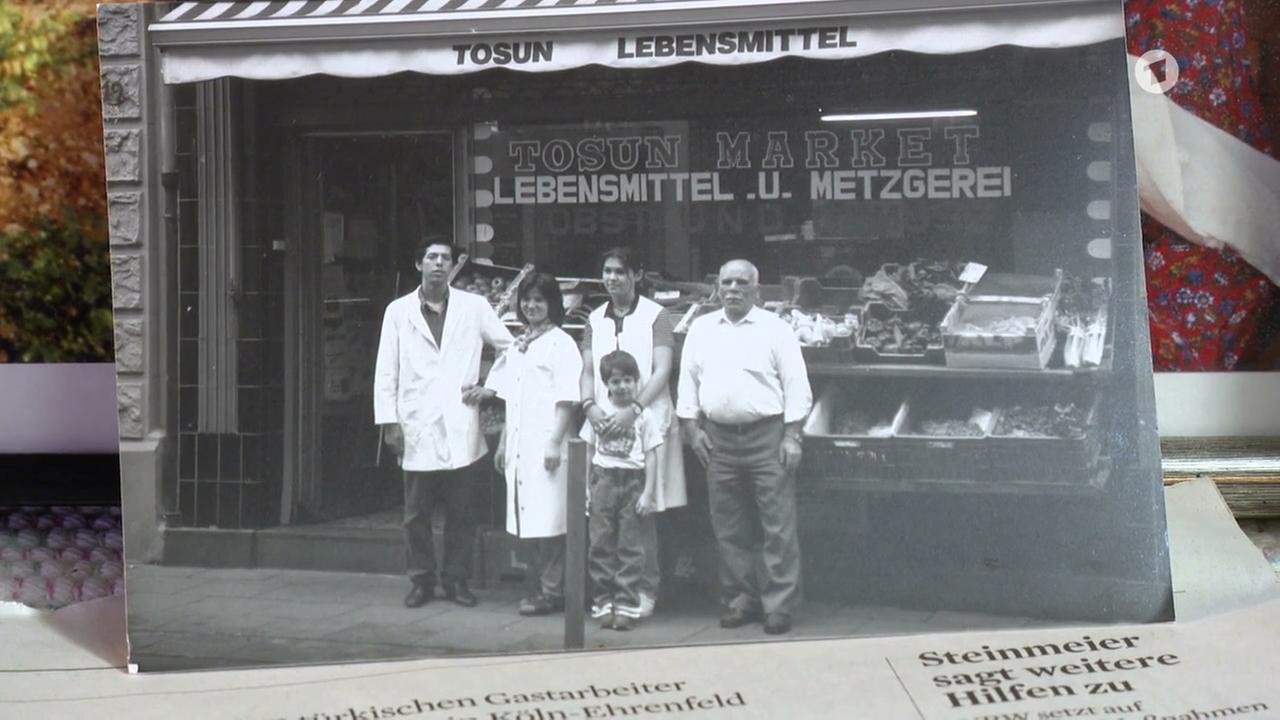
In the vibrant district of Cologne-Ehrenfeld, the "Markthalle Tosun" stands as a testament to the resilience of the first and second generations. Atila Tosun, now 60, has been the face of this butcher shop since 1991. To the local residents, he is an institution; to his family, he is the living bridge between two worlds.
Atila’s father arrived in 1965 to work at the Ford plants. "They arrived with no language, no cultural map, and no safety net," Atila recounts. "It was a different world." When Atila joined his father in 1979 at the age of 13, he faced an education system that effectively marginalized him. Many schools of that era grouped migrant children into segregated classes taught in Turkish, inadvertently delaying their German language acquisition and integration into the broader society.
Despite these hurdles, Atila’s success was forged through sheer personal effort. He worked through weekends and after school, supporting his family while finishing his education. His story is not an anomaly; it is a quintessential representation of the struggle and eventual triumph of the guest worker generation.
The Structural Void: Lack of State Support
Sociologist Yunus Ulusoy of the Centre for Turkish Studies in Essen notes that the success of these individuals was largely achieved in spite of the state, rather than because of it.
"These success stories were born from the efforts of the individuals themselves," Ulusoy explains. "During the foundational decades, there were no state-led integration offers. There were no language classes, no orientation courses. Integration happened through private, human connections—teachers who went the extra mile, neighbors who shared their customs, and the quiet resilience of the families themselves."
This sentiment is echoed by many who lived through the era. The German state largely viewed these workers as temporary economic units. Consequently, the cultural, religious, and linguistic assets that these migrants brought were often ignored or treated as obstacles rather than contributions. For decades, the public narrative remained that these workers did not truly "belong" to the German society.
Official Perspectives and Remaining Disparities
While the narrative of integration is one of success, the government acknowledges that the legacy of the 1960s is not without its shadows. Federal Commissioner for Migration, Refugees, and Integration, Natalie Pawlik, admits that systemic inequalities remain.
"We must be honest about the fact that structural disadvantages have been inherited," says Pawlik. "Today, the descendants of those first workers still face higher hurdles in the education system, and they encounter significantly more barriers in the labor and housing markets compared to the majority population."
These disparities are often linked to the socio-economic status of the initial generation, who were largely funneled into low-wage, manual labor positions. The "glass ceiling" for many migrant-descended families is often a byproduct of historical underinvestment in the areas where these communities were initially concentrated.
The Cultural Synthesis: A New German Identity
Despite the persistence of discrimination and the struggle for full recognition, the shift in the national identity is undeniable. The "Gastarbeiter" of 1961 have evolved into the stakeholders of 2026.
Atila Tosun’s daughter, Yasemin Celik, represents this shift. For her, the question of whether she is "German" is not a point of debate—it is a fact of life. "My generation cannot imagine living in Turkey," she says. "We know the country from summer vacations. Our home is here."
However, this does not mean the abandonment of heritage. Celik is teaching her two young sons the Turkish language, not as a necessity for survival, but as a bridge to their roots. "They need to know where we came from, and they need to understand the sacrifice and labor our parents put into building this life," she emphasizes. This perspective is shared by millions of Germans with Turkish roots, who view themselves as a "bridge generation" that preserves history while driving the future.
Implications for a Globalized Germany
The 65-year trajectory of the Turkish-German community serves as a masterclass in the complexities of immigration. It demonstrates that integration is not a destination, but a long-term, multi-generational process that requires active participation from both the newcomer and the host society.
The implications for modern Germany are significant:
- Economic Vitality: The children and grandchildren of the guest workers are vital contributors to the German economy, filling key roles in tech, medicine, and public administration.
- Social Cohesion: The long-term presence of these communities has forced Germany to redefine its national identity, moving away from a mono-cultural model toward a more pluralistic society.
- Policy Lessons: The "laissez-faire" approach of the 1960s—which left integration to chance—is now recognized as a missed opportunity. Contemporary policies now focus on early-language intervention and inclusive education to prevent the stratification of society.
As Germany looks back on the 1961 agreement, it is clear that the "guest" has become the host. The transformation of the Turkish community from a temporary labor force into a foundational element of the nation is perhaps the most significant social experiment in post-war European history.
For the Tosun family, as for thousands of others, the "Markthalle" is not just a shop—it is a symbol of a journey that began in a train station in the 1960s and has led to the heart of German society. As Yasemin Celik puts it, "We are the result of our parents’ hard work, and we are the architects of the Germany that is to come."